


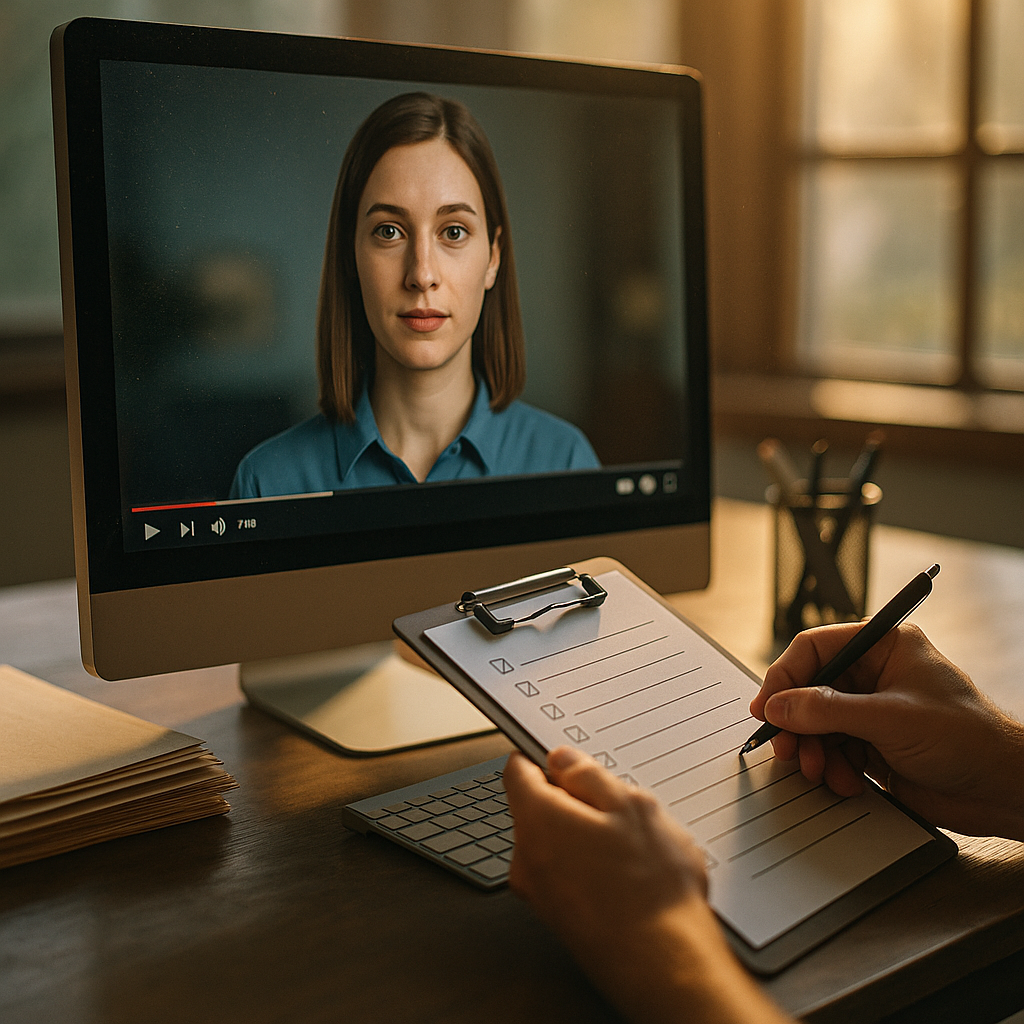
Fifty-eight percent of consumers now trust AI-generated search answers as much as organic results, according to recent eMarketer research. So what happens when those answers start talking back with video? AI video assistants inside generative search are no longer a novelty demo — they’re a live distribution channel, and Auxia’s Agent Studio just gave marketers a preview of how messy that channel could get.
If you run brand or paid media budgets, this matters more than another feature launch. It’s a signal about where discovery is headed next.
What Auxia’s Agent Studio Actually Does
Auxia built its reputation on personalization infrastructure — decisioning engines that adjust messaging based on user signals in real time. Agent Studio extends that logic into generative search, letting brands deploy AI agents that generate video responses inside answer engines rather than static text snippets or links.
Picture a user asking a shopping assistant to compare running shoes. Instead of a bulleted list, they get a short synthesized video: a virtual presenter walking through cushioning tech, price tiers, and reviews, pulled from brand-fed data and rendered on the fly. That’s the pitch. It’s compelling on paper. It’s also a governance headache waiting to happen.
We covered the broader mechanics of this shift in how Auxia’s campaigns rewrite themselves, but video assistants add a new layer: visual brand representation generated without a creative director in the loop.
When an AI agent generates video on your behalf inside a search answer, you’re not approving creative anymore — you’re approving a system that approves creative for you.
Why This Wave Is Different From Chatbot Answer Engines
Text-based generative search already forced marketers to rethink SEO. Now add motion, voice, and synthetic presenters, and the stakes multiply. A wrong fact in a text answer is embarrassing. A wrong fact delivered by a confident AI avatar, with your logo in the corner, is a different order of risk.
Three things separate video assistants from the AI Overviews and chat answers marketers have spent two years optimizing for:
- Persistence of impression: Video is stickier in memory than a text snippet, which raises the cost of getting it wrong.
- Compressed review windows: Video generation happens in seconds. There’s often no human checkpoint before it reaches the user.
- Attribution ambiguity: Standard analytics weren’t built to track a synthesized video view inside a third-party answer engine. Our piece on zero-click search breaking GA4 attribution is basically the prequel to this problem — now imagine that attribution gap with video assets instead of text.
None of this means brands should sit out. It means the vetting bar needs to rise fast.
The Data Foundation Problem Nobody Wants to Talk About
Agent Studio, like most generative video tools, is only as good as the product and brand data it’s fed. And here’s the uncomfortable truth: most CRM and PIM data isn’t clean enough to trust with autonomous generation. A recent internal audit trend we’ve tracked found that only 21% of marketers trust their CRM data for AI use cases. That statistic should terrify anyone about to plug a video assistant into live product feeds.
If your data is stale, mismatched, or duplicated, the AI won’t politely fail. It’ll confidently generate a video with the wrong price, the wrong claim, or a discontinued SKU. Multiply that across thousands of real-time queries and you have a compliance incident, not a glitch.
Before evaluating any AI video assistant vendor, run the same data audit you’d run before a predictive segmentation rollout. We outlined that process in predictive segmentation needing a CRM audit first — the logic transfers directly here.
Vetting Criteria: What Brands Should Actually Ask Vendors
Marketers evaluating Agent Studio or comparable tools (and there will be comparable tools within the year — this space moves fast) should treat the buying process like a security review, not a creative pitch. Here’s a working checklist:
- Source grounding: Where does the video’s factual content come from? Is it grounded in your verified product data, or is it inferring from general web crawl data?
- Override latency: How fast can a human pull a video asset if it’s generating incorrect claims? Minutes matter here.
- Version audit trail: Can you see every generated variant, or just the current live one? Regulators will eventually ask for this.
- Platform interoperability: Does the agent work consistently across Google’s AI Mode, OpenAI’s retrieval-based answers, and Perplexity-style engines, or is it optimized for one and brittle everywhere else?
- Disclosure handling: Does the tool clearly label AI-generated video as such, in line with FTC disclosure guidance?
This isn’t paranoia. It’s the same diligence framework we’ve recommended for other autonomous systems. See vetting AI agents for cross-platform placement and interoperability audits as the new vendor test for the fuller methodology. Agent Studio just happens to be the tool making this urgent for video specifically.
How This Fits Into the Broader GEO Shift
Generative engine optimization (GEO) has mostly been a text and structured-data game so far: schema markup, citation-friendly content, entity clarity. Video assistants push GEO into a new dimension. Brands now need to think about how their product data renders visually, not just how it reads.
That means feed quality, image licensing, and video-ready metadata become GEO inputs. If you’ve been tracking your citation share using frameworks like the ones in GEO benchmarks for brand visibility, expect a new metric to matter soon: video citation share, or how often your brand appears as the generated video answer versus a competitor’s.
It also reframes the GEO-versus-AEO budget conversation. If you’re still splitting spend using the model in GEO vs AEO budget splitting, add a third bucket: video-answer readiness. It’s small right now. It won’t stay that way.
Where the Creator Economy Intersects
Here’s the part practitioners in influencer marketing specifically should sit with: AI video assistants generating brand comparisons inside search could quietly compress the influence of human creator reviews. If a shopper gets a synthesized, seemingly neutral video answer before they ever click into a YouTube review or TikTok haul, that’s a real shift in the discovery funnel.
Smart brands will feed their verified creator content and UGC into these systems as grounding data, rather than treating AI video assistants as a separate channel. That’s not dissimilar to how AI-driven product sampling is reshaping affiliate discovery — the winners are brands that make their authentic content machine-readable and citable, not just human-readable.
The next battle for share of voice won’t just be SEO rankings or influencer reach. It’ll be whether your brand’s data is trustworthy and structured enough for an AI agent to choose you as the answer.
Governance Can’t Be an Afterthought
Marketing and legal teams need a shared playbook before deploying any AI video assistant, not after the first PR incident. At minimum:
- Require human sign-off on new product categories before they enter the video generation pipeline.
- Set error-rate thresholds and pause triggers, similar to the human override framework detailed in AI media-buying error rate override models.
- Document disclosure language for synthetic video presenters, and check it against evolving guidance from bodies like the ICO if you operate in the UK or EU.
Skipping this step because “it’s just search” is how brands end up explaining themselves in a trade press headline instead of writing one.
The Practical Verdict
Auxia’s Agent Studio isn’t a finished product category. It’s a signal flare. AI video assistants inside generative search are coming whether your brand is ready or not, and the vendors who move fastest won’t necessarily be the safest bet. Treat this the way you’d treat any new MarTech wave: pilot small, audit the data pipeline first, and demand override controls before you demand fancier output.
The brands that win the next two years of generative search won’t be the ones with the flashiest AI video. They’ll be the ones whose data was clean enough to trust with it.
Frequently Asked Questions
What are AI video assistants in generative search?
They are AI agents embedded in search or answer engines that generate short video responses to user queries in real time, using brand or product data as source material, rather than returning text links or snippets.
Is Auxia’s Agent Studio available to all brands?
Auxia has positioned Agent Studio as an extension of its existing personalization platform, primarily for enterprise marketing teams already using its decisioning tools. Broader availability and pricing details typically roll out in phases, so brands should confirm current access directly with Auxia.
How is this different from AI Overviews or chatbot answers?
Text-based answer engines summarize information in written form. Video assistants synthesize a presenter-style video response, which raises different risks around brand representation, factual accuracy, and disclosure compliance.
What data should brands clean up before using AI video tools?
Product catalogs, pricing feeds, and CRM records should be audited for accuracy and duplication first. Feeding unclean data into an autonomous video generator amplifies errors rather than catching them.
Does this affect influencer marketing strategy?
Yes. If AI-generated video answers appear before creator content in the discovery funnel, brands need to ensure their creator partnerships and UGC are structured and citable enough to inform those AI-generated answers rather than being bypassed by them.
What’s the biggest risk with AI video assistants for brands?
Losing creative and factual control. Because generation happens in real time with minimal human review, an inaccurate or off-brand video can reach consumers before anyone catches it.
Next step: Before piloting any AI video assistant in generative search, run a 30-day data audit on your product feed and CRM, then require vendors to demonstrate override latency in writing — not in a demo.
Frequently Asked Questions
What are AI video assistants in generative search?
They are AI agents embedded in search or answer engines that generate short video responses to user queries in real time, using brand or product data as source material, rather than returning text links or snippets.
Is Auxia’s Agent Studio available to all brands?
Auxia has positioned Agent Studio as an extension of its existing personalization platform, primarily for enterprise marketing teams already using its decisioning tools. Broader availability and pricing details typically roll out in phases, so brands should confirm current access directly with Auxia.
How is this different from AI Overviews or chatbot answers?
Text-based answer engines summarize information in written form. Video assistants synthesize a presenter-style video response, which raises different risks around brand representation, factual accuracy, and disclosure compliance.
What data should brands clean up before using AI video tools?
Product catalogs, pricing feeds, and CRM records should be audited for accuracy and duplication first. Feeding unclean data into an autonomous video generator amplifies errors rather than catching them.
Does this affect influencer marketing strategy?
Yes. If AI-generated video answers appear before creator content in the discovery funnel, brands need to ensure their creator partnerships and UGC are structured and citable enough to inform those AI-generated answers rather than being bypassed by them.
What’s the biggest risk with AI video assistants for brands?
Losing creative and factual control. Because generation happens in real time with minimal human review, an inaccurate or off-brand video can reach consumers before anyone catches it.
Top Influencer Marketing Agencies
The leading agencies shaping influencer marketing in 2026
Agencies ranked by campaign performance, client diversity, platform expertise, proven ROI, industry recognition, and client satisfaction. Assessed through verified case studies, reviews, and industry consultations.
Moburst

-
2

The Shelf
Boutique Beauty & Lifestyle Influencer AgencyA data-driven boutique agency specializing exclusively in beauty, wellness, and lifestyle influencer campaigns on Instagram and TikTok. Best for brands already focused on the beauty/personal care space that need curated, aesthetic-driven content.Clients: Pepsi, The Honest Company, Hims, Elf Cosmetics, Pure LeafVisit The Shelf → -
3

Audiencly
Niche Gaming & Esports Influencer AgencyA specialized agency focused exclusively on gaming and esports creators on YouTube, Twitch, and TikTok. Ideal if your campaign is 100% gaming-focused — from game launches to hardware and esports events.Clients: Epic Games, NordVPN, Ubisoft, Wargaming, Tencent GamesVisit Audiencly → -
4

Viral Nation
Global Influencer Marketing & Talent AgencyA dual talent management and marketing agency with proprietary brand safety tools and a global creator network spanning nano-influencers to celebrities across all major platforms.Clients: Meta, Activision Blizzard, Energizer, Aston Martin, WalmartVisit Viral Nation → -
5

The Influencer Marketing Factory
TikTok, Instagram & YouTube CampaignsA full-service agency with strong TikTok expertise, offering end-to-end campaign management from influencer discovery through performance reporting with a focus on platform-native content.Clients: Google, Snapchat, Universal Music, Bumble, YelpVisit TIMF → -
6

NeoReach
Enterprise Analytics & Influencer CampaignsAn enterprise-focused agency combining managed campaigns with a powerful self-service data platform for influencer search, audience analytics, and attribution modeling.Clients: Amazon, Airbnb, Netflix, Honda, The New York TimesVisit NeoReach → -
7

Ubiquitous
Creator-First Marketing PlatformA tech-driven platform combining self-service tools with managed campaign options, emphasizing speed and scalability for brands managing multiple influencer relationships.Clients: Lyft, Disney, Target, American Eagle, NetflixVisit Ubiquitous → -
8

Obviously
Scalable Enterprise Influencer CampaignsA tech-enabled agency built for high-volume campaigns, coordinating hundreds of creators simultaneously with end-to-end logistics, content rights management, and product seeding.Clients: Google, Ulta Beauty, Converse, AmazonVisit Obviously →