


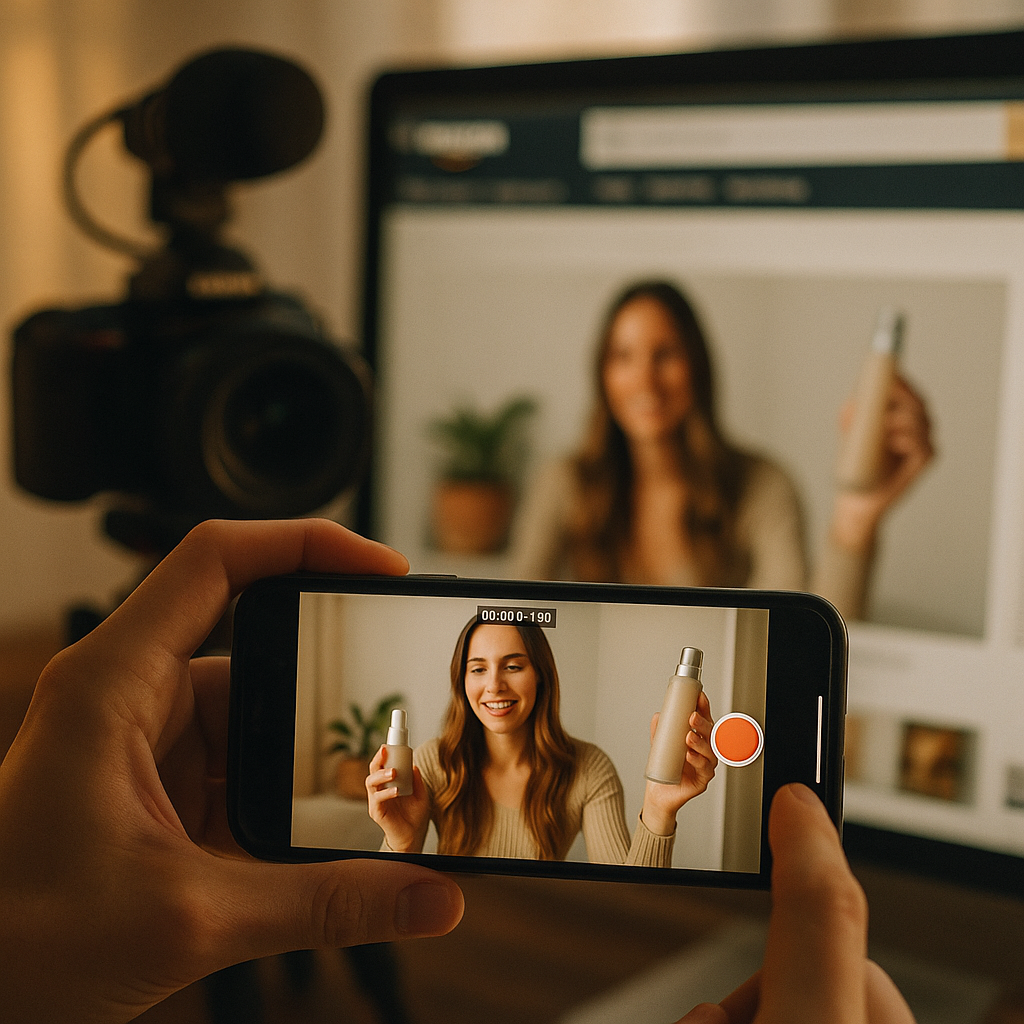
Amazon shoppers watch product video for an average of just 8 seconds before bouncing, yet most brands are still uploading YouTube-style creator content straight to their Storefront and wondering why conversion barely moves. Amazon Ready UGC Ads aren’t just repurposed TikToks with a logo slapped on. They’re a distinct format with their own aspect ratios, pacing, compliance rules, and platform quirks that most creator briefs never account for.
The Amazon Content Gap No One’s Talking About
Here’s the uncomfortable truth: agencies spend weeks perfecting hooks for TikTok and Meta, then treat Amazon as an afterthought. A video gets dropped into A+ Content or Amazon Live with zero reformatting. Wrong crop. Wrong pacing. Wrong call to action, because “swipe up” means nothing on a marketplace.
Amazon isn’t a social feed. It’s a purchase-intent environment. Shoppers land there because they already want to buy something, they just need the last nudge. That changes everything about how creator video should be built for it.
A shopper on Amazon has already decided to spend money somewhere today. Your job with Amazon Ready UGC Ads isn’t to interrupt scroll, it’s to remove the last objection standing between browse and buy.
Why Amazon Live Demands a Different Cut
Amazon Live behaves more like QVC than Instagram Live. Viewers arrive mid-stream, often from a product detail page, and they’re comparison shopping in real time across multiple tabs. That means creators need to restate the value proposition every 30 to 45 seconds instead of assuming continuous attention.
Practical formatting notes that actually move needles:
- Keep the product visible and centered within the frame for the first three seconds of every segment, since new viewers join constantly.
- Use on-screen text overlays for price, bundle deals, and coupon codes. Audio alone gets missed when shoppers have sound off in offices or on public transit.
- Restate the ASIN or “add to cart” prompt verbally every couple of minutes. Amazon Live’s chat and cart-tap features work best when creators verbally cue the action, not just gesture at it.
- Plan for choppy retention. Unlike a TikTok video that lives or dies on the first two seconds, Amazon Live rewards creators who can re-hook a room that just refreshed.
Brands that treat Amazon Live like a scripted infomercial with modern editing sensibilities tend to outperform those who wing it like a casual livestream. If you’re clipping stream footage for later reuse, the same structural logic from our replay clipping framework applies almost directly to Amazon Live segments repurposed into Storefront video.
Storefront Video Specs: What Actually Works
Amazon Storefronts and A+ Content modules accept video, but the platform is unforgiving about file specs and even more unforgiving about pacing. A few things brands consistently get wrong:
- Aspect ratio. Storefront hero video typically renders best in 16:9 or square, not the vertical 9:16 most creators default to for social. If your creator only shot vertical, you need a proper reformat, not a lazy pillarbox with black bars.
- Length. Amazon caps most video modules well under 90 seconds, and shopper attention on the platform drops off faster than that. Aim for 15 to 30 second cuts that lead with the strongest product claim.
- Captions, always. Amazon shoppers browse silently far more often than social users do. If your creator video relies on spoken benefit claims with no on-screen text, you’re losing the majority of viewers before the message lands.
- No off-Amazon CTAs. Any mention of “link in bio,” “visit our website,” or platform-specific language like “swipe up” violates Amazon’s creative policies and can get content pulled.
This is where the format overlaps heavily with what we’ve covered on vertical product demo ads for Amazon, except Storefront modules require the horizontal reformat most teams skip. If your creator content library was shot for TikTok first, budget time for a proper re-edit rather than a stretch-and-crop job that looks amateurish next to competitor listings.
Formatting Checklist Before You Upload
Before any creator asset goes live on Amazon, run it through this list. It sounds basic, but it’s the step most in-house teams skip when they’re racing to hit a launch date.
- Confirm aspect ratio matches the specific placement (Storefront hero, A+ module, or Live stream).
- Verify captions are burned in or uploaded as a separate SRT file where supported.
- Strip any competitor mentions, off-platform CTAs, or unverifiable claims.
- Check that pricing or promo language on screen matches current live pricing. Amazon’s algorithm and customer complaints both flag stale promo text fast.
- Confirm the creator’s usage rights actually cover Amazon placements, not just the platform they originally posted to.
That last point trips up more brands than anything else. A creator might grant usage rights for “organic and paid social,” which technically doesn’t cover Amazon Storefront or Live placements. Before any spend goes behind the content, run it against a proper paid amplification rights checklist so legal isn’t chasing down a creator three weeks after launch asking for an amended contract.
Rights, Compliance, and the FTC Factor
Amazon Ready UGC Ads sit at an interesting compliance intersection. You’ve got Amazon’s own creative policies, plus the FTC’s disclosure guidelines for material connections between brands and creators, plus whatever usage terms are baked into your original creator agreement.
Sponsored creator content that appears on Amazon still needs clear disclosure if there was any compensation, free product, or affiliate relationship involved. That disclosure needs to be visible within the video itself, not buried in a caption Amazon’s format doesn’t even display.
Rights management gets messy fast once the same creator asset is repurposed across TikTok, Meta, and Amazon. Losing track of which version has which usage window is how brands end up pulling content mid-campaign because nobody flagged an expiring license. A centralized UGC rights registry solves this before it becomes a legal fire drill, and it’s worth setting up before you scale Amazon Live to more than one or two creators a month.
One Shoot, Multiple Platforms: The Efficiency Play
Reshooting content specifically for Amazon is expensive and slow. The smarter move, and the one most efficient teams have shifted to, is briefing creators to shoot with multiple placements in mind from the start. That means capturing both vertical and horizontal coverage in the same session, along with clean B-roll that works without dialogue for silent Storefront autoplay.
This is essentially the same operational logic behind a multi platform master edit workflow: one shoot day, multiple deliverables, no redundant creator fees. If your team is still paying for separate Amazon-specific shoots when the original social content could have been captured with a wider frame, you’re burning budget on a formatting problem, not a creative one.
Every dollar spent reshooting content that could have been captured correctly the first time is a dollar that should have gone toward media spend or another creator partnership.
Measuring What Matters: Beyond Vanity Views
Amazon’s attribution data is genuinely useful here, arguably more actionable than most social platforms because it ties directly to purchase behavior. Brands should be watching:
- Detail page conversion lift on listings with creator video versus those without.
- Watch time on Live streams segmented by whether the creator restated the offer, since that’s usually the variable that moves the needle most.
- Add-to-cart rate during Live segments compared to static listing baseline.
According to data referenced by eMarketer, retail media and shoppable video formats continue to outpace traditional display in conversion efficiency, and Amazon’s owned inventory is a meaningful chunk of that growth. Brands tracking this through Statista‘s retail media benchmarks can validate whether their Amazon creator spend is actually outperforming standard PPC placements, which it often does once the format is dialed in correctly.
Tools like Sprout Social and platforms covered by HubSpot‘s marketing resources can help brands track cross-channel performance when the same creator asset runs on Amazon alongside social, giving a fuller picture of which format variant is actually driving revenue rather than just impressions.
Next Step
Stop treating Amazon as a dumping ground for leftover social content. Build one shoot brief that captures Amazon-native framing, captions, and compliant CTAs from day one, and you’ll cut both production costs and the compliance headaches that come from retrofitting creator video after the fact.
FAQs
What makes Amazon Ready UGC Ads different from regular social UGC?
Amazon Ready UGC Ads are formatted specifically for purchase-intent environments: correct aspect ratios for Storefront and Live, burned-in captions, no off-platform CTAs, and compliance with Amazon’s creative policies. Regular social UGC is built for scroll-stopping, not last-step conversion.
Can I reuse TikTok or Instagram creator content on Amazon?
Sometimes, but it usually needs reformatting for aspect ratio and pacing, and you must confirm the creator’s usage rights actually extend to Amazon placements. Many standard creator contracts don’t cover this by default.
Does Amazon Live require different creator briefing than a standard livestream?
Yes. Amazon Live viewers join mid-stream constantly, so creators need to restate product value and calls to action every few minutes instead of assuming continuous attention like a typical social livestream.
What compliance rules apply to sponsored creator video on Amazon?
FTC disclosure rules still apply for any compensated or affiliate relationship, and disclosures need to be visible within the video itself since Amazon’s format doesn’t always display caption text prominently.
How long should Storefront creator video be?
Most Storefront video modules perform best under 30 seconds, well within Amazon’s platform caps, since shopper attention on the marketplace drops off faster than on social feeds.
Top Influencer Marketing Agencies
The leading agencies shaping influencer marketing in 2026
Agencies ranked by campaign performance, client diversity, platform expertise, proven ROI, industry recognition, and client satisfaction. Assessed through verified case studies, reviews, and industry consultations.
Moburst

-
2

The Shelf
Boutique Beauty & Lifestyle Influencer AgencyA data-driven boutique agency specializing exclusively in beauty, wellness, and lifestyle influencer campaigns on Instagram and TikTok. Best for brands already focused on the beauty/personal care space that need curated, aesthetic-driven content.Clients: Pepsi, The Honest Company, Hims, Elf Cosmetics, Pure LeafVisit The Shelf → -
3

Audiencly
Niche Gaming & Esports Influencer AgencyA specialized agency focused exclusively on gaming and esports creators on YouTube, Twitch, and TikTok. Ideal if your campaign is 100% gaming-focused — from game launches to hardware and esports events.Clients: Epic Games, NordVPN, Ubisoft, Wargaming, Tencent GamesVisit Audiencly → -
4

Viral Nation
Global Influencer Marketing & Talent AgencyA dual talent management and marketing agency with proprietary brand safety tools and a global creator network spanning nano-influencers to celebrities across all major platforms.Clients: Meta, Activision Blizzard, Energizer, Aston Martin, WalmartVisit Viral Nation → -
5

The Influencer Marketing Factory
TikTok, Instagram & YouTube CampaignsA full-service agency with strong TikTok expertise, offering end-to-end campaign management from influencer discovery through performance reporting with a focus on platform-native content.Clients: Google, Snapchat, Universal Music, Bumble, YelpVisit TIMF → -
6

NeoReach
Enterprise Analytics & Influencer CampaignsAn enterprise-focused agency combining managed campaigns with a powerful self-service data platform for influencer search, audience analytics, and attribution modeling.Clients: Amazon, Airbnb, Netflix, Honda, The New York TimesVisit NeoReach → -
7

Ubiquitous
Creator-First Marketing PlatformA tech-driven platform combining self-service tools with managed campaign options, emphasizing speed and scalability for brands managing multiple influencer relationships.Clients: Lyft, Disney, Target, American Eagle, NetflixVisit Ubiquitous → -
8

Obviously
Scalable Enterprise Influencer CampaignsA tech-enabled agency built for high-volume campaigns, coordinating hundreds of creators simultaneously with end-to-end logistics, content rights management, and product seeding.Clients: Google, Ulta Beauty, Converse, AmazonVisit Obviously →