


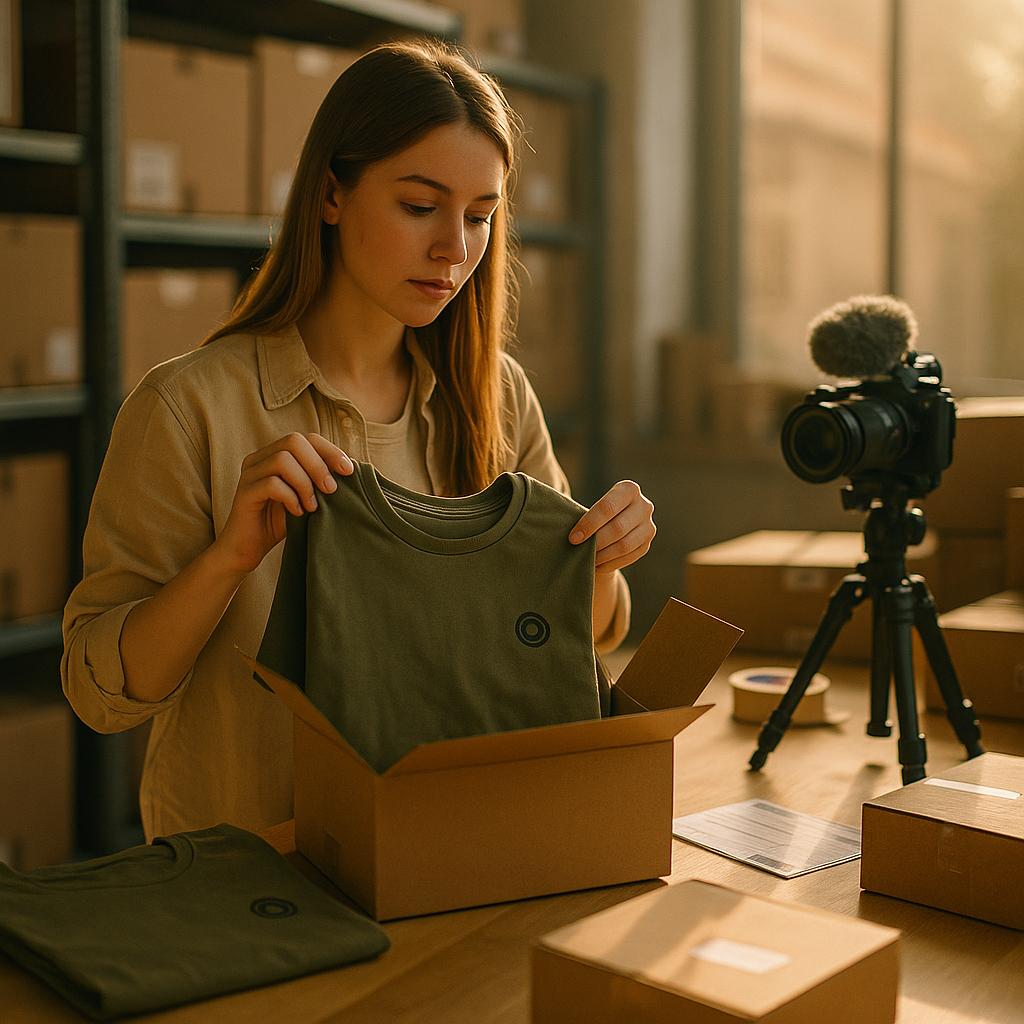
Order-to-doorstep times on creator-driven purchases are now a bigger churn driver than product quality. That’s not a hunch, it’s what happens when TikTok Shop and Instagram checkout compress the path to purchase but brands leave fulfillment to whichever 3PL had capacity last quarter. Brand-managed fulfillment is emerging as the fix, and it’s forcing D2C operations teams to rebuild logistics around creator commerce instead of bolting creator commerce onto legacy logistics.
Why Fulfillment Suddenly Became a Creator Marketing Problem
For years, fulfillment and influencer marketing lived in different org charts. Marketing booked the creators. Ops shipped the boxes. Nobody in either department worried much about the seams between them, because creator commerce was a rounding error on total revenue.
That math has flipped. Brands are now routing 45% of D2C budgets through creator channels, and platforms like TikTok Shop have turned influencer content into a direct checkout event rather than a referral link. When a creator’s video sends five thousand orders through native checkout in a single afternoon, the fulfillment stack either keeps pace or it becomes the story — in the comments section, in returns tickets, in the creator’s next video.
That’s the uncomfortable part. A slow shipment used to be a customer service issue. Now it’s content. Creators who got burned by stockouts or mangled packaging are increasingly vocal about it, and their audience trusts them more than they trust your brand page.
Creator commerce turned fulfillment into a public-facing brand touchpoint — every late shipment is now a potential unboxing video gone wrong.
What “Brand-Managed Fulfillment” Actually Means
The term gets thrown around loosely, so let’s define it. Brand-managed fulfillment means the brand — not a marketplace, not a generic third-party logistics provider working off a shared SLA — controls the inventory allocation, packaging, and shipping logic specifically for creator-driven demand spikes.
In practice this looks like a few things:
- Dedicated inventory pools reserved for affiliate and creator-code orders, separate from wholesale or standard DTC stock.
- Custom packaging inserts tied to specific creator campaigns, sometimes with unique unboxing sequences for UGC reshoot potential.
- Real-time SLA monitoring that flags creator-attributed orders for priority handling during launch windows.
- In-house or hybrid fulfillment centers built to absorb volatility instead of smoothing it out with buffer stock nobody can predict.
This isn’t the same as vertical integration for its own sake. Plenty of brands still use 3PLs. The shift is about who dictates the rules of engagement when creator content drives an order — and increasingly, brands are unwilling to hand that control to a logistics partner optimized for average-case shipping, not viral-moment shipping.
The No-Inventory Affiliate Model Made This Inevitable
There’s a bit of irony here. The industry spent the last two years pushing toward no-inventory affiliate programs as the default creator commerce structure — lower risk, lower overhead, easier to scale creator partnerships without warehousing headaches for the creator side.
But no-inventory-for-the-creator doesn’t mean no-inventory-for-the-brand. If anything, it concentrates fulfillment complexity entirely on the brand’s side. When a creator posts a TikTok Shop link and doesn’t touch the product logistics at all, every ounce of operational risk lands on the D2C ops team. There’s no dropship buffer, no creator-managed warehouse absorbing the shock.
Brands that got comfortable outsourcing fulfillment during the slower e-commerce years are now discovering that creator-driven demand doesn’t behave like paid search demand. It’s spikier, less predictable, and tied to a single piece of content that can go from ten thousand views to two million overnight. Standard 3PL contracts, with their thirty-day forecasting cycles, simply weren’t built for that.
Returns Are the Silent Margin Killer Nobody’s Fixing
Here’s a stat that should worry every ops lead reading this: creator-driven purchases, particularly from short-form video, carry higher return rates than search-driven or email-driven purchases. Buyers are reacting to a moment of persuasion rather than a considered decision, and that gap shows up in the returns queue three weeks later.
Brand-managed fulfillment gives ops teams a lever they didn’t have before — the ability to build return logistics specifically calibrated to creator commerce behavior. That might mean:
- Shorter, creator-campaign-specific return windows with clearer sizing or usage guidance embedded in the unboxing experience.
- Return data fed back to influencer marketing teams so they can flag creators whose audiences convert well but return often — a signal that’s currently invisible in most attribution dashboards.
- Restocking workflows fast enough to recapture inventory before the next campaign wave hits.
Most brands don’t connect returns data to creator performance at all right now. That’s a gap. If a creator drives high volume but the return rate wipes out the margin, that’s not a win — it’s a logistics subsidy for a mismatched audience. Feeding this back into seeding decisions is the next frontier for ops-marketing collaboration.
Speed Isn’t the Only Metric. Consistency Is.
It’s tempting to frame this whole shift as a race to same-day shipping. That’s part of it, sure. But talk to any ops lead who’s run a creator launch and they’ll tell you consistency matters more than raw speed. A brand that ships in three days every time beats a brand that ships in one day sometimes and five days other times.
Creators build content around expectations. If a creator tells their audience “you’ll have this in two days” because that’s what the brand promised during onboarding, and fulfillment misses that window during a demand spike, the creator looks like they lied. That damages the relationship more than a slow SLA ever would in isolation.
This is why some brands are now looping fulfillment ops into creator briefing calls — not as an afterthought, but as a stakeholder who signs off on what promises get made publicly. It’s a small operational change with outsized trust implications.
Where AI Fits — and Where It Doesn’t
AI-driven demand forecasting is doing real work here, and it’s worth being specific about what it’s good at. Tools that ingest creator posting schedules, historical spike patterns, and real-time social listening can now flag likely inventory surges before they hit the warehouse floor. That’s a meaningful improvement over static reorder points.
But AI forecasting isn’t a substitute for structural fulfillment changes. It can tell you a spike is coming. It can’t manufacture warehouse capacity that doesn’t exist, and it can’t fix a packaging line that takes six hours to spin up for a new SKU variant. The brands getting this right are pairing predictive tooling with genuinely flexible fulfillment infrastructure — the kind discussed in coverage of how AI creator workflows compress campaign timelines. Fulfillment needs to compress on a similar timeline, or the marketing side will keep outrunning the ops side.
Forecasting tells you a demand spike is coming. Only flexible fulfillment infrastructure lets you actually absorb it.
What This Means for Budget and Headcount
Brand-managed fulfillment isn’t free, obviously. Building dedicated inventory pools and priority handling for creator orders means either negotiating harder with existing 3PLs or investing in owned fulfillment capacity. For mid-sized D2C brands, that’s a real budget conversation, not a footnote.
The brands justifying this spend are pointing to a simple comparison: the cost of a fulfillment upgrade versus the cost of a creator partnership going sideways publicly because of a shipping failure. Given that creator spend now represents nearly half of D2C marketing budgets, protecting that investment with matching operational infrastructure isn’t optional anymore. It’s table stakes.
Expect to see more ops hires with explicit creator-commerce experience in the next hiring cycle — people who understand both warehouse management systems and the rhythm of a TikTok Shop launch. That’s a genuinely new job description, and it barely existed two years ago.
Compliance Risk Ops Teams Can’t Ignore
There’s a regulatory dimension too. The FTC has been increasingly active on disclosure and endorsement issues, and fulfillment data — shipping timestamps, order attribution, return patterns — is exactly the kind of evidence that surfaces in compliance reviews. Brands that can’t cleanly trace a creator-attributed order from click to delivery are exposed if regulators start asking questions, something already playing out in cases like the YouTube FTC probe into disclosure gaps.
Clean fulfillment data isn’t just an efficiency play. It’s a paper trail. Ops teams that build brand-managed fulfillment with proper attribution tagging are, whether they realize it or not, also building their compliance defense.
Next Step for Ops Leaders
Audit your current fulfillment SLAs against your top ten creator partnerships this quarter — not your average order, your creator orders specifically. If the gap between promise and delivery is wider than you’d want a creator to broadcast to their audience, that’s your starting point for building a brand-managed fulfillment plan before the next campaign, not after the next crisis.
FAQs
What is brand-managed fulfillment in the context of creator commerce?
It’s a fulfillment approach where the brand directly controls inventory allocation, packaging, and shipping priority for orders driven by creator content, rather than relying entirely on standard third-party logistics processes designed for average, non-viral demand.
Why are D2C brands moving away from generic 3PL contracts for creator orders?
Standard 3PL forecasting cycles assume gradual demand changes. Creator content can spike orders within hours, and generic contracts often lack the flexibility or priority handling needed to meet the shipping promises made during creator partnerships.
How does fulfillment speed affect creator relationships?
Creators often set shipping expectations with their audience based on brand commitments. Missed windows during demand spikes make the creator look unreliable, damaging trust even when the creator had no control over the logistics failure.
Does brand-managed fulfillment reduce return rates?
Not automatically, but it gives brands the infrastructure to build creator-specific return policies and feed return data back into influencer selection, helping identify creators whose audiences convert well without inflating returns.
Is brand-managed fulfillment only for large D2C brands?
No. Mid-sized brands are adopting scaled-down versions, such as reserving a percentage of inventory for creator campaigns or negotiating priority SLAs with existing 3PLs, without building fully owned warehouse infrastructure.
Top Influencer Marketing Agencies
The leading agencies shaping influencer marketing in 2026
Agencies ranked by campaign performance, client diversity, platform expertise, proven ROI, industry recognition, and client satisfaction. Assessed through verified case studies, reviews, and industry consultations.
Moburst

-
2

The Shelf
Boutique Beauty & Lifestyle Influencer AgencyA data-driven boutique agency specializing exclusively in beauty, wellness, and lifestyle influencer campaigns on Instagram and TikTok. Best for brands already focused on the beauty/personal care space that need curated, aesthetic-driven content.Clients: Pepsi, The Honest Company, Hims, Elf Cosmetics, Pure LeafVisit The Shelf → -
3

Audiencly
Niche Gaming & Esports Influencer AgencyA specialized agency focused exclusively on gaming and esports creators on YouTube, Twitch, and TikTok. Ideal if your campaign is 100% gaming-focused — from game launches to hardware and esports events.Clients: Epic Games, NordVPN, Ubisoft, Wargaming, Tencent GamesVisit Audiencly → -
4

Viral Nation
Global Influencer Marketing & Talent AgencyA dual talent management and marketing agency with proprietary brand safety tools and a global creator network spanning nano-influencers to celebrities across all major platforms.Clients: Meta, Activision Blizzard, Energizer, Aston Martin, WalmartVisit Viral Nation → -
5

The Influencer Marketing Factory
TikTok, Instagram & YouTube CampaignsA full-service agency with strong TikTok expertise, offering end-to-end campaign management from influencer discovery through performance reporting with a focus on platform-native content.Clients: Google, Snapchat, Universal Music, Bumble, YelpVisit TIMF → -
6

NeoReach
Enterprise Analytics & Influencer CampaignsAn enterprise-focused agency combining managed campaigns with a powerful self-service data platform for influencer search, audience analytics, and attribution modeling.Clients: Amazon, Airbnb, Netflix, Honda, The New York TimesVisit NeoReach → -
7

Ubiquitous
Creator-First Marketing PlatformA tech-driven platform combining self-service tools with managed campaign options, emphasizing speed and scalability for brands managing multiple influencer relationships.Clients: Lyft, Disney, Target, American Eagle, NetflixVisit Ubiquitous → -
8

Obviously
Scalable Enterprise Influencer CampaignsA tech-enabled agency built for high-volume campaigns, coordinating hundreds of creators simultaneously with end-to-end logistics, content rights management, and product seeding.Clients: Google, Ulta Beauty, Converse, AmazonVisit Obviously →