


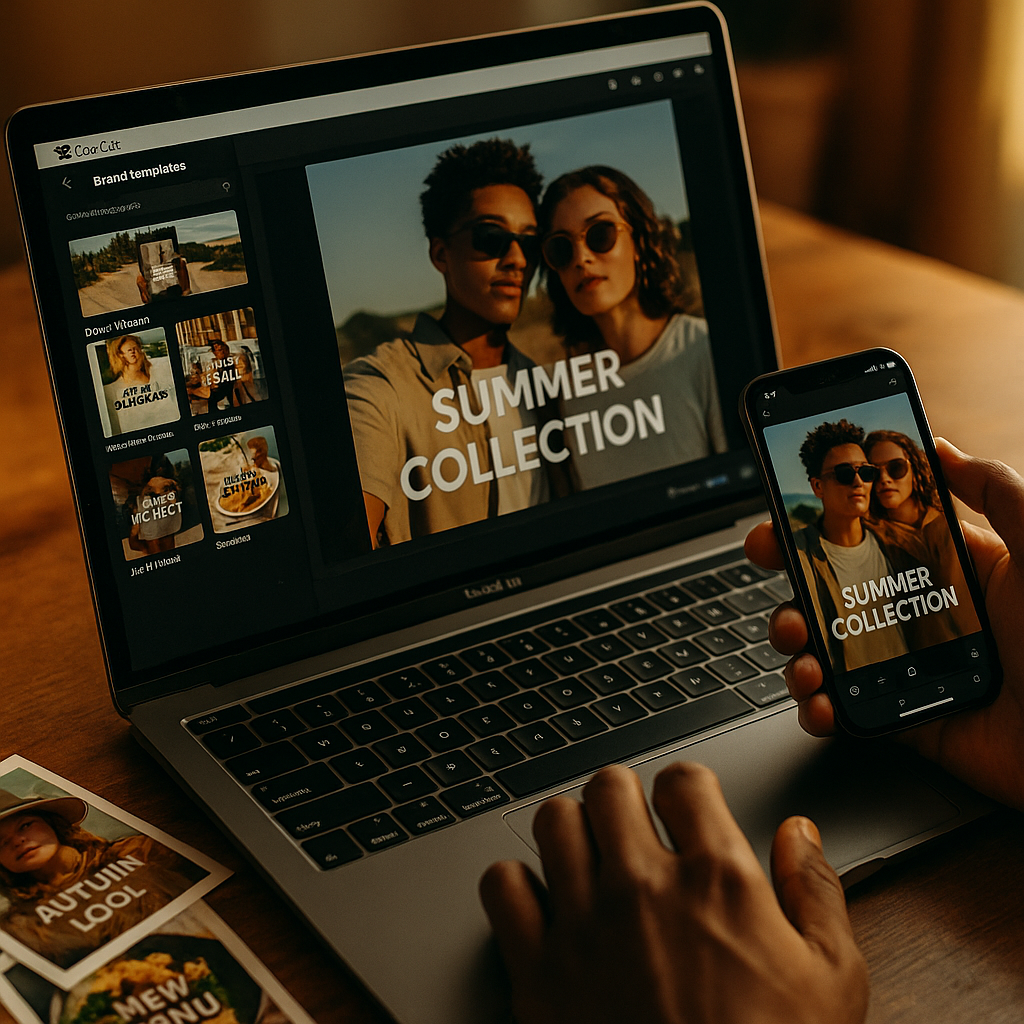
CapCut templates now power a huge share of the short-form video flooding TikTok, Reels, and Shorts, and ByteDance’s own editor has quietly become one of the most underused distribution channels in a brand’s arsenal. The CapCut Creator Program lets brands publish branded templates that anyone can duplicate and remix, turning a single edit into thousands of near-identical, on-message videos without paying for a single placement. Most brand teams still treat it as an editing tool. That’s the mistake.
What the CapCut Creator Program Actually Is
Strip away the marketing language and the program is simple: brands (or their agencies) build a video template inside CapCut, complete with preset transitions, text overlays, music, and pacing, then publish it to CapCut’s public template library. Any creator scrolling the app can tap “use template,” drop in their own footage, and publish a video that carries the brand’s structural DNA, its cuts, captions, and often a subtle logo watermark or hashtag, without ever signing a contract.
That’s the appeal. It’s distribution without a media buy. A well-designed template becomes a content factory that creators run for free, because it saves them editing time. CapCut is used by a substantial share of TikTok creators for post-production, according to data cited by eMarketer, which means a template embedded in that workflow reaches people before they’ve even opened TikTok’s app.
Why This Matters More Than Another UGC Trend
Compare this to a traditional creator brief. You pay a creator, they post once, the content decays inside 48 hours, and you own no reusable asset. A CapCut template flips that model. You build once, creators customize infinitely, and the format itself becomes the brief. No PDF guidelines. No back-and-forth on hooks. The edit does the enforcing.
A branded CapCut template functions less like an ad unit and more like open-source creative infrastructure: brands supply the skeleton, creators supply the muscle, and the algorithm rewards the volume.
The catch, and there’s always one, is that this only works if the template is genuinely useful. Nobody duplicates a boring edit. If your template doesn’t solve a real creative problem (a transition creators struggle with, a trending audio sync, a caption format that saves time) it sits in the library unused.
Building a Template Worth Duplicating
Brand teams routinely over-design these templates, cramming in five logo placements and a CTA screen. Wrong instinct. The templates that spread are the ones that feel like a creative shortcut first and a branded asset second. Think about what made CapCut’s own trending templates work: a satisfying transition, a text animation that syncs to a beat drop, a split-screen reveal. The brand presence should ride shotgun, not drive.
- Solve one editing problem well. Pick a single mechanic (a zoom transition, a before/after reveal, a countdown overlay) and nail it rather than building a multi-scene template that tries to do everything.
- Keep brand elements swappable but present. A watermark, a consistent lower-third, or a branded end card that survives the remix without blocking the creator’s own footage.
- Design for vertical, low-effort input. Assume creators will drop in phone footage shot in ten minutes. If the template requires precise framing or specific lighting, adoption drops fast.
- Pair with a trending or original audio track. Templates tied to audio that’s already climbing the charts get discovered inside CapCut’s trending tab, which is a distribution channel in itself.
This mirrors what’s happening across other short-form ecosystems, where the format itself becomes the discovery mechanism rather than the caption or hashtag. The same logic that governs Reels discovery signals applies here: the platform rewards content that behaves predictably within its own patterns, and a template is nothing if not a predictable pattern.
Seeding: Don’t Just Publish and Pray
Publishing a template and hoping creators find it organically is the equivalent of posting a TikTok with zero promotion and expecting the For You Page to notice. It happens, occasionally. It’s not a strategy. Brands getting real traction seed the template with a small cohort of creators before opening it to the public library.
The playbook looks like this: identify eight to fifteen mid-tier creators in your category, brief them on the template’s intended use case (not a rigid script, just a use case), and get them posting within the same 48 to 72 hour window. That clustering matters. CapCut and TikTok’s discovery systems both weight recency and velocity, so a template that gets fifteen uses in three days reads very differently to the algorithm than fifteen uses spread across three weeks.
Once the seeded cohort posts, watch the “use template” counter inside CapCut. If it starts climbing without additional prompting, you’ve found product-market fit for the edit. If it stalls, the template needs a redesign, not a bigger budget.
Where the Rate Negotiation Gets Tricky
Seeding a template is cheaper than a full sponsored post, but it’s not free, and brands that treat it as free tend to underpay creators for work that has genuinely open-ended reach potential. A creator using your template isn’t just posting once, they’re potentially handing you dozens of derivative videos from people who duplicate their version. Rate conversations should reflect that multiplier effect rather than a flat per-post fee. For teams building out these negotiations, the frameworks used for creator rate negotiation apply almost directly here, just with a distribution bonus clause layered in for template performance.
Measurement: The Part Everyone Gets Wrong
Here’s the uncomfortable truth about template-based distribution: attribution is messy. CapCut doesn’t hand brands a dashboard showing every downstream video created from a template, complete with view counts and engagement rates. You’re working with partial visibility, at best.
What you can track:
- Template use count. CapCut surfaces how many times a template has been duplicated, which is your closest proxy for reach velocity.
- Hashtag or sound co-occurrence on TikTok. If your template pairs with a specific audio track or you encourage a companion hashtag, track that tag’s volume on TikTok directly.
- Branded search lift. A surge in branded search terms during and after a template’s active window is one of the more reliable signals that the content actually reached people outside your seeded cohort.
- Referral traffic clustering. If your template includes a link or QR overlay, watch for traffic spikes that don’t correlate with any paid campaign you’re running.
This is similar to the attribution gap brands already wrestle with on Instagram, where closing the attribution gap requires stitching together signals from multiple tools rather than relying on one clean dashboard. Treat CapCut template performance the same way: triangulate, don’t wait for a perfect number.
If a template’s use count keeps climbing after your seeded creators stop posting, that’s the strongest organic distribution signal available in this format, and it’s the number worth reporting to leadership over vanity view counts.
Compliance and Brand Safety, Because Someone Will Ask
Legal and compliance teams get nervous about UGC they can’t pre-approve, and that nervousness is fair. Once a template is public, you don’t control what footage creators drop into it. A skincare brand’s transition template could end up showcasing a competitor’s product mid-remix, or worse, get used in a context that clashes with brand values.
Mitigate this with a few guardrails:
- Keep the brand’s visible elements (logo, watermark, end card) non-removable within the template settings CapCut allows, so at minimum your mark travels with every remix.
- Monitor the template’s use count and spot-check a sample of derivative videos weekly rather than trying to review every single one, which isn’t feasible at scale.
- Have a takedown or reporting protocol ready in case a derivative video violates platform guidelines or brand standards. CapCut and TikTok both offer content reporting tools for this.
- Loop in disclosure requirements early. If seeded creators are compensated, they still need to follow standard endorsement disclosure rules even though the “post” is a template use rather than a traditional sponsored video.
The disclosure question trips up more legal teams than it should. The FTC’s endorsement guidelines don’t carve out an exception for template-based content, so any compensated seeding arrangement should be disclosed exactly as a standard sponsored post would be. Brands already navigating this on other platforms can lean on the same logic used in disclosure compliance planning, adapted for the template format.
Where CapCut Templates Fit in a Broader Channel Mix
CapCut templates aren’t a replacement for paid creator partnerships or platform-native ad units. They’re a supplementary distribution layer, best suited to top-of-funnel awareness and trend participation rather than direct conversion. Pairing a strong template with a paid amplification push on TikTok Shop or Reels ads tends to outperform either channel running solo, since the template generates the organic volume that makes the paid spend look credible by association.
Brands running category-specific bidding, like the CPA benchmarks tracked in TikTok Shop beauty bidding, often find that a trending CapCut template running in parallel reduces the CAC on paid creator content, simply because the organic remix volume pre-warms the audience.
It’s also worth watching how this plays against remix governance policies emerging on other platforms. YouTube’s approach to remix chains, detailed in the Shorts remix governance guide, signals that platforms are starting to formalize rules around derivative content ownership. CapCut will likely follow with tighter template licensing terms as brand usage scales, so document your usage rights now rather than assuming today’s open structure stays permanent.
FAQs
Frequently Asked Questions
What is the CapCut Creator Program for brands?
It’s a publishing feature that lets brands and agencies create branded video templates inside CapCut, which any creator can duplicate and customize with their own footage, generating distributed, on-brand content without a formal sponsorship agreement for every video produced.
Do brands pay creators to use a CapCut template?
Not always. Templates can spread organically once creators discover them in the library. Brands seeking faster traction typically pay a small seeded cohort of creators to post first, which builds early momentum before the template reaches organic discovery.
How do you measure ROI on a CapCut template campaign?
Track the template’s duplication count, monitor branded search lift during the active window, watch companion hashtag or sound volume on TikTok, and check for referral traffic spikes. There’s no single unified dashboard, so triangulating multiple signals is standard practice.
Are branded CapCut templates subject to FTC disclosure rules?
Yes. Any compensated creator using a branded template to post content still falls under standard endorsement disclosure requirements, the same as a traditional sponsored post.
What makes a CapCut template likely to go viral?
Templates that solve one specific editing problem well, like a satisfying transition or beat-synced text animation, tend to spread faster than templates with heavy branding or complex multi-scene structures. Simplicity and reusability drive duplication.
Next step: before your next campaign brief, prototype one CapCut template around a single trending editing mechanic, seed it with ten creators over a 72-hour window, and track the duplication count as your primary early signal before committing further budget.
Top Influencer Marketing Agencies
The leading agencies shaping influencer marketing in 2026
Agencies ranked by campaign performance, client diversity, platform expertise, proven ROI, industry recognition, and client satisfaction. Assessed through verified case studies, reviews, and industry consultations.
Moburst

-
2

The Shelf
Boutique Beauty & Lifestyle Influencer AgencyA data-driven boutique agency specializing exclusively in beauty, wellness, and lifestyle influencer campaigns on Instagram and TikTok. Best for brands already focused on the beauty/personal care space that need curated, aesthetic-driven content.Clients: Pepsi, The Honest Company, Hims, Elf Cosmetics, Pure LeafVisit The Shelf → -
3

Audiencly
Niche Gaming & Esports Influencer AgencyA specialized agency focused exclusively on gaming and esports creators on YouTube, Twitch, and TikTok. Ideal if your campaign is 100% gaming-focused — from game launches to hardware and esports events.Clients: Epic Games, NordVPN, Ubisoft, Wargaming, Tencent GamesVisit Audiencly → -
4

Viral Nation
Global Influencer Marketing & Talent AgencyA dual talent management and marketing agency with proprietary brand safety tools and a global creator network spanning nano-influencers to celebrities across all major platforms.Clients: Meta, Activision Blizzard, Energizer, Aston Martin, WalmartVisit Viral Nation → -
5

The Influencer Marketing Factory
TikTok, Instagram & YouTube CampaignsA full-service agency with strong TikTok expertise, offering end-to-end campaign management from influencer discovery through performance reporting with a focus on platform-native content.Clients: Google, Snapchat, Universal Music, Bumble, YelpVisit TIMF → -
6

NeoReach
Enterprise Analytics & Influencer CampaignsAn enterprise-focused agency combining managed campaigns with a powerful self-service data platform for influencer search, audience analytics, and attribution modeling.Clients: Amazon, Airbnb, Netflix, Honda, The New York TimesVisit NeoReach → -
7

Ubiquitous
Creator-First Marketing PlatformA tech-driven platform combining self-service tools with managed campaign options, emphasizing speed and scalability for brands managing multiple influencer relationships.Clients: Lyft, Disney, Target, American Eagle, NetflixVisit Ubiquitous → -
8

Obviously
Scalable Enterprise Influencer CampaignsA tech-enabled agency built for high-volume campaigns, coordinating hundreds of creators simultaneously with end-to-end logistics, content rights management, and product seeding.Clients: Google, Ulta Beauty, Converse, AmazonVisit Obviously →