


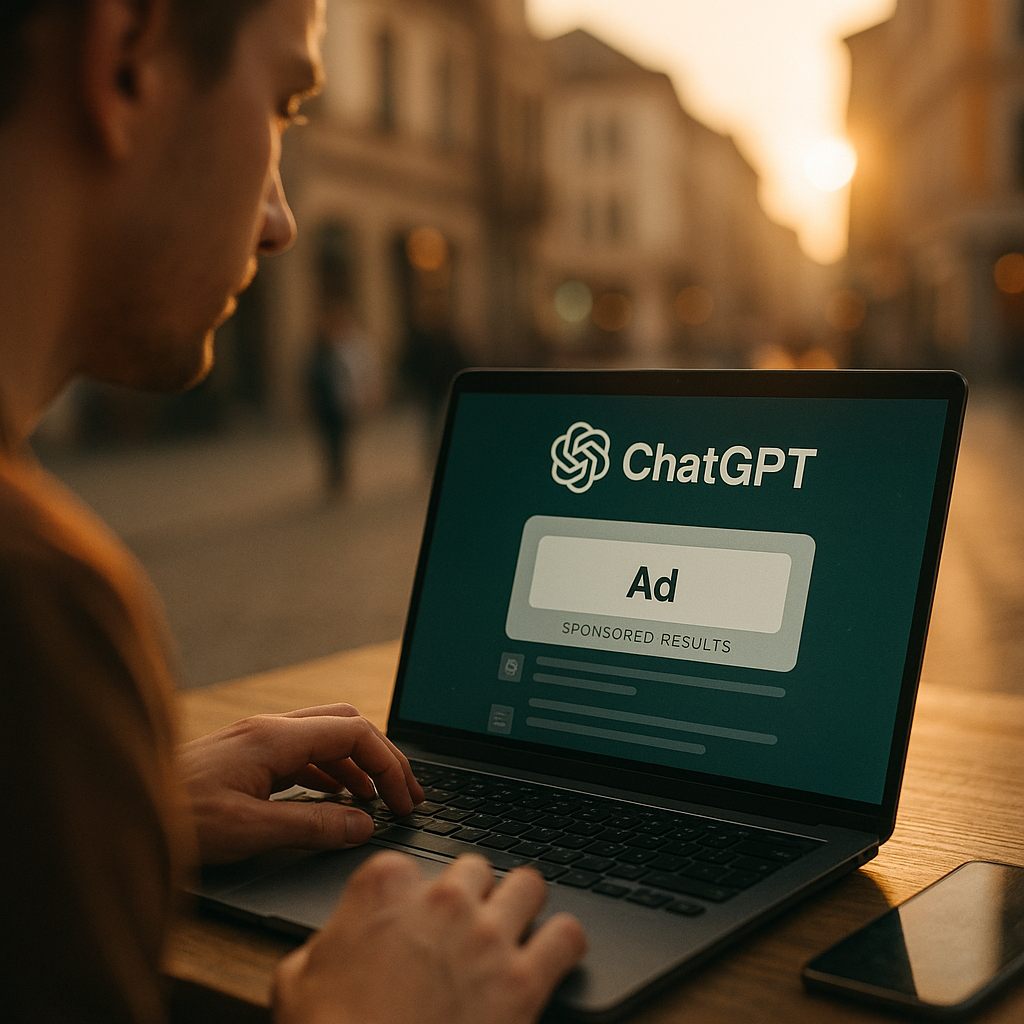
Only 18% of European marketers say they have a formal plan for AI chat ad placements, according to recent eMarketer surveys on generative AI adoption. Yet OpenAI just opened new offices across the continent and is quietly testing commercial placements inside ChatGPT. If your creator content strategy still assumes search engines and social feeds are the only game in town, you’re already behind. ChatGPT ad placements are coming to Europe, and the brands that prepare their creator assets now will have a real head start.
Why Europe Changes the Calculus
OpenAI’s push into Europe isn’t just a headcount story. It’s a regulatory one. GDPR, the Digital Services Act, and the EU AI Act all apply to how conversational AI platforms handle personal data, ad targeting, and content provenance. That means any ChatGPT ad product launched in the EU will look different from a US-first rollout, with stricter consent flows and more explicit labeling requirements baked in from day one.
For brands, this is actually good news. It forces clarity earlier. You won’t be guessing what disclosure standards apply months after launch, because European regulators will have already pushed OpenAI toward transparent defaults. Compare that to the messier early days of influencer disclosure on Instagram and YouTube, where the FTC had to chase compliance after the fact. Europe’s ICO tends to move earlier, and OpenAI knows it.
Still, “earlier regulation” doesn’t mean “simple.” It means brands need creator content that’s structured, sourced, and disclosed well enough to survive scrutiny in multiple jurisdictions at once.
What ChatGPT Ad Placements Will Actually Look Like
Nobody outside OpenAI knows the exact ad unit yet, but the pilot signals so far point to a few likely formats: sponsored product mentions inside conversational answers, branded shopping links surfaced during comparison queries, and possibly creator-attributed content cited as a source within a response. That last one matters most for this piece.
If ChatGPT starts pulling from creator reviews, tutorials, or comparison content to generate answers, and then attaches a commercial layer to that response, the creator content itself becomes ad inventory. Not in the traditional sense of a paid post, but as the underlying material an AI model references and potentially monetizes. We covered the early mechanics of this in how brands should test ChatGPT ad placements, and the European rollout only sharpens the urgency.
The creator content you published six months ago for TikTok or YouTube might now be raw material for an AI-generated answer that includes your brand, whether you planned for that or not.
Auditing Your Existing Creator Library
Before you brief a single new creator, look at what you already have. Most brands are sitting on years of unstructured content: product reviews, unboxings, comparison videos, tutorial threads. None of it was built with AI retrieval in mind.
Start with an audit that asks three questions:
- Is the factual claim in this content still accurate? (Pricing, specs, availability change fast, and AI models don’t always know that.)
- Does the content include clear, machine-readable disclosure language, not just a buried hashtag?
- Is the creator’s usage rights agreement broad enough to cover AI referencing and citation, or does it only mention “social media” and “paid media” placements?
That last point trips up more legal teams than you’d expect. Contracts written in 2023 or earlier almost never anticipated a large language model quoting a creator’s script inside a chat response. If your usage rights language is narrow, you may not legally be able to let ChatGPT surface that content commercially, even if OpenAI’s system pulls it anyway from public web indexing.
Rewriting Creator Briefs for AI Retrieval
Going forward, creator briefs need a new section entirely: AI discoverability and disclosure. That means asking creators to state claims plainly (AI models tend to reward clear, structured language over vague marketing speak), avoid ambiguous sponsorship phrasing, and include disclosure text that reads clearly even when stripped of visual context like a video overlay or platform badge.
Think about it this way: a human viewer sees the “Paid Partnership” tag on a TikTok video. An AI model summarizing that video’s transcript might not “see” the tag at all if it’s only rendered as an on-screen graphic. Disclosure needs to live in the spoken or written content itself, not just the platform metadata.
The Compliance Layer You Can’t Skip
This is where a lot of marketing teams will get tripped up, and it’s worth being blunt about it. If OpenAI’s European ad product treats creator-sourced content as citable material within paid or sponsored responses, disclosure rules under both FTC guidance and EU consumer protection law will likely apply, even though the “ad” itself never appears on the creator’s own channel.
We broke down the specific compliance mechanics in our OpenAI creator content compliance guide, and the short version is this: assume dual jurisdiction. Assume any content that could plausibly get pulled into a ChatGPT response needs to meet the stricter of the two regimes, US or EU, not the more lenient one.
Practically, that means:
- Building a disclosure checklist that satisfies both FTC “clear and conspicuous” standards and the EU’s transparency requirements under the Digital Services Act.
- Keeping a centralized record of creator contracts with explicit AI usage clauses, refreshed for any active or evergreen campaign.
- Flagging content older than 12 months for a compliance re-review before it’s fed into any AI training or retrieval pipeline your brand controls (owned blogs, product pages, brand-hosted creator content).
Measurement Gets Murkier Before It Gets Better
Here’s the uncomfortable truth nobody’s fully solved yet: attribution inside a conversational AI ad unit is going to be harder to track than a TikTok click or a YouTube view. There’s no obvious click-through funnel, no pixel firing in the way marketers are used to. If ChatGPT surfaces a creator’s product comparison and a user takes action based on that response, how do you credit the original creator, let alone measure ROI against a media spend line?
Expect early European pilots to rely heavily on self-reported attribution and post-purchase surveys, similar to how brands handled early podcast advertising before dynamic ad insertion existed. It’s not elegant, but it’s a starting point.
In the meantime, treat AI-referenced creator content the way you’d treat SEO content: optimize for long-term discoverability and accuracy rather than immediate campaign metrics. That mindset shift matters more than any single tactic. It’s a similar logic to what we’ve seen play out with creator content built for search intent on TikTok, where the content had to work for both algorithmic discovery and human decision-making at once.
A Practical Prep Checklist for the Next Quarter
You don’t need to overhaul your entire creator program before OpenAI finalizes European ad specs. But a few moves now will save you a scramble later.
- Audit your top 20 highest-performing creator assets for factual accuracy and disclosure clarity.
- Update creator contract templates to explicitly address AI referencing, citation, and retrieval rights.
- Build a lightweight internal glossary of disclosure phrasing that satisfies both US and EU standards, so legal and creative teams aren’t reinventing it per campaign.
- Assign one team member to monitor OpenAI’s European ad product announcements directly, rather than relying on secondhand trade coverage.
- Pilot a small batch of new creator content specifically written with clear, structured claims that would hold up if quoted verbatim by an AI model.
Some of this overlaps with retention and owned-channel thinking we’ve flagged elsewhere, like the underused potential of owned creator retention channels. The common thread: content built to be durable, clear, and reusable across surfaces outperforms content built for a single platform moment. That principle only gets more important as AI systems become another distribution layer creators have to account for.
Don’t Wait for the Official Ad Spec
One more thing worth saying plainly: brands that wait for OpenAI to publish a finished European ad rate card before acting will be months behind competitors who started auditing content and contracts now. The same pattern played out with early creator monetization negotiations on X, where brands that moved early on unclear terms locked in better positioning than those who waited for full clarity.
AI ad platforms rarely launch with perfect documentation. OpenAI’s own marketing technology adoption data patterns, echoed across the industry, suggest early movers on new ad surfaces consistently capture disproportionate share of voice before costs rise and competition catches up.
Next step: pull your five most-cited creator assets this week, run them through the accuracy and disclosure checklist above, and flag any contracts missing AI usage language before OpenAI’s European ad product goes live. The prep work is unglamorous, but it’s the difference between being ready and scrambling.
FAQs
What are ChatGPT ad placements?
ChatGPT ad placements refer to sponsored or commercial content that OpenAI is testing within conversational responses, which may include product mentions, shopping links, or citations of creator-sourced content as part of an AI-generated answer.
Why does OpenAI’s European expansion matter for creator marketing?
Europe’s stricter data privacy and consumer protection laws, including GDPR and the Digital Security Act, mean any ChatGPT ad product launched there will likely require clearer disclosure and consent standards, which affects how creator content can be used or referenced.
Do existing creator contracts cover AI usage rights?
Most contracts written before AI retrieval became a factor only address social media or paid media usage, not AI citation or referencing. Brands should review and update contract language to explicitly cover this scenario.
How should brands disclose AI-referenced creator content?
Disclosure language should be embedded directly in the spoken or written content itself, not just in visual platform tags, since AI models summarizing transcripts may not register on-screen disclosure graphics.
Can brands measure ROI from ChatGPT ad placements?
Attribution is still immature. Early measurement will likely rely on self-reported data and post-purchase surveys rather than direct click tracking, similar to early podcast advertising models.
Top Influencer Marketing Agencies
The leading agencies shaping influencer marketing in 2026
Agencies ranked by campaign performance, client diversity, platform expertise, proven ROI, industry recognition, and client satisfaction. Assessed through verified case studies, reviews, and industry consultations.
Moburst

-
2

The Shelf
Boutique Beauty & Lifestyle Influencer AgencyA data-driven boutique agency specializing exclusively in beauty, wellness, and lifestyle influencer campaigns on Instagram and TikTok. Best for brands already focused on the beauty/personal care space that need curated, aesthetic-driven content.Clients: Pepsi, The Honest Company, Hims, Elf Cosmetics, Pure LeafVisit The Shelf → -
3

Audiencly
Niche Gaming & Esports Influencer AgencyA specialized agency focused exclusively on gaming and esports creators on YouTube, Twitch, and TikTok. Ideal if your campaign is 100% gaming-focused — from game launches to hardware and esports events.Clients: Epic Games, NordVPN, Ubisoft, Wargaming, Tencent GamesVisit Audiencly → -
4

Viral Nation
Global Influencer Marketing & Talent AgencyA dual talent management and marketing agency with proprietary brand safety tools and a global creator network spanning nano-influencers to celebrities across all major platforms.Clients: Meta, Activision Blizzard, Energizer, Aston Martin, WalmartVisit Viral Nation → -
5

The Influencer Marketing Factory
TikTok, Instagram & YouTube CampaignsA full-service agency with strong TikTok expertise, offering end-to-end campaign management from influencer discovery through performance reporting with a focus on platform-native content.Clients: Google, Snapchat, Universal Music, Bumble, YelpVisit TIMF → -
6

NeoReach
Enterprise Analytics & Influencer CampaignsAn enterprise-focused agency combining managed campaigns with a powerful self-service data platform for influencer search, audience analytics, and attribution modeling.Clients: Amazon, Airbnb, Netflix, Honda, The New York TimesVisit NeoReach → -
7

Ubiquitous
Creator-First Marketing PlatformA tech-driven platform combining self-service tools with managed campaign options, emphasizing speed and scalability for brands managing multiple influencer relationships.Clients: Lyft, Disney, Target, American Eagle, NetflixVisit Ubiquitous → -
8

Obviously
Scalable Enterprise Influencer CampaignsA tech-enabled agency built for high-volume campaigns, coordinating hundreds of creators simultaneously with end-to-end logistics, content rights management, and product seeding.Clients: Google, Ulta Beauty, Converse, AmazonVisit Obviously →