


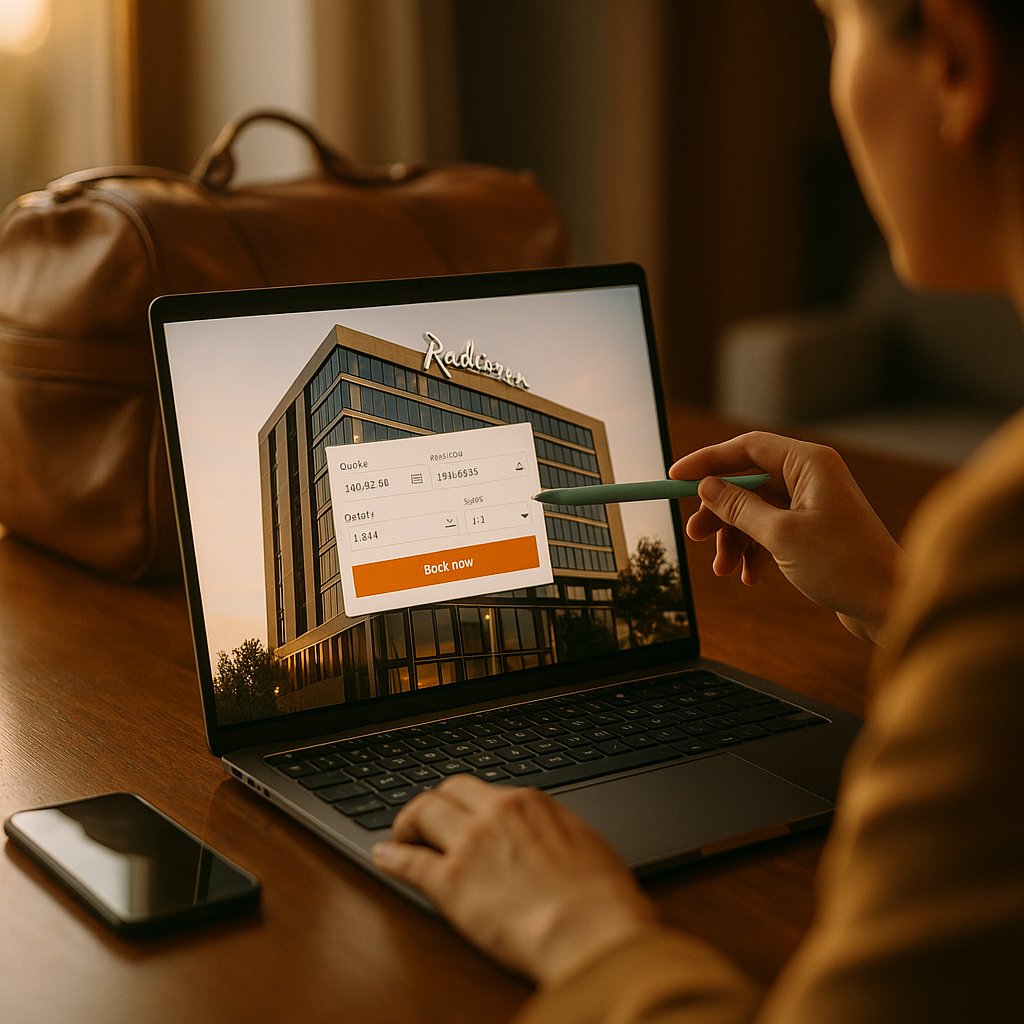
What if your best booking engine wasn’t your website, but your guests’ phones? Radisson’s Creator Hub has quietly turned ordinary travelers into a content supply chain, and the direct booking numbers are hard to ignore. This isn’t influencer marketing in the traditional sense. It’s a structural bet that real people, not polished campaigns, sell rooms better.
What Is the Creator Hub, Exactly?
Radisson’s Creator Hub is a program that recruits actual hotel guests, not professional influencers, to produce short-form video and photo content in exchange for perks like room credits, upgrades, or small stipends. Think of it as a structured UGC pipeline with an approval workflow, rights management, and a distribution plan baked in from day one.
The mechanics matter here. Guests opt in during or after their stay, get a simple content brief (nothing overly scripted), and submit clips through a branded portal. Radisson’s team reviews, licenses, and redistributes the best material across owned channels, paid social, and even OTA listing pages where permitted. We covered the recruitment mechanics in detail in how Radisson sources nano creators, and the operational build-out in how one platform powers multiple creator programs.
The Direct Booking Problem OTAs Created
Hotel brands have spent a decade fighting a losing battle against Expedia, Booking.com, and their double-digit commission structures. Every booking routed through an OTA is a guest relationship the hotel never fully owns, and a margin hit that compounds across a global portfolio.
Radisson’s answer wasn’t another loyalty point scheme. It was content that makes the brand’s own site the obvious place to book, because the proof of a great stay is coming from someone who looks like the person searching, not a stock photo of a suspiciously empty infinity pool.
Authentic guest content converted at a materially higher rate on Radisson’s owned booking pages than professionally shot hero imagery, according to internal performance data cited in the brand’s own reporting.
That’s the entire thesis. If consumer trust in branded advertising keeps eroding, then the fix is sourcing content from the people booking rooms, not the agencies shooting campaigns.
From Guest to Creator: How the Program Actually Works
Recruitment happens at multiple touchpoints: post-stay email prompts, front desk QR codes, and in-app nudges during checkout. Radisson isn’t chasing follower counts. A guest with 400 Instagram followers who posts a genuinely great video of the breakfast spread is more valuable to this program than a mid-tier influencer with a polished but generic hotel reel.
The brand’s related program, detailed in how nano-influencers cut OTA dependency, leans on this exact insight: scale beats celebrity when the goal is volume and authenticity rather than reach concentration in a handful of accounts.
- Guests submit raw or lightly edited clips through a mobile-first portal.
- Content gets tagged by property, room type, and travel occasion (business, family, leisure).
- Approved assets are licensed for a defined period and distributed across paid and owned channels.
- Top performers get invited back into a recurring creator pool with better perks.
This is nano-creator marketing without the influencer marketplace fees, and it’s a model other hospitality brands are now studying closely.
The Numbers That Matter to Finance, Not Just Marketing
Direct booking share is the metric that actually moves the P&L, and it’s the one Radisson’s leadership reportedly tracks against Creator Hub content exposure. Properties running heavier rotations of guest-generated content on their booking pages have shown a meaningful lift in direct-channel conversion relative to properties still leaning on stock and studio imagery.
Cost per acquisition tells a similar story. Sourcing content from guests who are already paying customers is dramatically cheaper than commissioning agency shoots or paying macro-influencer day rates. The deeper ROI breakdown, including how stay-level attribution stacks up against OTA fee structures, is covered in Radisson’s stay-level ROI analysis.
Volume compounds the advantage. A single flagship property can generate hundreds of usable clips per quarter from guest submissions alone, a content velocity no in-house studio budget could match. That’s the same logic driving programmatic creator matching in other verticals, like the approach detailed in how Chipotle scaled creator tiers programmatically.
Why “Real People” Content Wins Over Polish
There’s a psychological reason this works, and it’s not complicated. Travelers booking a hotel aren’t evaluating architecture, they’re evaluating whether the stay will feel good. A shaky, handheld clip of a real guest enjoying the rooftop bar signals “this is what it’s actually like” in a way a drone shot never can.
Platforms have quietly rewarded this shift too. Social platform algorithm trends increasingly favor native-feeling video over produced content, which means Creator Hub submissions often outperform paid campaign assets on organic reach alone, before Radisson spends a dollar boosting them.
Other brands have run the same playbook with different products. ASOS proved it with try-on hauls that cut return rates through real fit content, and grocery retailers have used nano creators to beat national CPG cost-per-sale benchmarks. Hospitality is just late to the realization that unpolished wins.
Compliance and Rights: The Part Everyone Underestimates
Here’s where a lot of brands trip. Recruiting guests as creators means you’re now managing content rights, disclosure obligations, and usage terms at a scale most legal teams weren’t built for. Radisson’s portal handles this by requiring explicit licensing agreements at the point of submission, not after the fact.
Any brand running guest or nano-creator content at volume needs airtight rights management before scale, not after a viral moment forces the issue.
The FTC’s endorsement guidance still applies even when the “creator” is a paying customer rather than a professional influencer, particularly when compensation or free stays are involved. Brands that skip clear disclosure language are exposing themselves to the same risk Poppi faced, a cautionary tale covered in how Poppi rebuilt trust after its FTC settlement. Rights clearance at scale isn’t glamorous, but it’s the operational backbone that lets a program like this survive legal scrutiny. Engen’s approach to UGC licensing, outlined in how one platform fixed UGC rights at scale, is worth studying for any brand building a similar pipeline.
What Brands Outside Hospitality Should Steal
You don’t need a hotel chain to apply this model. Any brand with a physical customer touchpoint, retail, restaurants, events, has a built-in creator pool it’s not tapping. The framework is transferable: identify the touchpoint, make submission frictionless, license clearly, and distribute where it converts.
Track the metric that matters to your business, not vanity engagement. For Radisson, that’s direct booking share. For a DTC brand, it might be repeat purchase rate or cost per acquisition, the same discipline shown in how vetted creator networks cut DTC launch costs. The HubSpot benchmarks on content marketing ROI back up the broader point: relevance to purchase intent beats production value almost every time.
Radisson’s Creator Hub proves the case that scaled, real-guest content can outperform studio production on the metric that actually pays the bills: direct bookings. Brands sitting on customer touchpoints they haven’t activated should treat this as a blueprint, not an anomaly.
FAQs
What is Radisson’s Creator Hub?
It’s a program that recruits everyday hotel guests to produce short-form content in exchange for perks, then licenses and distributes that content to drive direct bookings and reduce reliance on OTA traffic.
How does the Creator Hub reduce OTA dependency?
By generating authentic content that improves conversion on Radisson’s own booking pages, the program strengthens the direct channel’s appeal relative to third-party sites that charge high commissions.
Do guests get paid to participate?
Most participants receive non-cash incentives such as room credits, upgrades, or small stipends rather than large cash payments, which keeps the program cost-efficient at scale.
Is this different from traditional influencer marketing?
Yes. Traditional influencer marketing targets accounts with existing reach. Creator Hub recruits actual paying guests regardless of follower count, prioritizing authenticity and volume over audience size.
How does Radisson handle content rights and legal compliance?
Guests agree to licensing terms at the point of submission, and the program applies disclosure practices aligned with FTC endorsement guidance to manage compensation-related transparency requirements.
Can other industries replicate this model?
Yes. Any brand with a physical or digital customer touchpoint, retail, restaurants, events, can apply the same framework: frictionless submission, clear licensing, and distribution tied to a core business metric.
Top Influencer Marketing Agencies
The leading agencies shaping influencer marketing in 2026
Agencies ranked by campaign performance, client diversity, platform expertise, proven ROI, industry recognition, and client satisfaction. Assessed through verified case studies, reviews, and industry consultations.
Moburst

-
2

The Shelf
Boutique Beauty & Lifestyle Influencer AgencyA data-driven boutique agency specializing exclusively in beauty, wellness, and lifestyle influencer campaigns on Instagram and TikTok. Best for brands already focused on the beauty/personal care space that need curated, aesthetic-driven content.Clients: Pepsi, The Honest Company, Hims, Elf Cosmetics, Pure LeafVisit The Shelf → -
3

Audiencly
Niche Gaming & Esports Influencer AgencyA specialized agency focused exclusively on gaming and esports creators on YouTube, Twitch, and TikTok. Ideal if your campaign is 100% gaming-focused — from game launches to hardware and esports events.Clients: Epic Games, NordVPN, Ubisoft, Wargaming, Tencent GamesVisit Audiencly → -
4

Viral Nation
Global Influencer Marketing & Talent AgencyA dual talent management and marketing agency with proprietary brand safety tools and a global creator network spanning nano-influencers to celebrities across all major platforms.Clients: Meta, Activision Blizzard, Energizer, Aston Martin, WalmartVisit Viral Nation → -
5

The Influencer Marketing Factory
TikTok, Instagram & YouTube CampaignsA full-service agency with strong TikTok expertise, offering end-to-end campaign management from influencer discovery through performance reporting with a focus on platform-native content.Clients: Google, Snapchat, Universal Music, Bumble, YelpVisit TIMF → -
6

NeoReach
Enterprise Analytics & Influencer CampaignsAn enterprise-focused agency combining managed campaigns with a powerful self-service data platform for influencer search, audience analytics, and attribution modeling.Clients: Amazon, Airbnb, Netflix, Honda, The New York TimesVisit NeoReach → -
7

Ubiquitous
Creator-First Marketing PlatformA tech-driven platform combining self-service tools with managed campaign options, emphasizing speed and scalability for brands managing multiple influencer relationships.Clients: Lyft, Disney, Target, American Eagle, NetflixVisit Ubiquitous → -
8

Obviously
Scalable Enterprise Influencer CampaignsA tech-enabled agency built for high-volume campaigns, coordinating hundreds of creators simultaneously with end-to-end logistics, content rights management, and product seeding.Clients: Google, Ulta Beauty, Converse, AmazonVisit Obviously →