


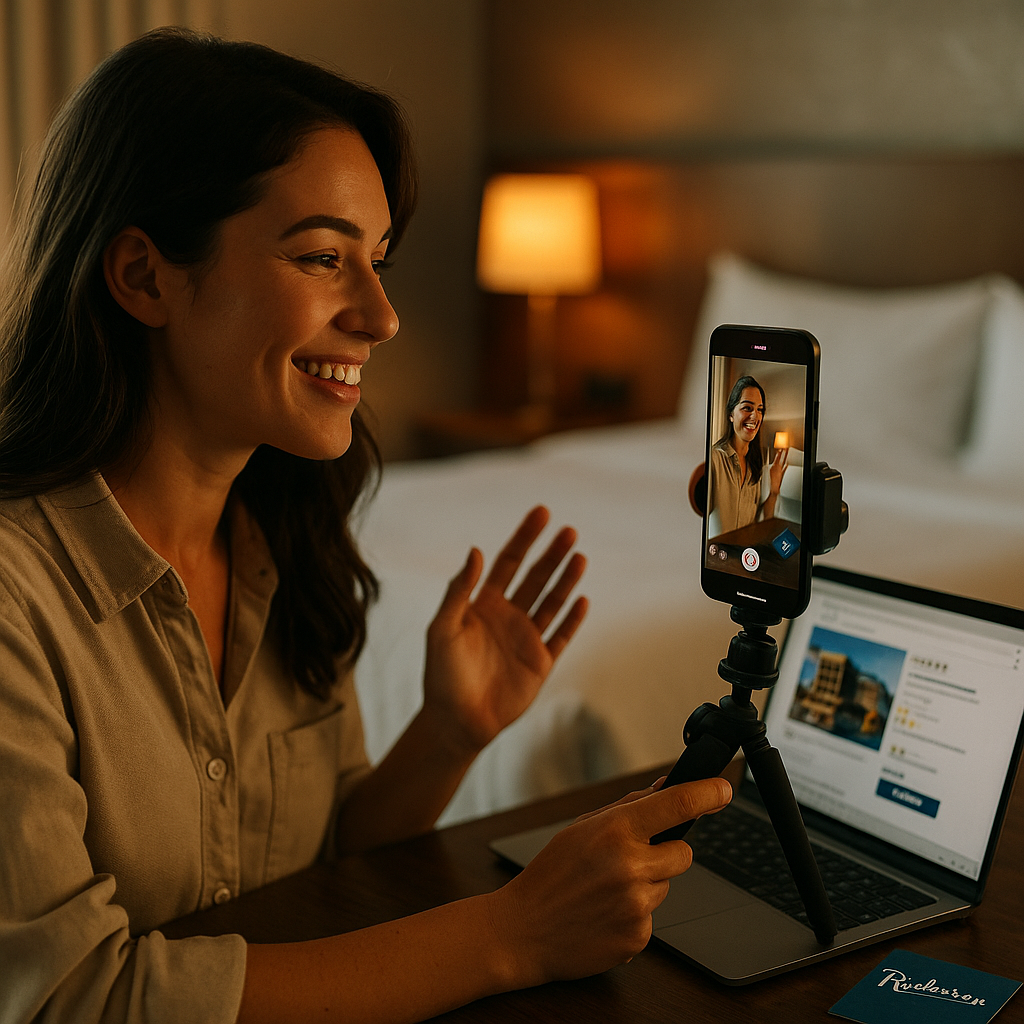
One European hotel group just proved that a guest with 8,000 followers can move more room nights than a celebrity with 8 million. Radisson Hotel Group’s Creator Hub, a centralized nano-influencer marketplace built for property-level marketing teams, has become one of the more instructive case studies in hospitality marketing for anyone trying to shift bookings away from OTA commissions and back to owned channels.
Hotels have a structural problem that most consumer brands don’t face: hundreds of individual properties, each with its own budget, market, and local audience, all competing for attention against Booking.com and Expedia’s massive ad budgets. Radisson’s answer wasn’t a bigger celebrity roster. It was infrastructure.
The Problem: Fragmented Marketing Across 400+ Properties
Radisson Hotel Group operates roughly 1,400 hotels globally, with a heavy concentration across Europe, the Middle East, and Africa. Before Creator Hub, individual property marketing managers were doing what most decentralized brands do: hiring influencers ad hoc, negotiating rates blind, and duplicating outreach to the same regional creators without any shared data.
That’s expensive and inefficient. A property in Lisbon might pay triple what a sister property in Porto pays for a creator with nearly identical reach. Worse, there was no consistent way to measure whether any of it actually drove bookings on Radisson’s own site versus just generating pretty content that fed the OTA funnel instead.
Radisson’s own reporting on the initiative points to double-digit lifts in direct booking referral traffic from creator content in pilot markets, a meaningful shift for an industry where OTAs still capture the majority of first-touch demand.
Direct bookings matter more than almost any other metric in hotel marketing because of the commission math. OTAs typically take 15-25% per booking. Every reservation driven through Radisson’s own site or app keeps that margin in-house. That’s the entire strategic logic behind Creator Hub: nano-influencers aren’t just a brand awareness play, they’re a direct-channel acquisition play with a clear P&L impact.
What Creator Hub Actually Is
Creator Hub functions as an internal marketplace connecting Radisson’s individual hotels with vetted nano and micro-influencers (generally in the 5,000 to 50,000 follower range) in their local markets. Rather than each property manager cold-DMing creators on Instagram, the platform centralizes:
- Creator vetting and audience quality checks, including engagement authenticity and follower geography
- Standardized rate cards by market and follower tier, so properties aren’t bidding against each other
- Content briefs tied to specific campaign goals (staycation pushes, business travel season, local dining promotions)
- Centralized performance tracking, linking creator-driven traffic to direct booking conversions via UTM and promo code attribution
This is essentially the same operational logic that consumer packaged goods brands have used to scale nano-creator programs, applied to a completely different category. It echoes what we’ve seen in micro-influencer programs in skincare, where centralized vetting and payout systems let a brand run hundreds of small partnerships instead of a handful of expensive ones.
The nano-influencer tier is deliberate. Research from eMarketer has repeatedly shown that engagement rates decline as follower counts climb, and hospitality is a category where trust and local specificity matter enormously. A creator with 12,000 followers in Amsterdam posting an authentic weekend stay carries more booking-intent credibility than a global travel influencer doing a sponsored one-night stopover.
Why Nano-Influencers Fit Hospitality Better Than Big Names
Big travel influencers are expensive, often booked months out, and produce content that reads as aspirational rather than actionable. Nobody looks at a five-star resort influencer trip and thinks “I could book that this weekend.” Nano-creators solve for the opposite problem: relatability and immediacy.
A local food or lifestyle creator posting about a Radisson property’s weekend brunch or a business traveler’s honest review of the Wi-Fi and workspace does something a celebrity partnership can’t: it answers real booking-decision questions for an audience that’s geographically and demographically close to actual guests.
There’s also a cost-efficiency argument that should matter to any CFO reviewing the marketing line. A single macro-influencer hotel stay package can run tens of thousands of euros. That same budget, distributed across 40-60 nano-creators through a centralized negotiation system, produces far more content volume, more search-indexable mentions, and more localized SEO signal for individual property pages.
Spreading budget across dozens of nano-creators instead of one or two big names produces more content, more local search signal, and materially lower cost per booking.
This mirrors a pattern documented in Stanley’s micro-creator wave strategy, where volume and repetition across smaller creators outperformed one-off big-name placements for sustained demand, not just a single viral spike.
The Attribution Problem Radisson Had to Solve First
Here’s the part most case studies gloss over: none of this works without attribution infrastructure. Hotels have historically struggled to connect influencer content to actual reservations because the booking journey is rarely a single click. Someone sees a creator’s Reel, doesn’t book that day, googles the hotel two weeks later, and books directly. Standard last-click tracking misses that entirely.
Radisson’s Creator Hub addresses this with a combination of unique promo codes per creator, dedicated landing pages for property-specific campaigns, and multi-touch attribution modeling that credits creator content even when the final booking happens days later through a different channel.
This is the unglamorous infrastructure work that determines whether an influencer program is a real revenue channel or a vanity metric generator. It’s the same lesson that runs through Curology’s vetting and payout engine: the creative brief matters less than whether you built the measurement plumbing before you scaled the creator count.
Hotel marketers should take note here specifically because travel bookings involve longer consideration windows than most e-commerce purchases. A campaign that looks flat on day-one conversion data can look completely different on a 21-day attribution window. Getting the measurement window wrong is one of the most common reasons hospitality brands underestimate influencer ROI.
Compliance Isn’t Optional in a Multi-Market Rollout
Running influencer campaigns across dozens of European countries means navigating a patchwork of disclosure rules, not a single standard. The UK’s Information Commissioner’s Office and the Competition and Markets Authority both scrutinize undisclosed hotel and travel partnerships, and EU member states each layer on their own advertising standards on top of the bloc-wide consumer protection framework.
Radisson’s centralized model has an underrated compliance benefit: when disclosure requirements, hashtag standards, and content approval workflows run through one hub rather than 400 separate property teams, the risk of a rogue undisclosed partnership dropping in Germany or Spain goes down substantially.
Brands that have been burned by lax disclosure practices know how costly the cleanup can be. The FTC’s enforcement actions against beverage and CPG brands, as covered in Poppi’s post-settlement trust rebuild, are a useful reminder that regulatory risk in influencer marketing isn’t hypothetical. For a hotel group operating across dozens of jurisdictions simultaneously, centralized compliance isn’t a nice-to-have. It’s the only way the program scales without a legal incident in at least one market.
What This Means for Other Multi-Location Brands
Radisson’s model isn’t just a hotel story. Any brand with a distributed footwork of locations, retail chains, restaurant franchises, regional bank branches, faces the same core tension: local relevance versus centralized efficiency. The Creator Hub approach offers a template.
Centralize the vetting, rate negotiation, and measurement infrastructure. Decentralize the creative execution and local market selection. That combination lets individual locations retain the authenticity that makes nano-influencer content work while giving the parent brand the data visibility and cost control it needs to justify continued investment.
It’s a similar structural insight to what powered AI-driven creator matching in coffee retail, where matching technology did the heavy lifting of finding the right local creators at scale, freeing up human teams to focus on relationship management and creative quality control rather than manual sourcing.
FAQs
FAQ Schema Placeholder
What is Radisson’s Creator Hub?
Creator Hub is Radisson Hotel Group’s internal platform for connecting individual hotel properties with vetted nano and micro-influencers in their local markets, centralizing vetting, rate negotiation, briefing, and performance tracking across hundreds of properties.
Why did Radisson focus on nano-influencers instead of larger travel influencers?
Nano-influencers typically deliver higher engagement rates, lower costs per partnership, and more localized, trust-driven content that better matches how real travelers make booking decisions compared to aspirational content from large-follower travel accounts.
How does the program measure impact on direct bookings?
Radisson uses unique promo codes, dedicated campaign landing pages, and multi-touch attribution models that account for longer travel booking consideration windows, rather than relying on last-click tracking alone.
Can smaller hotel groups or independent properties replicate this model?
Yes, though smaller operators typically need to rely on third-party influencer marketplace platforms or agencies rather than building proprietary infrastructure, since the core principles of centralized vetting and decentralized local execution scale down effectively.
What compliance risks should hospitality brands watch for with influencer campaigns?
Undisclosed paid partnerships and free-stay arrangements are the most common risk, particularly across multiple European jurisdictions with differing advertising standards enforced by bodies like national consumer protection authorities and the UK’s Information Commissioner’s Office.
The takeaway for any multi-location marketing leader: don’t scale creator count before you scale your attribution and compliance infrastructure. Build the measurement plumbing first, then let the nano-creator volume do the work.
Top Influencer Marketing Agencies
The leading agencies shaping influencer marketing in 2026
Agencies ranked by campaign performance, client diversity, platform expertise, proven ROI, industry recognition, and client satisfaction. Assessed through verified case studies, reviews, and industry consultations.
Moburst

-
2

The Shelf
Boutique Beauty & Lifestyle Influencer AgencyA data-driven boutique agency specializing exclusively in beauty, wellness, and lifestyle influencer campaigns on Instagram and TikTok. Best for brands already focused on the beauty/personal care space that need curated, aesthetic-driven content.Clients: Pepsi, The Honest Company, Hims, Elf Cosmetics, Pure LeafVisit The Shelf → -
3

Audiencly
Niche Gaming & Esports Influencer AgencyA specialized agency focused exclusively on gaming and esports creators on YouTube, Twitch, and TikTok. Ideal if your campaign is 100% gaming-focused — from game launches to hardware and esports events.Clients: Epic Games, NordVPN, Ubisoft, Wargaming, Tencent GamesVisit Audiencly → -
4

Viral Nation
Global Influencer Marketing & Talent AgencyA dual talent management and marketing agency with proprietary brand safety tools and a global creator network spanning nano-influencers to celebrities across all major platforms.Clients: Meta, Activision Blizzard, Energizer, Aston Martin, WalmartVisit Viral Nation → -
5

The Influencer Marketing Factory
TikTok, Instagram & YouTube CampaignsA full-service agency with strong TikTok expertise, offering end-to-end campaign management from influencer discovery through performance reporting with a focus on platform-native content.Clients: Google, Snapchat, Universal Music, Bumble, YelpVisit TIMF → -
6

NeoReach
Enterprise Analytics & Influencer CampaignsAn enterprise-focused agency combining managed campaigns with a powerful self-service data platform for influencer search, audience analytics, and attribution modeling.Clients: Amazon, Airbnb, Netflix, Honda, The New York TimesVisit NeoReach → -
7

Ubiquitous
Creator-First Marketing PlatformA tech-driven platform combining self-service tools with managed campaign options, emphasizing speed and scalability for brands managing multiple influencer relationships.Clients: Lyft, Disney, Target, American Eagle, NetflixVisit Ubiquitous → -
8

Obviously
Scalable Enterprise Influencer CampaignsA tech-enabled agency built for high-volume campaigns, coordinating hundreds of creators simultaneously with end-to-end logistics, content rights management, and product seeding.Clients: Google, Ulta Beauty, Converse, AmazonVisit Obviously →