


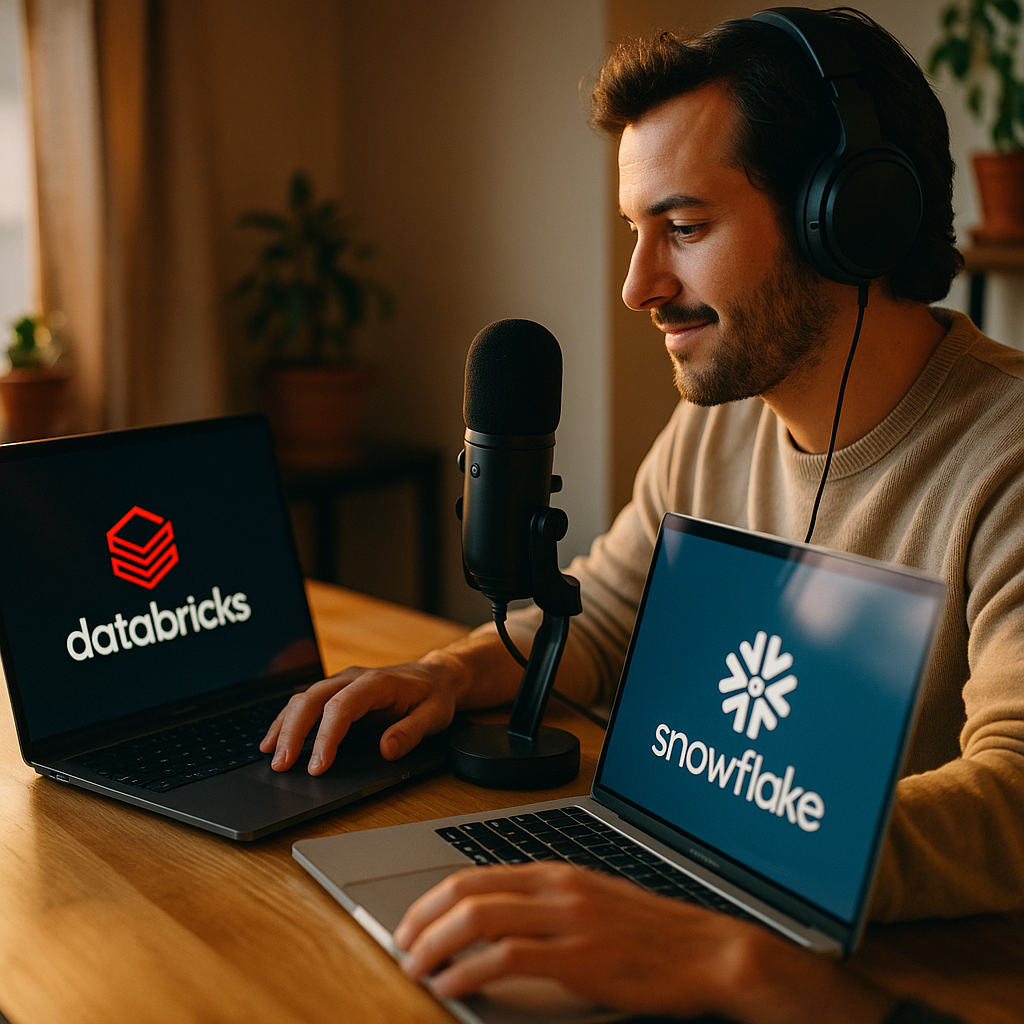
Two platforms now sit at the center of every serious data-team debate: which one actually deserves your creator segmentation workload? Gartner estimates enterprise spend on data warehousing will keep climbing double digits through the decade, and agentic AI features are the new battleground. If you’re evaluating an agentic data warehouse for creator audience segmentation, the choice between Databricks CustomerLake and Snowflake Native Apps isn’t academic. It’s a multi-year infrastructure bet.
Why Creator Segmentation Broke the Old Warehouse Model
Traditional customer segmentation ran on static SQL queries and quarterly cohort refreshes. Creator marketing doesn’t work that way. A campaign involving 400 micro-influencers generates engagement signals, UGC metadata, sentiment shifts, and commission events in near real time. Marketing teams need to segment audiences by creator affinity, not just demographics, and they need to do it while a campaign is still live, not after the fact.
This is where “agentic” enters the vocabulary. Both Databricks and Snowflake now market autonomous agents that can query, reason over, and act on warehouse data without a human writing SQL. The pitch: your team asks a question in plain English, an agent traverses the lakehouse or warehouse, and it returns segmented creator cohorts with reasoning attached. Sounds great in a demo. The reality, as usual, is messier.
Databricks CustomerLake, In Plain Terms
CustomerLake is Databricks’ answer to the “unify everything, then let agents reason over it” problem. It sits on top of Delta Lake and Unity Catalog, meaning your creator engagement data, first-party CRM records, and even unstructured content (video transcripts, comment sentiment, image embeddings) all live in one governed lakehouse. The agentic layer, built on Databricks’ Mosaic AI stack, lets marketing ops build natural-language queries that pull cross-source creator segments.
For teams already piping TikTok, Instagram, and YouTube data through a lakehouse architecture, this is a meaningful upgrade. You’re not bolting an AI agent onto a rigid schema. You’re letting it reason across structured and unstructured formats natively, which matters enormously for creator data, since so much of it is video, audio, and free-text comments rather than clean rows and columns.
The real differentiator isn’t which platform has a flashier agent demo. It’s which one can reason across unstructured creator content, video, comments, sentiment, without a six-month data engineering detour.
The tradeoff? Databricks still demands more hands-on data engineering than most CMOs want to admit. CustomerLake reduces that burden, but it doesn’t eliminate it. If your team doesn’t have a data engineer who understands Delta Lake internals, expect a steeper ramp than the marketing collateral suggests.
Snowflake Native Apps: A Different Bet Entirely
Snowflake took a different path. Rather than building one mega-agentic layer, it opened up Native Apps, a marketplace-style framework where third-party vendors (and increasingly, Snowflake itself via Cortex Agents) build packaged applications that run directly inside your Snowflake account. Your creator data never leaves your governed environment, but you get pre-built segmentation logic, agent workflows, and dashboards from vendors who’ve already solved the hard problems.
For creator audience segmentation specifically, this matters because a growing number of influencer platforms, CRM vendors, and attribution tools now ship Snowflake Native App versions of their products. Instead of building a custom agentic pipeline from scratch, a mid-market brand can install a segmentation app, point it at their Snowflake warehouse, and get creator cohort outputs within days rather than months.
The catch is fragmentation. Native Apps quality varies wildly by vendor. Some are genuinely agentic, reasoning dynamically over your schema. Others are glorified dashboards with an AI label slapped on for the pitch deck. You have to vet each app individually, which reintroduces the vendor evaluation burden Snowflake’s marketplace was supposed to eliminate.
Head-to-Head: What Actually Matters for Creator Segmentation
Strip away the marketing language and here’s what separates the two for a marketing team building creator cohorts:
- Unstructured data handling: Databricks CustomerLake wins for teams heavy on video/audio creator content. Its lakehouse architecture was built for multimodal data from day one.
- Time to first segment: Snowflake Native Apps generally win here if a vendor already has a packaged solution for your use case. You’re not building, you’re configuring.
- Governance and compliance: Both platforms have matured significantly on this front, but Snowflake’s data-never-leaves-the-account model gives compliance teams an easier sell, especially relevant given ongoing scrutiny from bodies like the FTC on data handling in influencer marketing disclosures.
- Vendor lock-in risk: Databricks’ open-format approach (Delta Lake, Parquet) reduces lock-in. Snowflake’s proprietary storage format, while performant, ties you more tightly to their ecosystem long-term.
- Cost predictability: Snowflake’s consumption-based pricing can spike unpredictably with agentic query volume. Databricks’ compute model is arguably more transparent, but total cost of ownership still depends heavily on cluster configuration discipline.
Neither platform is objectively “better.” They optimize for different organizational realities. A brand with an in-house data engineering team and heavy video/UGC volume should lean Databricks. A brand that wants to move fast with vendor-built segmentation logic and minimal internal build should lean Snowflake.
Where This Connects to Your Existing Martech Stack
Neither platform operates in isolation. If you’ve already invested in warehouse-native identity resolution to replace a legacy CDP, the choice between Databricks and Snowflake becomes even more consequential, because your identity graph now lives inside whichever ecosystem you pick. Ripping that out later is expensive and slow.
The same logic applies to vector search. Creator segmentation increasingly relies on embedding-based similarity (finding creators whose audience “feels” like your target segment, not just matches demographic filters). Teams running vector databases alongside their warehouse need to check whether CustomerLake or Snowflake Cortex handles embedding storage natively, or whether you’ll need a separate vector retrieval layer bolted on. That’s an additional integration cost most vendor pitches conveniently skip.
The Agentic Layer Is Still Immature, Whatever the Demos Show
Let’s be honest about where we are. Agentic querying across both platforms works well for straightforward asks: “show me creators whose audience overlaps with our Gen Z segment in the top five metros.” It gets shakier fast when you ask compound, multi-hop questions involving sentiment trends over time plus commission attribution plus content format performance. The agents hallucinate join logic. They misinterpret ambiguous column names. They occasionally produce confident-sounding wrong answers, the exact failure mode marketing teams need to watch for.
This isn’t a knock on either vendor specifically. It’s the current state of agentic AI applied to enterprise data. eMarketer’s research on AI adoption in marketing consistently shows a gap between pilot enthusiasm and production reliability. Treat any agentic segmentation output as a first draft requiring human review, not a final answer you present to a CMO in a board deck.
Teams that have already built observability into their AI agent workflows are ahead here. If you’re deploying agentic segmentation without a way to catch drift or hallucinated joins, you’re flying blind on decisions that affect real ad spend.
Compliance and Data Governance Angle
Creator audience data touches sensitive territory: minors’ engagement patterns on some platforms, geographic data subject to regional privacy law, and increasingly, disclosure requirements tied to AI-generated content labeling. The ICO and similar bodies globally have signaled closer scrutiny of how brands process audience data at scale, particularly when AI agents are making autonomous decisions about segmentation without a documented audit trail.
Both Databricks and Snowflake offer row-level security, column masking, and audit logging. But agentic querying adds a wrinkle: if an AI agent constructs its own query logic on the fly, can you actually produce a clean audit trail showing how a segment was derived? This is a question compliance teams should ask before any deal is signed, not after a regulator asks it for you.
This governance question echoes concerns raised in no-code AI agent governance frameworks being adopted across marketing orgs. If your creator segmentation agent can’t explain its own reasoning in a way that satisfies a compliance review, it’s not ready for production, regardless of how well it performed in the sales demo.
Making the Actual Decision
Run this checklist before committing budget:
- Audit your current data engineering bandwidth. Databricks CustomerLake rewards teams with real engineering depth; Snowflake Native Apps rewards teams that want vendor-built speed.
- Inventory your unstructured creator data volume. Heavy video/UGC content favors Databricks’ lakehouse architecture.
- Check which vendors in your existing stack already ship Native App integrations for Snowflake. This can dramatically shorten time-to-value.
- Demand an audit-trail demo for any agentic query, not just a segmentation output demo.
- Model total cost under realistic agentic query volume, not the vendor’s optimistic sandbox pricing.
Whichever way you lean, don’t sign a multi-year commitment based on a single proof-of-concept quarter. Agentic reliability at scale looks very different from agentic reliability in a curated demo environment.
Frequently Asked Questions
What is an agentic data warehouse in the context of creator marketing?
An agentic data warehouse allows AI agents to autonomously query, reason over, and segment data (like creator audience overlap or engagement patterns) using natural language, rather than requiring analysts to write manual SQL for every request.
Is Databricks CustomerLake better than Snowflake Native Apps for influencer marketing data?
Neither is universally better. Databricks CustomerLake tends to suit teams with heavy unstructured creator content (video, comments, images) and existing data engineering capacity. Snowflake Native Apps suit teams that want faster deployment through pre-built vendor segmentation apps.
Can these platforms handle real-time creator campaign data?
Both support near-real-time ingestion, but actual latency depends on pipeline configuration, not just the platform itself. Test with your real campaign data volume before assuming production-level real-time performance.
What’s the biggest risk with agentic segmentation right now?
Hallucinated query logic on complex, multi-hop questions. Agents can produce confident, wrong segmentation outputs when asked to join sentiment, attribution, and content-format data simultaneously. Human review remains essential.
Does switching between Databricks and Snowflake lock in creator data long-term?
Databricks’ open Delta Lake format reduces lock-in risk. Snowflake’s proprietary storage format increases migration cost later, which matters if you expect to change vendors within a few years.
How does this relate to CDP replacement strategies?
Many brands are shifting identity resolution directly into the warehouse rather than maintaining a separate CDP. This makes the Databricks vs Snowflake decision more consequential, since your creator identity graph will live inside whichever ecosystem you choose.
Frequently Asked Questions
What is an agentic data warehouse in the context of creator marketing?
An agentic data warehouse allows AI agents to autonomously query, reason over, and segment data (like creator audience overlap or engagement patterns) using natural language, rather than requiring analysts to write manual SQL for every request.
Is Databricks CustomerLake better than Snowflake Native Apps for influencer marketing data?
Neither is universally better. Databricks CustomerLake tends to suit teams with heavy unstructured creator content (video, comments, images) and existing data engineering capacity. Snowflake Native Apps suit teams that want faster deployment through pre-built vendor segmentation apps.
Can these platforms handle real-time creator campaign data?
Both support near-real-time ingestion, but actual latency depends on pipeline configuration, not just the platform itself. Test with your real campaign data volume before assuming production-level real-time performance.
What’s the biggest risk with agentic segmentation right now?
Hallucinated query logic on complex, multi-hop questions. Agents can produce confident, wrong segmentation outputs when asked to join sentiment, attribution, and content-format data simultaneously. Human review remains essential.
Does switching between Databricks and Snowflake lock in creator data long-term?
Databricks’ open Delta Lake format reduces lock-in risk. Snowflake’s proprietary storage format increases migration cost later, which matters if you expect to change vendors within a few years.
How does this relate to CDP replacement strategies?
Many brands are shifting identity resolution directly into the warehouse rather than maintaining a separate CDP. This makes the Databricks vs Snowflake decision more consequential, since your creator identity graph will live inside whichever ecosystem you choose.
Bottom line: pilot both platforms against your messiest real creator dataset, not a clean sandbox, and demand an audit trail before you demand a demo of segmentation accuracy.
Top Influencer Marketing Agencies
The leading agencies shaping influencer marketing in 2026
Agencies ranked by campaign performance, client diversity, platform expertise, proven ROI, industry recognition, and client satisfaction. Assessed through verified case studies, reviews, and industry consultations.
Moburst

-
2

The Shelf
Boutique Beauty & Lifestyle Influencer AgencyA data-driven boutique agency specializing exclusively in beauty, wellness, and lifestyle influencer campaigns on Instagram and TikTok. Best for brands already focused on the beauty/personal care space that need curated, aesthetic-driven content.Clients: Pepsi, The Honest Company, Hims, Elf Cosmetics, Pure LeafVisit The Shelf → -
3

Audiencly
Niche Gaming & Esports Influencer AgencyA specialized agency focused exclusively on gaming and esports creators on YouTube, Twitch, and TikTok. Ideal if your campaign is 100% gaming-focused — from game launches to hardware and esports events.Clients: Epic Games, NordVPN, Ubisoft, Wargaming, Tencent GamesVisit Audiencly → -
4

Viral Nation
Global Influencer Marketing & Talent AgencyA dual talent management and marketing agency with proprietary brand safety tools and a global creator network spanning nano-influencers to celebrities across all major platforms.Clients: Meta, Activision Blizzard, Energizer, Aston Martin, WalmartVisit Viral Nation → -
5

The Influencer Marketing Factory
TikTok, Instagram & YouTube CampaignsA full-service agency with strong TikTok expertise, offering end-to-end campaign management from influencer discovery through performance reporting with a focus on platform-native content.Clients: Google, Snapchat, Universal Music, Bumble, YelpVisit TIMF → -
6

NeoReach
Enterprise Analytics & Influencer CampaignsAn enterprise-focused agency combining managed campaigns with a powerful self-service data platform for influencer search, audience analytics, and attribution modeling.Clients: Amazon, Airbnb, Netflix, Honda, The New York TimesVisit NeoReach → -
7

Ubiquitous
Creator-First Marketing PlatformA tech-driven platform combining self-service tools with managed campaign options, emphasizing speed and scalability for brands managing multiple influencer relationships.Clients: Lyft, Disney, Target, American Eagle, NetflixVisit Ubiquitous → -
8

Obviously
Scalable Enterprise Influencer CampaignsA tech-enabled agency built for high-volume campaigns, coordinating hundreds of creators simultaneously with end-to-end logistics, content rights management, and product seeding.Clients: Google, Ulta Beauty, Converse, AmazonVisit Obviously →