


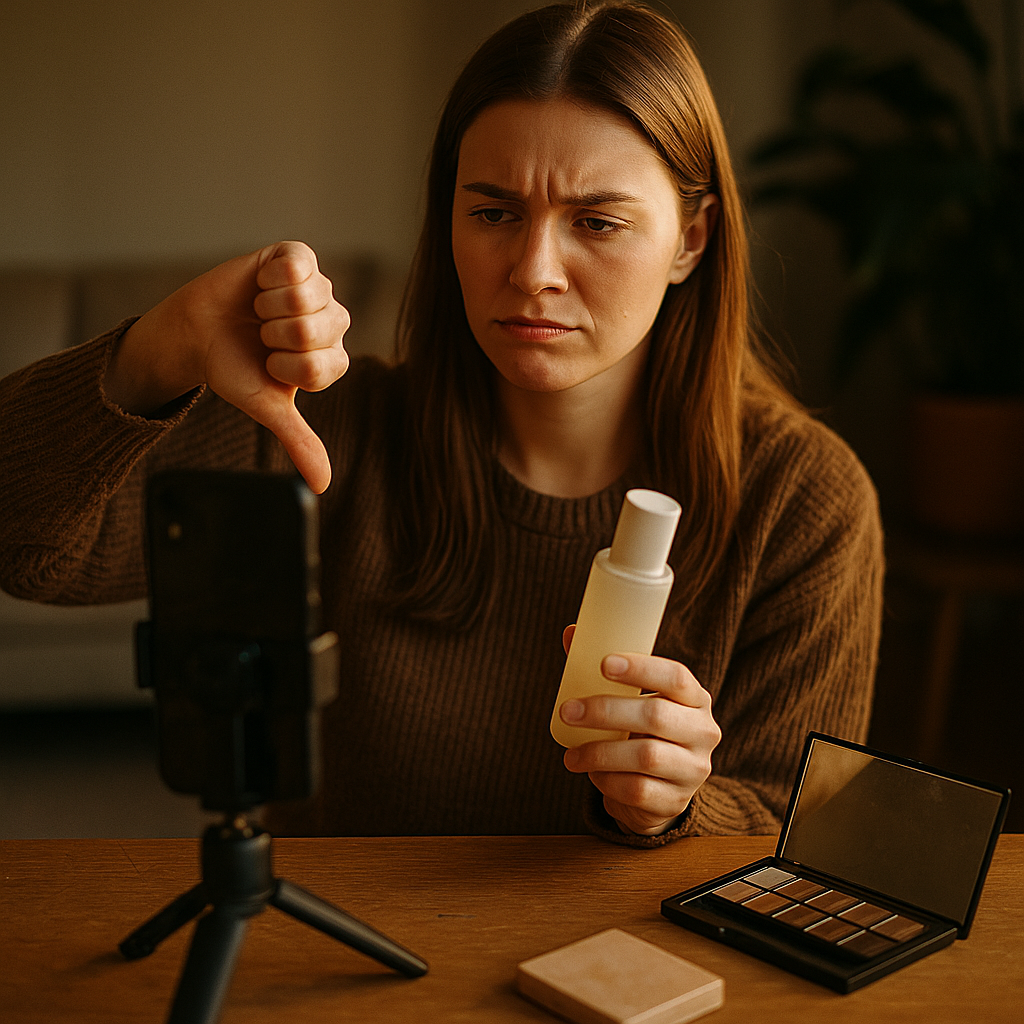
Brands have long relied on influencer marketing, but the rise of de-influencing campaigns has shifted the landscape. A recent case study reveals how a powerful de-influencing movement significantly impacted a prominent brand’s sales. Interested in how consumer voices reshaped an industry giant’s identity—and what this means for your business? Read on for a close examination of the trend shaking up 2025.
The Rise of De-Influencing and Its Impact on Brand Reputation
De-influencing, a social media phenomenon where content creators advise audiences against purchasing certain products, has rapidly gained traction in 2025. Unlike traditional influencer marketing, these campaigns leverage authenticity and transparency, challenging the relentless push for consumerism. The best-documented example is the backlash against GlowGenix Skincare’s “Radiance Serum,” which once dominated skincare recommendations but came under fire through coordinated de-influencer videos on TikTok and Instagram.
Recent data from SocialPulse Analytics shows that the hashtag #deinfluence generated over 3 billion views in early 2025, with skincare brands experiencing a 14% average dip in quarterly sales after targeted campaigns. For GlowGenix, the impact was even starker, as loyal customers began genuinely questioning product efficacy and ethical practices.
Case Study Spotlight: GlowGenix’s “Radiance Serum” Faces a De-Influencing Wave
GlowGenix, beloved for its clever packaging and influencer endorsements, launched its “Radiance Serum” in late 2024. The product quickly became a best-seller due to aggressive collaborations with beauty influencers. However, by early 2025, respected creators began posting honest reviews highlighting questionable ingredients, potential skin irritation, and lackluster results. De-influencers such as @HonestDiana and @SkinScienceAlex spearheaded the charge, their videos garnering millions of views and engagement.
Consumer trust began to wane as more users left negative reviews and shared their experiences. Within three months, GlowGenix saw sales of the Radiance Serum plummet by 32%, according to the company’s first-quarter financial report. This rapid decline not only hit revenue but also severely damaged brand credibility in the vital Gen Z and Millennial markets.
Why Did the De-Influencing Campaign Succeed?
The success of the GlowGenix de-influencing campaign offers key lessons. First, authenticity resonated with audiences weary of paid sponsorships. De-influencers used scientific evidence, ingredient analysis, and personal stories instead of rehearsed brand talking points. For example, dermatologists weighed in on TikTok, confirming user concerns and amplifying their reach.
Trust and relatability made these content creators credible. Further, rapid engagement in social media forums and comment sections fueled the viral nature of the campaign. Social media algorithms favored posts with high interaction rates, propelling the de-influencing content to wider discovery. Ultimately, GlowGenix failed to respond quickly or transparently, deepening consumer skepticism and cementing the campaign’s impact.
What Can Brands Learn from De-Influencing Trends?
The GlowGenix case highlights crucial takeaways for brands navigating the volatile intersection of social media and consumer trust in 2025:
- Embrace Transparency: Brands must share clear, detailed product information and address negative feedback openly.
- Engage Authentically: Building genuine community relationships and using credible spokespersons—such as credentialed experts—boosts brand trust.
- Monitor Social Media: Active social listening and rapid response teams can mitigate damage and adapt strategies on the fly.
- Prioritize Product Quality: No amount of marketing can overcome legitimate product issues. Continuous research and customer feedback loops are essential.
Brands committed to honesty and consumer advocacy are more likely to withstand de-influencing scrutiny and maintain long-term loyalty.
Rebuilding Trust: How GlowGenix Responded and Market Reactions
After the severity of the de-influencing campaign became unignorable, GlowGenix initiated several corrective measures. These included releasing independent lab test results, reformulating the serum to address irritation complaints, and hosting live Q&A sessions with dermatologists. While sales had sharply declined, the company’s transparency and willingness to admit shortcomings began to stabilize loyalty among its core customer base.
Market observers argue that GlowGenix’s journey offers a roadmap for recovery. Promptly owning missteps, communicating changes, and demonstrating an ethical commitment can mitigate long-term damage. However, regaining trust is an ongoing process and, as experts emphasize, requires continuous engagement—not one-off crisis responses.
Future of De-Influencing: Preparing for the Next Wave
The GlowGenix case underscores the lasting impact of de-influencing campaigns on sales and brand image. As audiences grow ever more discerning and empowered in 2025, brands must proactively nurture transparency and authenticity. Social media will continue to amplify both positive and negative narratives, placing consumer trust at the center of sustainable business strategies. For forward-thinking organizations, adapting to the de-influencing era is not optional—it’s essential to survival and growth.
FAQs About De-Influencing Campaigns and Brand Sales
-
What is de-influencing, and how does it affect brands?
De-influencing is when creators advise against buying certain products, often spotlighting issues overlooked by traditional influencers. For brands, this can result in lost sales and reputational harm, especially if concerns raised are valid and widely shared.
-
How can companies respond to a de-influencing campaign?
Quickly acknowledge concerns, share transparent information, and engage genuinely with the audience. Admitting mistakes and demonstrating actionable improvements go a long way in rebuilding trust.
-
Is it possible to prevent de-influencing from harming a brand?
While no brand is immune, actively listening to consumer feedback, maintaining high product standards, and cultivating authentic relationships reduce risk and enable faster response to criticism.
-
Are de-influencing campaigns always based on facts?
Not always. Some are driven by misunderstandings or misinformation. Brands should provide evidence-based responses to clarify issues and foster an informed conversation.
-
What industries are most affected by de-influencing in 2025?
Beauty, skincare, wellness, and tech industries are particularly vulnerable, as buying decisions are heavily swayed by social media credibility and peer reviews.
In conclusion, the GlowGenix case shows that de-influencing can quickly reshape consumer perceptions and sales. Brands that prioritize transparency, quality, and ongoing engagement are best positioned to weather and even thrive amid these evolving digital conversations.
Top Influencer Marketing Agencies
The leading agencies shaping influencer marketing in 2026
Agencies ranked by campaign performance, client diversity, platform expertise, proven ROI, industry recognition, and client satisfaction. Assessed through verified case studies, reviews, and industry consultations.
Moburst

-
2

The Shelf
Boutique Beauty & Lifestyle Influencer AgencyA data-driven boutique agency specializing exclusively in beauty, wellness, and lifestyle influencer campaigns on Instagram and TikTok. Best for brands already focused on the beauty/personal care space that need curated, aesthetic-driven content.Clients: Pepsi, The Honest Company, Hims, Elf Cosmetics, Pure LeafVisit The Shelf → -
3

Audiencly
Niche Gaming & Esports Influencer AgencyA specialized agency focused exclusively on gaming and esports creators on YouTube, Twitch, and TikTok. Ideal if your campaign is 100% gaming-focused — from game launches to hardware and esports events.Clients: Epic Games, NordVPN, Ubisoft, Wargaming, Tencent GamesVisit Audiencly → -
4

Viral Nation
Global Influencer Marketing & Talent AgencyA dual talent management and marketing agency with proprietary brand safety tools and a global creator network spanning nano-influencers to celebrities across all major platforms.Clients: Meta, Activision Blizzard, Energizer, Aston Martin, WalmartVisit Viral Nation → -
5

The Influencer Marketing Factory
TikTok, Instagram & YouTube CampaignsA full-service agency with strong TikTok expertise, offering end-to-end campaign management from influencer discovery through performance reporting with a focus on platform-native content.Clients: Google, Snapchat, Universal Music, Bumble, YelpVisit TIMF → -
6

NeoReach
Enterprise Analytics & Influencer CampaignsAn enterprise-focused agency combining managed campaigns with a powerful self-service data platform for influencer search, audience analytics, and attribution modeling.Clients: Amazon, Airbnb, Netflix, Honda, The New York TimesVisit NeoReach → -
7

Ubiquitous
Creator-First Marketing PlatformA tech-driven platform combining self-service tools with managed campaign options, emphasizing speed and scalability for brands managing multiple influencer relationships.Clients: Lyft, Disney, Target, American Eagle, NetflixVisit Ubiquitous → -
8

Obviously
Scalable Enterprise Influencer CampaignsA tech-enabled agency built for high-volume campaigns, coordinating hundreds of creators simultaneously with end-to-end logistics, content rights management, and product seeding.Clients: Google, Ulta Beauty, Converse, AmazonVisit Obviously →