


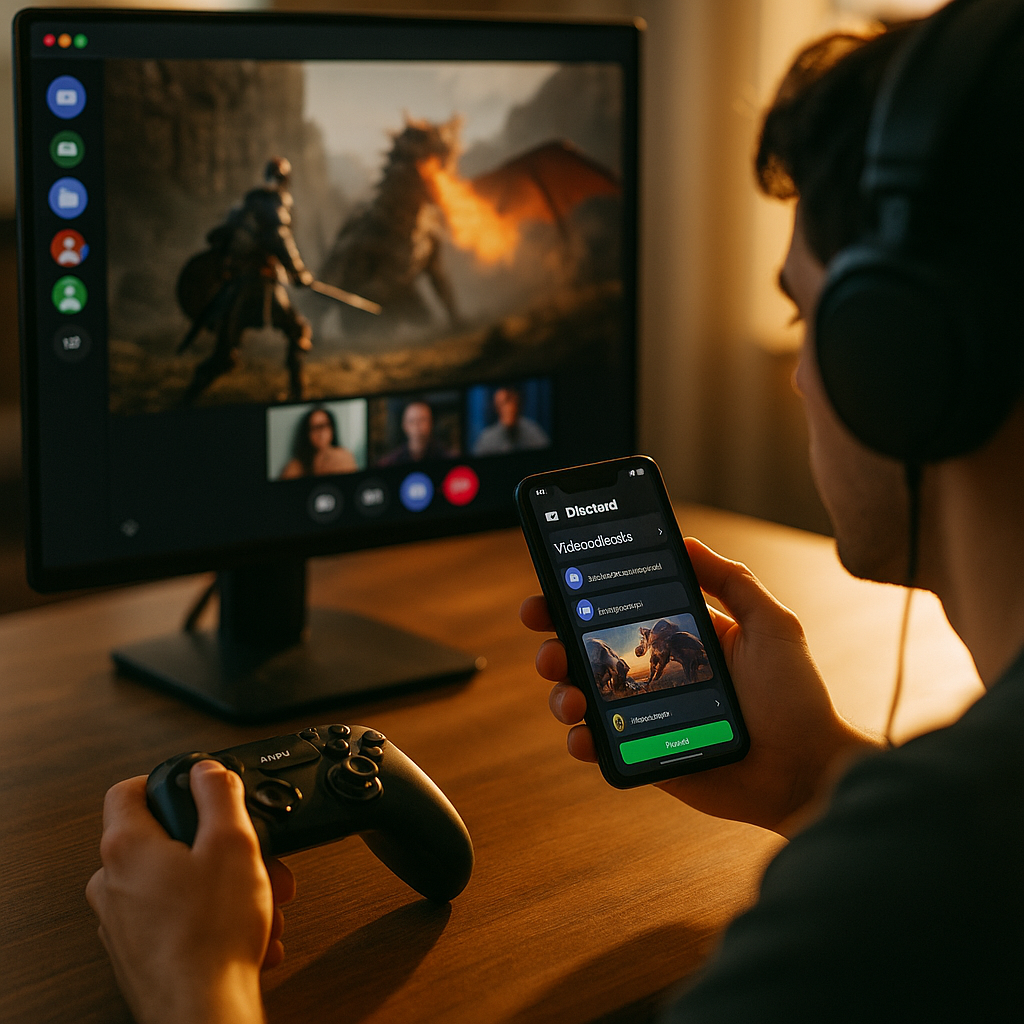
Discord now hosts more than 200 million monthly active users, and most brand marketers still treat it as a Gen Z gaming chatroom they can safely ignore. That assumption is getting expensive. Discord video quests, a new interactive ad format that rewards users for watching branded clips inside servers they already trust, are quietly producing engagement numbers that make standard feed ads look lazy. The question isn’t whether the format works. It’s whether your brand can operationalize it before the early-mover advantage disappears.
What Exactly Is a Discord Video Quest?
A video quest is a gamified ad unit embedded directly into the Discord client. Users complete an action (typically watching a branded video to completion, sometimes paired with a server join or reaction) and unlock an in-app reward: Nitro credits, exclusive server roles, limited cosmetics, or quest badges. Discord has run quests before for game launches and platform features, but opening the format to third-party brand advertisers is the real shift here.
Unlike a skippable pre-roll ad, the quest format requires completion before the reward unlocks. That single mechanic changes the incentive structure entirely. You’re not paying for an impression that someone might half-watch while scrolling to the next post. You’re paying for a user who sat through your full message because they wanted something on the other side of it.
Early brand pilots on Discord video quests are reporting completion rates north of 70 percent, a figure that would be unthinkable for a standard 15 second skippable video ad on most social platforms.
Why This Matters for Brand Lift, Not Just Views
Brand lift studies live and die on attention quality. A view count tells you reach. It tells you almost nothing about whether the message landed. Discord’s quest mechanic forces a behavior that correlates far more tightly with recall and favorability than passive impressions do, because the user has made an active choice to engage rather than a passive choice to not-skip.
That matters for CMOs under pressure to prove media spend is doing something beyond generating vanity metrics. If you’re running mixed-format campaigns and comparing a Discord quest against, say, a POV storytelling clip on TikTok, the completion-gated structure gives you a cleaner signal of intent. People aren’t completing quests by accident.
There’s also a community trust dimension that’s hard to replicate elsewhere. Discord servers are opt-in, often niche, and built around shared identity (gaming guilds, fandoms, creator communities, crypto projects). A brand showing up inside that context with a reward-based format reads less like an interruption and more like participation. That’s a meaningfully different psychological entry point than a paid placement wedged between organic posts on Instagram or X.
The Early Data: Promising, But Thin
Here’s the honest caveat. Discord video quests are new enough that independent, large-sample brand lift studies don’t really exist yet. Most of what’s circulating is vendor-reported or agency case study data, which always skews favorable. eMarketer’s coverage of emerging ad formats consistently flags this exact problem: platforms release optimistic early numbers to attract advertiser budget before the format has been stress-tested at scale.
What we do know: Discord’s user base skews younger (the platform’s own disclosures put a significant share of weekly active users under 25), highly engaged (average session times dwarf most social apps), and resistant to traditional advertising. That combination is exactly why brands in gaming, entertainment, beverage, and tech verticals have been the first to test quests. If your target demo already lives in Discord servers, the format arrives with built-in context. If your target demo doesn’t, you’re building a community presence from zero, and that’s a much bigger lift than buying a few quest placements.
Where Video Quests Fit in a Funnel
Quests aren’t a performance format in the direct-response sense. There’s no “swipe up to buy” moment baked in. Think of them as upper-funnel awareness and consideration tools that happen to carry a stronger engagement signal than most upper-funnel formats offer. That positioning matters when you’re building a format-to-funnel brief and deciding what job each asset is supposed to do.
- Awareness and sentiment: Quests work well for launches, especially gaming titles, entertainment releases, or product drops that have a natural community angle.
- Community seeding: Rewarding users with exclusive server roles or badges creates a tiered sense of belonging, which can feed into longer-term ambassador or loyalty programs.
- Not built for conversion: There’s no native checkout, no shoppable overlay, no pixel-perfect attribution path to a sale. If your KPI is last-click ROAS, this isn’t your format yet.
That funnel positioning should inform your brief development. A quest video needs a hook in the first three seconds just like any other format, but it also needs pacing that respects a captive, reward-motivated viewer rather than a scroll-happy one. That’s a different creative discipline. Compare it to the rhythm needed for retail walkthrough content, where every second has to fight for attention against an easy swipe away. Quest viewers have already committed. Your job is to reward that commitment with substance, not to re-earn attention every two seconds.
Risk and Compliance: The Part Nobody’s Talking About Enough
Here’s where brand safety and legal teams need to get involved early, not after the first campaign is live. Discord’s moderation infrastructure is server-by-server, which means brand exposure varies wildly depending on which communities you’re placing quests in. A quest running in a well-moderated, verified gaming server carries very different risk than one surfacing in a loosely moderated fan server with minimal content oversight.
Disclosure is another open question. The FTC’s endorsement guidance already requires clear disclosure when content is sponsored, and reward-gated ad formats sit in a gray zone that regulators haven’t fully addressed yet. If a quest reward functions like an incentivized review or testimonial pathway, your legal team should be asking whether existing disclosure language covers it. Don’t wait for a regulatory nudge to find out it doesn’t.
Treat Discord video quests the same way you’d treat any new creator or community partnership: audit the server, audit the moderation standards, and document the placement rationale before spend goes out the door.
There’s also a data privacy angle. Discord users, especially younger ones, are protective of their server identities and often maintain separation between their Discord persona and their “real” social media presence. A heavy-handed brand push that feels extractive (collecting emails, pushing users off-platform too aggressively) risks backlash in communities that pride themselves on resisting corporate intrusion. The reward has to feel proportionate to the ask, or you’ll generate exactly the kind of community backlash that erases any brand lift you were chasing.
How to Pilot Without Overcommitting Budget
Given the thin independent data, the smart move is a contained pilot rather than a full budget shift. A few practical guardrails:
- Start with one or two servers where your brand already has organic relevance (an existing fan community, a gaming title tie-in, a creator partnership that already has Discord presence).
- Set a hard cap on spend and a defined measurement window, typically four to six weeks, long enough to see completion rate trends but short enough to pull back fast.
- Pair the quest with a parallel control group running your standard format (a sound-on demo or similar) so you have an internal benchmark instead of relying on Discord’s own reported numbers.
- Track qualitative sentiment in server chat, not just completion rate. Community reaction is a leading indicator Discord’s dashboard won’t surface for you.
If you’re already running a multi-creator roster strategy, this is also a natural extension point. Creators with existing Discord communities can co-design quest content that feels native rather than bolted on, similar to how multi-creator collab formats solve for authenticity by letting the creator’s existing audience relationship do the heavy lifting.
Where This Format Is Headed
Expect Discord to keep expanding quest capabilities as it chases ad revenue diversification beyond Nitro subscriptions. HubSpot’s coverage of emerging platform monetization trends points to a broader pattern: platforms with strong community dynamics (Discord, Reddit, niche forums) are increasingly building reward-based engagement mechanics because they outperform passive ad units on every attention metric that matters. If that trend holds, expect more granular targeting options, better reporting dashboards, and eventually some kind of attribution bridge to off-platform conversion, though that’s speculative at this stage.
The brands that win here won’t be the ones who wait for mature measurement tools. They’ll be the ones who ran small, well-documented pilots now, built internal benchmarks, and have a point of view ready when the format matures and budget competition intensifies.
Frequently Asked Questions
What is a Discord video quest in advertising terms?
It’s an interactive ad format where users complete a branded video view (sometimes paired with another action like joining a server) to unlock a reward such as Nitro credits, exclusive roles, or cosmetic items. The completion requirement is what separates it from standard skippable video ads.
Is Discord video quests a good fit for every brand?
No. The format performs best for brands whose target audience already has meaningful Discord presence, particularly gaming, entertainment, tech, and beverage brands with existing community ties. Brands without an organic Discord foothold face a steeper community-building cost before quests make sense.
Can Discord video quests drive direct conversions?
Not natively. There’s no built-in shoppable or checkout layer, so quests function as an upper-funnel awareness and consideration tool rather than a performance format. Brands looking for last-click attribution should pair quests with separate conversion-focused campaigns elsewhere.
What are the main compliance risks with this format?
Moderation quality varies drastically by server, so brand safety exposure depends heavily on placement choice. Sponsorship disclosure requirements under FTC endorsement guidance may also apply to reward-gated content, and legal teams should confirm existing disclosure language covers this mechanic before launch.
How much budget should a brand allocate to a first Discord video quest test?
Keep initial pilots small and time-boxed, typically four to six weeks with a hard spend cap, run against one or two relevant servers. Pair the test with a control group using an existing proven format so you have internal benchmark data rather than relying solely on platform-reported numbers.
Top Influencer Marketing Agencies
The leading agencies shaping influencer marketing in 2026
Agencies ranked by campaign performance, client diversity, platform expertise, proven ROI, industry recognition, and client satisfaction. Assessed through verified case studies, reviews, and industry consultations.
Moburst

-
2

The Shelf
Boutique Beauty & Lifestyle Influencer AgencyA data-driven boutique agency specializing exclusively in beauty, wellness, and lifestyle influencer campaigns on Instagram and TikTok. Best for brands already focused on the beauty/personal care space that need curated, aesthetic-driven content.Clients: Pepsi, The Honest Company, Hims, Elf Cosmetics, Pure LeafVisit The Shelf → -
3

Audiencly
Niche Gaming & Esports Influencer AgencyA specialized agency focused exclusively on gaming and esports creators on YouTube, Twitch, and TikTok. Ideal if your campaign is 100% gaming-focused — from game launches to hardware and esports events.Clients: Epic Games, NordVPN, Ubisoft, Wargaming, Tencent GamesVisit Audiencly → -
4

Viral Nation
Global Influencer Marketing & Talent AgencyA dual talent management and marketing agency with proprietary brand safety tools and a global creator network spanning nano-influencers to celebrities across all major platforms.Clients: Meta, Activision Blizzard, Energizer, Aston Martin, WalmartVisit Viral Nation → -
5

The Influencer Marketing Factory
TikTok, Instagram & YouTube CampaignsA full-service agency with strong TikTok expertise, offering end-to-end campaign management from influencer discovery through performance reporting with a focus on platform-native content.Clients: Google, Snapchat, Universal Music, Bumble, YelpVisit TIMF → -
6

NeoReach
Enterprise Analytics & Influencer CampaignsAn enterprise-focused agency combining managed campaigns with a powerful self-service data platform for influencer search, audience analytics, and attribution modeling.Clients: Amazon, Airbnb, Netflix, Honda, The New York TimesVisit NeoReach → -
7

Ubiquitous
Creator-First Marketing PlatformA tech-driven platform combining self-service tools with managed campaign options, emphasizing speed and scalability for brands managing multiple influencer relationships.Clients: Lyft, Disney, Target, American Eagle, NetflixVisit Ubiquitous → -
8

Obviously
Scalable Enterprise Influencer CampaignsA tech-enabled agency built for high-volume campaigns, coordinating hundreds of creators simultaneously with end-to-end logistics, content rights management, and product seeding.Clients: Google, Ulta Beauty, Converse, AmazonVisit Obviously →