


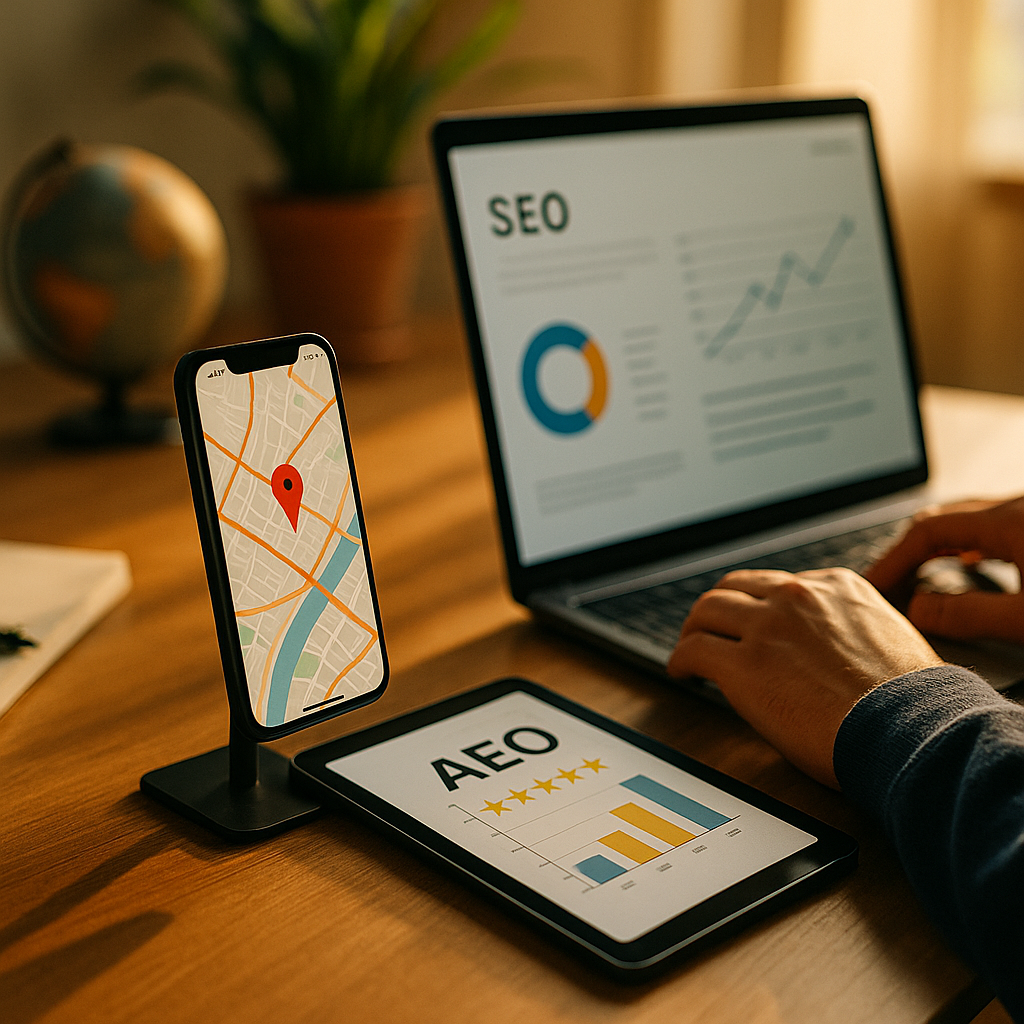
Nearly 60% of Google searches now end without a click, according to eMarketer estimates on zero-click behavior. If your brand still treats generative search optimization as a side project for the SEO team, you’re already behind. The generative search ecosystem has collapsed three disciplines — GEO, AEO, and traditional SEO — into one operating model, and brands that keep them siloed are bleeding visibility they can’t even measure yet.
The Split That Never Should Have Happened
For a couple of years, marketing teams treated generative engine optimization (GEO) and answer engine optimization (AEO) as novelty disciplines bolted onto legacy SEO. Someone on the content team would “optimize for ChatGPT” as a side quest. Someone else owned the Google rankings dashboard. Nobody owned the overlap.
That separation made sense in 2023, when generative answers were a curiosity. It makes no sense now. Google’s AI Overviews appear on a majority of informational queries, ChatGPT search has hundreds of millions of weekly users, and Perplexity has become a default research tool for younger professionals. These aren’t separate channels anymore. They’re different rendering layers on top of the same underlying signal: does the internet trust your brand enough to cite it?
The real shift isn’t that AI search exists — it’s that discovery, answer-generation, and ranking now pull from the same trust signals, which means your content strategy can no longer be split across three separate teams and three separate dashboards.
Think of it this way: a large language model deciding whether to cite your brand in a summary is running a lightweight version of the same evaluation a search engine runs when deciding whether to rank you on page one. Authoritative sourcing, structured clarity, consistent entity signals, third-party corroboration. Same inputs, different output format.
Why “One Discipline” Isn’t Just a Nice Framing
This isn’t a semantic exercise for conference panels. It has real budget and org-chart implications.
Brands running separate teams for SEO, AEO, and GEO end up with duplicated content audits, conflicting keyword strategies, and — worst of all — inconsistent entity data across the web. If your Wikipedia page, Crunchbase profile, and press mentions describe your company differently than your website does, you’re actively confusing the retrieval systems that generative engines lean on. Consistency isn’t a nice-to-have. It’s the mechanism by which AI systems build confidence in what they cite.
Consider how enterprise marketers are consolidating identity, CDP, and attribution stacks for exactly this reason — fragmented data sources create fragmented trust signals, whether you’re feeding a recommendation algorithm or an LLM’s retrieval layer.
The operational fix is straightforward, even if the execution is not: build one content governance function that owns structured data, citation-worthy content, and traditional ranking signals together. Not three teams passing a brief back and forth.
What Actually Changed in the Ranking Logic
Traditional SEO rewarded keyword match, backlink authority, and page experience. Generative systems reward something slightly different: extractability. Can a model pull a clean, unambiguous fact or claim from your page without needing to interpret ambiguous phrasing?
- Direct-answer formatting (a clear sentence answering the implied question near the top of a section) increases citation likelihood in AI Overviews and chat-based answers.
- Structured data — schema markup for FAQs, products, and organizations — gives generative crawlers explicit, machine-readable confirmation of what a page is claiming.
- Original data and named-source quotes get cited disproportionately more than generic advice content, because LLMs are trained to prefer specificity over vague consensus.
- Freshness still matters, but recency signals now need to be explicit (dated updates, versioned claims) rather than implied by publish date alone.
None of this replaces traditional SEO fundamentals. It extends them. A page that ranks well organically because it’s well-structured, authoritative, and clearly written is already 80% of the way to being GEO-ready. The remaining 20% is about explicit answer formatting and structured markup that makes extraction trivial for a model.
Where Brands Are Getting This Wrong
The most common mistake right now: chasing “AI visibility” as a vanity metric disconnected from revenue. Marketing teams are spinning up dashboards to track how often their brand appears in ChatGPT or Perplexity answers, without connecting that visibility to pipeline, conversion, or even brand lift.
That’s backwards. Visibility in generative answers matters because it shapes consideration before a buyer ever hits your site — not because a citation count looks good in a board deck.
Second mistake: treating GEO as purely a content-team problem. It’s not. It’s a data governance problem, a PR problem, and increasingly a creator marketing problem. When someone asks an AI assistant “what’s the best influencer platform for mid-market DTC brands,” the model is pulling from review sites, forum threads, comparison articles, and yes, credible trade coverage. If your brand has no third-party footprint feeding that ecosystem, you don’t exist in the answer — no matter how good your own website is.
This is exactly why creator and PR-driven content strategies matter more now, not less. Coverage on trusted third-party publications, structured comparison content, and consistent entity mentions across the web all function as off-site trust signals that generative engines weigh heavily. It’s the same logic behind always-authentic creator partnerships — sustained, credible presence beats one-off campaigns, whether you’re optimizing for human trust or machine retrieval.
The Attribution Problem Nobody’s Solved
Here’s the uncomfortable part: measuring GEO and AEO performance is still genuinely hard. There’s no universal “AI search console” equivalent to Google Search Console. Some platforms, like ChatGPT and Perplexity, are slowly rolling out citation and referral tracking, but it’s fragmented and inconsistent across tools.
Brands are cobbling together measurement from a mix of referral traffic tagging, manual prompt testing, and third-party monitoring tools like Profound, Otterly, and Semrush’s AI visibility features. None of it is as clean as classic rank tracking.
This measurement gap mirrors a broader pattern the industry has already lived through. The same attribution murkiness that plagued influencer marketing for years — where brands struggled to connect creator content to actual conversions — is now playing out in generative search. The parallels to AI attribution trust gaps rooted in identity resolution are hard to miss. If you couldn’t cleanly attribute a TikTok view to a sale, you’re going to have the same headache attributing an AI Overview citation to a lead.
The pragmatic move: don’t wait for perfect measurement. Build directional tracking now (brand mention frequency, citation share versus competitors, referral traffic from AI platforms where available) and pair it with existing SEO and content KPIs. Treat it as an evolving input, not a finished dashboard.
What a Converged Strategy Actually Looks Like
Brands that are ahead on this aren’t running three playbooks. They’re running one, with a few added disciplines layered in.
- Unify the content and structured data teams. Whoever owns your website content should also own schema markup, entity consistency, and structured FAQ content. Splitting these creates gaps generative crawlers exploit against you.
- Audit your off-site entity footprint. Check how your brand is described on Wikipedia, Crunchbase, G2, industry directories, and press coverage. Inconsistencies here directly undermine AI trust signals, regardless of how good your owned content is.
- Prioritize original data and named expertise. Generic “10 tips” content is losing ground fast. Proprietary research, named subject-matter experts, and quotable statistics get cited far more often — the same EEAT logic Google has pushed for years now applies doubly in generative retrieval.
- Build FAQ and comparison content deliberately. Structured question-and-answer formatting isn’t just good UX. It’s the exact shape generative engines prefer to extract and cite.
- Track citation share, not just rank position. Start monitoring how often your brand versus competitors gets referenced in AI-generated answers for your category’s core queries.
This convergence also has budget implications worth flagging to finance and leadership. The same governance-first thinking driving AI marketing spend toward governance applies here. Generative search optimization isn’t a growth-hacking line item — it’s infrastructure. Treat it like the identity and measurement stack investments brands are already making elsewhere in martech.
The Creator and PR Angle Brands Keep Missing
Here’s a detail that gets buried in most GEO conversations: generative engines weight third-party corroboration heavily. A claim made only on your own website carries less retrieval confidence than the same claim echoed across independent sources.
That means creator content, trade press coverage, and structured comparison articles aren’t just top-of-funnel awareness plays anymore. They’re literal training and retrieval inputs for the tools your future customers are asking questions to.
Brands running tiered influencer programs are already sitting on an underused asset here. Structured creator content, consistent messaging across tiers, and searchable long-form reviews all feed the same ecosystem generative engines pull from. It’s worth revisiting how tiered influencer models function as enterprise infrastructure — the same content discipline that scales creator programs also scales AI visibility.
PR teams should take note too. A single well-placed, data-backed feature in a trusted trade publication can outweigh a dozen generic blog posts in terms of generative citation weight. Quality and credibility of the source matter more than volume.
Is This Actually Replacing Traditional SEO?
No. And be skeptical of anyone claiming SEO is dead. Traditional organic search still drives the majority of measurable website traffic for most B2B brands, and HubSpot’s own research consistently shows organic search remains a top-performing channel for lead generation. What’s changed is the shape of the discipline, not its existence.
Rank tracking, technical SEO, backlink quality, page speed — all of it still matters. GEO and AEO are additive layers requiring the same foundational hygiene, plus new formatting and structured data disciplines on top.
The brands treating this as “SEO is over, AI search is everything” are going to overcorrect and lose organic share they can’t afford to lose. The brands treating it as “nothing has changed” are going to wake up invisible in a growing share of buyer research moments. The answer is convergence, not replacement.
Next Step
Audit one high-intent commercial page this week: check its schema markup, confirm your brand’s entity data matches across three external sources, and rewrite the top paragraph as a direct, quotable answer. Do that ten times before you build another dashboard.
Frequently Asked Questions
What’s the difference between GEO, AEO, and traditional SEO?
Traditional SEO optimizes for ranking in search engine results pages. AEO (answer engine optimization) focuses on getting content featured in direct-answer formats like featured snippets and voice search. GEO (generative engine optimization) optimizes specifically for being cited or summarized by AI systems like ChatGPT, Perplexity, and Google’s AI Overviews. In practice, they now share nearly identical underlying signals: authority, structure, and clarity.
How do brands measure ROI on generative search optimization?
Measurement is still immature compared to traditional SEO. Brands typically combine referral traffic from AI platforms (where trackable), manual prompt testing to check citation frequency, and third-party AI visibility tools like Profound or Semrush’s AI tracking features. Treat these as directional signals rather than precise attribution until platform-level reporting matures.
Does structured data actually help with AI citations?
Yes. Schema markup gives generative crawlers explicit, machine-readable confirmation of what a page claims, which reduces ambiguity and increases the likelihood of accurate extraction and citation. FAQ schema, organization schema, and product schema are particularly high-value for this purpose.
Should brands create separate content for AI search versus traditional search?
Generally, no. Well-structured, authoritative content built for traditional SEO already satisfies most generative engine requirements. The additions needed are typically direct-answer formatting, explicit structured data, and stronger sourcing — layered onto existing content rather than built as a parallel content stream.
Why does third-party coverage matter more in generative search?
Generative engines weight corroboration across independent sources heavily. A claim appearing only on a brand’s own site carries less retrieval confidence than the same claim echoed in trade press, review sites, or creator content. This makes PR and earned media strategically important for AI visibility, not just brand awareness.
Frequently Asked Questions
What’s the difference between GEO, AEO, and traditional SEO?
Traditional SEO optimizes for ranking in search engine results pages. AEO (answer engine optimization) focuses on getting content featured in direct-answer formats like featured snippets and voice search. GEO (generative engine optimization) optimizes specifically for being cited or summarized by AI systems like ChatGPT, Perplexity, and Google’s AI Overviews. In practice, they now share nearly identical underlying signals: authority, structure, and clarity.
How do brands measure ROI on generative search optimization?
Measurement is still immature compared to traditional SEO. Brands typically combine referral traffic from AI platforms (where trackable), manual prompt testing to check citation frequency, and third-party AI visibility tools like Profound or Semrush’s AI tracking features. Treat these as directional signals rather than precise attribution until platform-level reporting matures.
Does structured data actually help with AI citations?
Yes. Schema markup gives generative crawlers explicit, machine-readable confirmation of what a page claims, which reduces ambiguity and increases the likelihood of accurate extraction and citation. FAQ schema, organization schema, and product schema are particularly high-value for this purpose.
Should brands create separate content for AI search versus traditional search?
Generally, no. Well-structured, authoritative content built for traditional SEO already satisfies most generative engine requirements. The additions needed are typically direct-answer formatting, explicit structured data, and stronger sourcing — layered onto existing content rather than built as a parallel content stream.
Why does third-party coverage matter more in generative search?
Generative engines weight corroboration across independent sources heavily. A claim appearing only on a brand’s own site carries less retrieval confidence than the same claim echoed in trade press, review sites, or creator content. This makes PR and earned media strategically important for AI visibility, not just brand awareness.
Top Influencer Marketing Agencies
The leading agencies shaping influencer marketing in 2026
Agencies ranked by campaign performance, client diversity, platform expertise, proven ROI, industry recognition, and client satisfaction. Assessed through verified case studies, reviews, and industry consultations.
Moburst

-
2

The Shelf
Boutique Beauty & Lifestyle Influencer AgencyA data-driven boutique agency specializing exclusively in beauty, wellness, and lifestyle influencer campaigns on Instagram and TikTok. Best for brands already focused on the beauty/personal care space that need curated, aesthetic-driven content.Clients: Pepsi, The Honest Company, Hims, Elf Cosmetics, Pure LeafVisit The Shelf → -
3

Audiencly
Niche Gaming & Esports Influencer AgencyA specialized agency focused exclusively on gaming and esports creators on YouTube, Twitch, and TikTok. Ideal if your campaign is 100% gaming-focused — from game launches to hardware and esports events.Clients: Epic Games, NordVPN, Ubisoft, Wargaming, Tencent GamesVisit Audiencly → -
4

Viral Nation
Global Influencer Marketing & Talent AgencyA dual talent management and marketing agency with proprietary brand safety tools and a global creator network spanning nano-influencers to celebrities across all major platforms.Clients: Meta, Activision Blizzard, Energizer, Aston Martin, WalmartVisit Viral Nation → -
5

The Influencer Marketing Factory
TikTok, Instagram & YouTube CampaignsA full-service agency with strong TikTok expertise, offering end-to-end campaign management from influencer discovery through performance reporting with a focus on platform-native content.Clients: Google, Snapchat, Universal Music, Bumble, YelpVisit TIMF → -
6

NeoReach
Enterprise Analytics & Influencer CampaignsAn enterprise-focused agency combining managed campaigns with a powerful self-service data platform for influencer search, audience analytics, and attribution modeling.Clients: Amazon, Airbnb, Netflix, Honda, The New York TimesVisit NeoReach → -
7

Ubiquitous
Creator-First Marketing PlatformA tech-driven platform combining self-service tools with managed campaign options, emphasizing speed and scalability for brands managing multiple influencer relationships.Clients: Lyft, Disney, Target, American Eagle, NetflixVisit Ubiquitous → -
8

Obviously
Scalable Enterprise Influencer CampaignsA tech-enabled agency built for high-volume campaigns, coordinating hundreds of creators simultaneously with end-to-end logistics, content rights management, and product seeding.Clients: Google, Ulta Beauty, Converse, AmazonVisit Obviously →