


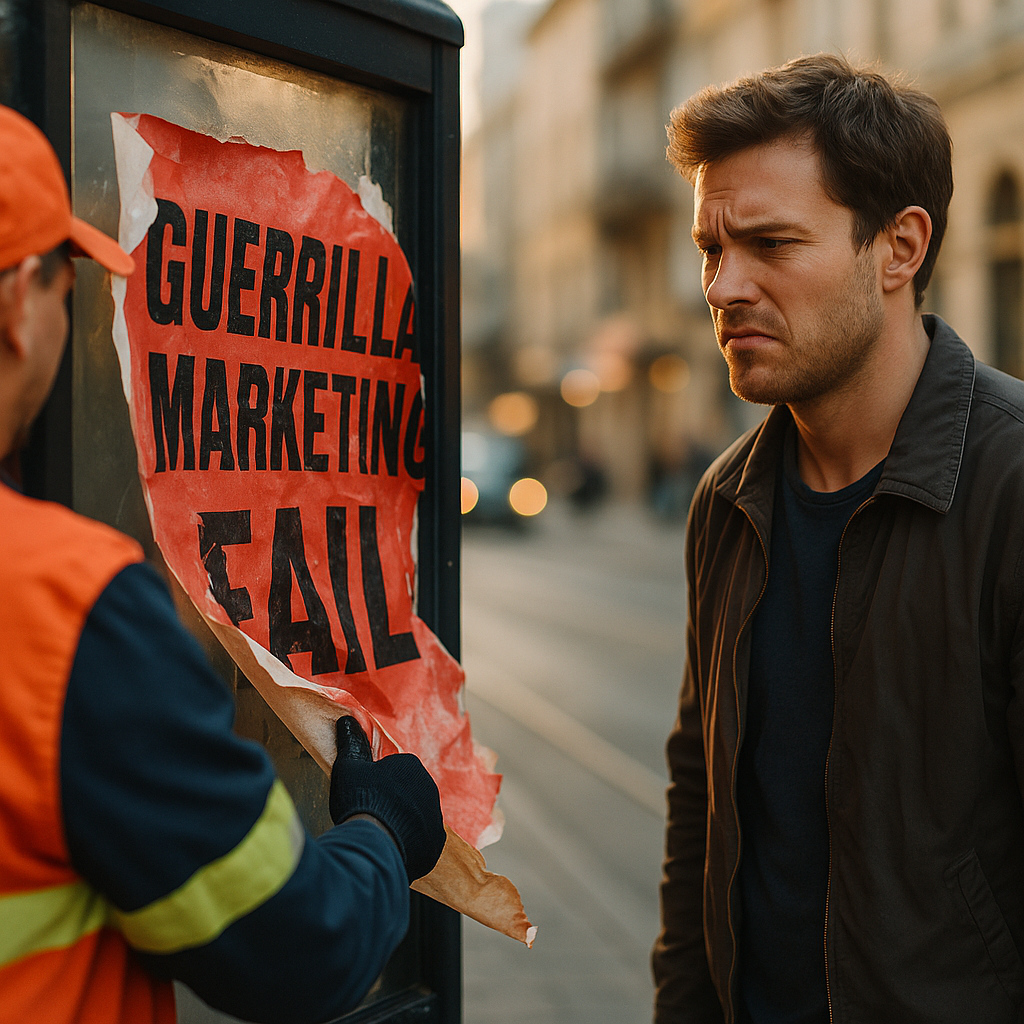
A post-mortem of a guerrilla marketing campaign that was misinterpreted sheds light on the risks and complexities of unconventional branding tactics. As businesses chase unique engagement, unexpected outcomes can impact public perception. Understanding why creative ideas backfire helps marketers balance innovation and responsibility. What lessons can we draw from a campaign that missed its mark?
The Rise of Guerrilla Marketing and Its Appeal
Guerrilla marketing, once a fringe approach, now attracts major brands seeking to stand out in a saturated marketplace. Its premise relies on low-cost, high-impact tactics that disrupt conventional advertising, often leveraging surprise and curiosity. In 2025, digital fatigue has pushed brands to pursue real-world engagement that feels authentic and memorable.
Recent surveys by Statista show that 62% of consumers appreciate interactive or novel advertising experiences. Marketers, aware of ad blindness, are using guerrilla campaigns to generate organic buzz and media coverage. However, this very unpredictability—the strength of guerrilla marketing—also presents unique risks.
Case Study: The Campaign That Got Misinterpreted
In early 2025, a beverage company launched an ambitious guerrilla campaign in several major cities. Branded, cryptic symbols began appearing in public places, coupled with mysterious packages and coordinated social media teasers. The effort aimed to spark intrigue, encouraging people to share images and decode the message, ultimately revealing a new product launch.
However, public reaction quickly deviated from expectations. The unexplained symbols resembled iconography associated with recent hacktivist events, and the unmarked packages sparked concerns about safety. Social channels filled with speculation, with terms like “urban threat” trending within hours. Local authorities responded, escalating the campaign into mainstream news for reasons unrelated to the brand’s intentions.
Why the Message Was Misinterpreted
One of the central missteps was neglecting context. A successful guerrilla marketing campaign works only if audiences perceive it as playful or intriguing. Research by Adweek highlights how rising anxiety about public safety has increased consumer sensitivity to ambiguous events. The beverage company failed to account for this emotional climate.
Additionally, the choice of symbols and lack of transparent branding led to confusion. While anonymity can increase viral reach, it also removes vital cues for interpretation. Without clear association to a brand or harmless context, the public defaulted to caution. News media’s amplification reinforced the narrative of potential threat, overshadowing the intended curiosity and engagement.
The Ripple Effect: Short and Long-Term Consequences
The fallout from the misinterpreted guerrilla marketing campaign was immediate. The company issued public clarifications and coordinated with local authorities to mitigate safety concerns. Despite swift damage control, the campaign’s budget inflated due to crisis management and lost sales opportunities.
In the months that followed, trust metrics plummeted. Brand sentiment analysis using AI-based tools recorded a 23% drop in positive mentions within target demographics. Competitors capitalized on the incident, launching “safe and transparent” campaigns that resonated with shaken audiences. Internally, the marketing team reviewed its creative approval workflow, emphasizing ethics and stakeholder consultation for future projects.
However, the debacle also sparked industry-wide reflection. Marketing conferences in 2025 have featured case studies dissecting the incident, helping peers learn from the missteps. The campaign became a cautionary tale, underscoring the importance of aligning creativity with cultural context and public sentiment.
Lessons Learned: Best Practices for Transparent Guerrilla Campaigns
Despite the backlash, the attempt offers valuable lessons for brands seeking to innovate responsibly. Marketers considering guerrilla tactics should focus on the following best practices:
- Audience Empathy: Consider current cultural, emotional, and societal factors. Regularly monitor trends and public sensitivities.
- Transparent Branding: Even when playful, ensure elements can be easily traced back to your brand within the first engagement cycle.
- Collaboration With Authorities: Notify local government, law enforcement, or community groups when campaigns use public spaces or might be misconstrued.
- Rapid Response Plans: Prepare statements, social posts, and escalation procedures in case your campaign is misunderstood.
- Stakeholder Review: Consult a diverse panel—including legal, PR, and cultural experts—during campaign development.
- Pre-Testing: Conduct small-scale pilots or focus groups to identify potential misinterpretations before full launch.
By prioritizing clarity, empathy, and transparency, brands can reduce the risk of a guerrilla marketing campaign being misinterpreted, ensuring creativity generates positive, lasting impressions rather than confusion or backlash.
Rebuilding Trust After a Failed Guerrilla Marketing Campaign
Post-crisis, the real test lies in restoring customer confidence. The affected beverage company initiated an apology tour, hosting Q&A sessions and supporting local community projects. Most importantly, transparency became central to its recovery strategy: every subsequent campaign featured clear branding and open communication channels.
Faithful consumers began to return as the proactive approach was recognized. Analysts noticed incremental improvements in brand sentiment over six months, especially where the company maintained honest engagement and quickly addressed concerns. This experience reinforces that accountability and humility are as critical as creativity in modern marketing.
Conclusion
When a guerrilla marketing campaign is misinterpreted, the consequences extend far beyond lost engagement—public trust and brand reputation are at stake. Success lies in marrying original ideas with cultural awareness and transparent communication. For every marketer, the key takeaway is simple: creative risks require responsibility and preparation to ensure an unforgettable—rather than regrettable—impact.
FAQs: Guerrilla Marketing Campaigns and Misinterpretation
-
What is a guerrilla marketing campaign?
A guerrilla marketing campaign uses unconventional tactics to surprise or engage audiences, often relying on creativity, low budgets, and unique placements rather than traditional advertisements.
-
Why do guerrilla marketing campaigns get misinterpreted?
Misinterpretation often occurs when campaigns lack clear branding, ignore cultural context, or use symbols and methods that could be linked to negative events. This leads audiences to draw unintended conclusions.
-
How can brands avoid having campaigns misinterpreted?
Brands should conduct pre-launch testing, communicate with local authorities, ensure identifiable branding, and maintain rapid response plans. Understanding public sentiment and context helps minimize risk.
-
What are the main risks of a misinterpreted campaign?
Main risks include damage to brand reputation, erosion of trust, potential legal action, increased costs for crisis management, and negative media coverage.
-
Can a brand recover from a failed guerrilla campaign?
Yes, with transparent communication, genuine public engagement, and a focus on rebuilding trust. Acknowledging mistakes and showing accountability are key to regaining customer confidence.
Top Influencer Marketing Agencies
The leading agencies shaping influencer marketing in 2026
Agencies ranked by campaign performance, client diversity, platform expertise, proven ROI, industry recognition, and client satisfaction. Assessed through verified case studies, reviews, and industry consultations.
Moburst

-
2

The Shelf
Boutique Beauty & Lifestyle Influencer AgencyA data-driven boutique agency specializing exclusively in beauty, wellness, and lifestyle influencer campaigns on Instagram and TikTok. Best for brands already focused on the beauty/personal care space that need curated, aesthetic-driven content.Clients: Pepsi, The Honest Company, Hims, Elf Cosmetics, Pure LeafVisit The Shelf → -
3

Audiencly
Niche Gaming & Esports Influencer AgencyA specialized agency focused exclusively on gaming and esports creators on YouTube, Twitch, and TikTok. Ideal if your campaign is 100% gaming-focused — from game launches to hardware and esports events.Clients: Epic Games, NordVPN, Ubisoft, Wargaming, Tencent GamesVisit Audiencly → -
4

Viral Nation
Global Influencer Marketing & Talent AgencyA dual talent management and marketing agency with proprietary brand safety tools and a global creator network spanning nano-influencers to celebrities across all major platforms.Clients: Meta, Activision Blizzard, Energizer, Aston Martin, WalmartVisit Viral Nation → -
5

The Influencer Marketing Factory
TikTok, Instagram & YouTube CampaignsA full-service agency with strong TikTok expertise, offering end-to-end campaign management from influencer discovery through performance reporting with a focus on platform-native content.Clients: Google, Snapchat, Universal Music, Bumble, YelpVisit TIMF → -
6

NeoReach
Enterprise Analytics & Influencer CampaignsAn enterprise-focused agency combining managed campaigns with a powerful self-service data platform for influencer search, audience analytics, and attribution modeling.Clients: Amazon, Airbnb, Netflix, Honda, The New York TimesVisit NeoReach → -
7

Ubiquitous
Creator-First Marketing PlatformA tech-driven platform combining self-service tools with managed campaign options, emphasizing speed and scalability for brands managing multiple influencer relationships.Clients: Lyft, Disney, Target, American Eagle, NetflixVisit Ubiquitous → -
8

Obviously
Scalable Enterprise Influencer CampaignsA tech-enabled agency built for high-volume campaigns, coordinating hundreds of creators simultaneously with end-to-end logistics, content rights management, and product seeding.Clients: Google, Ulta Beauty, Converse, AmazonVisit Obviously →