


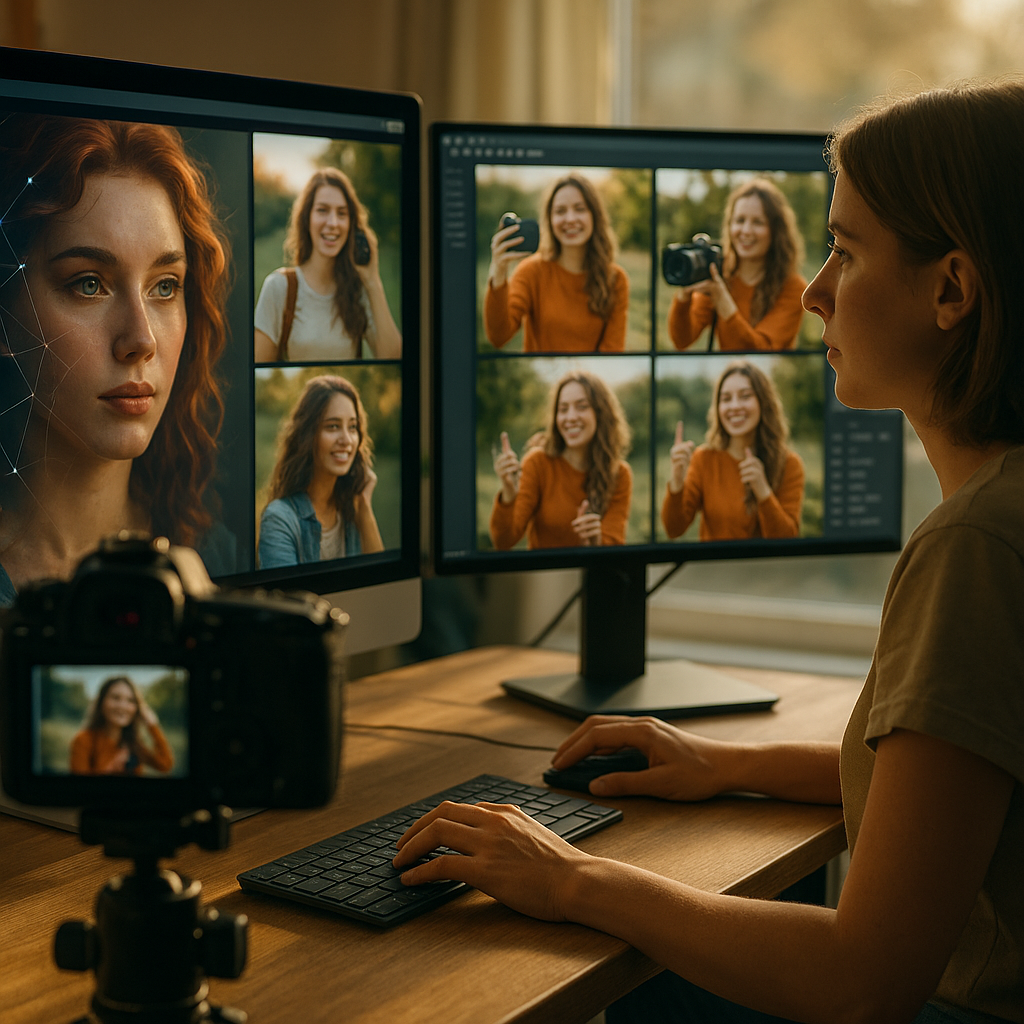
The Hybrid Content Problem Nobody Planned For
Here’s a number that should make you uncomfortable: 72% of marketing teams now use generative AI tools to produce campaign assets, according to HubSpot’s State of Marketing report. Yet fewer than one in five have a documented framework for how AI-generated creative and creator-produced content coexist inside the same campaign. The result? A growing mess of mismatched assets, inconsistent disclosure labels, and brand coherence breakdowns that erode trust at every funnel stage. Designing a hybrid asset architecture — one that assigns AI-generated creative and creator-produced content to the right role — isn’t optional anymore. It’s the operational backbone of modern influencer campaigns.
Why “Just Use Both” Isn’t a Strategy
Most teams fall into the same trap. They spin up AI assets for speed, hire creators for authenticity, and dump everything into the same distribution plan. That’s not a hybrid strategy — it’s a Frankenstein campaign.
The problems compound fast:
- Disclosure confusion. The FTC’s updated guidance requires clear material connection disclosures for sponsored content. AI-generated assets carry separate labeling expectations under emerging regulations from the EU AI Act and platform-specific rules on Meta and TikTok. When both asset types live in the same campaign without distinct disclosure protocols, you’re exposed.
- Brand coherence drift. AI tools produce polished, on-brand visuals at scale. Creators produce messy, human, platform-native content. Without a shared design system connecting them, audiences experience tonal whiplash between a sleek AI carousel on Instagram and a raw creator testimonial in the same ad set.
- Funnel mismatch. AI-generated assets tend to perform differently than creator content at different stages. Throwing both at mid-funnel consideration without differentiation wastes spend and muddies attribution.
The fix isn’t choosing one over the other. It’s building an architecture that gives each format a defined job.
Mapping Asset Types to Funnel Stages
Think of your funnel as a series of conversations. At the top, you’re interrupting. In the middle, you’re educating. At the bottom, you’re converting. AI and creator assets serve different conversational roles at each stage.
Top of funnel — Awareness and discovery: AI-generated creative excels here. You need volume, variation, and speed. Tools like Midjourney, Runway, and Adobe Firefly let you produce dozens of scroll-stopping visual variants for paid social in hours. Use AI assets for programmatic display, prospecting carousels, and brand awareness video cuts. Creator content at this stage works best as organic discovery — think TikTok hooks and Reels that ride algorithmic distribution. The key distinction: AI handles the paid volume play, creators handle the organic reach play. If you’re building vertical video formats for discovery, lean on creators for the hero cut and AI for the derivative variants.
Mid-funnel — Consideration and engagement: This is where creator content dominates. Audiences evaluating a product need social proof, real usage demonstrations, and relatable narratives. AI-generated testimonials feel hollow here — and savvy consumers spot them. Assign creator assets to product reviews, comparison content, tutorial-style videos, and community Q&A. AI can still support mid-funnel by generating supplementary assets: product spec graphics, lifestyle backgrounds for creator clips, or localized caption variations for different audience segments.
The strongest hybrid campaigns use AI as the connective tissue between creator assets — generating the supporting graphics, caption variations, and retargeting visuals that keep creator-produced hero content circulating across surfaces.
Bottom of funnel — Conversion: Both asset types have a role, but the division matters. Creator-produced content drives direct-to-checkout conversions through authentic urgency and personal endorsement. AI-generated assets handle the mechanical conversion scaffolding: dynamic product ads, personalized retargeting banners, abandoned cart creative, and price-point callout variations. Never use AI-generated “fake creator” content at the conversion stage. Trust is highest-stakes there, and the blowback from perceived deception is severe.
Platform Surface Assignment: Where Each Format Belongs
Funnel stage alone doesn’t determine asset assignment. Platform surface matters just as much — sometimes more.
TikTok and Reels (organic feed): Creator-first. These platforms’ algorithms reward authenticity signals: native filming, face-to-camera delivery, and unpolished production. AI-generated content struggles with algorithmic reach here. Use creators. Period. For guidance on structuring these briefs, look at how creator briefs that beat AI detection are built.
TikTok and Meta (paid surfaces): Hybrid. You can run AI-generated visuals in paid placements where algorithmic authenticity signals matter less. But even in paid, creator-produced ads consistently outperform polished brand creative on cost-per-click — TikTok’s own creative best practices emphasize creator-style production for Spark Ads. The smart move: use AI to generate the hook variants and thumbnail tests, then slot creator content as the primary asset.
YouTube (long-form and Shorts): Creator-dominant for integration content. AI for pre-roll bumpers and companion banners.
LinkedIn and X (B2B and thought leadership): AI-generated infographics and data visualizations perform well. Creator content works for executive thought leadership and employee advocacy. The blend depends on whether your campaign targets decision-makers (favor creator) or broad awareness (favor AI-generated supporting assets).
Programmatic display and CTV: AI-generated creative owns this surface. You need hundreds of variants for dynamic creative optimization. No creator can match the volume requirements. Build a multi-format asset library from a single creator shoot and let AI extend those assets into display and CTV formats.
Solving the Disclosure Problem Before It Solves You
This is where most hybrid campaigns break down catastrophically.
The disclosure requirements for AI-generated content and creator-sponsored content overlap but are not identical. Getting them wrong doesn’t just risk FTC enforcement — it tanks audience trust. Here’s how to think about it:
- Creator-produced, brand-sponsored content requires #ad, #sponsored, or platform-native partnership labels (like Instagram’s Paid Partnership tag). This hasn’t changed.
- AI-generated creative increasingly requires labeling under Meta’s AI content policies, the EU AI Act’s transparency obligations, and emerging state-level legislation in the US. If a realistic human likeness is AI-generated, disclosure is mandatory on most platforms.
- Hybrid assets — like an AI-modified version of creator footage, or a creator voiceover laid over AI-generated visuals — need both disclosure layers. This is the gap most brands miss.
Your architecture needs a disclosure matrix: a simple document mapping every asset type in the campaign to its required disclosures by platform. Build it during campaign planning, not post-production. For a deeper framework, review how AI-remix-proof disclosure compliance works in practice.
If an audience member cannot tell whether they’re looking at AI-generated creative or creator content — and the answer would change their perception — you have a disclosure obligation, regardless of whether a specific regulation mandates it. Trust is the asset you cannot regenerate.
Maintaining Brand Coherence Across the Hybrid
Brand coherence in a hybrid campaign doesn’t mean visual uniformity. It means narrative consistency.
The audience should experience a coherent brand story whether they encounter an AI-generated awareness ad or a creator’s unboxing video. That coherence comes from three elements:
- A shared messaging spine. Define three to five core claims or value propositions. Every asset — AI or creator — must anchor to at least one. Creators express it in their voice. AI assets express it in the brand’s visual language. Same spine, different muscles.
- A consistent color and type system for AI assets that doesn’t clash with the naturalistic look of creator content. The fastest way to create tonal whiplash is to run a hyper-designed AI carousel next to a low-fi creator Reel with zero visual connection.
- Transition assets. These are the bridge pieces — lower thirds, branded frames, intro/outro bumpers — that creator content passes through to signal brand affiliation without suffocating authenticity. AI is perfect for generating these at scale.
One practical test: show a random audience member three assets from your campaign in isolation. Can they tell the assets belong to the same brand? If not, your coherence system is broken.
The Operational Playbook
Architecture without execution is a PDF nobody reads. Here’s how to operationalize a hybrid asset structure:
Step 1: Audit your campaign brief. Map every required asset to a funnel stage, platform surface, and audience segment. Tag each as “AI-primary,” “creator-primary,” or “hybrid.”
Step 2: Build the disclosure matrix. Every asset tag gets a corresponding disclosure requirement. No exceptions, no “we’ll figure it out in QA.”
Step 3: Create the messaging spine document. Share it with both your AI prompt engineers and your creator partners. Creators need to see the AI-generated assets they’ll coexist with, and your AI team needs to see the creator content to design complementary — not competing — visuals.
Step 4: Sequence production. Shoot creator content first. Creator footage becomes the source material for AI-generated derivative assets — thumbnails, retargeting crops, display variants. This ensures visual coherence flows from human content outward, not the reverse.
Step 5: Run a coherence review before launch. Pull one asset from each funnel stage and lay them side by side. Does the narrative connect? Would disclosure hold up to a journalist’s scrutiny? Ship only when both answers are yes.
The brands winning with hybrid campaigns aren’t the ones using the most AI or the most creators. They’re the ones who architected the relationship between the two before a single asset was produced.
Your next step: Pull your current campaign brief and tag every asset with its format origin (AI or creator), funnel stage, platform, and disclosure requirement. If you can’t fill in all four columns for every asset, your hybrid architecture has gaps — and those gaps are where trust, compliance, and performance leak out.
FAQs
Do I need to disclose AI-generated creative separately from sponsored creator content?
Yes. Sponsored creator content requires FTC-compliant sponsorship disclosures (#ad, paid partnership labels), while AI-generated creative faces separate labeling requirements under platform policies and emerging legislation like the EU AI Act. Hybrid assets that combine both need dual disclosure layers.
Which funnel stage benefits most from AI-generated creative?
Top-of-funnel awareness and bottom-of-funnel retargeting benefit most from AI-generated assets. At the top, AI delivers the volume and variation needed for prospecting. At the bottom, it powers dynamic product ads and personalized retargeting banners. Mid-funnel consideration typically favors creator-produced content for its authenticity and social proof.
How do I prevent brand coherence problems when mixing AI and creator content?
Establish a shared messaging spine of three to five core value propositions that both AI and creator assets must anchor to. Shoot creator content first and use it as source material for AI-generated derivatives. Use transition assets like branded frames and lower thirds to visually bridge the two styles.
Should I let creators see the AI-generated assets in my campaign?
Absolutely. Sharing AI-generated assets with creators during briefing helps them understand the visual ecosystem their content will live in. This reduces tonal clashes and helps creators naturally complement — rather than compete with — the AI-produced elements of the campaign.
Can I use AI to generate creator-style content for organic social feeds?
This is risky. Platforms like TikTok and Instagram algorithmically reward authentic, native-feeling content. AI-generated content mimicking creator style often underperforms organically and can trigger AI detection flags that reduce reach. Reserve AI-generated assets for paid placements and supporting formats, and use real creators for organic feed content.
Top Influencer Marketing Agencies
The leading agencies shaping influencer marketing in 2026
Agencies ranked by campaign performance, client diversity, platform expertise, proven ROI, industry recognition, and client satisfaction. Assessed through verified case studies, reviews, and industry consultations.
Moburst

-
2

The Shelf
Boutique Beauty & Lifestyle Influencer AgencyA data-driven boutique agency specializing exclusively in beauty, wellness, and lifestyle influencer campaigns on Instagram and TikTok. Best for brands already focused on the beauty/personal care space that need curated, aesthetic-driven content.Clients: Pepsi, The Honest Company, Hims, Elf Cosmetics, Pure LeafVisit The Shelf → -
3

Audiencly
Niche Gaming & Esports Influencer AgencyA specialized agency focused exclusively on gaming and esports creators on YouTube, Twitch, and TikTok. Ideal if your campaign is 100% gaming-focused — from game launches to hardware and esports events.Clients: Epic Games, NordVPN, Ubisoft, Wargaming, Tencent GamesVisit Audiencly → -
4

Viral Nation
Global Influencer Marketing & Talent AgencyA dual talent management and marketing agency with proprietary brand safety tools and a global creator network spanning nano-influencers to celebrities across all major platforms.Clients: Meta, Activision Blizzard, Energizer, Aston Martin, WalmartVisit Viral Nation → -
5

The Influencer Marketing Factory
TikTok, Instagram & YouTube CampaignsA full-service agency with strong TikTok expertise, offering end-to-end campaign management from influencer discovery through performance reporting with a focus on platform-native content.Clients: Google, Snapchat, Universal Music, Bumble, YelpVisit TIMF → -
6

NeoReach
Enterprise Analytics & Influencer CampaignsAn enterprise-focused agency combining managed campaigns with a powerful self-service data platform for influencer search, audience analytics, and attribution modeling.Clients: Amazon, Airbnb, Netflix, Honda, The New York TimesVisit NeoReach → -
7

Ubiquitous
Creator-First Marketing PlatformA tech-driven platform combining self-service tools with managed campaign options, emphasizing speed and scalability for brands managing multiple influencer relationships.Clients: Lyft, Disney, Target, American Eagle, NetflixVisit Ubiquitous → -
8

Obviously
Scalable Enterprise Influencer CampaignsA tech-enabled agency built for high-volume campaigns, coordinating hundreds of creators simultaneously with end-to-end logistics, content rights management, and product seeding.Clients: Google, Ulta Beauty, Converse, AmazonVisit Obviously →