


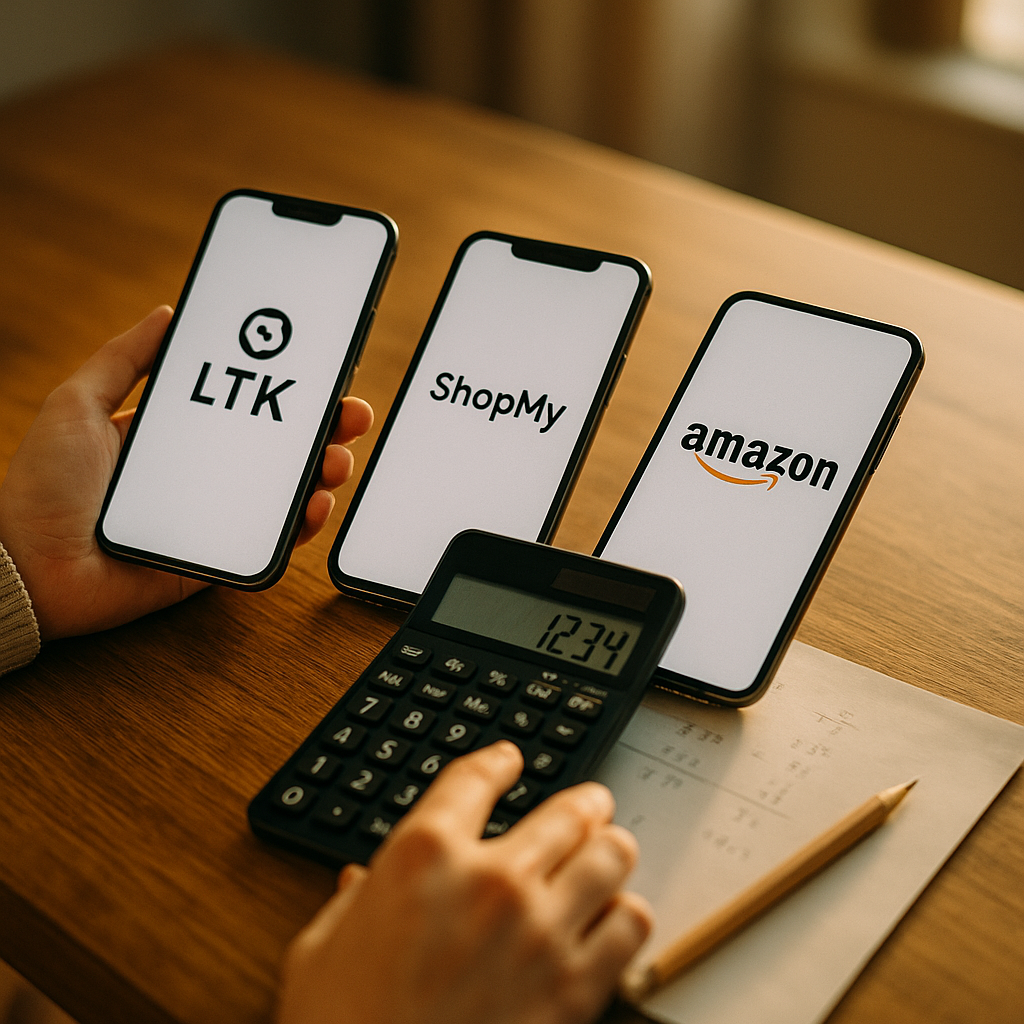
Creators funneled an estimated $86 billion in sales through affiliate and influencer commerce channels last year, according to eMarketer tracking. Yet most brand teams are still picking platforms based on vibes rather than margin math. If you’re building an affiliate commerce platforms strategy for next year’s program, the choice between LTK, ShopMy, and Amazon Influencer isn’t cosmetic. It changes your commission structure, your creator pool, and your reporting headaches.
Three Very Different Bets on Where Commerce Is Headed
LTK bet early that fashion and beauty creators needed a dedicated shopping app, not just a linking tool. ShopMy bet that creators wanted control and transparency that legacy platforms never gave them. Amazon Influencer bet that reach and logistics would always beat curation. All three bets paid off, which is why brands now juggle multiple platforms instead of picking a winner.
That fragmentation is annoying for finance teams reconciling payouts, but it’s a gift for marketers who understand each platform’s strengths. Run the wrong program on the wrong platform and you’ll bleed commission dollars on traffic that would have converted for free.
LTK: Built for Fashion, Priced for Scale
LTK (formerly LIKEtoKNOW.it) still owns the fashion and lifestyle shopping app category. Its creator base skews toward established mid-tier and macro talent who’ve built shoppable storefronts over years, not weeks. That maturity shows up in conversion rates: LTK creators typically convert at higher rates than generic link-in-bio setups because their audiences already know the app’s shopping flow.
The tradeoff is cost. LTK’s commission structures often run higher than ShopMy’s, and the platform takes its own cut on top of what brands pay creators. Brands also give up some direct relationship control since LTK mediates a chunk of the creator communication and payout process. For established retail and beauty brands with healthy margins, that’s a fair trade. For lean DTC brands watching every point of margin, it can sting.
The real cost of an affiliate platform isn’t the commission rate on the rate card. It’s the blended cost after platform fees, payout delays, and the manual reconciliation work your finance team absorbs every month.
LTK also locks brands into its own attribution windows and reporting dashboards, which don’t always sync cleanly with internal CDPs. If your team is already stretched thin on creator attribution work, budget extra time for LTK data reconciliation.
ShopMy Is Eating Share, and Brands Should Know Why
ShopMy has become the insurgent favorite among creators who are tired of opaque commission math. The platform gives creators visibility into which brands pay what, in real time, which sounds like a headache for brands until you realize it actually improves negotiation efficiency. Creators self-select into deals that make sense, so brands spend less time chasing lowball offers or renegotiating rates mid-campaign.
For brands, ShopMy’s appeal is flexibility. You can run tiered commission structures, adjust rates by SKU or category, and get payout data faster than LTK’s cycle. ShopMy skews younger in its creator base too, with more nano and micro talent active on the platform than LTK’s more established roster. That makes it a better fit for brands testing new categories or trying to build affiliate relationships from scratch rather than renting an existing audience’s trust.
The catch: ShopMy’s reach is thinner at the top end. If you need macro or celebrity-tier creators moving serious volume, LTK still has deeper relationships there. ShopMy is winning the long tail, not (yet) the head of the curve.
Amazon Influencer: Reach Without Relationship
Amazon Influencer Program is the blunt instrument of the three. Its commission structure is famously thin, often 1 to 10 percent depending on category, and creators have almost no control over presentation, storefront design, or brand messaging beyond curating a storefront page. But it comes with something neither LTK nor ShopMy can match: Amazon’s own logistics, trust, and one-click purchase behavior.
Shoppers already have their card on file. They already trust the return policy. That frictionless path to purchase is why Amazon Influencer links can convert at scale even with mediocre content, which is both the program’s strength and its risk. Brands chasing volume over relationship depth do well here. Brands trying to build loyalty or premium positioning often find the program feels transactional and short-term.
Amazon also pays out on its own schedule, tied to its broader affiliate infrastructure, so payout timing questions that plague brands on other platforms are less of an issue here. The bigger operational headache is fraud and link stacking, since Amazon’s ecosystem makes it easy for creators (or bad actors posing as creators) to double-dip on promo codes and affiliate links across the same purchase funnel. If that’s a live concern for your program, the breakdown in promo code and affiliate link stacking is worth a close read before you scale spend.
Commission Structures and Payout Timing, Side by Side
Here’s the practical breakdown brand teams actually need when building next year’s budget model:
- LTK: Higher commission floors, established creator relationships, slower reporting sync, best for premium fashion and beauty brands with margin to spare.
- ShopMy: Flexible, negotiable commission tiers, faster payout visibility, strongest with micro and mid-tier creators, best for brands testing new verticals or building affiliate programs from the ground up.
- Amazon Influencer: Thin commissions, minimal creator relationship management needed, unmatched conversion friction reduction, best for brands prioritizing volume and already selling heavily on Amazon.
None of these numbers matter without clean measurement behind them. A program that looks profitable on a platform dashboard can look very different once you run it through independent lift measurement tools that strip out organic and paid overlap.
Which Platform Actually Fits Your Brand?
Stop asking “which platform is best” and start asking “what does my margin structure allow.” A brand with 60 percent gross margins can absorb LTK’s commission premium and still profit. A brand running 30 percent margins probably can’t, no matter how good the creator content looks.
Ask three questions before signing on with any platform for next year’s program:
- Does our margin structure support this platform’s commission floor at scale, not just in a pilot?
- Can our attribution stack actually reconcile this platform’s reporting with our internal sales data, or will finance be doing manual spreadsheet work every month?
- Does our creator roster already have relationships on this platform, or are we starting from zero?
Most mature brands end up running two platforms simultaneously rather than picking one. LTK or ShopMy for relationship-driven content commerce, Amazon Influencer for volume plays where the audience is already primed to buy. Running both isn’t inefficient, it’s diversification. Just make sure your reporting stack can actually tell you which platform is driving incremental revenue versus cannibalizing sales you’d have gotten anyway. A real-time attribution dashboard built to handle multi-platform affiliate data is no longer optional if you’re running more than one program.
Payout reconciliation is the other operational tax nobody budgets for correctly. Three platforms means three payout cycles, three commission structures, and three sets of creator tax documentation. Teams still doing this by hand in spreadsheets are losing hours every month that AI-assisted CRM tools can now automate.
Disclosure compliance doesn’t disappear just because a platform handles the transaction. Every affiliate link and promo code still needs to meet FTC disclosure guidance, regardless of which platform processes the sale. Build that into creator contracts up front rather than auditing after the fact.
The Bottom Line for Program Planning
Run the numbers on gross margin against each platform’s real commission cost, not the headline rate. LTK rewards brands with margin to spend and patience for slower reporting. ShopMy rewards brands willing to negotiate and build relationships in the mid-tier. Amazon Influencer rewards brands that already win on logistics and just need more eyeballs on the buy button.
Frequently Asked Questions
Which affiliate commerce platform pays creators the most?
LTK generally offers the highest commission floors among the three, particularly for established fashion and beauty creators, though ShopMy’s negotiable tiers can match or exceed LTK rates for specific campaigns depending on category and creator leverage.
Can brands run LTK, ShopMy, and Amazon Influencer at the same time?
Yes, and many established brands do. The operational challenge is reconciling three different payout cycles and reporting formats, which typically requires dedicated attribution tooling rather than manual spreadsheet tracking.
Is Amazon Influencer worth it for brands not already selling on Amazon?
Usually not. The program’s main advantage is Amazon’s existing purchase infrastructure and trust, which brands without an Amazon storefront presence can’t leverage effectively.
How do commission structures differ across these platforms?
LTK tends toward fixed, higher commission floors negotiated per brand relationship. ShopMy allows more flexible, tiered rates that creators can see and compare in real time. Amazon Influencer uses fixed category-based rates, often in the low single digits to around 10 percent.
Do these platforms handle FTC disclosure compliance automatically?
No. Disclosure obligations sit with the creator and brand regardless of which platform processes the affiliate transaction, so contracts and creator briefs still need explicit disclosure requirements built in.
Top Influencer Marketing Agencies
The leading agencies shaping influencer marketing in 2026
Agencies ranked by campaign performance, client diversity, platform expertise, proven ROI, industry recognition, and client satisfaction. Assessed through verified case studies, reviews, and industry consultations.
Moburst

-
2

The Shelf
Boutique Beauty & Lifestyle Influencer AgencyA data-driven boutique agency specializing exclusively in beauty, wellness, and lifestyle influencer campaigns on Instagram and TikTok. Best for brands already focused on the beauty/personal care space that need curated, aesthetic-driven content.Clients: Pepsi, The Honest Company, Hims, Elf Cosmetics, Pure LeafVisit The Shelf → -
3

Audiencly
Niche Gaming & Esports Influencer AgencyA specialized agency focused exclusively on gaming and esports creators on YouTube, Twitch, and TikTok. Ideal if your campaign is 100% gaming-focused — from game launches to hardware and esports events.Clients: Epic Games, NordVPN, Ubisoft, Wargaming, Tencent GamesVisit Audiencly → -
4

Viral Nation
Global Influencer Marketing & Talent AgencyA dual talent management and marketing agency with proprietary brand safety tools and a global creator network spanning nano-influencers to celebrities across all major platforms.Clients: Meta, Activision Blizzard, Energizer, Aston Martin, WalmartVisit Viral Nation → -
5

The Influencer Marketing Factory
TikTok, Instagram & YouTube CampaignsA full-service agency with strong TikTok expertise, offering end-to-end campaign management from influencer discovery through performance reporting with a focus on platform-native content.Clients: Google, Snapchat, Universal Music, Bumble, YelpVisit TIMF → -
6

NeoReach
Enterprise Analytics & Influencer CampaignsAn enterprise-focused agency combining managed campaigns with a powerful self-service data platform for influencer search, audience analytics, and attribution modeling.Clients: Amazon, Airbnb, Netflix, Honda, The New York TimesVisit NeoReach → -
7

Ubiquitous
Creator-First Marketing PlatformA tech-driven platform combining self-service tools with managed campaign options, emphasizing speed and scalability for brands managing multiple influencer relationships.Clients: Lyft, Disney, Target, American Eagle, NetflixVisit Ubiquitous → -
8

Obviously
Scalable Enterprise Influencer CampaignsA tech-enabled agency built for high-volume campaigns, coordinating hundreds of creators simultaneously with end-to-end logistics, content rights management, and product seeding.Clients: Google, Ulta Beauty, Converse, AmazonVisit Obviously →