


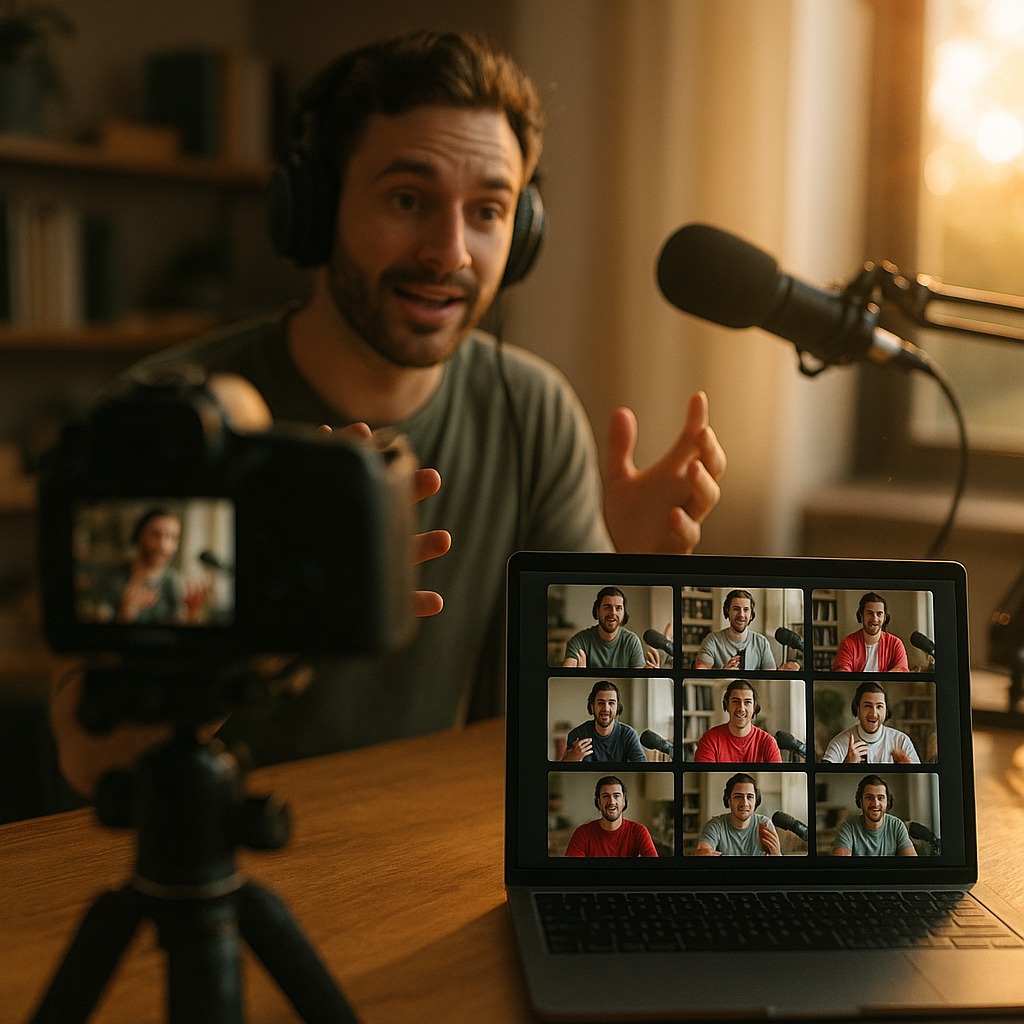
One creator video, three hundred versions, zero extra shoot days. That is the pitch behind AI personalization engines, and it is not vaporware anymore. Brands running fragmented, high-CPM feeds are discovering that a single “best performing” creator cut is a myth of the pre-AI era. AI personalization engines now slice one piece of creator content into dozens of micro-audience variants, each tuned to a different segment’s language, pacing, and hook. The question for 2026 isn’t whether this works. It’s whether your team is set up to manage it.
Why “One Video Fits All” Stopped Working
The old influencer marketing playbook assumed a creator’s audience was roughly homogeneous. Post once, let reach do the work. That logic collapses the moment you look at platform data. A single creator’s follower base can span five distinct behavioral clusters: bargain hunters, brand loyalists, gift shoppers, first time category buyers, and lurkers who never convert but drive social proof. Serving them identical creative is like using one sales script for every customer who walks into a store.
Marketers have already accepted this logic in paid search and email. Dynamic creative optimization has been standard in programmatic display for years. Influencer content lagged behind because video is expensive to reshoot and creators resist heavy post production tinkering. AI personalization engines solve that bottleneck by generating variants from existing footage rather than commissioning new production.
How AI Personalization Engines Actually Work
Strip away the marketing language and the mechanics are fairly consistent across vendors. The engine ingests a base creator video, then applies a layered pipeline:
- Segment mapping: first party CRM data, platform interest signals, and purchase history get clustered into micro-audiences, often 10 to 50 people wide rather than the old lookalike scale of hundreds of thousands.
- Dynamic asset swapping: captions, voiceover phrasing, product callouts, and even background music shift based on the segment’s demonstrated preferences.
- Hook sequencing: the first three seconds get algorithmically reordered because attention data shows different segments abandon at different points.
- Automated compliance tagging: disclosure language and claims get checked against a rules engine before a variant ever ships.
This isn’t wholesale AI generated video. Most enterprise buyers still want a real creator’s face and voice as the anchor. The personalization happens at the edit and metadata layer, which is exactly why it pairs so well with tools already doing real time optimization of creator video mid campaign. One system decides what to say to whom, the other decides when to cut it.
Segments this narrow used to be reserved for email subject line testing. Now they’re driving which version of a fifteen-second TikTok a shopper sees before they’ve even added anything to cart.
The Data Backing the Shift
Personalization at scale isn’t a nice-to-have anymore, it’s table stakes for retention economics. Industry benchmarking from eMarketer has repeatedly shown that personalized creative outperforms generic creative on click through and completion rate, and internal brand tests circulating through agency networks put the lift for micro-segmented creator video in the same range. Meanwhile Sprout Social‘s ongoing consumer research keeps surfacing the same complaint: audiences feel marketed at, not spoken to, when creative ignores what platforms already know about them.
That gap between what’s technically possible and what brands are actually shipping is the opportunity. Most influencer programs still treat a creator deliverable as a single monolithic asset distributed identically across every placement.
Where This Actually Moves the ROI Needle
Skeptics will ask, reasonably, whether this is just a fancier A/B test with better branding. The honest answer is: sometimes. But three use cases show real operational lift.
Retention creative for existing customers. A repeat buyer doesn’t need the same “why trust this brand” framing as a cold prospect. Segmenting creator content by purchase recency lets brands show upsell or loyalty messaging to buyers already primed to convert again, which connects directly to the retention economics covered in AI retention tracking that ranks creators by repeat sales.
Regional and language micro-targeting. Instead of commissioning separate creators per market, one creator’s video gets re-voiced and re-captioned for adjacent regions with shared platforms but different dialects or shopping norms.
Funnel stage matching. Top of funnel audiences see discovery framed hooks. Retargeted audiences who already viewed the product page see comparison or objection handling framed cuts, generated from the same raw footage.
None of this replaces creator selection strategy. If anything it raises the stakes on getting the right creator in the first place, since intent signals now outrank follower counts in most sophisticated brand vetting processes. Personalization engines amplify a good creator match. They don’t fix a bad one.
The Governance Problem Nobody’s Solved Yet
Here’s the part vendors gloss over in the demo. Once you’re generating fifty variants of a single sponsored post, who reviews all fifty for FTC disclosure compliance? Manual review doesn’t scale to that volume, and that’s precisely the tension already documented in agentic creator tools that promise autonomy but deliver manual review. Personalization engines inherit the same bottleneck, just multiplied.
Brand and legal teams need to know, at minimum, whether disclosure language survives the localization or hook reordering process. A caption swap that drops “#ad” because it didn’t fit the new character count isn’t a hypothetical, it’s an FTC enforcement risk. The FTC’s endorsement guidance doesn’t carve out exceptions for automated variants, and regulators in the UK apply similar scrutiny through the ICO’s data use rules when personalization draws on personal data to build those micro-segments in the first place.
Fifty personalized variants means fifty compliance surfaces. Treat each one as a distinct piece of regulated content, not a cosmetic tweak on an already approved asset.
What a Reasonable Governance Checklist Looks Like
- Lock disclosure placement and wording as a non-negotiable field the personalization engine cannot alter.
- Require a compliance pass on template level rules, not spot checks on individual outputs.
- Log which data signals fed each segment definition, especially where consent based data is involved.
- Set a human review threshold, for instance any variant targeting a protected characteristic or health/finance vertical gets manual sign off regardless of volume.
This is the same discipline brands are already applying to GPT workflows that flag contract risk but leave legal in the decision seat. Automation accelerates the drafting and generation. Humans still own the accountable decision.
Picking a Platform Without Getting Locked In
The vendor landscape here is young and consolidating fast, which means today’s shiny personalization dashboard could be an acquired feature inside a bigger martech suite within eighteen months. Before signing anything, ask three questions.
First, does the platform own the segmentation logic or does it plug into your existing CDP? Vendors building proprietary black box segments make it harder to audit why an audience saw a particular variant, which matters both for compliance and for basic marketing hygiene.
Second, how does pricing scale with variant volume? Some platforms charge per generated asset, which sounds reasonable until you’re producing hundreds of cuts per campaign and the bill balloons past the value delivered.
Third, what happens to your creative assets and segment data if you cancel? The checklist that applies to single dashboard creator platforms before you sign applies just as directly here: data portability clauses matter more than feature lists.
It’s also worth benchmarking against how agentic matching tools are handling similar scale problems on the discovery side, covered in agentic AI creator matchmaking that replaces manual scouting. The pattern across the creator tech stack right now is the same: powerful automation, immature governance tooling around it.
What Marketing Teams Should Do Right Now
Start small. Pick one high volume creator partnership and test three to five audience segments rather than jumping straight to fifty. Measure completion rate and conversion lift against your current single version baseline, using tools you likely already have through TikTok Ads Manager or Meta Business Suite, both of which already support layered audience delivery that personalization engines can plug into. Build your compliance checklist before your first campaign, not after a variant slips through with missing disclosure. And resist the vendor pressure to personalize everything at once. The brands getting real ROI from this are running disciplined pilots, not blanket rollouts.
Frequently Asked Questions
FAQs
What is an AI personalization engine in influencer marketing?
It’s software that takes a single piece of creator content and automatically generates multiple tailored versions, adjusting captions, hooks, voiceover, and pacing to match different audience micro-segments, without requiring new creator shoots for each version.
How is this different from standard A/B testing?
A/B testing typically compares two or three creative variants against a broad audience. Personalization engines generate many more variants simultaneously and route each one to a narrowly defined segment based on behavioral or purchase data, closer to dynamic creative optimization than simple split testing.
Does personalized creator video require new disclosure rules?
The underlying FTC endorsement guidance still applies to every variant. The operational risk is that automated editing can accidentally drop or shorten disclosure language during localization or caption swaps, so brands need review processes that treat each variant as separately regulated content.
Do creators need to approve every personalized variant?
Best practice, and increasingly a contractual requirement, is creator sign off on the template logic and approved variable ranges (tone, claims, music) rather than every single output, since manual approval of hundreds of variants isn’t practical at scale.
Is this only viable for large budget brands?
No. Mid-tier brands running on TikTok or Meta’s native ad platforms can access basic dynamic creative and audience layering without a dedicated personalization vendor, making small scale pilots accessible well below enterprise budget levels.
The brands winning with this technology aren’t the ones generating the most variants, they’re the ones with the tightest compliance loop around a modest, well-measured pilot. Start with one creator, three segments, and a locked disclosure template, then scale only what the data proves.
Top Influencer Marketing Agencies
The leading agencies shaping influencer marketing in 2026
Agencies ranked by campaign performance, client diversity, platform expertise, proven ROI, industry recognition, and client satisfaction. Assessed through verified case studies, reviews, and industry consultations.
Moburst

-
2

The Shelf
Boutique Beauty & Lifestyle Influencer AgencyA data-driven boutique agency specializing exclusively in beauty, wellness, and lifestyle influencer campaigns on Instagram and TikTok. Best for brands already focused on the beauty/personal care space that need curated, aesthetic-driven content.Clients: Pepsi, The Honest Company, Hims, Elf Cosmetics, Pure LeafVisit The Shelf → -
3

Audiencly
Niche Gaming & Esports Influencer AgencyA specialized agency focused exclusively on gaming and esports creators on YouTube, Twitch, and TikTok. Ideal if your campaign is 100% gaming-focused — from game launches to hardware and esports events.Clients: Epic Games, NordVPN, Ubisoft, Wargaming, Tencent GamesVisit Audiencly → -
4

Viral Nation
Global Influencer Marketing & Talent AgencyA dual talent management and marketing agency with proprietary brand safety tools and a global creator network spanning nano-influencers to celebrities across all major platforms.Clients: Meta, Activision Blizzard, Energizer, Aston Martin, WalmartVisit Viral Nation → -
5

The Influencer Marketing Factory
TikTok, Instagram & YouTube CampaignsA full-service agency with strong TikTok expertise, offering end-to-end campaign management from influencer discovery through performance reporting with a focus on platform-native content.Clients: Google, Snapchat, Universal Music, Bumble, YelpVisit TIMF → -
6

NeoReach
Enterprise Analytics & Influencer CampaignsAn enterprise-focused agency combining managed campaigns with a powerful self-service data platform for influencer search, audience analytics, and attribution modeling.Clients: Amazon, Airbnb, Netflix, Honda, The New York TimesVisit NeoReach → -
7

Ubiquitous
Creator-First Marketing PlatformA tech-driven platform combining self-service tools with managed campaign options, emphasizing speed and scalability for brands managing multiple influencer relationships.Clients: Lyft, Disney, Target, American Eagle, NetflixVisit Ubiquitous → -
8

Obviously
Scalable Enterprise Influencer CampaignsA tech-enabled agency built for high-volume campaigns, coordinating hundreds of creators simultaneously with end-to-end logistics, content rights management, and product seeding.Clients: Google, Ulta Beauty, Converse, AmazonVisit Obviously →