


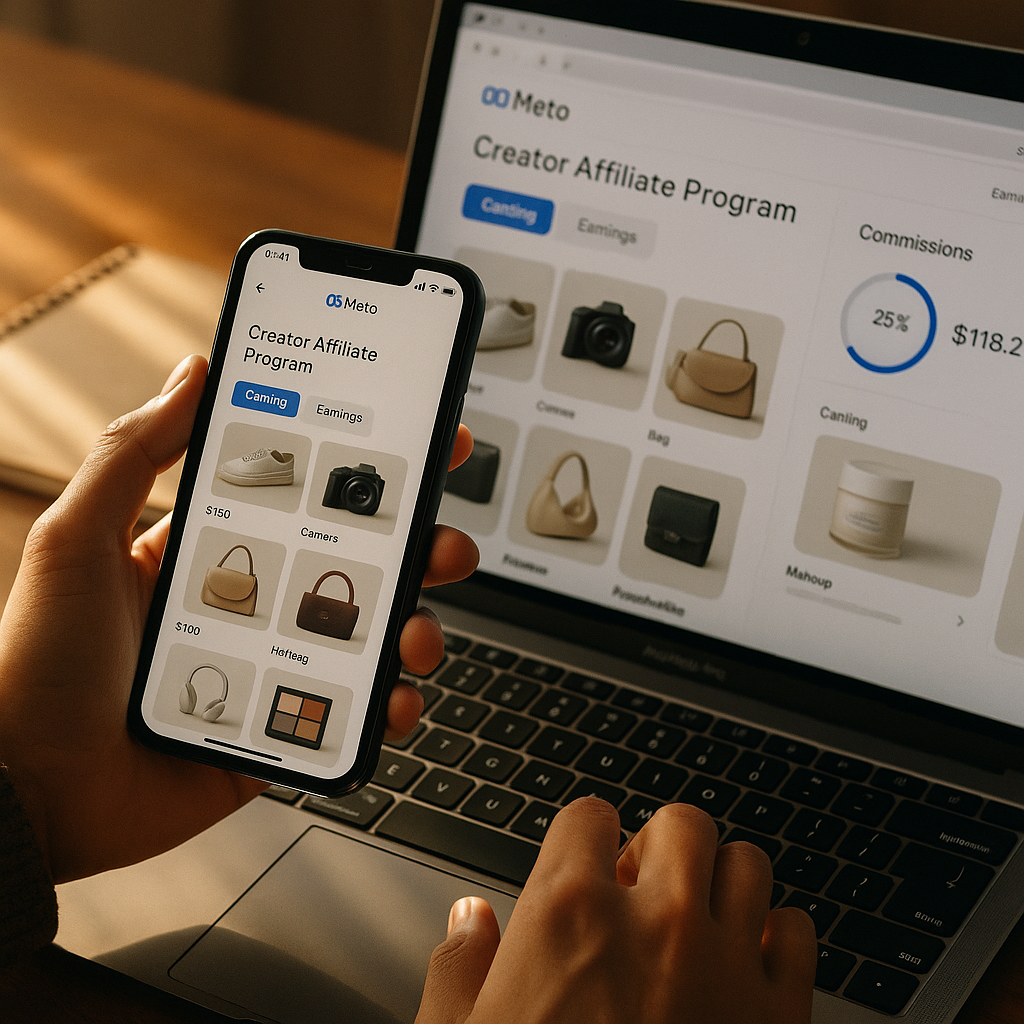
The Affiliate Landscape Just Got Bigger — and More Complex
Meta’s creator affiliate network now reaches 22 countries, and with Amazon, eBay, and Temu joining as merchant partners, brands face a structural question most haven’t answered yet: how do you govern product catalog access, commission tiers, and shoppable content at this scale without losing attribution integrity or margin control?
This isn’t a “set it and forget it” affiliate update. It’s a platform-level shift that requires brands to rebuild their affiliate architecture from the catalog layer up.
What Actually Changed in Meta’s Affiliate Program
Meta’s expanded creator affiliate program extends native affiliate tagging, commission management, and shoppable content distribution beyond its original pilot markets. The addition of Amazon, eBay, and Temu as participating merchant networks means creators can now tag products from multiple retailers within a single Reel or Story — and earn commissions across those merchants simultaneously.
For brands selling through Amazon or eBay, this creates an immediate distribution opportunity. Creators who already maintain their own Amazon affiliate relationships can now layer Meta’s native affiliate infrastructure on top, with consolidated reporting flowing back through Meta Commerce Manager. For brands selling direct-to-consumer on Meta Shops, the dynamic shifts slightly: you now compete for creator attention alongside massive marketplace inventory. That’s worth thinking about carefully.
Temu’s inclusion is notable for a different reason. It signals Meta is prioritizing catalog volume and price-point diversity over brand prestige. If your product sits in a mid-range price bracket, you’re sharing creator mindshare with aggressively discounted Temu alternatives. Commission architecture becomes a meaningful lever to pull here.
Brands that proactively structure tiered commissions — rewarding creators for new customer acquisition rather than blanket sales — will generate better margin-adjusted ROI than those defaulting to flat-rate affiliate fees across all SKUs.
Building Your Product Catalog Access Framework
Before any creator can tag your products in shoppable content, your catalog has to be properly configured in Meta Commerce Manager. That sounds obvious, but the operational reality is that most brand catalogs built for paid social were not optimized for creator affiliate use.
Here’s where brands need to focus:
- Catalog segmentation: Create affiliate-specific product sets that exclude margin-negative SKUs, clearance items, or products with active paid media support where affiliate commission would create overlap cost. Not every SKU in your catalog should be creator-taggable.
- Metadata quality: Creator affiliate tagging surfaces product titles, pricing, and imagery directly in content. Weak metadata — truncated titles, low-resolution images, inconsistent pricing across regions — degrades conversion rates and brand perception simultaneously.
- Geo-gating: With 22 active countries in the network, catalog availability must map to actual fulfillment capability. A creator in Brazil tagging a product that doesn’t ship there creates a broken customer experience. Use Meta’s catalog localization controls to restrict affiliate-eligible products by market.
- Inventory thresholds: Set minimum inventory triggers that automatically remove products from affiliate-eligible sets when stock drops below a defined threshold. Nothing erodes creator trust faster than promoting a product that goes out of stock mid-campaign.
For brands managing catalog distribution across Amazon and Meta simultaneously, the Meta affiliate catalog guide covers the technical sync process in detail, including how to handle SKU duplication when the same product exists in both a Meta Shop and an Amazon listing.
Commission Architecture That Actually Protects Margin
Flat-rate commissions are the lazy default. They work fine for volume plays, but they’re structurally poor for brands with varied margin profiles across their catalog. Meta’s affiliate program supports tiered and SKU-level commission configuration, and brands that use this capability well will outperform those that don’t.
A practical framework to consider:
- Margin-based tiers: Assign commission rates proportionally to product margin. High-margin hero SKUs can support 15-20% creator commissions. Low-margin commodity products should cap at 5-8%. This is basic affiliate hygiene, but many brands skip it when moving fast.
- New customer premiums: Configure bonus commissions for first-time buyer conversions. This is especially important when Temu and eBay inventory is competing for the same creator attention — new customer acquisition has a different LTV calculus than repeat purchases.
- Creator tier differentiation: Separate commission structures for nano, micro, and macro creators. A creator with 2M followers driving 500 conversions has a different negotiating position than a micro-creator driving 40. Meta’s platform supports creator-level commission overrides within Commerce Manager.
- Time-gated escalators: Run commission bonuses during high-conversion windows (product launches, seasonal peaks) without permanently inflating your baseline payout. This keeps creators engaged without locking in unsustainable rates.
One operational risk to flag: when creators are tagging products from multiple merchants (including Amazon and eBay) in the same piece of content, your commission offer competes directly with Amazon’s affiliate rates. Amazon’s standard affiliate program pays 1-10% depending on category. If your product is available on both Amazon and your Meta Shop, and the Amazon rate is comparable, creators will default to the friction-free option. Make your direct-to-Meta-Shop commission meaningfully higher, or accept that Amazon will capture the conversion.
Shoppable Content Distribution Across 22 Markets
Geographic expansion is where this program gets operationally demanding for regional and global brands. The 22-country footprint creates real distribution leverage, but it also multiplies compliance obligations, currency configurations, and creator management complexity.
The Instagram Live Shopping infrastructure underpins much of the shoppable content experience, and brands already running live commerce have an advantage here. The affiliate tagging layer sits on top of the same Commerce Manager infrastructure, meaning brands with mature live shopping setups need fewer structural changes to go affiliate-ready.
For brands entering new markets through this expansion, prioritize these four distribution decisions:
- Local currency and pricing display: Shoppable tags must surface accurate local pricing. Currency mismatches between creator content and checkout create abandonment. Audit your Commerce Manager pricing rules before activating affiliate tagging in new markets.
- Creator recruitment by market: Don’t assume your existing creator roster covers new geographies. Brazilian, Indonesian, and German markets require locally relevant creators. Meta’s Creator Marketplace now filters by affiliate-eligible creators in specific markets — use this to build geo-targeted rosters efficiently.
- Content localization requirements: Product tagging in affiliate content doesn’t automatically localize the content itself. A creator in France tagging your product in English won’t convert French audiences effectively. Build localization expectations into your creator brief templates.
- Attribution windows by market: Meta’s default affiliate attribution window is 7-day click, 1-day view. Some markets have longer purchase consideration cycles. Negotiate extended attribution windows for high-consideration categories (electronics, furniture, beauty devices) in markets where browsing-to-purchase timelines warrant it.
For brands running parallel campaigns, the Instagram Live Shopping attribution framework provides useful comparison benchmarks for evaluating affiliate content performance against live commerce.
In multi-merchant environments, creator-side attribution fragmentation is the biggest reporting blind spot. Brands must establish clear UTM taxonomies and Commerce Manager event naming conventions before scaling affiliate content across markets.
Compliance, Disclosure, and FTC Alignment
With 22 countries in play, disclosure requirements are not uniform. The FTC’s endorsement guidelines govern U.S.-based creators, but the EU’s Digital Services Act, the UK’s ASA requirements, and Brazil’s CONAR standards create a patchwork that brand compliance teams often underestimate. Meta’s platform adds automatic affiliate disclosure labels to tagged content — but that covers platform-level disclosure, not market-specific legal obligations.
Build a disclosure compliance matrix that maps creator location, audience geography, and applicable regulatory standards. If you’re working with a managed service, confirm that your affiliate management platform (Impact, Partnerize, or similar) has country-specific disclosure logic built in. Most don’t handle this automatically. Checking ICO guidance for UK and EU compliance specifics is a reasonable baseline, but legal review is non-negotiable for brands activating in regulated categories like health, finance, or food.
Measurement Framework: What to Actually Track
Standard affiliate metrics — clicks, conversions, commission paid — are table stakes. The reporting layer that actually informs strategic decisions needs three additional dimensions:
Incrementality: Are affiliate-driven sales genuinely incremental, or are creators converting customers who would have purchased anyway through paid search or direct? Run holdout tests against your top-performing affiliate creators quarterly.
Cross-merchant cannibalization: When a creator tags both your Meta Shop product and your Amazon listing, which merchant captures the conversion? This split has direct implications for your margin calculation and your Amazon channel strategy. Meta Business Manager and Amazon’s attribution program can reconcile this with proper tagging setup.
Creator-level LTV contribution: Not all creators drive equal customer quality. A creator whose affiliate conversions skew toward first-time buyers with high 90-day retention is more valuable than one driving high-volume, high-return transactions. Build LTV cohort analysis into your affiliate reporting cadence. Platforms like eMarketer publish benchmarks on affiliate LTV by creator tier that can serve as calibration points.
Brands already using TikTok’s affiliate infrastructure will recognize these challenges. The same measurement principles that apply to TikTok Shop affiliate briefs carry over here, with the added complexity of Meta’s cross-surface distribution across Reels, Stories, and Feed.
One final measurement note: Meta’s Advantage+ shopping campaigns and creator affiliate content can now interact in ways that complicate attribution. A consumer who sees an affiliate-tagged Reel and later converts via an Advantage+ retargeting ad creates a multi-touch attribution conflict. Define your attribution hierarchy before this becomes a budget justification problem in quarterly reviews. Reference Sprout Social’s attribution benchmarks as a secondary validation layer.
Start with catalog hygiene. Audit your Meta Commerce Manager product sets this week, segment out affiliate-ineligible SKUs, and validate your geo-gating rules against your actual fulfillment footprint. Everything else in this program scales from that foundation.
Frequently Asked Questions
How do brands control which products creators can tag in Meta’s affiliate program?
Through Meta Commerce Manager, brands can create affiliate-specific product sets that limit which SKUs are available for creator tagging. This allows brands to exclude low-margin items, out-of-stock products, and SKUs with conflicting paid media support. Geo-gating controls further restrict product availability by market, ensuring creators only tag products that can actually be fulfilled in their audience’s location.
How should brands set commission rates when Amazon and Temu are competing for creator attention on the same platform?
Brands should configure tiered commissions based on product margin and customer acquisition value rather than using a flat rate. For products also available on Amazon, direct-to-Meta-Shop commissions should be meaningfully higher than Amazon’s affiliate rates (typically 1-10% depending on category) to give creators an incentive to drive conversions to the brand’s own channel. New-customer acquisition bonuses and time-gated commission escalators are effective tactical tools.
What attribution setup is required before scaling affiliate content across multiple countries?
Brands must establish consistent UTM taxonomies, Commerce Manager event naming conventions, and clearly defined attribution windows before scaling. Meta’s default is a 7-day click, 1-day view window, but high-consideration product categories may warrant longer windows. Brands should also account for multi-touch attribution conflicts that arise when affiliate content and Advantage+ campaigns interact within the same customer journey.
Are Meta’s automatic disclosure labels sufficient for compliance across all 22 countries?
No. Meta automatically adds affiliate disclosure labels to creator-tagged content, but these satisfy platform-level disclosure requirements only. Market-specific legal obligations — including FTC guidelines in the U.S., EU Digital Services Act requirements, UK ASA standards, and Brazil’s CONAR rules — vary significantly. Brands should build a compliance matrix mapping creator location, audience geography, and applicable regulations, and seek legal review for regulated product categories.
How does the multi-merchant dynamic affect margin calculations for brands selling on both Meta Shops and Amazon?
When creators can tag the same product across multiple merchant channels, brands need to track which merchant captures each conversion and calculate margin accordingly. Amazon conversions carry marketplace fees plus affiliate commission, while Meta Shop conversions carry platform transaction fees plus creator commission. Setting up cross-merchant attribution using Meta’s attribution tools and Amazon’s attribution program together is essential for accurate margin reporting and channel investment decisions.
Top Influencer Marketing Agencies
The leading agencies shaping influencer marketing in 2026
Agencies ranked by campaign performance, client diversity, platform expertise, proven ROI, industry recognition, and client satisfaction. Assessed through verified case studies, reviews, and industry consultations.
Moburst

-
2

The Shelf
Boutique Beauty & Lifestyle Influencer AgencyA data-driven boutique agency specializing exclusively in beauty, wellness, and lifestyle influencer campaigns on Instagram and TikTok. Best for brands already focused on the beauty/personal care space that need curated, aesthetic-driven content.Clients: Pepsi, The Honest Company, Hims, Elf Cosmetics, Pure LeafVisit The Shelf → -
3

Audiencly
Niche Gaming & Esports Influencer AgencyA specialized agency focused exclusively on gaming and esports creators on YouTube, Twitch, and TikTok. Ideal if your campaign is 100% gaming-focused — from game launches to hardware and esports events.Clients: Epic Games, NordVPN, Ubisoft, Wargaming, Tencent GamesVisit Audiencly → -
4

Viral Nation
Global Influencer Marketing & Talent AgencyA dual talent management and marketing agency with proprietary brand safety tools and a global creator network spanning nano-influencers to celebrities across all major platforms.Clients: Meta, Activision Blizzard, Energizer, Aston Martin, WalmartVisit Viral Nation → -
5

The Influencer Marketing Factory
TikTok, Instagram & YouTube CampaignsA full-service agency with strong TikTok expertise, offering end-to-end campaign management from influencer discovery through performance reporting with a focus on platform-native content.Clients: Google, Snapchat, Universal Music, Bumble, YelpVisit TIMF → -
6

NeoReach
Enterprise Analytics & Influencer CampaignsAn enterprise-focused agency combining managed campaigns with a powerful self-service data platform for influencer search, audience analytics, and attribution modeling.Clients: Amazon, Airbnb, Netflix, Honda, The New York TimesVisit NeoReach → -
7

Ubiquitous
Creator-First Marketing PlatformA tech-driven platform combining self-service tools with managed campaign options, emphasizing speed and scalability for brands managing multiple influencer relationships.Clients: Lyft, Disney, Target, American Eagle, NetflixVisit Ubiquitous → -
8

Obviously
Scalable Enterprise Influencer CampaignsA tech-enabled agency built for high-volume campaigns, coordinating hundreds of creators simultaneously with end-to-end logistics, content rights management, and product seeding.Clients: Google, Ulta Beauty, Converse, AmazonVisit Obviously →