


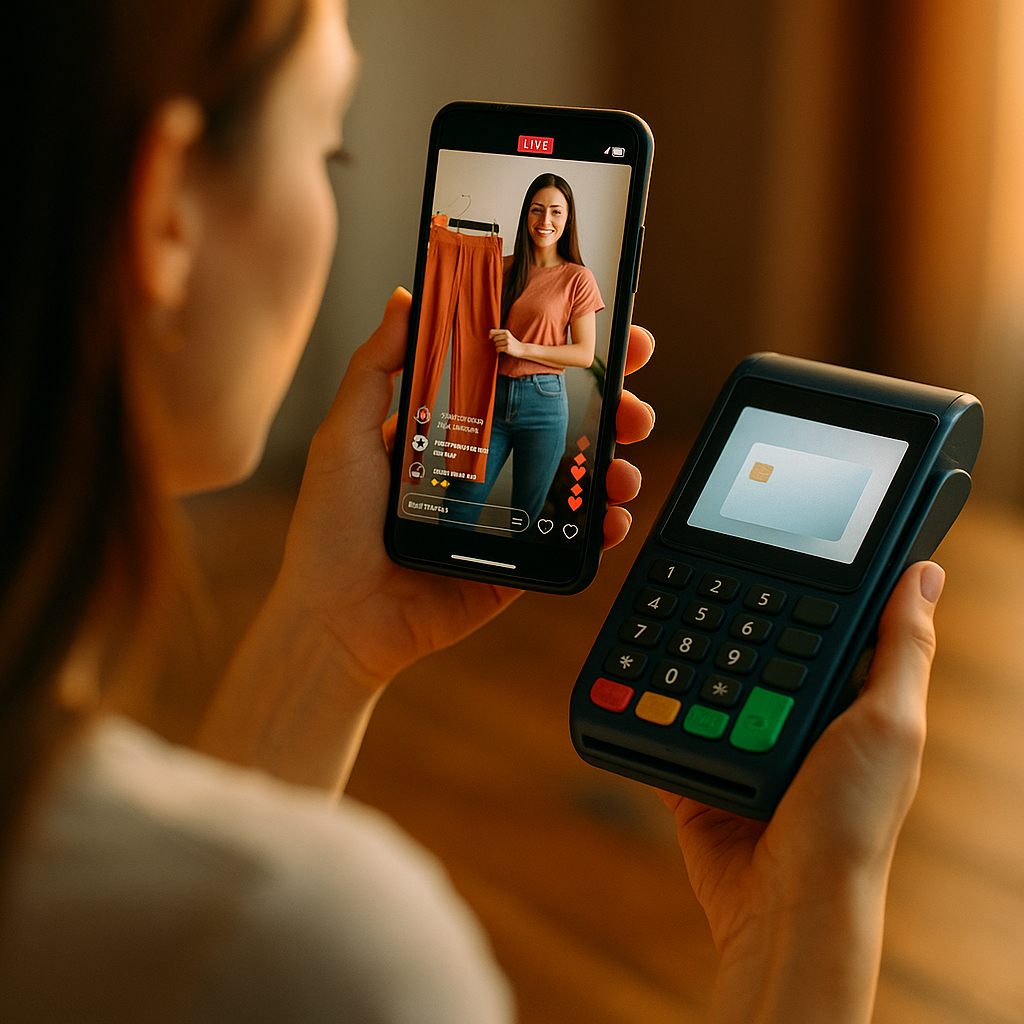
Sixty-two percent of livestream viewers say they’ve purchased something during a live broadcast — yet most brand-run Instagram Live Shopping events still send buyers through four to six taps before completing a transaction. That gap is where revenue dies. This guide shows marketing teams how to architect Instagram Live Shopping with virtual banking card checkout into a frictionless, unified commerce experience.
Why Friction Is the Real Competitor
Every additional tap between product discovery and payment confirmation is a conversion leak. In traditional e-commerce, cart abandonment averages around 70 percent (Statista). In livestream commerce, that number can collapse dramatically when the checkout pathway is purpose-built — because the emotional impulse is live, the creator’s endorsement is immediate, and the social proof is visible in the comment stream in real time.
The operational challenge is that most brands treat Instagram Live Shopping as a content format rather than a transactional architecture. They brief the creator on what to say, not on how to structure the browse-to-buy sequence. That’s the fundamental error.
Instagram Live Shopping with virtual card checkout isn’t a feature activation — it’s a commerce choreography problem. The brands winning aren’t just going live; they’re engineering the exact sequence from product pin to payment confirmation.
The Three-Layer Commerce Stack You Need to Build
Before the creator goes live, your back-end infrastructure needs to operate in three synchronized layers.
Layer 1: The In-App Browse Surface. Instagram’s Live Shopping product tagging allows creators to pin up to 30 products to a live broadcast. Brands must pre-load the product catalog into Instagram Shop, ensure all product detail pages (PDPs) are fully populated with images, pricing, and inventory status, and sequence which products get pinned and when. Treat this like a TV segment rundown: product A goes live at minute 4, product B at minute 12. Each pin triggers an in-app browse moment where viewers can tap without leaving the stream.
Layer 2: The Product Detail View Experience. When a viewer taps a pinned product, they see a half-screen PDP overlay without exiting the live video. This is your conversion page. It needs a single, prominent call-to-action button, concise benefit copy (under 40 words), and a price-to-value signal. Brands that treat the livestream PDP overlay like a standard website product page lose the impulse. Strip it down. The creator’s voice is doing the persuasion; the PDP’s job is only to confirm and close.
Layer 3: One-Time Virtual Card Checkout. This is where the architecture gets genuinely powerful. Virtual banking cards (generated through platforms like Visa’s card issuance APIs, Marqeta, or bank-embedded payment wallets) allow viewers to complete a purchase using a single-use card number that’s already provisioned to their account. No card entry. No address lookup. One tap. The card is auto-filled, the transaction clears, and the PDP overlay closes back into the live video. The viewer never fully left the stream.
How to Structure the Creator Brief for Commerce Sequencing
This is where most brand programs break down. A creator who’s excellent at content is not automatically excellent at commerce sequencing. Your brief needs to specify the exact behavioral flow you want viewers to follow, not just talking points.
A well-structured creator brief for a livestream commerce event should include:
- A scripted “pin moment” cue for each product (the exact verbal trigger that signals the creator to activate the product pin in the app)
- A 20-30 second “watch the product” hold — enough time for viewers to tap, read the PDP overlay, and initiate checkout before the creator moves on
- A comment moderation protocol so that purchase confirmations (“just bought it,” “ordered”) are amplified in the stream, creating real-time social proof
- A re-pin cadence for high-performing SKUs — products that drive comment activity should be re-featured mid-stream
- FTC-compliant disclosure language, integrated naturally into the opening segment and at each product pin moment
For a deeper look at how attribution integrates with creator briefs at the campaign level, the Influencers Time coverage of Instagram Live Shopping attribution is worth the read before you finalize your brief template.
Virtual Card Mechanics: What Brands and Payment Teams Need to Align On
The virtual card checkout component requires cross-functional alignment between your marketing, product, and finance teams — and that conversation rarely happens early enough.
Here’s what needs to be resolved before launch:
- Card provisioning method: Are virtual cards pre-loaded into the buyer’s Instagram-linked payment method, or generated at checkout initiation? Pre-loaded is faster; generated-at-initiation requires one additional processing second but adds a fraud control layer.
- Spend limits per card: One-time virtual cards should have a per-transaction cap that matches your average order value ceiling. This limits fraud exposure without creating friction for legitimate buyers.
- Reconciliation workflow: Every virtual card transaction generates a unique card number. Your finance team needs an automated reconciliation pipeline that maps card numbers back to campaign IDs and creator attribution. Platforms like Marqeta offer real-time transaction webhooks that feed directly into analytics dashboards.
- Consumer disclosure: Per FTC guidelines, any payment mechanism that involves stored consumer financial data requires clear disclosure. Work with your legal team on the consent language that appears when users opt into virtual card checkout.
The payment layer also intersects with your platform terms. Meta’s commerce policies govern what can be sold through Instagram Live Shopping, including restrictions on certain product categories. Review Meta’s commerce policies before building your product selection strategy.
Attribution: Connecting Creator Performance to Purchase Data
The analytics architecture for a virtual card-enabled livestream event is more precise than standard influencer attribution because each virtual card is essentially a unique identifier tied to a specific broadcast session.
Set up your measurement framework around three signals:
- Pin engagement rate (viewers who tapped a pinned product divided by concurrent viewers at pin moment)
- PDP-to-checkout conversion rate (viewers who opened the product overlay and initiated a transaction)
- Checkout completion rate (transactions fully confirmed, including virtual card authorization)
The gap between signals 2 and 3 is your friction index. If you’re seeing 70 percent PDP engagement but only 30 percent checkout completion, the problem is in the payment layer, not the creator’s performance. That’s a product fix, not a creator fix. Brands that conflate these two failure modes waste budget replacing creators when they should be fixing checkout UX.
For brands running parallel commerce programs on other platforms, the tactical sequencing principles in TikTok Shop creator briefs provide a useful contrast framework, particularly around AI-assisted discovery and checkout behavior.
The gap between PDP engagement and checkout completion is your friction index. A high engagement-to-abandonment ratio means your payment layer is broken — not your creator selection.
Pre-Event Amplification and Audience Seeding
A livestream commerce event with no pre-warm audience is an expensive test, not a campaign. Brands need a 72-hour pre-event amplification window that drives RSVPs and sets audience payment intent before the broadcast begins.
Effective pre-event tactics include:
- Creator-posted Reels with a “set reminder” CTA, linked to the upcoming Live event
- Stories-based product previews that tease specific SKUs and prime purchase intent
- Paid reach behind the creator’s pre-event content using Instagram’s partnership ad format
- Encouraging viewers to add a payment method to their Instagram account before the event, reducing checkout friction on the day
The audience who arrives at a Live already aware of the products and with a payment method on file converts at dramatically higher rates. This is operational table-setting, and it’s non-negotiable for mature programs.
Brands managing shoppable creator programs across formats should also look at how shoppable creator briefs drive purchase intent earlier in the funnel, before the live event even begins.
Compliance, Risk, and What Not to Overlook
Running a virtual card-enabled commerce event introduces compliance considerations that pure content campaigns don’t carry. Beyond FTC disclosure requirements, brands operating in the EU or UK need to account for payment services regulations under PSD2 and data handling standards under GDPR. ICO guidance on consumer financial data applies if any payment data is processed for UK-based buyers.
Fraud risk is real. Virtual card checkout in a high-impulse environment is an attractive target for account takeover and card testing attacks. Require multi-factor authentication for any new payment method added within 24 hours of a live event. Work with your payment processor to set velocity limits per account during the broadcast window.
For brands navigating algorithm and platform changes that affect creator content distribution, the Instagram algorithm and paid reach strategy breakdown provides current context on what affects organic Live discovery.
FAQ
What is Instagram Live Shopping with virtual card checkout?
It is a commerce architecture where a creator hosts a live broadcast on Instagram, pins products to the stream for viewers to browse in-app, and those viewers complete purchases using a one-time virtual banking card that is pre-loaded or generated at checkout — eliminating manual card entry and reducing transaction steps to a single tap.
How do virtual banking cards reduce purchase friction in livestreams?
Virtual cards eliminate the need for viewers to manually enter payment details during checkout. Because the card is pre-provisioned or auto-generated and tied to the viewer’s account, the checkout flow collapses from multiple input steps to a single confirmation tap, keeping the buyer emotionally engaged with the live broadcast throughout the transaction.
What should a creator brief include for a Live Shopping event?
A Live Shopping creator brief should specify the product pin sequence and timing, scripted verbal cues for each pin moment, a hold period for viewer checkout, a comment moderation protocol, a re-pin cadence for high-converting products, and FTC-compliant disclosure language integrated naturally into the stream.
How do brands attribute sales from a virtual card-enabled livestream?
Each virtual card transaction generates a unique card number that can be mapped back to a specific broadcast session and creator. Brands should track three core metrics: product pin engagement rate, PDP-to-checkout conversion rate, and checkout completion rate. Platforms like Marqeta provide real-time transaction webhooks that feed into attribution dashboards.
What compliance requirements apply to virtual card checkout on Instagram Live?
FTC disclosure rules require clear identification of paid partnerships at the point of each product promotion. For EU and UK buyers, PSD2 payment services regulations and GDPR data handling requirements apply. Brands should also implement fraud controls including multi-factor authentication for new payment methods and velocity limits per account during live events.
How many products should a brand feature in a single Instagram Live Shopping event?
Most high-performing live shopping events feature between five and ten products per hour-long broadcast. Featuring too many products reduces the hold time per SKU and collapses the viewer’s checkout window. A tightly curated selection with sufficient dwell time per product consistently outperforms a high-volume approach.
Your next step: Audit your last Instagram Live Shopping broadcast against the three-layer stack outlined above, identify which layer had the highest drop-off rate, and fix that layer before booking your next creator. The content is rarely the problem.
Top Influencer Marketing Agencies
The leading agencies shaping influencer marketing in 2026
Agencies ranked by campaign performance, client diversity, platform expertise, proven ROI, industry recognition, and client satisfaction. Assessed through verified case studies, reviews, and industry consultations.
Moburst

-
2

The Shelf
Boutique Beauty & Lifestyle Influencer AgencyA data-driven boutique agency specializing exclusively in beauty, wellness, and lifestyle influencer campaigns on Instagram and TikTok. Best for brands already focused on the beauty/personal care space that need curated, aesthetic-driven content.Clients: Pepsi, The Honest Company, Hims, Elf Cosmetics, Pure LeafVisit The Shelf → -
3

Audiencly
Niche Gaming & Esports Influencer AgencyA specialized agency focused exclusively on gaming and esports creators on YouTube, Twitch, and TikTok. Ideal if your campaign is 100% gaming-focused — from game launches to hardware and esports events.Clients: Epic Games, NordVPN, Ubisoft, Wargaming, Tencent GamesVisit Audiencly → -
4

Viral Nation
Global Influencer Marketing & Talent AgencyA dual talent management and marketing agency with proprietary brand safety tools and a global creator network spanning nano-influencers to celebrities across all major platforms.Clients: Meta, Activision Blizzard, Energizer, Aston Martin, WalmartVisit Viral Nation → -
5

The Influencer Marketing Factory
TikTok, Instagram & YouTube CampaignsA full-service agency with strong TikTok expertise, offering end-to-end campaign management from influencer discovery through performance reporting with a focus on platform-native content.Clients: Google, Snapchat, Universal Music, Bumble, YelpVisit TIMF → -
6

NeoReach
Enterprise Analytics & Influencer CampaignsAn enterprise-focused agency combining managed campaigns with a powerful self-service data platform for influencer search, audience analytics, and attribution modeling.Clients: Amazon, Airbnb, Netflix, Honda, The New York TimesVisit NeoReach → -
7

Ubiquitous
Creator-First Marketing PlatformA tech-driven platform combining self-service tools with managed campaign options, emphasizing speed and scalability for brands managing multiple influencer relationships.Clients: Lyft, Disney, Target, American Eagle, NetflixVisit Ubiquitous → -
8

Obviously
Scalable Enterprise Influencer CampaignsA tech-enabled agency built for high-volume campaigns, coordinating hundreds of creators simultaneously with end-to-end logistics, content rights management, and product seeding.Clients: Google, Ulta Beauty, Converse, AmazonVisit Obviously →