


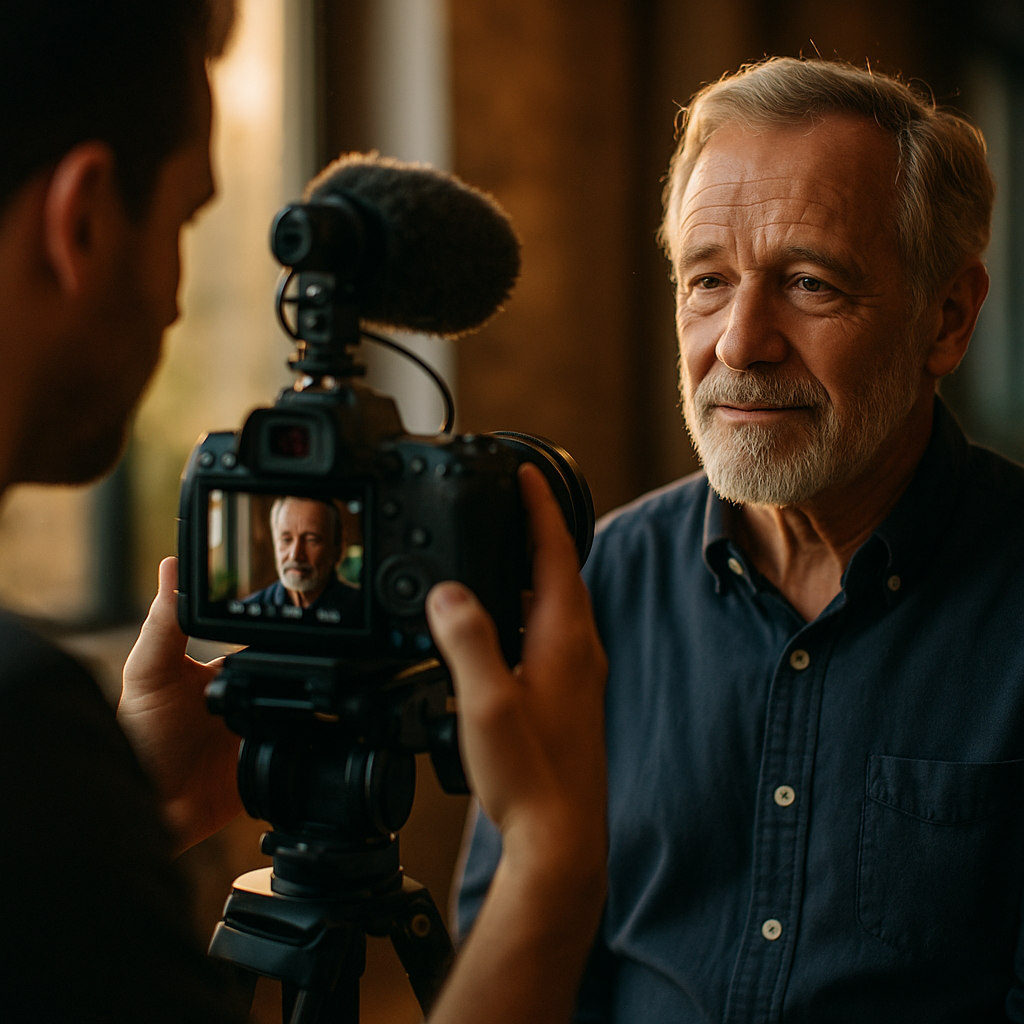
A 90 second TikTok can earn a view. It rarely earns a decision. Brands chasing consideration and high-ticket conversion are quietly shifting budget into mini-documentary brand films, long-form creator pieces running six to twenty minutes that behave more like YouTube journalism than ad content. The question isn’t whether short-form still works. It’s knowing exactly when long-form wins, and why most marketers get the format call wrong.
The Short-Form Ceiling Nobody Wants to Admit
Short-form content is phenomenal at interrupting a scroll. It is far weaker at building the kind of trust that justifies a $2,000 purchase, a B2B software switch, or a recurring subscription. Sprout Social’s research on consumer trust consistently shows that depth and authenticity, not just reach, drive purchase confidence. A 15 second clip can showcase a feature. It cannot showcase a founder’s reasoning, a customer’s full before and after, or the friction a brand overcame to ship something real.
That’s the ceiling. Short-form optimizes for attention capture. Long-form optimizes for belief transfer. Different jobs, different formats, and brands that treat them as interchangeable waste budget on the wrong one.
Short-form earns a glance. Mini-documentaries earn a decision, which is why high-consideration categories are moving budget toward longer creator formats even as average watch times elsewhere decline.
What Counts as a Mini-Documentary Brand Film?
It’s not a glorified ad with a voiceover slapped on. A mini-documentary brand film follows documentary conventions: a real subject, a narrative arc, unresolved tension, and a payoff that feels earned rather than scripted. Think a founder walking through a manufacturing failure before a product launch, or a creator spending a week genuinely testing a service and showing the messy middle, not just the highlight reel.
The format overlaps with what we’ve covered in mini documentary launch films, where brands use the format pre-launch to earn credibility before the sales pitch even starts. The difference now is scale. Brands aren’t just using this for launches anymore. They’re building it into always-on content calendars for retention, recruiting, and investor-facing storytelling.
The Signals That Tell You Long-Form Will Outperform
- High price point or long sales cycle: SaaS, financial products, home services, anything over roughly $500 benefits from extended proof.
- Skepticism is the default: Categories with a trust deficit (supplements, financial advice, home renovation) need narrative evidence, not quick claims.
- A genuinely interesting founder or operational story exists: No story, no documentary. Don’t force it.
- Retention matters more than acquisition: Long-form builds loyalty among people already aware of you, not just new eyeballs.
- You have owned distribution: Email lists, YouTube subscribers, or a community where longer content actually gets watched.
Where Short-Form Still Wins, No Contest
Let’s not pretend long-form is universally superior. It isn’t. If the goal is top-of-funnel awareness, reach efficiency, or testing creative angles fast, short-form wins on cost and speed every time. A brand running a split screen comparison test or a quick silent first video design can iterate ten concepts in the time it takes to script one documentary.
Platforms like TikTok and Instagram Reels are also built for algorithmic discovery of short clips, not fifteen-minute narratives. Trying to force a mini-documentary into a feed optimized for three-second hooks is a mismatch of format and environment. The data on this is consistent: eMarketer’s short-form video research shows engagement on vertical clips under 60 seconds still outpaces longer uploads across most consumer categories when the goal is pure reach.
So the real skill isn’t picking a side. It’s sequencing. Use short-form to generate the audience. Use long-form to convert the ones who stick around.
The Funnel Logic: Pairing Formats Instead of Choosing One
The smartest programs we’re seeing in late 2026 don’t ask “short or long.” They ask “where in the funnel does each one sit?” A typical sequence looks like this: a 15 second hook clip drives discovery, a comparison video handles mid-funnel consideration, and a mini-documentary closes the loop for warm audiences who need the final push of trust before converting.
This mirrors how job specific creative briefs approach format selection generally: match the asset to the funnel stage, not to whatever format is trending. A mini-documentary dropped at the awareness stage is wasted spend. The same film retargeted to cart abandoners or email subscribers who already know the brand can lift conversion meaningfully, because it answers the objections short-form never had time to address.
Budget allocation should follow the same logic. Most brands we talk to are still spending 80 to 90 percent of creator budget on short-form, which made sense when reach was the only scarce resource. It’s less defensible now that trust, not reach, is the bottleneck in saturated categories. A modest reallocation, even 15 to 20 percent of quarterly spend toward two or three well-produced documentary pieces, often outperforms another dozen short clips in categories where skepticism is high.
Production Reality: Cost, Time, and Who Should Make It
Mini-documentaries cost more. There’s no way around it. A single 10 minute piece with a creator, proper audio, b-roll, and editing can run anywhere from $8,000 to $40,000 depending on the creator’s tier and production complexity, compared to a few hundred dollars for a UGC-style short. That math only works if the content gets reused across channels for months, not treated as a one-off campaign asset.
Who should produce it matters too. A hired creator with documentary chops can work, but founder-led pieces often outperform on trust metrics because the audience is watching an actual stakeholder, not a hired voice reading a brief. We covered this dynamic in founder led video vs hired creators, and the same principle applies to long-form: authenticity of the subject matters more than production polish once you’re past a baseline quality threshold.
A mini-documentary that never gets repurposed past its launch window is a sunk cost, not an asset. Treat it like evergreen owned media, not a campaign flight.
Measuring It Without Fooling Yourself
Views and average watch time are the obvious metrics, but they’re also the easiest to misread. A 20 percent average watch rate on a 12 minute documentary represents roughly two and a half minutes of attention, which is more engaged time than most brands get from an entire short-form campaign. Compare retention curves, not raw view counts, and watch for completion spikes right before your call to action. That’s the signal the story structure is working.
Tie the content to assisted conversions in your attribution model, not last-click. Long-form influences decisions made days or weeks later, often after the viewer searches the brand directly. If your measurement setup only credits the last touchpoint, mini-documentaries will always look like underperformers, even when they’re doing the heaviest lifting in the consideration stage. Platforms like Meta’s business tools and TikTok’s ad platform both offer view-through and engagement attribution options that are frequently left switched off by teams still running last-click dashboards built for short-form.
Brands building owned IP around recurring creator stories should also look at how original creator series extend single documentary pieces into a franchise, giving each new installment a built-in audience instead of starting cold every time.
A Quick Gut Check Before You Greenlight One
Ask three questions before committing budget to a mini-documentary brand film. Is there an actual story here, with conflict and resolution, or just a product feature stretched thin? Do we have a distribution plan beyond the launch week, including retargeting and owned channels? And is our attribution model capable of crediting a long-form view days after the fact? If the answer to any of these is no, fix that first. A beautifully shot documentary with no story, no reuse plan, and no proper measurement is just an expensive video nobody will watch twice.
FAQs
Frequently Asked Questions
How long should a mini-documentary brand film actually be?
Most effective ones run between six and fifteen minutes. Under six minutes and you rarely have time to build real narrative tension. Past fifteen, drop-off accelerates unless the subject is unusually compelling.
Is mini-documentary content only for big brands with big budgets?
No. Smaller brands often get stronger results because founder access is easier and the story feels more authentic. Budget affects production polish, not whether the format can work.
Which platforms work best for distributing long-form creator films?
YouTube is the primary home for full-length versions, with owned channels like email and website embeds as secondary distribution. Short-form platforms work for teaser cutdowns that drive traffic to the full piece.
How do I know if my category is right for this format?
If customers research heavily before buying, face a high price point, or need to overcome skepticism about your category, long-form works. Impulse-purchase, low-price categories usually don’t need it.
Can short-form and mini-documentary content work together in one campaign?
Yes, and they usually should. Short clips drive top-of-funnel reach and awareness, while the documentary converts the warmer audience that short-form generated, sitting lower in the funnel where trust decides the outcome.
If you’re still allocating creator budget purely on view counts, start a pilot: pick one high-consideration product line, commission one mini-documentary, and measure it against assisted conversions rather than last-click. The format proves itself fastest where skepticism is highest and price points are hardest to justify in fifteen seconds.
Top Influencer Marketing Agencies
The leading agencies shaping influencer marketing in 2026
Agencies ranked by campaign performance, client diversity, platform expertise, proven ROI, industry recognition, and client satisfaction. Assessed through verified case studies, reviews, and industry consultations.
Moburst

-
2

The Shelf
Boutique Beauty & Lifestyle Influencer AgencyA data-driven boutique agency specializing exclusively in beauty, wellness, and lifestyle influencer campaigns on Instagram and TikTok. Best for brands already focused on the beauty/personal care space that need curated, aesthetic-driven content.Clients: Pepsi, The Honest Company, Hims, Elf Cosmetics, Pure LeafVisit The Shelf → -
3

Audiencly
Niche Gaming & Esports Influencer AgencyA specialized agency focused exclusively on gaming and esports creators on YouTube, Twitch, and TikTok. Ideal if your campaign is 100% gaming-focused — from game launches to hardware and esports events.Clients: Epic Games, NordVPN, Ubisoft, Wargaming, Tencent GamesVisit Audiencly → -
4

Viral Nation
Global Influencer Marketing & Talent AgencyA dual talent management and marketing agency with proprietary brand safety tools and a global creator network spanning nano-influencers to celebrities across all major platforms.Clients: Meta, Activision Blizzard, Energizer, Aston Martin, WalmartVisit Viral Nation → -
5

The Influencer Marketing Factory
TikTok, Instagram & YouTube CampaignsA full-service agency with strong TikTok expertise, offering end-to-end campaign management from influencer discovery through performance reporting with a focus on platform-native content.Clients: Google, Snapchat, Universal Music, Bumble, YelpVisit TIMF → -
6

NeoReach
Enterprise Analytics & Influencer CampaignsAn enterprise-focused agency combining managed campaigns with a powerful self-service data platform for influencer search, audience analytics, and attribution modeling.Clients: Amazon, Airbnb, Netflix, Honda, The New York TimesVisit NeoReach → -
7

Ubiquitous
Creator-First Marketing PlatformA tech-driven platform combining self-service tools with managed campaign options, emphasizing speed and scalability for brands managing multiple influencer relationships.Clients: Lyft, Disney, Target, American Eagle, NetflixVisit Ubiquitous → -
8

Obviously
Scalable Enterprise Influencer CampaignsA tech-enabled agency built for high-volume campaigns, coordinating hundreds of creators simultaneously with end-to-end logistics, content rights management, and product seeding.Clients: Google, Ulta Beauty, Converse, AmazonVisit Obviously →