


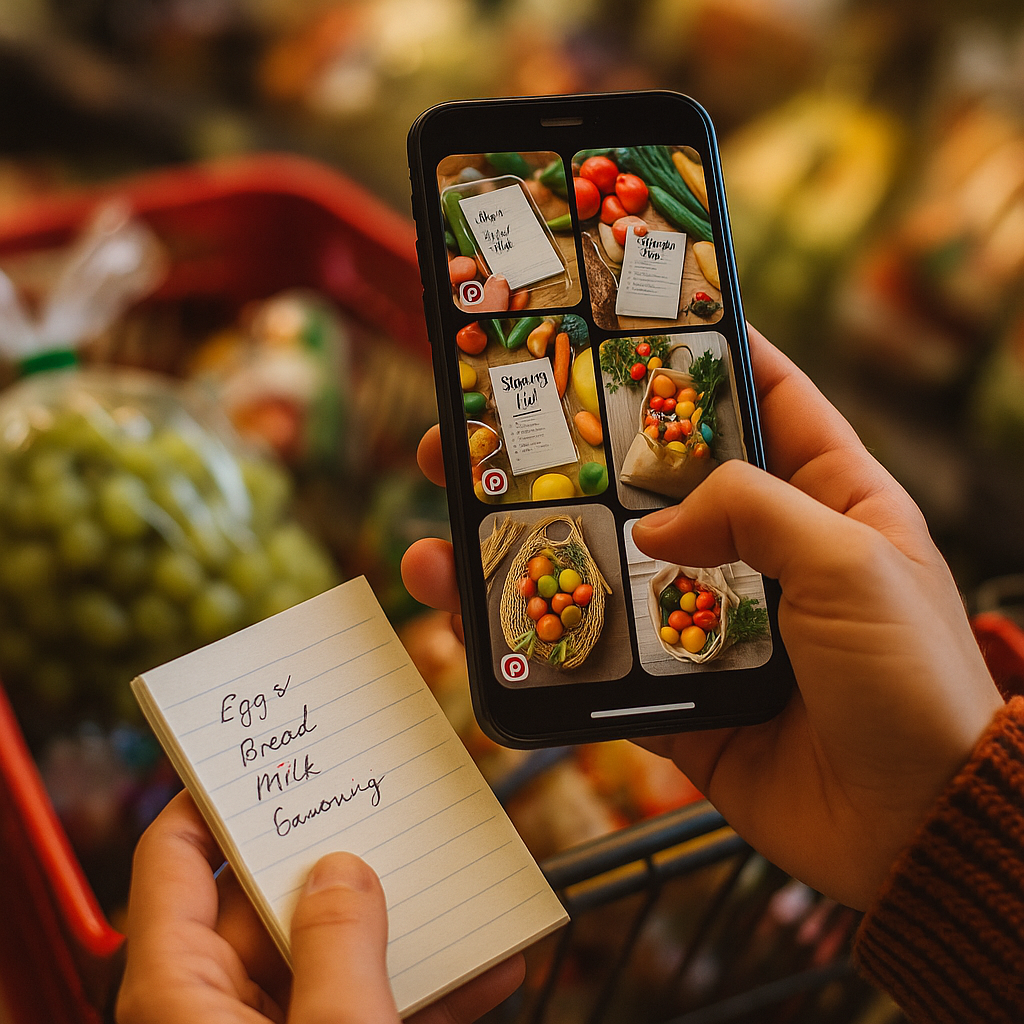
Pinterest users are 85% more likely to purchase after seeing a brand’s content on the platform than on other social networks, according to Pinterest’s own advertiser data. Yet most home and lifestyle brands still treat Pinterest Shopping List campaigns like an afterthought, briefing creators the same way they would for Instagram. That’s leaving money on the table.
Pinterest isn’t a social network. It’s a visual search engine where people plan purchases weeks or months in advance. A well-briefed Idea Pin campaign around a seasonal shopping list can sit in search results for months, quietly driving traffic long after the “season” ends. A poorly briefed one disappears into the feed within days. The difference is almost entirely in how you write the brief.
Why Pinterest Rewards Planning, Not Posting
Most platforms optimize for immediacy. Pinterest optimizes for intent. Someone searching “cozy fall living room ideas” in September might not buy a throw blanket until December. That’s the whole point: Pinterest is where the decision incubates, not necessarily where the buy button gets clicked (though increasingly, it can be).
This changes everything about how you should brief creators. A caption written to “go viral this week” is the wrong ask. You want evergreen searchability, seasonal relevance that outlasts the season, and product tagging that survives a retag six months later when the item is restocked.
A Pinterest Idea Pin briefed for search longevity can outperform a same-week viral post by 3-4x in lifetime saves, because Pinterest’s algorithm keeps surfacing well-tagged seasonal content in relevant searches for months after publish.
Brands running seasonal creator programs across multiple platforms should already know this rhythm from our Pinterest Video Pins seasonal playbook, which covers the broader content calendar. This piece goes narrower: how to brief creators specifically for Shopping List-style Idea Pins that home and lifestyle brands rely on for Q4, spring refresh, and back-to-school pushes.
What Is a Pinterest Shopping List Idea Pin, Exactly?
Think of it as a curated, multi-product carousel built around a theme — “5 pieces for a Scandinavian bedroom refresh” or “everything for a small-space patio under $200.” Each product gets tagged, each slide gets its own visual, and the whole thing functions less like an ad and more like a mood board with checkout links baked in.
The format rewards specificity. Generic “home decor haul” pins underperform against tightly themed lists that match a search query almost word-for-word. Creators who understand Pinterest SEO will tell you: the pin title and first overlay text matter almost as much as the product itself.
Brief the Search Query, Not the Vibe
Here’s where most brand briefs fail. Marketing teams hand creators a moodboard and say “make it feel cozy” or “give us that autumn vibe.” Creators then produce beautiful content that nobody finds, because it was never anchored to an actual search term.
Instead, brief against Pinterest Trends data. Pull the top seasonal queries for your category — “fall entryway decor,” “Friendsgiving table setting,” “small kitchen organization ideas” — and build the creator’s shot list around fulfilling that specific query. The creative should feel native, sure, but it needs to be built on a keyword skeleton first.
- Give creators the exact search phrase you want the pin to rank for, not just a general theme.
- Specify product count per list (Pinterest data suggests 5-7 items performs best for scannability without overwhelming the save decision).
- Require a text overlay on the cover image that mirrors the target query almost verbatim.
- Mandate individual product tagging on every slide, not just a single tag on the cover image.
This is a fundamentally different brief than what works on TikTok or Instagram, where discovery leans more on algorithmic reach than literal search matching. If your team is used to briefing for TikTok discovery over reach, resist the urge to copy-paste that logic here. Pinterest still runs on search intent first.
Seasonal Windows: Brief Three Months Ahead, Not Three Weeks
Pinterest itself recommends brands start seasonal campaigns 30-45 days before peak search interest, but for home and lifestyle categories, the smarter window is closer to 60-90 days. Why? Because Idea Pins need time to get indexed, gain saves, and start ranking before the season actually hits.
A Christmas tablescape pin briefed in November is already late. Briefing it in August, with creators shooting in September, gives Pinterest’s algorithm the runway to start surfacing it in “holiday table decor” searches by October. This lead time also gives you room for revisions, something almost impossible when you’re briefing three weeks out and praying the creator delivers on time.
Build your creator calendar backward from the search peak, not forward from your product launch date. That single mindset shift solves half the timing complaints brand teams have about underperforming Pinterest campaigns.
What Goes in the Brief Itself
A strong Pinterest Shopping List brief for creators should include specifics most platforms don’t require. Here’s the skeleton we’d recommend to any home or lifestyle brand running this kind of program:
- Target query and secondary keywords — the exact phrase Pinterest Trends shows is climbing for your season and category.
- Product list with tagging order — which products appear on which slide, and in what sequence (lead with the highest-margin or best-selling item).
- Aspect ratio and cover image specs — 2:3 vertical, with legible text overlay even at thumbnail size.
- Tone guidance tied to season, not just brand voice generally. “Cozy and unhurried” reads differently in October than “bright and functional” does in March.
- A do-not list — no trending audio requirements (irrelevant on Pinterest), no CTA overlays that block product visibility, no stock-photo-style staging that reads as an ad rather than inspiration.
Notice what’s missing: hashtag requirements. Pinterest’s search algorithm cares far more about board titles, pin descriptions, and alt text than hashtags. Creators coming over from Instagram or TikTok often over-index on hashtags out of habit. Correct that in the brief itself, explicitly.
The Creator Brief Should Include a Board Strategy
Most brand briefs stop at the pin. That’s a mistake. The board the creator pins to (or that you ask them to help populate) matters for discoverability too. A seasonal Shopping List pin dropped into a generic, unfocused board performs worse than the same pin placed into a tightly themed board with a matching title and consistent pinning history.
If you’re working with a creator on an ongoing basis, ask them to build or maintain a themed board specifically for your seasonal category, refreshed each cycle. This is a longer-term asset play, similar to how brands think about YouTube channel loyalty in our piece on YouTube rewarding loyalty over reach. Pinterest rewards consistency and topical authority in much the same way.
Compensation and Usage Rights: Don’t Skip This
Because Idea Pins have such long shelf lives on Pinterest, standard 30-day usage terms don’t make sense. If a pin is still driving saves and clicks eight months after posting, you want the rights to run it as a Pinterest ad, repost it, or refresh the product tags without renegotiating.
Negotiate usage rights for the full expected lifespan of the content, typically 12 months for seasonal home content, not the 30-60 day windows standard on faster-moving platforms.
This also affects disclosure requirements. The FTC’s endorsement guidance applies regardless of platform, and Pinterest’s long content lifespan makes it easy to forget an old paid pin is still technically an ad running months later. Build disclosure language into the pin description itself, not just the caption, since Pinterest treats descriptions as more permanent than captions on other platforms. Review the FTC’s endorsement guidelines with your legal team before finalizing creator contracts for evergreen content.
Measuring What Actually Matters
Engagement rate is close to meaningless on Pinterest. Saves, closeups, and outbound clicks are the metrics that map to actual purchase intent. A pin with modest impressions but a high save-to-impression ratio is doing its job: it’s being filed away for later, exactly how Pinterest users shop.
Track saves against your seasonal window, not against launch week. A pin that saves slowly but steadily over 90 days is often more valuable than one that spikes and dies. If you’re used to reporting frameworks built for faster platforms, this will feel uncomfortably slow. It isn’t. It’s just a different sales cycle, and your reporting cadence to stakeholders needs to reflect that up front, or you’ll get pressure to kill a working campaign too early.
For brands running parallel programs across TikTok Shop or YouTube Shopping affiliate content, it’s worth comparing conversion windows directly. Our YouTube Shopping affiliate brief template covers a similar attribution challenge, where last-click models undercount the true influence of discovery content. Pinterest’s save-and-return behavior deserves the same skepticism toward last-click-only reporting. Marketers benchmarking creator ROI across platforms should also look at broader industry data from eMarketer’s influencer marketing coverage and Sprout Social’s platform benchmarks to calibrate expectations by channel.
Common Brief Mistakes That Tank Seasonal Campaigns
- Briefing for virality instead of searchability. Pinterest isn’t rewarding your best hook. It’s rewarding your best keyword match.
- Ignoring board context. A great pin on a dead or irrelevant board underperforms a mediocre pin on an active, well-themed one.
- Under-tagging products. Every slide needs its own tag. One tag on the cover image leaves conversion on the table.
- Skipping the alt text field. This is a searchable, indexable field that most brand briefs never even mention to creators.
- Treating it like Instagram with a longer shelf life. The formats look similar. The discovery mechanics are not.
None of this is complicated once you see it clearly, but it does require rewriting your standard creator brief template rather than reusing the one built for faster, feed-based platforms. If your team is already updating briefs for platform-specific ranking shifts elsewhere, this is a natural companion project. See how we approached a similar rebrief for Instagram’s ranking change in saves and DMs over likes.
The Takeaway
Brief Pinterest creators like SEO copywriters with a camera, not like social content creators with a product to plug. Anchor every seasonal Idea Pin to a specific search query, give creators a 60-90 day head start, and negotiate usage rights that match the platform’s actual content lifespan. Do that, and your seasonal Shopping List campaign will still be converting long after the season, and the competing campaigns, have gone cold.
FAQs
How far in advance should brands brief creators for seasonal Pinterest campaigns?
Aim for 60-90 days before peak seasonal search interest. Pinterest content needs time to get indexed and start ranking, so briefing on the same timeline you’d use for Instagram or TikTok will leave the campaign underperforming when the season actually arrives.
What makes a Pinterest Shopping List Idea Pin different from a regular product pin?
A Shopping List Idea Pin curates multiple related products around a single theme or search query, with individual tagging on each slide, rather than promoting one product in isolation. It’s built to match how people actually plan purchases on Pinterest: as a themed list, not a single item.
Should creator briefs include hashtags for Pinterest campaigns?
No, hashtags carry minimal weight in Pinterest’s search algorithm. Briefs should instead prioritize keyword-rich pin titles, descriptions, and alt text, which are the fields Pinterest actually indexes for search.
How long should usage rights last for Pinterest creator content?
Given that Idea Pins can drive saves and traffic for many months after posting, usage terms should typically extend to 12 months, longer than the 30-60 day windows common on faster-moving platforms.
What metrics should brands prioritize when measuring Pinterest creator campaigns?
Saves, closeups, and outbound clicks matter more than engagement rate or impressions. These metrics track more closely with actual purchase intent and reflect how Pinterest users research and plan before buying.
Top Influencer Marketing Agencies
The leading agencies shaping influencer marketing in 2026
Agencies ranked by campaign performance, client diversity, platform expertise, proven ROI, industry recognition, and client satisfaction. Assessed through verified case studies, reviews, and industry consultations.
Moburst

-
2

The Shelf
Boutique Beauty & Lifestyle Influencer AgencyA data-driven boutique agency specializing exclusively in beauty, wellness, and lifestyle influencer campaigns on Instagram and TikTok. Best for brands already focused on the beauty/personal care space that need curated, aesthetic-driven content.Clients: Pepsi, The Honest Company, Hims, Elf Cosmetics, Pure LeafVisit The Shelf → -
3

Audiencly
Niche Gaming & Esports Influencer AgencyA specialized agency focused exclusively on gaming and esports creators on YouTube, Twitch, and TikTok. Ideal if your campaign is 100% gaming-focused — from game launches to hardware and esports events.Clients: Epic Games, NordVPN, Ubisoft, Wargaming, Tencent GamesVisit Audiencly → -
4

Viral Nation
Global Influencer Marketing & Talent AgencyA dual talent management and marketing agency with proprietary brand safety tools and a global creator network spanning nano-influencers to celebrities across all major platforms.Clients: Meta, Activision Blizzard, Energizer, Aston Martin, WalmartVisit Viral Nation → -
5

The Influencer Marketing Factory
TikTok, Instagram & YouTube CampaignsA full-service agency with strong TikTok expertise, offering end-to-end campaign management from influencer discovery through performance reporting with a focus on platform-native content.Clients: Google, Snapchat, Universal Music, Bumble, YelpVisit TIMF → -
6

NeoReach
Enterprise Analytics & Influencer CampaignsAn enterprise-focused agency combining managed campaigns with a powerful self-service data platform for influencer search, audience analytics, and attribution modeling.Clients: Amazon, Airbnb, Netflix, Honda, The New York TimesVisit NeoReach → -
7

Ubiquitous
Creator-First Marketing PlatformA tech-driven platform combining self-service tools with managed campaign options, emphasizing speed and scalability for brands managing multiple influencer relationships.Clients: Lyft, Disney, Target, American Eagle, NetflixVisit Ubiquitous → -
8

Obviously
Scalable Enterprise Influencer CampaignsA tech-enabled agency built for high-volume campaigns, coordinating hundreds of creators simultaneously with end-to-end logistics, content rights management, and product seeding.Clients: Google, Ulta Beauty, Converse, AmazonVisit Obviously →