


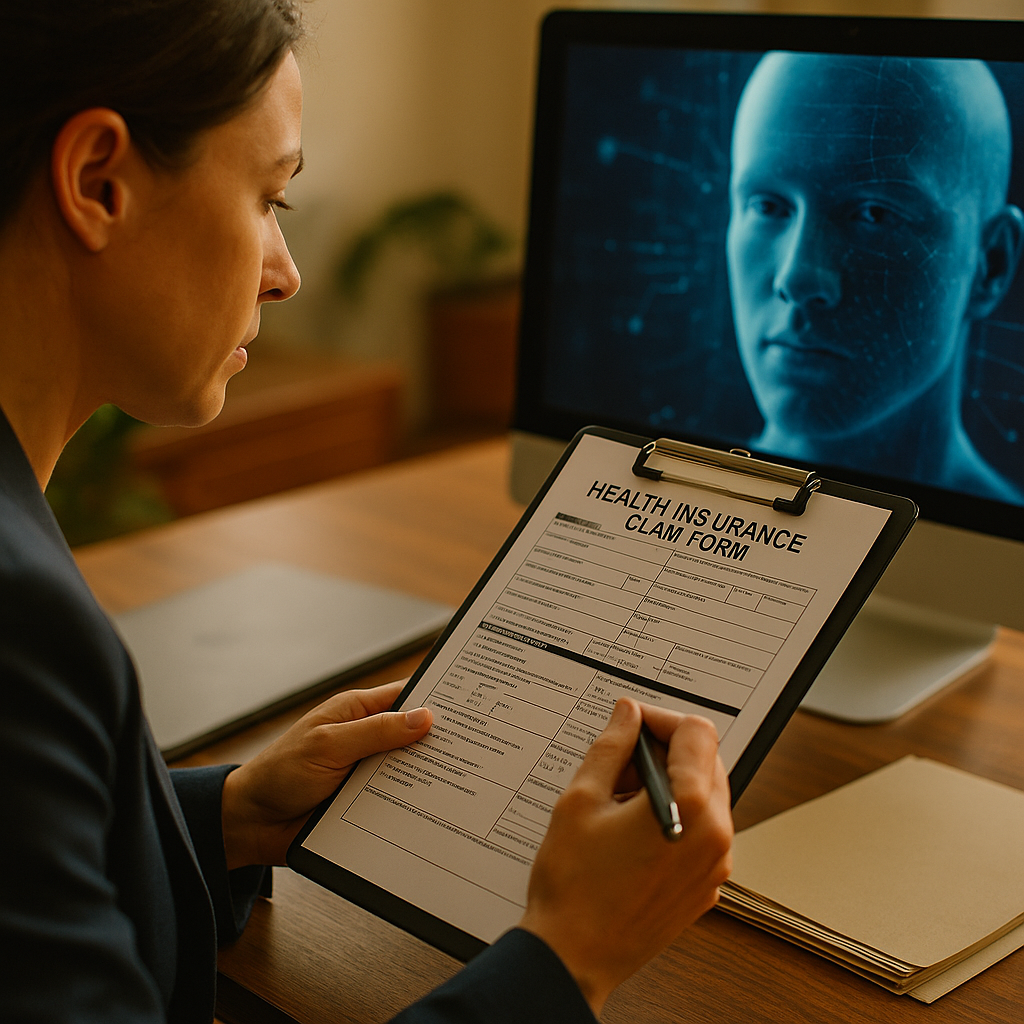
Ask ChatGPT what supplement helps with sleep, and it might cite a creator’s TikTok claim as fact. No FTC disclaimer. No nuance. Just a confident answer pulled from content nobody vetted for substantiation. That’s the risk hiding inside every health and wellness creator claim pre-clear conversation brands are avoiding right now, and it’s about to get expensive.
Generative engine optimization (GEO) is working exactly as intended: pushing creator content into AI-generated shopping answers on ChatGPT, Perplexity, and Google’s AI Overviews. The problem is that GEO doesn’t check whether the underlying claim is legally defensible. It just makes sure the content gets seen. For health and wellness brands, that’s a compliance time bomb wrapped in a marketing win.
Why This Is Different From Regular Influencer Compliance
Traditional influencer compliance was built around a simple model: a creator posts, humans see it, someone flags it if something’s off. Slow, but contained. GEO breaks that containment. Once an AI model ingests a creator’s post as training or retrieval data, that claim can resurface in answers to millions of unrelated queries, stripped of context, stripped of disclosure, and often stripped of the caveats the creator originally included.
Say a wellness creator posts “this adaptogen cured my anxiety” with a small-print disclaimer buried in the caption. A human scrolling past might catch the nuance. An AI shopping assistant summarizing “best anxiety supplements” probably won’t. It’ll just repeat the claim as a recommendation, and now your brand is attached to a medical assertion nobody at the company approved.
The moment a claim enters an AI-generated answer, it stops being “creator content” in the eyes of a regulator and starts looking like brand-endorsed marketing, disclaimer or not.
This isn’t hypothetical anxiety. The FTC has already signaled it’s watching how AI-surfaced content blurs the line between organic opinion and paid endorsement. Our earlier coverage on GEO optimization and FTC pre-clearance laid out the foundational risk. Health and wellness raises the stakes further because claims here intersect with FDA-adjacent rules around structure/function statements, disease claims, and implied medical benefits.
The Math on Why Brands Are Rushing GEO Without Guardrails
Search behavior is shifting fast. Statista and eMarketer data both point to rising AI-assisted shopping research, and marketing teams don’t want to lose visibility in that channel. So they’re pushing creators to produce content optimized for AI retrieval: clear claims, structured language, benefit-forward hooks. All the things that make a claim easy for a large language model to lift and repeat.
The irony is brutal. The more “quotable” a creator makes their claim, the more likely an AI engine surfaces it verbatim, and the more exposed the brand becomes if that claim isn’t substantiated.
What “Pre-Clearing” Actually Means for Health Claims
Pre-clearance isn’t a legal review that happens after content goes live. It’s a workflow that happens before a creator hits publish, built specifically for claims that touch health, wellness, supplements, skincare, or anything with an implied physiological benefit. Here’s what a functional pre-clearance process includes:
- Claim inventory: Every health-adjacent statement a creator plans to make, logged and categorized (structure/function, disease claim, comparative claim, testimonial-based).
- Substantiation check: Does the brand have clinical data, ingredient studies, or regulatory approval backing the claim? If not, the claim gets rewritten or cut.
- Disclosure alignment: Confirm the disclosure format matches current FTC endorsement guidance, not just platform defaults.
- GEO-readiness scan: Model how the claim would read if stripped of context and quoted alone in an AI answer. If it sounds like a medical guarantee without the caveats, revise it.
- Sign-off trail: Documented approval from legal or regulatory affairs, timestamped, before content goes to the creator for filming or publishing.
That last point matters more than people think. If an AI engine surfaces a bad claim six months from now, you want a paper trail showing your brand caught it, or at least tried to. Our related piece on FTC substantiation before GEO goes deeper into building that documentation habit into standard workflows.
Structure/Function vs. Disease Claims: The Line Creators Cross Without Knowing It
Most creators aren’t regulatory experts, and honestly, why would they be? A structure/function claim (“supports immune health”) is generally allowed for supplements under FDA rules without pre-market approval. A disease claim (“prevents colds”) is not, unless the product is regulated as a drug. Creators blur this line constantly, usually with zero malicious intent. They’re just talking the way real people talk.
The problem is that AI summarization tools don’t preserve that nuance. They compress. A creator saying “this helped my immune system fight off what was going around” can get summarized by an AI shopping assistant as “users report it prevents illness.” That’s a disease claim now, born from paraphrasing, not from anything the creator or brand actually intended.
This is why pre-clearance scripts should include explicit “do not say” lists for creators, not just “do say” talking points. Give creators the boundary lines, not just the messaging.
Building the Pre-Clearance Workflow Into Campaign Timelines
Here’s the operational reality: legal review takes time, creators want fast turnaround, and campaign timelines are usually tight. Squeezing pre-clearance into that mix without killing momentum requires structure, not heroics.
- Front-load the claim library. Before any creator briefing, legal and marketing should jointly build an approved claims bank specific to the product. Creators pull from this bank instead of freelancing language.
- Build claim review into the brief, not the edit. Catching a bad claim in a shot list is cheap. Catching it in a finished video is expensive and often too late once it’s live and indexed.
- Set a 48-hour legal SLA. Slow legal review is the top reason compliance gets skipped. A committed turnaround window keeps creators moving without sacrificing the check.
- Route AI-optimized content through a second pass. If a creator or agency is specifically writing for GEO visibility, that content needs an extra look, because it’s engineered to be quotable, and quotable claims are exactly what gets pulled into AI answers verbatim.
- Log everything. Every approval, every revision, every rejected claim. This isn’t bureaucracy for its own sake, it’s your defense file if a regulator or platform ever asks questions.
Brands already managing complex disclosure requirements around AI-labeled content should look at how AI labels can clash with FTC rules. The same tension applies to health claims: platform-level AI disclosure doesn’t replace the substantive claim review a regulator actually cares about.
What Happens When You Skip This Step
Let’s talk consequences, because vague risk warnings don’t move budgets. If an unsubstantiated health claim gets surfaced in an AI shopping answer and traced back to a paid partnership, the brand faces exposure on multiple fronts: FTC enforcement action, state consumer protection claims, and reputational fallout when journalists (or competitors) screenshot the AI answer as proof of “AI recommending unproven health products.”
The reputational angle is underrated. Nobody wants to be the case study in the next trade press piece about AI shopping assistants pushing bad health advice. That story writes itself, and brands are the easiest villain in it.
There’s also a slower-burn risk: once bad claims get baked into an AI model’s retrieval index, correcting them isn’t instant. Unlike a social post you can delete, AI training and retrieval systems don’t always refresh on your timeline. A claim pre-cleared badly today could keep surfacing for months after you’ve fixed the source content.
Deleting a post takes seconds. Un-teaching an AI model that your product “cures” something takes a lot longer, if it happens at all.
Cross-Functional Ownership, Not Just Legal Sign-Off
Pre-clearance works best when it’s not treated as purely a legal function bolted onto marketing. Regulatory affairs, brand safety, and the influencer marketing team need shared ownership. Legal knows the FTC and FDA-adjacent rules. Marketing knows what’s actually getting produced and how GEO strategies are shaping creator briefs. Neither team alone catches everything.
Some brands are starting to formalize this with a joint sign-off matrix, similar to escalation frameworks used for disclosure complaints. If you haven’t built one yet, the compliance escalation matrix for creator disclosures is a solid model to adapt for claim pre-clearance specifically.
Agencies managing multiple health and wellness clients should also standardize this across accounts. Inconsistent claim review from one client to the next is how mistakes slip through: someone assumes another team already checked.
A Quick Gut-Check Before Any Health Claim Goes Into a Brief
If you’re short on time and need a fast filter, ask these three questions before approving any health or wellness creator content:
- Would this claim survive being read aloud, out of context, by an AI voice assistant with no disclaimer attached?
- Is there actual clinical or regulatory backing for this specific wording, not just the general product category?
- Does the claim imply treatment, prevention, or cure of a disease, even indirectly?
If the answer to any of those raises a flag, the claim needs revision before it ever reaches a creator’s camera. This isn’t about slowing campaigns down for the sake of caution. It’s about protecting the brand from a distribution channel that doesn’t know how to say “consult your doctor” on your behalf.
Start treating claim pre-clearance as infrastructure, not a bottleneck: build the claims bank, set the SLA, and audit what GEO-optimized content is already live before an AI engine finds the gap first.
FAQs
What does it mean to pre-clear a health and wellness creator claim?
It means reviewing and approving the exact wording of a health-related statement before a creator publishes it, checking it against substantiation data and regulatory rules like FTC endorsement guidance and FDA structure/function standards, rather than reviewing content after it’s already live.
Why does GEO optimization increase health claim risk specifically?
GEO makes creator content more likely to be surfaced and quoted by AI shopping assistants and search engines. When a health claim gets pulled into an AI-generated answer, it often loses its original context, disclaimers, and nuance, which can turn a borderline statement into an unsubstantiated medical claim.
Who should own claim pre-clearance inside a brand?
It works best as a shared function between legal or regulatory affairs and the influencer marketing team. Legal understands the compliance boundaries, while marketing understands what’s actually being produced and how content is being optimized for AI visibility.
How long should claim review take without slowing campaigns down?
A 48-hour service-level agreement for legal review is a reasonable benchmark for most campaigns. Front-loading an approved claims bank before creator briefings reduces the volume of ad hoc review requests significantly.
Can a brand fix a bad claim after an AI model has already surfaced it?
Sometimes, but not instantly. Unlike deleting a social post, correcting information already indexed or retrieved by AI systems can take weeks or months, which is why pre-clearance before publication matters far more than after-the-fact correction.
FAQs
What does it mean to pre-clear a health and wellness creator claim?
It means reviewing and approving the exact wording of a health-related statement before a creator publishes it, checking it against substantiation data and regulatory rules like FTC endorsement guidance and FDA structure/function standards, rather than reviewing content after it’s already live.
Why does GEO optimization increase health claim risk specifically?
GEO makes creator content more likely to be surfaced and quoted by AI shopping assistants and search engines. When a health claim gets pulled into an AI-generated answer, it often loses its original context, disclaimers, and nuance, which can turn a borderline statement into an unsubstantiated medical claim.
Who should own claim pre-clearance inside a brand?
It works best as a shared function between legal or regulatory affairs and the influencer marketing team. Legal understands the compliance boundaries, while marketing understands what’s actually being produced and how content is being optimized for AI visibility.
How long should claim review take without slowing campaigns down?
A 48-hour service-level agreement for legal review is a reasonable benchmark for most campaigns. Front-loading an approved claims bank before creator briefings reduces the volume of ad hoc review requests significantly.
Can a brand fix a bad claim after an AI model has already surfaced it?
Sometimes, but not instantly. Unlike deleting a social post, correcting information already indexed or retrieved by AI systems can take weeks or months, which is why pre-clearance before publication matters far more than after-the-fact correction.
Top Influencer Marketing Agencies
The leading agencies shaping influencer marketing in 2026
Agencies ranked by campaign performance, client diversity, platform expertise, proven ROI, industry recognition, and client satisfaction. Assessed through verified case studies, reviews, and industry consultations.
Moburst

-
2

The Shelf
Boutique Beauty & Lifestyle Influencer AgencyA data-driven boutique agency specializing exclusively in beauty, wellness, and lifestyle influencer campaigns on Instagram and TikTok. Best for brands already focused on the beauty/personal care space that need curated, aesthetic-driven content.Clients: Pepsi, The Honest Company, Hims, Elf Cosmetics, Pure LeafVisit The Shelf → -
3

Audiencly
Niche Gaming & Esports Influencer AgencyA specialized agency focused exclusively on gaming and esports creators on YouTube, Twitch, and TikTok. Ideal if your campaign is 100% gaming-focused — from game launches to hardware and esports events.Clients: Epic Games, NordVPN, Ubisoft, Wargaming, Tencent GamesVisit Audiencly → -
4

Viral Nation
Global Influencer Marketing & Talent AgencyA dual talent management and marketing agency with proprietary brand safety tools and a global creator network spanning nano-influencers to celebrities across all major platforms.Clients: Meta, Activision Blizzard, Energizer, Aston Martin, WalmartVisit Viral Nation → -
5

The Influencer Marketing Factory
TikTok, Instagram & YouTube CampaignsA full-service agency with strong TikTok expertise, offering end-to-end campaign management from influencer discovery through performance reporting with a focus on platform-native content.Clients: Google, Snapchat, Universal Music, Bumble, YelpVisit TIMF → -
6

NeoReach
Enterprise Analytics & Influencer CampaignsAn enterprise-focused agency combining managed campaigns with a powerful self-service data platform for influencer search, audience analytics, and attribution modeling.Clients: Amazon, Airbnb, Netflix, Honda, The New York TimesVisit NeoReach → -
7

Ubiquitous
Creator-First Marketing PlatformA tech-driven platform combining self-service tools with managed campaign options, emphasizing speed and scalability for brands managing multiple influencer relationships.Clients: Lyft, Disney, Target, American Eagle, NetflixVisit Ubiquitous → -
8

Obviously
Scalable Enterprise Influencer CampaignsA tech-enabled agency built for high-volume campaigns, coordinating hundreds of creators simultaneously with end-to-end logistics, content rights management, and product seeding.Clients: Google, Ulta Beauty, Converse, AmazonVisit Obviously →