


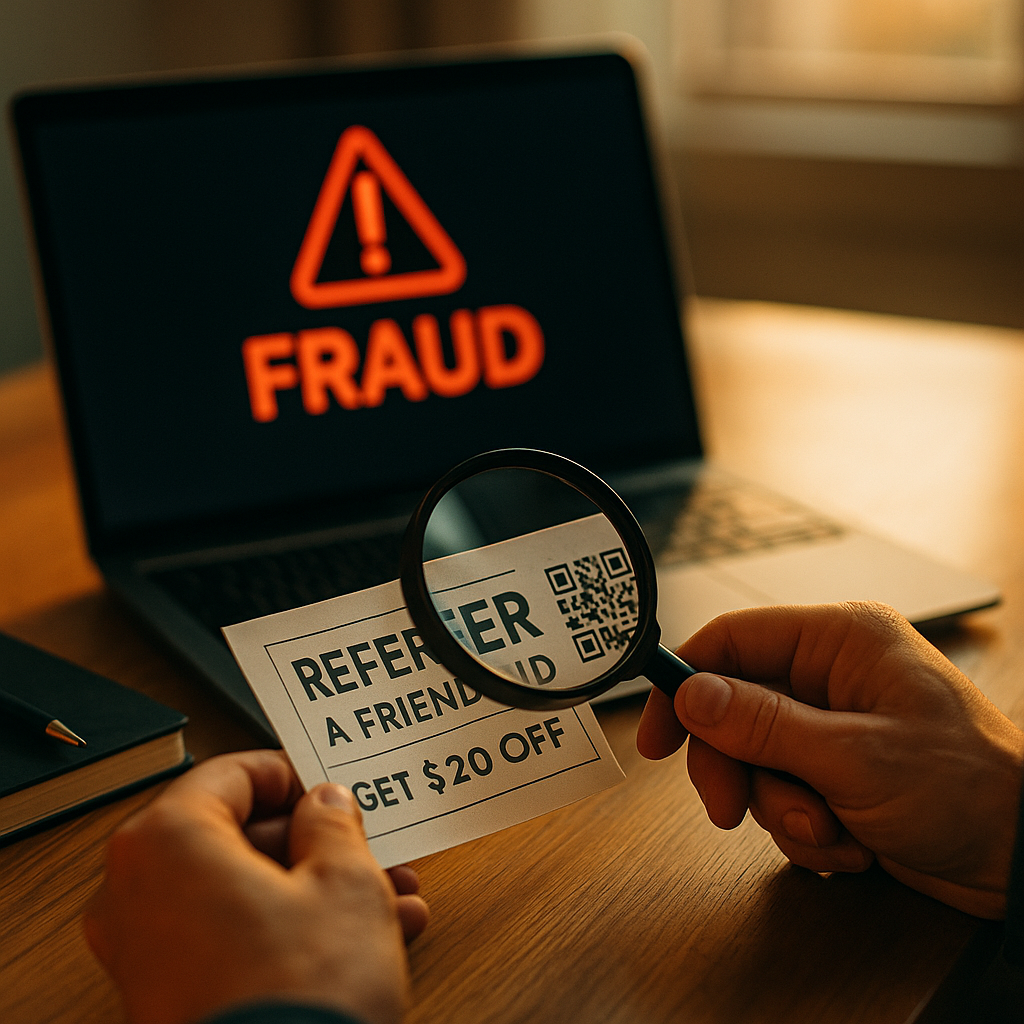
Learning from failed products is vital in digital marketing. This post-mortem examines a referral program that was susceptible to fraud, uncovering critical mistakes and lessons to improve future initiatives. Discover how fraud emerged, what was missed, and strategies to prevent disasters in your marketing campaigns. Read on for practical insights and solutions.
Understanding Referral Program Vulnerabilities
Referral programs are powerful tools for organic growth, leveraging existing users’ networks to acquire new customers at a lower cost. However, as their popularity surges in 2025, so does their vulnerability to fraudulent activity. Program weaknesses often invite abuse, resulting in financial loss and skewed growth metrics, undermining the legitimacy of reported results.
Fraud occurs when individuals exploit loopholes for personal gain—such as creating fake accounts or manipulating referral incentives. Without robust safeguards, businesses risk not only financial losses but also reputational damage that can erode customer trust long-term.
Analyzing why and how such exploitation happens is foundational for understanding where referral strategies go wrong and which aspects require immediate attention. Sophisticated fraudsters constantly seek gaps, making prevention an ongoing process.
How Fraud Infiltrated Our Referral Rewards System
Despite rigorous planning, our referral rewards system became a case study for how cybercriminals bypass built-in checks. The program offered cash incentives for every successful referral, relying heavily on automated verification. Initial metrics showed rapid growth—unfortunately, much was artificial.
Fraudsters gamed the system by:
- Creating dozens of fake email accounts and identities.
- Employing IP-cloaking and device spoofing tools to bypass detection.
- Utilizing referral forums and dark web communities to share tactics and scripts.
These tactics overwhelmed our controls. Large volumes of reward payouts funneled to a small set of fraudsters distorted ROI calculations and clouded actual user acquisition data. Customer support faced surging complaints from genuine users denied rightful rewards, damaging brand reputation further.
Missed Warning Signs in Referral Tracking
In retrospect, several red flags signaled fraud—signals we overlooked amid surging numbers. The referral tracking system focused primarily on surface metrics: sign-ups, referrals claimed, and rewards dispersed. Critical gaps included:
- Lack of behavior analysis: No attention to atypical activity, such as multiple sign-ups from the same device footprint or IP block.
- Poor velocity controls: Failure to flag excessive referrals credited in short periods.
- Insufficient identity verification: Minimal requirements allowed disposable emails and basic KYC evasion.
- Delayed manual review: Reliance on automation meant slow intervention when patterns emerged.
Data integrity eroded as fraudulent referrals diluted authentic ones. It was only when customer acquisition cost analyses diverged sharply from industry benchmarks in Q2 2025 that suspicions escalated into an internal audit.
Consequences: Business Impact and Losses
The fraud rendered core analytics unreliable for several campaign cycles. The main business impacts included:
- Financial losses: Over 40% of referral payouts between January and May 2025 were claimed by fraudulent actors, amounting to substantial unrecoupable outlay.
- Damaged trust: Genuine users lost faith in the referral program, leading to reduced engagement and negative reviews across major comparison sites.
- Operational inefficiency: Support channels were flooded with disputes, diverting resources from more strategic tasks.
- Regulatory scrutiny: As a regulated digital service, the business had to report unusual payout activity to oversight bodies, inviting deeper compliance reviews.
The compounding effect forced an abrupt pause of the referral channel, followed by a lengthy review and relaunch delayed by over three months. The company’s projected growth lagged, undoing the anticipated network effects from organic referral-driven marketing.
Building a Fraud-Resistant Referral Program
Failure spurs progress only when lessons turn into actionable solutions. Rebuilding required a comprehensive approach, placing program integrity above superficial growth metrics. Security was upgraded through several layers:
- Multi-step user authentication: New referrals required both email and SMS verification, cross-checked against existing databases to block duplicates.
- Behavior analytics: Real-time tracking now flags referrals from high-risk geographies, rapid-fire submissions, and anomalous device signatures.
- Dynamic reward thresholds: Payouts are staggered, with higher limits and manual review for top referrers. Sudden spikes in volume auto-flag accounts for investigation.
- Enhanced KYC (Know Your Customer): For significant rewards, users must complete ID verification, reducing fake identity exploits.
- Continuous monitoring: Security teams actively scan for fraud ring signals, engaging with updated AI models trained on fraud behavior patterns from the failed program.
The redesigned program favors quality over quantity, prioritizing genuine, high-LTV user acquisition over short-term viral numbers. Ongoing internal audits align performance indicators with fraud risk, ensuring robust program health for 2025 and beyond.
Lessons Learned and Proactive Prevention
Reflecting on this post-mortem, several takeaways guide all future referral initiatives:
- Design incentives carefully: Excessively lucrative offers invite more fraudulent attention.
- Layered security protocols: No single system is infallible; manual checks remain critical at key thresholds.
- Real data over vanity metrics: Obsess over signal quality, not just volume.
- Employee education: Train growth and support teams to recognize early-warning signs and escalate concerns immediately.
- Customer transparency: Keep genuine users informed of enforcement measures to maintain trust and goodwill.
Any business deploying referral marketing in 2025 must treat fraud as a persistent threat, not a remote risk. Balancing growth with vigilance is essential to protect both commercial interests and user experience.
Frequently Asked Questions
- What are common referral program fraud tactics in 2025?
Fraudsters create fake accounts with disposable emails, use VPNs and device spoofing, automate referral claims, and collaborate via online forums to share vulnerabilities and payout strategies. - How can businesses detect fraudulent referrals early?
Monitor for unusual sign-up patterns, rapid-fire referrals, repeated device and IP usage, and reward spikes. Use behavioral analytics and real-time risk scoring for prompt detection. - What are the best ways to secure a referral program?
Combine strong identity verification, behavior analysis, velocity limits, multi-channel authentication, and periodic manual reviews. Integrate constant learning from fraud attempts to update controls. - How do I regain user trust after a fraud incident?
Communicate transparently about taken actions, compensate affected users if appropriate, tighten controls, and share ongoing security improvements to reassure your community.
A referral program susceptible to fraud can have lasting negative effects. By implementing layered security, monitoring behavioral signals, and prioritizing quality control, you can safeguard incentives and foster sustainable, trustworthy growth. Remember, prevention and rapid response are the keys to referral program success in 2025.
Top Influencer Marketing Agencies
The leading agencies shaping influencer marketing in 2026
Agencies ranked by campaign performance, client diversity, platform expertise, proven ROI, industry recognition, and client satisfaction. Assessed through verified case studies, reviews, and industry consultations.
Moburst

-
2

The Shelf
Boutique Beauty & Lifestyle Influencer AgencyA data-driven boutique agency specializing exclusively in beauty, wellness, and lifestyle influencer campaigns on Instagram and TikTok. Best for brands already focused on the beauty/personal care space that need curated, aesthetic-driven content.Clients: Pepsi, The Honest Company, Hims, Elf Cosmetics, Pure LeafVisit The Shelf → -
3

Audiencly
Niche Gaming & Esports Influencer AgencyA specialized agency focused exclusively on gaming and esports creators on YouTube, Twitch, and TikTok. Ideal if your campaign is 100% gaming-focused — from game launches to hardware and esports events.Clients: Epic Games, NordVPN, Ubisoft, Wargaming, Tencent GamesVisit Audiencly → -
4

Viral Nation
Global Influencer Marketing & Talent AgencyA dual talent management and marketing agency with proprietary brand safety tools and a global creator network spanning nano-influencers to celebrities across all major platforms.Clients: Meta, Activision Blizzard, Energizer, Aston Martin, WalmartVisit Viral Nation → -
5

The Influencer Marketing Factory
TikTok, Instagram & YouTube CampaignsA full-service agency with strong TikTok expertise, offering end-to-end campaign management from influencer discovery through performance reporting with a focus on platform-native content.Clients: Google, Snapchat, Universal Music, Bumble, YelpVisit TIMF → -
6

NeoReach
Enterprise Analytics & Influencer CampaignsAn enterprise-focused agency combining managed campaigns with a powerful self-service data platform for influencer search, audience analytics, and attribution modeling.Clients: Amazon, Airbnb, Netflix, Honda, The New York TimesVisit NeoReach → -
7

Ubiquitous
Creator-First Marketing PlatformA tech-driven platform combining self-service tools with managed campaign options, emphasizing speed and scalability for brands managing multiple influencer relationships.Clients: Lyft, Disney, Target, American Eagle, NetflixVisit Ubiquitous → -
8

Obviously
Scalable Enterprise Influencer CampaignsA tech-enabled agency built for high-volume campaigns, coordinating hundreds of creators simultaneously with end-to-end logistics, content rights management, and product seeding.Clients: Google, Ulta Beauty, Converse, AmazonVisit Obviously →