


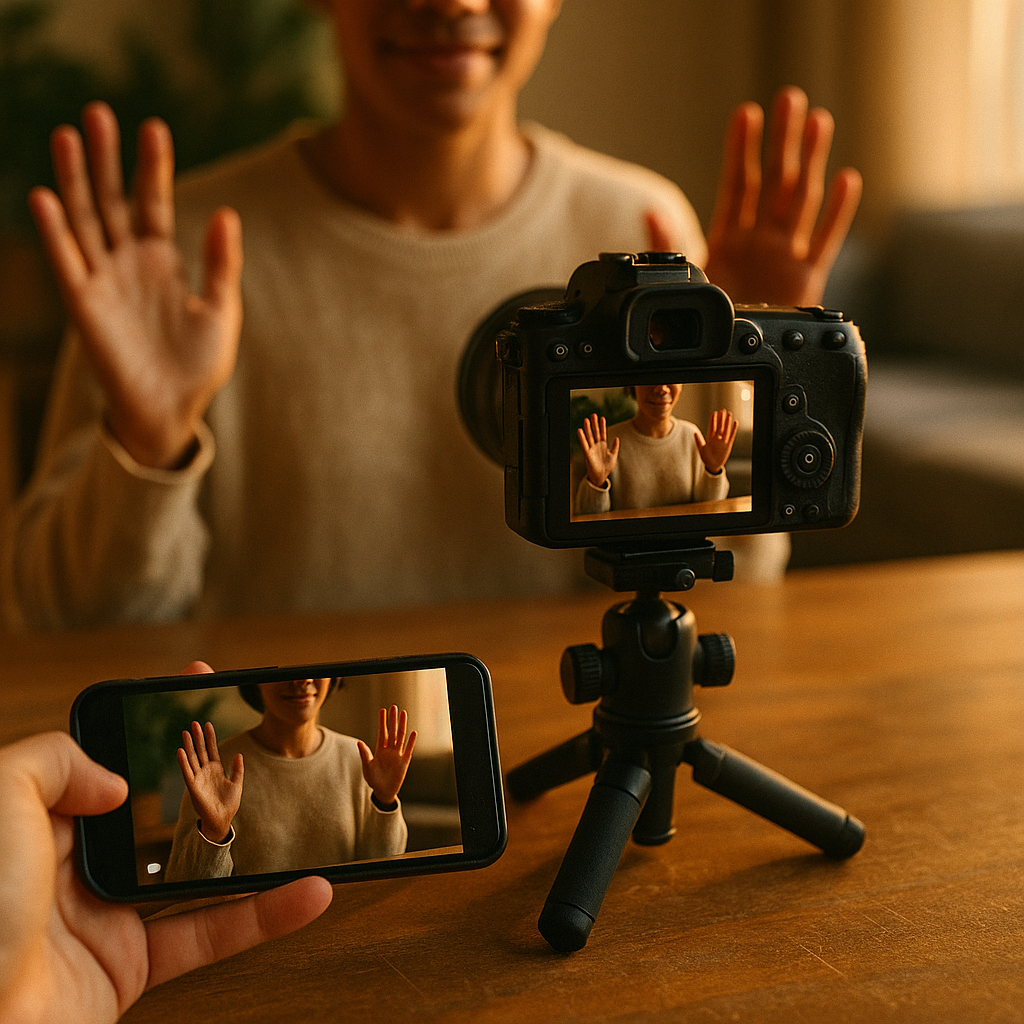
Over 85% of social video is watched with the sound off. Yet most vlog-style creator content is still shot, scripted, and edited as if every viewer has earbuds in. Silent vlogging flips that assumption, treating captions and on-screen text as the primary storytelling layer, not an accessibility afterthought. If your influencer program is still measuring “watch time” without asking whether the story actually lands muted, you’re leaving reach and conversion on the table.
Why Muted Feeds Changed the Creative Brief
Sound-off viewing isn’t a niche behavior anymore. It’s the default across commuter scrolling, office breaks, and shared spaces where audio would be rude or risky. TikTok, Instagram, and YouTube Shorts all autoplay muted by default, which means the first two seconds of any vlog either hook a silent viewer with visuals and text, or lose them before the audio even matters.
This isn’t new information for anyone who’s briefed a subtitle first design approach before. But silent vlogging pushes the concept further. It’s not just adding captions to a talking-head video. It’s restructuring the entire narrative arc, pacing, and visual grammar of a vlog so the story works as a silent film first, with audio as an optional enhancement layer.
Treat every vlog script as two scripts: one spoken, one written on screen. If the on-screen version can’t carry the story alone, the format isn’t ready to ship.
What Silent Vlogging Actually Looks Like
A silent vlog isn’t a talking-head clip with captions bolted on in post. It’s built from the ground up around text pacing, visual beats, and caption hierarchy. That means:
- Hook text within the first frame. No slow build. The caption on screen at second zero needs to do the job a spoken intro used to do.
- Layered captions, not just transcripts. Bold keywords, emoji punctuation, and short line breaks that mimic how people actually skim, not how they’d read a script.
- Visual pacing tied to text reveals. Cuts happen when new caption beats appear, so the eye has a reason to keep watching even without sound cues.
- B-roll that narrates on its own. If the visuals can’t communicate “day in the life at a skincare startup” without a voiceover, the shoot plan needs rework, a lesson also core to the B-roll diary format brands are already testing.
Creators who’ve built audiences on TikTok and Shorts have been doing versions of this instinctively for years. The brands catching up now are the ones formalizing it into a repeatable brief instead of hoping their creator partners figure it out clip by clip.
The ROI Case: Why Brands Should Care
Let’s talk numbers, because that’s what gets budget approved. Meta has reported that video ads designed for sound-off viewing see meaningfully higher completion rates than audio-dependent creative when tested against the same audience. Sprout Social’s own research on caption usage has repeatedly shown accessibility features like captions correlate with higher engagement, not just compliance box-checking. You can dig into the platform-level guidance yourself via Meta’s business resources and TikTok’s advertising hub, both of which now treat caption design as a core creative variable, not an accessibility checkbox.
The efficiency angle matters just as much as the performance angle. Caption-first content is cheaper to localize. Swap the text layer, keep the visuals, and you’ve got a version ready for a new market without a full reshoot. That’s the same logic driving AI voiceover overlay workflows, but silent vlogging takes it a step further by making the audio layer optional entirely.
A caption-first vlog format isn’t just an accessibility win. It’s a localization shortcut, a muted-feed insurance policy, and a completion-rate lever, all from one production decision.
What This Means for Compliance and Risk
There’s a risk mitigation angle too, one that often gets overlooked in creative meetings but not in legal ones. Captions and on-screen disclosures make FTC-required disclosures more visible, not less. A spoken “this is sponsored” buried in fast talk is easy to miss. A bold on-screen “#ad” caption held for a full second is not. Brands running influencer campaigns should already be familiar with disclosure requirements via the FTC’s endorsement guidelines, and caption-first design happens to make compliance easier to prove during an audit, since the disclosure lives in the visual record of the video itself, not just in a spoken aside that’s hard to timestamp.
Building the Brief: What to Actually Ask Creators For
Most briefing failures in this format come down to vague language. “Make sure it works muted” isn’t a brief, it’s a wish. Here’s what a tighter creative brief for silent vlogging should specify:
- Caption timing rules. Minimum on-screen duration per line (industry norm is roughly 1.5 to 2 seconds per short caption line, longer for dense text).
- Font and contrast standards. Legibility over branding aesthetics. If the brand font is thin and low-contrast, it needs an on-screen variant built for readability at small mobile sizes.
- Hook caption requirement. A specific instruction that the first caption must state the value proposition or hook, not just a greeting.
- Silent-first storyboard review. Ask creators to submit a version with sound muted during the approval process, so the team is judging what most viewers will actually experience.
This kind of structure pairs well with the pacing discipline covered in editing style testing for pacing, since caption timing and cut timing are really the same decision viewed from two angles.
Does This Kill Creator Authenticity?
This is the pushback we hear most from creative teams: won’t a rigid caption structure make vlogs feel scripted and stiff, the opposite of the raw, authentic energy that made creator content work in the first place? It’s a fair concern, and it’s the same tension explored in creative approval bottlenecks content.
The answer is that caption-first doesn’t mean caption-heavy or caption-rigid. The best silent vlogs still feel loose and unscripted in tone, they’ve just made the on-screen text do double duty as both storytelling device and safety net for muted viewers. Think of captions as a second camera angle, not a teleprompter. Creators who already understand pacing intuitively, the ones who’ve built audiences through micro vlog story arcs, tend to adapt to this fastest because they already think in visual beats.
Where Silent Vlogging Fits in a Broader Content System
Silent vlogging shouldn’t live as an isolated tactic. It slots naturally into a format-agnostic production system where one shoot generates multiple caption-first cuts for different platforms and funnel stages. Brands already running format agnostic distribution models will find silent vlogging is simply another lens applied to existing raw footage, not a separate production line requiring new budget.
It also connects directly to the growing body of work on silent caption scripts and silent product demos, both of which tackle adjacent problems: scripting for text-first delivery and demonstrating product value without narration. Silent vlogging is really the umbrella format tying those techniques into a longer-form narrative arc, ideal for brand storytelling, founder content, and behind-the-scenes series that need more runway than a 15-second demo allows.
For teams tracking performance, don’t just watch completion rate. Segment it by sound-on versus sound-off where the platform allows, and compare caption-forward cuts against traditional voiceover-led versions of the same footage. HubSpot’s marketing analytics resources and Statista’s social media usage data are both useful benchmarks for contextualizing whether your muted completion rates are actually competitive or just average.
Common Mistakes That Sink the Format
- Auto-generated captions with no editing. Platform auto-captions are a starting point, not a finished product. Typos and misread words break trust fast.
- Text that moves too fast to read. If your creative team can’t read it comfortably on a single pass, neither can a scrolling viewer.
- Ignoring safe zones. Captions placed where platform UI elements (like buttons or usernames) overlap get cut off or hidden constantly.
- Treating captions as a compliance line item instead of a creative asset. The brands winning here design captions with the same care as a headline, not as a legal afterthought.
Silent vlogging works best when brands stop thinking of it as a workaround and start treating it as the primary creative brief. Build the next vlog campaign caption-first, test it muted before it ever ships, and measure completion rate as seriously as you measure clicks.
Frequently Asked Questions
What is silent vlogging in creator marketing?
Silent vlogging is a content format where the story is designed to be fully understood without audio, using on-screen text, captions, and visual pacing as the primary storytelling tools rather than relying on voiceover or spoken narration.
Why do brands need a caption-first strategy if most platforms auto-generate captions?
Auto-generated captions are often inaccurate, poorly timed, and visually inconsistent with brand style. A caption-first strategy treats text as a designed creative element, controlling timing, hierarchy, and legibility rather than leaving it to default platform tools.
Does silent vlogging replace the need for audio entirely?
No. Audio still adds value for viewers who do have sound on, especially for music, tone, and ambiance. Silent vlogging simply ensures the core message and hook are fully deliverable without it, so brands aren’t losing the majority of viewers who scroll muted.
How does silent vlogging affect FTC disclosure compliance?
On-screen captions make sponsorship disclosures more visible and easier to verify during an audit than spoken disclosures buried in fast dialogue. Brands should still follow FTC endorsement guidelines regardless of format.
What metrics should brands track to measure silent vlogging success?
Completion rate segmented by sound-on versus sound-off viewing, caption engagement (where platforms report it), and conversion rate compared against traditional voiceover-led versions of similar content.
Top Influencer Marketing Agencies
The leading agencies shaping influencer marketing in 2026
Agencies ranked by campaign performance, client diversity, platform expertise, proven ROI, industry recognition, and client satisfaction. Assessed through verified case studies, reviews, and industry consultations.
Moburst

-
2

The Shelf
Boutique Beauty & Lifestyle Influencer AgencyA data-driven boutique agency specializing exclusively in beauty, wellness, and lifestyle influencer campaigns on Instagram and TikTok. Best for brands already focused on the beauty/personal care space that need curated, aesthetic-driven content.Clients: Pepsi, The Honest Company, Hims, Elf Cosmetics, Pure LeafVisit The Shelf → -
3

Audiencly
Niche Gaming & Esports Influencer AgencyA specialized agency focused exclusively on gaming and esports creators on YouTube, Twitch, and TikTok. Ideal if your campaign is 100% gaming-focused — from game launches to hardware and esports events.Clients: Epic Games, NordVPN, Ubisoft, Wargaming, Tencent GamesVisit Audiencly → -
4

Viral Nation
Global Influencer Marketing & Talent AgencyA dual talent management and marketing agency with proprietary brand safety tools and a global creator network spanning nano-influencers to celebrities across all major platforms.Clients: Meta, Activision Blizzard, Energizer, Aston Martin, WalmartVisit Viral Nation → -
5

The Influencer Marketing Factory
TikTok, Instagram & YouTube CampaignsA full-service agency with strong TikTok expertise, offering end-to-end campaign management from influencer discovery through performance reporting with a focus on platform-native content.Clients: Google, Snapchat, Universal Music, Bumble, YelpVisit TIMF → -
6

NeoReach
Enterprise Analytics & Influencer CampaignsAn enterprise-focused agency combining managed campaigns with a powerful self-service data platform for influencer search, audience analytics, and attribution modeling.Clients: Amazon, Airbnb, Netflix, Honda, The New York TimesVisit NeoReach → -
7

Ubiquitous
Creator-First Marketing PlatformA tech-driven platform combining self-service tools with managed campaign options, emphasizing speed and scalability for brands managing multiple influencer relationships.Clients: Lyft, Disney, Target, American Eagle, NetflixVisit Ubiquitous → -
8

Obviously
Scalable Enterprise Influencer CampaignsA tech-enabled agency built for high-volume campaigns, coordinating hundreds of creators simultaneously with end-to-end logistics, content rights management, and product seeding.Clients: Google, Ulta Beauty, Converse, AmazonVisit Obviously →