


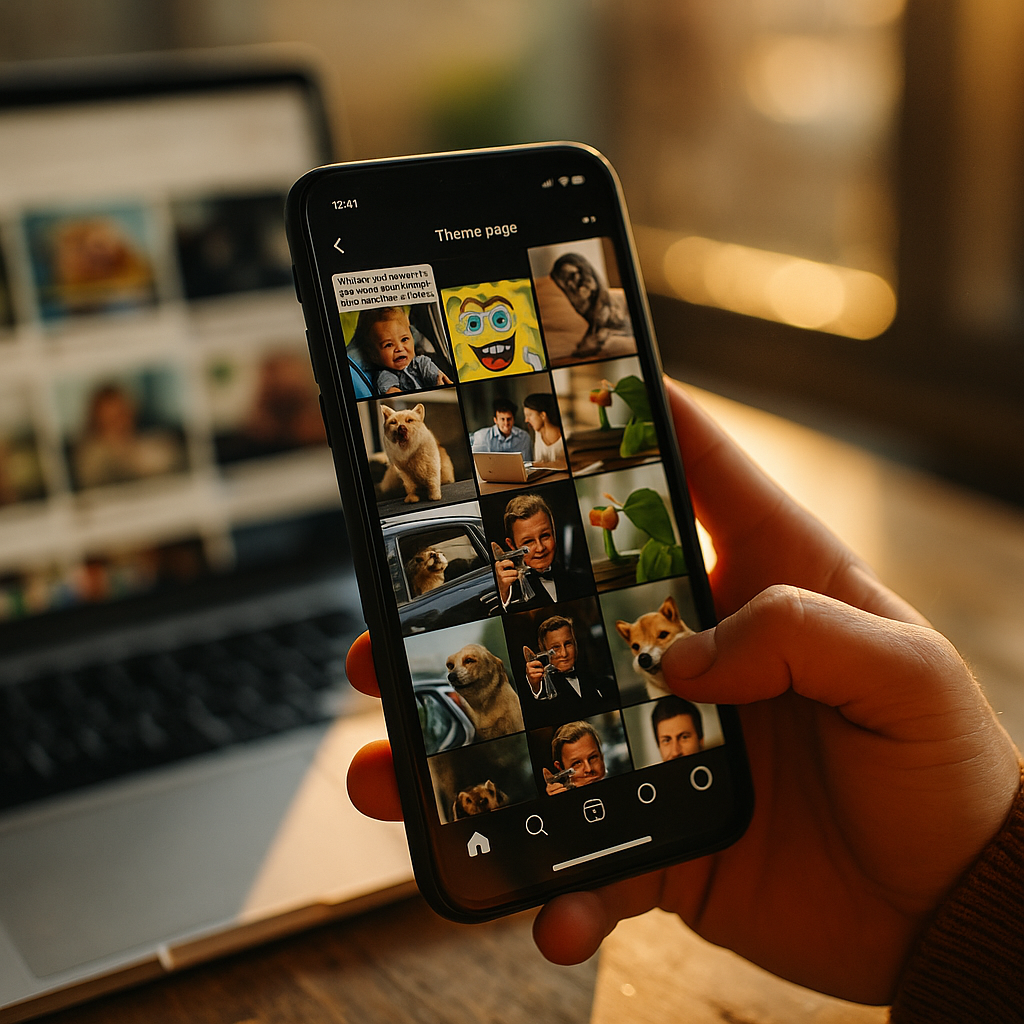
Nearly 70% of Gen Z users say they trust a meme account’s recommendation more than a celebrity endorsement, according to recent Sprout Social research on creator trust. That’s the entire premise behind theme page seeding: getting your content placed on the niche meme pages, aggregator accounts, and fan pages that already own an audience’s attention, instead of paying to build that attention from scratch. It’s cheap, it’s fast, and it’s wildly misunderstood by most brand teams.
What Is Theme Page Seeding, Really?
Theme pages are the large niche accounts built around a single interest, a dog breed, a fandom, a city’s food scene, a finance meme format, that exist to entertain a specific audience segment. They don’t create original content so much as curate and repost it. Theme page seeding is the practice of getting your branded content, or content that features your product, placed on these accounts organically or through paid repost arrangements.
Unlike a traditional influencer partnership, you’re not paying for a creator’s face or voice. You’re paying (or pitching) for distribution. The content itself usually isn’t made for the theme page audience from day one, it’s adapted, reframed, or stripped of branding just enough to survive the native feel of the page.
Theme page seeding works because audiences trust the page’s curation instincts more than they trust an obvious ad. The moment your content looks like paid media, the format collapses.
Why Borrowed Reach Beats Paid Media Right Now
Paid social CPMs have climbed steadily across Meta and TikTok over the past two years, and brand teams are feeling the squeeze on efficiency. Theme page seeding sidesteps that inflation entirely. You’re not bidding against every other advertiser in an auction, you’re buying a placement directly from a page operator or earning one through organic relevance.
The economics are compelling for a few reasons:
- Lower cost per placement. Many theme pages charge flat fees for a single repost, often a fraction of what a comparable paid impression volume would cost through ads.
- Built-in context. The audience already trusts the page’s taste. Your content inherits some of that trust instantly.
- Speed to market. No creative review cycles with a single influencer’s team, no platform ad approval queue. Just a DM, a fee, and a post.
The catch? You give up control. Once a theme page posts your content, you don’t own the caption, the comment section, or the shelf life. That tradeoff is exactly why format selection and briefing discipline matter so much, which we’ll get to in a minute.
The Content Formats That Actually Get Reposted
Not every piece of branded content survives the jump to a theme page. Pages have reputations to protect with their own followers, and they’ll reject anything that reads as a straight ad. The formats that consistently earn placement share a few traits: they’re self-contained, they’re funny or surprising, and they don’t require brand context to land.
Here’s what tends to work, based on patterns across lifestyle, finance, and pet niche pages:
- Relatable text overlay clips. Short videos with on-screen text that mirrors a common frustration or inside joke resonate because the humor travels without sound. This overlaps heavily with the approach covered in sound off video scripts.
- Meme templates with a product twist. Taking a format the theme page’s audience already recognizes and inserting your product as the punchline. The disclosure mechanics here deserve real attention, more on that below.
- Stitched or duet reaction bait. Content built specifically to invite a reaction, a rebuttal, or a duet from the theme page’s own posting style, similar in structure to split screen duet responses.
- Multi creator handoff clips. Content that feels like part of a chain or challenge, which theme pages love because it signals ongoing cultural relevance rather than a one-off ad drop. See the mechanics in multi creator relay challenges.
- Compilation or “proof” clips. Short stitched reviews or testimonial snippets that read as social proof rather than promotion, the same logic behind stitched review compilations.
The common thread: nothing on this list looks like a commercial the first time you watch it. That’s the whole job of the format.
Briefing Theme Pages Without Losing Brand Control
Most brand teams either over-brief theme pages (killing the native feel) or under-brief them (losing control of the message entirely). The fix is a tight, format-specific brief rather than a full creative deck.
A workable brief for theme page seeding includes:
- The one joke, hook, or claim the content must carry, nothing more.
- Any legally required disclosure language, non-negotiable.
- A short list of banned claims (health, financial, or performance claims that can’t survive scrutiny).
- Posting window and any exclusivity terms.
- Tracking requirements (link, code, or UTM, covered below).
If you’ve already run a seeding program, you know the real work happens in the scripting stage, before the page ever sees the asset. For a deeper walkthrough of how to structure that brief and script memes that survive a repost cycle, theme page seeding briefs covers the mechanics in more detail.
The Compliance Trap Nobody Talks About
Here’s where most teams get burned. Theme pages aren’t influencers in the traditional sense, and plenty of page operators don’t think of themselves as running ads at all. That doesn’t change your legal exposure. The FTC’s endorsement guidelines apply regardless of whether the account calls itself a meme page, a fan account, or a repost hub. If material consideration changed hands for the placement, disclosure rules apply.
The practical problem is that theme page operators often resist adding #ad or #sponsored tags because they believe it kills engagement. That’s a real tension, and it’s exactly why format choice matters so much. Humor-driven formats can carry disclosure more gracefully than straight promotional copy, which is the entire argument behind meme format captions that clear FTC review.
If a theme page won’t agree to disclosure language in writing before posting, that’s not a negotiation you should lose. Walk away or escalate to a written contract. A viral repost isn’t worth a regulatory complaint.
Build a short, non-negotiable disclosure clause into every seeding agreement, even informal ones. Get it in a text thread or email at minimum. Page operators turn over fast, and “we didn’t know” won’t protect your brand if a complaint lands with the FTC or an equivalent regulator like the ICO for UK audiences.
Measuring ROI When You Don’t Own the Post
Theme page seeding’s biggest operational headache is attribution. You rarely get whitelisting access or boosted ad permissions the way you would through Meta Partnership Ads, so you’re stuck with indirect signals most of the time.
Workable tracking approaches include:
- Unique promo codes tied to each theme page, cheap and simple, though redemption rates undercount true influence.
- Dedicated landing page URLs or UTMs baked into the bio link or caption, when the page agrees to include one.
- Branded search lift tracked in the days immediately following a placement, a rougher but directionally useful signal that eMarketer data suggests correlates with earned media spikes.
- Share of voice tracking across comment sections and quote-reposts, which tells you whether the content actually resonated with the page’s native audience or just sat there.
None of these are perfect. Treat theme page seeding the way you’d treat PR placements: directionally measurable, not perfectly attributable. If your finance team demands last-click ROAS from every seeding dollar, you’re using the wrong format for that budget line.
Where Theme Page Seeding Fits in a Broader Content Mix
Theme page seeding shouldn’t replace owned influencer partnerships or paid media, it should sit alongside them as a low-cost reach extension. Smart teams run it in parallel with formats like AR filter UGC or ingredient breakdown videos, letting the theme page seeding budget handle top-of-funnel awareness while owned creator content handles conversion and trust-building further down.
The mistake to avoid is treating a theme page hit as a campaign finale. It’s an awareness spike. What you do with the attention it generates, retargeting, follow-up creator content, website optimization, determines whether that borrowed reach actually turns into revenue.
Next step: before your next seeding push, write a one-page format brief that locks in the hook, the disclosure line, and the tracking mechanism before you ever pitch a theme page. That single document will save you more budget than any amount of post-launch optimization.
FAQs
What counts as a theme page for seeding purposes?
Any niche aggregator or meme account with an established, engaged audience built around a specific interest, from finance memes to pet content to regional food pages. The defining trait is that the page curates and reposts rather than produces original creator content.
Do theme pages require FTC disclosure for sponsored reposts?
Yes, if the brand provided payment, product, or any material consideration for the placement, FTC endorsement guidelines apply regardless of the account’s format or self-description. Written disclosure terms should be locked in before the post goes live.
How much does a typical theme page repost cost?
Pricing varies widely by page size and niche, but flat fees per repost are common and generally land well below comparable paid media CPMs. Larger, high-engagement pages command premium rates similar to mid-tier influencer sponsorships.
Can theme page content be reused in paid ads?
Only with explicit usage rights negotiated in advance. Theme pages rarely offer whitelisting or boosted ad access the way influencer partnership programs do, so usage rights need to be a specific line item in any seeding agreement.
What’s the biggest risk with theme page seeding?
Losing control of the message once it’s posted, combined with compliance exposure if disclosure terms weren’t clearly agreed upon in writing. Both risks are manageable with a tight brief and a documented agreement before launch.
FAQs
Visible FAQ content repeated below in structured data format.
Top Influencer Marketing Agencies
The leading agencies shaping influencer marketing in 2026
Agencies ranked by campaign performance, client diversity, platform expertise, proven ROI, industry recognition, and client satisfaction. Assessed through verified case studies, reviews, and industry consultations.
Moburst

-
2

The Shelf
Boutique Beauty & Lifestyle Influencer AgencyA data-driven boutique agency specializing exclusively in beauty, wellness, and lifestyle influencer campaigns on Instagram and TikTok. Best for brands already focused on the beauty/personal care space that need curated, aesthetic-driven content.Clients: Pepsi, The Honest Company, Hims, Elf Cosmetics, Pure LeafVisit The Shelf → -
3

Audiencly
Niche Gaming & Esports Influencer AgencyA specialized agency focused exclusively on gaming and esports creators on YouTube, Twitch, and TikTok. Ideal if your campaign is 100% gaming-focused — from game launches to hardware and esports events.Clients: Epic Games, NordVPN, Ubisoft, Wargaming, Tencent GamesVisit Audiencly → -
4

Viral Nation
Global Influencer Marketing & Talent AgencyA dual talent management and marketing agency with proprietary brand safety tools and a global creator network spanning nano-influencers to celebrities across all major platforms.Clients: Meta, Activision Blizzard, Energizer, Aston Martin, WalmartVisit Viral Nation → -
5

The Influencer Marketing Factory
TikTok, Instagram & YouTube CampaignsA full-service agency with strong TikTok expertise, offering end-to-end campaign management from influencer discovery through performance reporting with a focus on platform-native content.Clients: Google, Snapchat, Universal Music, Bumble, YelpVisit TIMF → -
6

NeoReach
Enterprise Analytics & Influencer CampaignsAn enterprise-focused agency combining managed campaigns with a powerful self-service data platform for influencer search, audience analytics, and attribution modeling.Clients: Amazon, Airbnb, Netflix, Honda, The New York TimesVisit NeoReach → -
7

Ubiquitous
Creator-First Marketing PlatformA tech-driven platform combining self-service tools with managed campaign options, emphasizing speed and scalability for brands managing multiple influencer relationships.Clients: Lyft, Disney, Target, American Eagle, NetflixVisit Ubiquitous → -
8

Obviously
Scalable Enterprise Influencer CampaignsA tech-enabled agency built for high-volume campaigns, coordinating hundreds of creators simultaneously with end-to-end logistics, content rights management, and product seeding.Clients: Google, Ulta Beauty, Converse, AmazonVisit Obviously →