


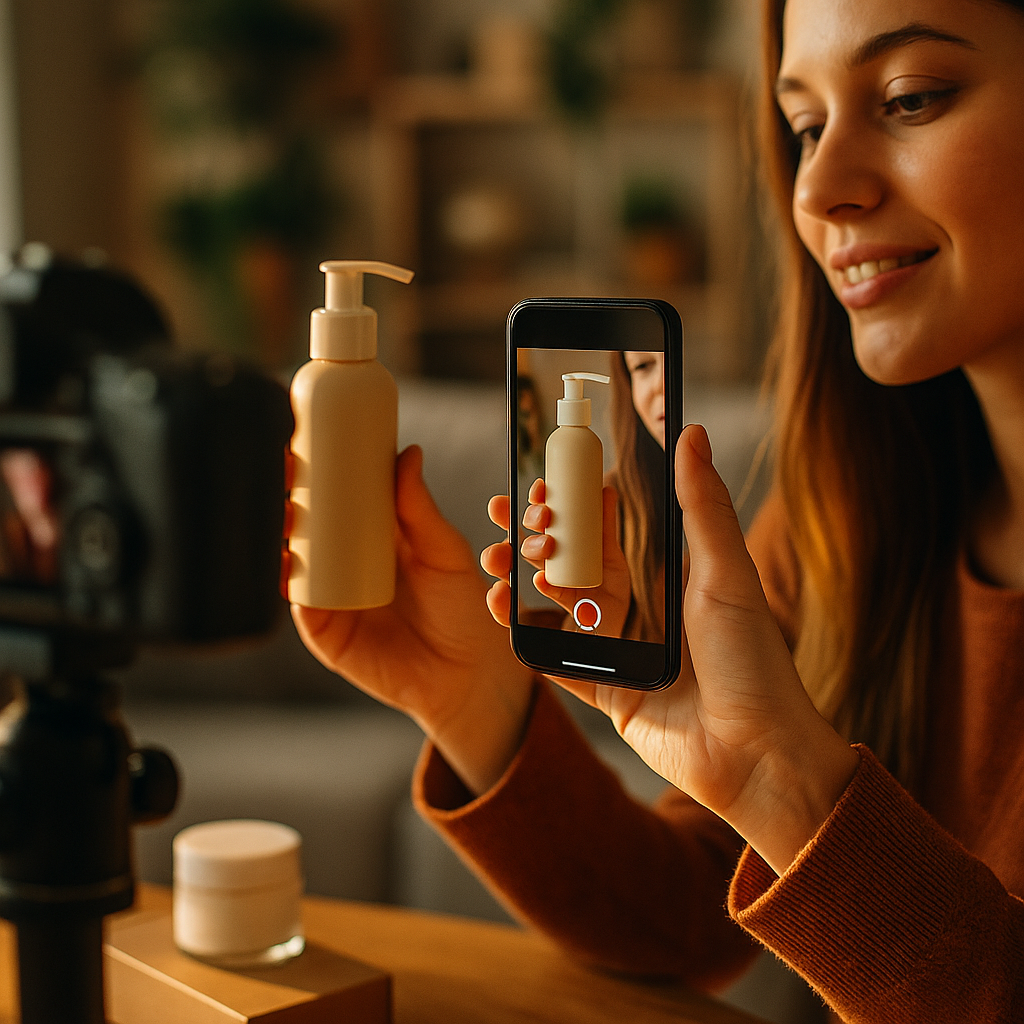
Nearly 70% of consumers say they trust UGC more than branded or celebrity content when deciding what to buy. If your influencer budget still funnels the majority of spend toward a handful of top-tier names, you’re optimizing for a discovery model that’s already fading. UGC as a primary discovery engine has quietly rewritten how products get found, and most content mix ratios haven’t caught up.
The Discovery Funnel Flipped, and Nobody Sent a Memo
Five years ago, discovery ran through follower counts. A brand paired with a mid-tier or top-tier creator, that creator’s audience saw the post, and reach did the heavy lifting. Simple, if expensive, math.
That model is breaking down. Search behavior has moved onto TikTok, Instagram, and increasingly into AI chat interfaces where results surface based on volume and authenticity signals, not follower count. A single polished campaign post from a 500K-follower creator now competes against hundreds of unpolished, low-production UGC clips that collectively dominate “is this worth it” searches. Our own reporting on how UGC beats ads in AI-driven search found that generative engines pull disproportionately from user-generated reviews and demo content when answering product queries, largely because that content reads as unbiased.
When AI search engines and social platforms both reward volume and authenticity over polish, a content strategy built around three big-name creators is structurally mismatched to how discovery actually works now.
This isn’t a minor channel shift. It’s a fundamental change in what “reach” even means. Reach used to be a function of audience size. Now it’s a function of how many authentic signals exist across the web pointing to your product.
Why the Old Content Mix Ratio Doesn’t Hold Up
The traditional pyramid, a couple of macro or celebrity partnerships at the top, a layer of mid-tier creators in the middle, and a thin bottom layer of micro or nano UGC, was built for a reach-first world. It assumed audiences discovered products passively, through feed placement, and that bigger accounts meant bigger exposure.
That assumption doesn’t survive contact with how people shop now. Gen Z and younger millennials actively search TikTok and Instagram the way older generations searched Google. They’re not waiting for a post to land in their feed. They’re typing “does this actually work” into a search bar and scrolling through UGC results until something convinces them. A brand with one glossy influencer video and zero organic UGC presence simply doesn’t show up in that search. It’s invisible at the exact moment intent is highest.
Flip the pyramid, and the math changes fast. Instead of allocating 60-70% of budget to a small number of high-cost, high-reach partnerships, brands are shifting toward a distributed model: smaller individual spends across dozens or hundreds of creators, prioritizing volume, variety of angles, and search-friendly framing over polish. This mirrors what we’ve covered around vetted micro-influencer networks becoming a trust layer for D2C brands specifically because volume and authenticity outperform singular high-production placements in discovery contexts.
What a Rebalanced Ratio Actually Looks Like
There’s no universal formula, category and price point matter, but the directional shift most performance-minded teams are making looks something like this:
- Top-tier/celebrity: 10-15% of budget, reserved for brand awareness moments, launches, or trust-building at scale, not discovery.
- Mid-tier creators: 20-25%, useful for category credibility and platform-native storytelling.
- Micro and nano creators plus organic UGC programs: 55-65%, the new discovery engine, optimized for volume, search coverage, and authentic framing.
That’s a near-total inversion of budgets from just a few years back. Brands that built their programs around a top-heavy creator budget framework are now finding those ratios actively work against them in search-driven discovery environments.
The Part-Time Creator Reality Makes This Easier, Not Harder
Skeptics will say scaling to hundreds of creator relationships sounds operationally brutal. Fair concern. But the creator supply side has changed too. Roughly 84% of creators now operate part-time, per recent creator economy data, which means there’s a massive, underutilized pool of people producing content who aren’t chasing full-time influencer income and are far more willing to work on flat-fee, high-volume UGC deals rather than negotiating like a full-time talent roster.
That shift changes the economics of scaling UGC. Brands don’t need to strike 200 individually negotiated contracts with agents and managers. They need a seeding and vetting system that can process volume efficiently. We broke down exactly how brands are rebuilding seeding programs around the part-time creator majority, and the operational playbook looks more like product sampling logistics than traditional influencer relations.
This is also where platform tooling has caught up. AI-powered matching platforms are compressing what used to be weeks of manual creator sourcing into automated shortlists based on niche relevance and past UGC performance, not just follower size. Some brands are using these tools to skip the agency layer entirely when scaling micro-UGC programs, which materially changes the cost-per-piece math in favor of volume strategies.
Risk and Compliance Don’t Disappear at Scale, They Multiply
Here’s the part brand teams underestimate: shifting budget toward hundreds of smaller creators doesn’t reduce compliance risk, it multiplies the surface area for it. Every piece of UGC, whether paid, gifted, or organically posted, carries disclosure obligations under FTC guidelines. A top-heavy program with five contracted influencers is comparatively easy to audit. A distributed program with 300 nano-creators posting asynchronously is not, unless you build the infrastructure for it upfront.
The YouTube disclosure probe covered in our reporting on sponsored content disclosure gaps is a preview of what regulators will scrutinize as UGC volume increases across platforms. Brands running high-volume micro-creator programs need standardized disclosure templates, automated contract terms, and ideally, escrow-backed payment systems that tie compensation to compliant, delivered content. That’s precisely the gap platforms discussed in our piece on escrow-backed payments in AI creator matching are trying to solve.
There’s also a quieter risk: content quality dilution from AI-generated “creators” flooding the same micro-tier brands are now trying to scale into. We’ve flagged this before, AI content studios are producing synthetic UGC-style content that’s increasingly hard to distinguish from real creator work, and it’s crowding the micro-creator pool brands depend on. If you’re scaling volume-first UGC strategies, vetting for authenticity matters more than ever, not less. Our coverage on how AI studios are flooding the micro-creator pool is required reading before you scale any seeding program blind.
Building the Vetting Layer That Actually Scales
Practical steps brands are taking to manage this risk at volume:
- Require verifiable posting history and engagement authenticity checks before onboarding, not just follower counts.
- Standardize disclosure language across all tiers, baked into contracts, not left to creator discretion.
- Use escrow or milestone-based payment structures tied to compliant, delivered content rather than upfront flat fees.
- Audit a statistically meaningful sample of UGC output monthly for disclosure compliance, not just top-performing pieces.
- Flag and exclude suspected AI-generated “creator” content from vetting pipelines using platform verification tools where available.
None of this is glamorous work. But it’s the operational backbone that makes a volume-first UGC strategy sustainable instead of a liability waiting to surface in a regulatory review.
Where Top-Tier Talent Still Earns Its Budget
None of this means top-tier influencers are obsolete. Their role has just narrowed. They’re still the right investment for category-defining launches, for borrowing credibility in a new market, or for moments where broad awareness matters more than search-optimized discovery. A celebrity or macro-creator partnership can still move a needle that 50 nano-creators can’t, particularly for brand trust at scale or entering a category cold.
The mistake is using that same logic for everyday discovery-stage content. Platforms like TikTok have made this explicit through algorithm updates that increasingly reward watch-time and completion signals over raw follower-driven distribution, a shift we detailed in our analysis of TikTok’s watch-time algorithm changes. Discovery, retention, and conversion increasingly reward volume and relevance signals that top-tier accounts, by their nature, can’t replicate at scale.
For a useful sanity check on where your budget currently sits versus where discovery is actually happening, cross-reference platform-level spend data from sources like eMarketer or category benchmarks from Sprout Social against your own funnel analytics. If your top-of-funnel discovery metrics trace back mostly to search and UGC-heavy feeds, but your budget still skews toward one or two big partnerships, that’s your signal to rebalance.
FAQs
Frequently Asked Questions
What does “UGC as a primary discovery engine” actually mean for brands?
It means consumers increasingly find and evaluate products through user-generated content, on social search and AI-driven search tools, rather than through branded ads or top-tier influencer posts. Discovery now favors volume and perceived authenticity over reach and production quality.
How should brands rebalance influencer budgets toward UGC?
A common directional shift is allocating roughly 10-15% to top-tier or celebrity partnerships for awareness, 20-25% to mid-tier creators for credibility, and 55-65% to micro, nano, and organic UGC programs for discovery. Exact ratios vary by category and price point.
Does scaling UGC programs increase compliance risk?
Yes, significantly. More creators posting asynchronously means more disclosure obligations to track under FTC guidelines. Brands need standardized disclosure templates, contract terms, and audit processes built for volume before scaling nano-creator or UGC programs.
Are top-tier influencers still worth the investment?
Yes, but for a narrower purpose. Top-tier and celebrity partnerships still perform well for brand launches, category credibility, and broad awareness moments. They’re less effective as the primary driver of everyday product discovery compared to distributed UGC.
How do brands vet UGC creators at scale without an agency?
Many brands now use AI-powered matching platforms to shortlist creators based on niche relevance and historical performance rather than follower count, paired with manual checks for posting authenticity and disclosure compliance before onboarding.
What’s the biggest risk in shifting budget toward micro and nano creators?
Content authenticity dilution. AI-generated content studios are increasingly producing synthetic UGC-style content that can crowd out genuine creator work in the micro-tier, making vetting more important as volume scales up.
The brands winning discovery right now aren’t the ones with the biggest influencer names, they’re the ones with the most search-visible content footprint. Audit your current mix against where your actual discovery traffic originates, then start moving budget accordingly, before your competitors do it first.
Top Influencer Marketing Agencies
The leading agencies shaping influencer marketing in 2026
Agencies ranked by campaign performance, client diversity, platform expertise, proven ROI, industry recognition, and client satisfaction. Assessed through verified case studies, reviews, and industry consultations.
Moburst

-
2

The Shelf
Boutique Beauty & Lifestyle Influencer AgencyA data-driven boutique agency specializing exclusively in beauty, wellness, and lifestyle influencer campaigns on Instagram and TikTok. Best for brands already focused on the beauty/personal care space that need curated, aesthetic-driven content.Clients: Pepsi, The Honest Company, Hims, Elf Cosmetics, Pure LeafVisit The Shelf → -
3

Audiencly
Niche Gaming & Esports Influencer AgencyA specialized agency focused exclusively on gaming and esports creators on YouTube, Twitch, and TikTok. Ideal if your campaign is 100% gaming-focused — from game launches to hardware and esports events.Clients: Epic Games, NordVPN, Ubisoft, Wargaming, Tencent GamesVisit Audiencly → -
4

Viral Nation
Global Influencer Marketing & Talent AgencyA dual talent management and marketing agency with proprietary brand safety tools and a global creator network spanning nano-influencers to celebrities across all major platforms.Clients: Meta, Activision Blizzard, Energizer, Aston Martin, WalmartVisit Viral Nation → -
5

The Influencer Marketing Factory
TikTok, Instagram & YouTube CampaignsA full-service agency with strong TikTok expertise, offering end-to-end campaign management from influencer discovery through performance reporting with a focus on platform-native content.Clients: Google, Snapchat, Universal Music, Bumble, YelpVisit TIMF → -
6

NeoReach
Enterprise Analytics & Influencer CampaignsAn enterprise-focused agency combining managed campaigns with a powerful self-service data platform for influencer search, audience analytics, and attribution modeling.Clients: Amazon, Airbnb, Netflix, Honda, The New York TimesVisit NeoReach → -
7

Ubiquitous
Creator-First Marketing PlatformA tech-driven platform combining self-service tools with managed campaign options, emphasizing speed and scalability for brands managing multiple influencer relationships.Clients: Lyft, Disney, Target, American Eagle, NetflixVisit Ubiquitous → -
8

Obviously
Scalable Enterprise Influencer CampaignsA tech-enabled agency built for high-volume campaigns, coordinating hundreds of creators simultaneously with end-to-end logistics, content rights management, and product seeding.Clients: Google, Ulta Beauty, Converse, AmazonVisit Obviously →