


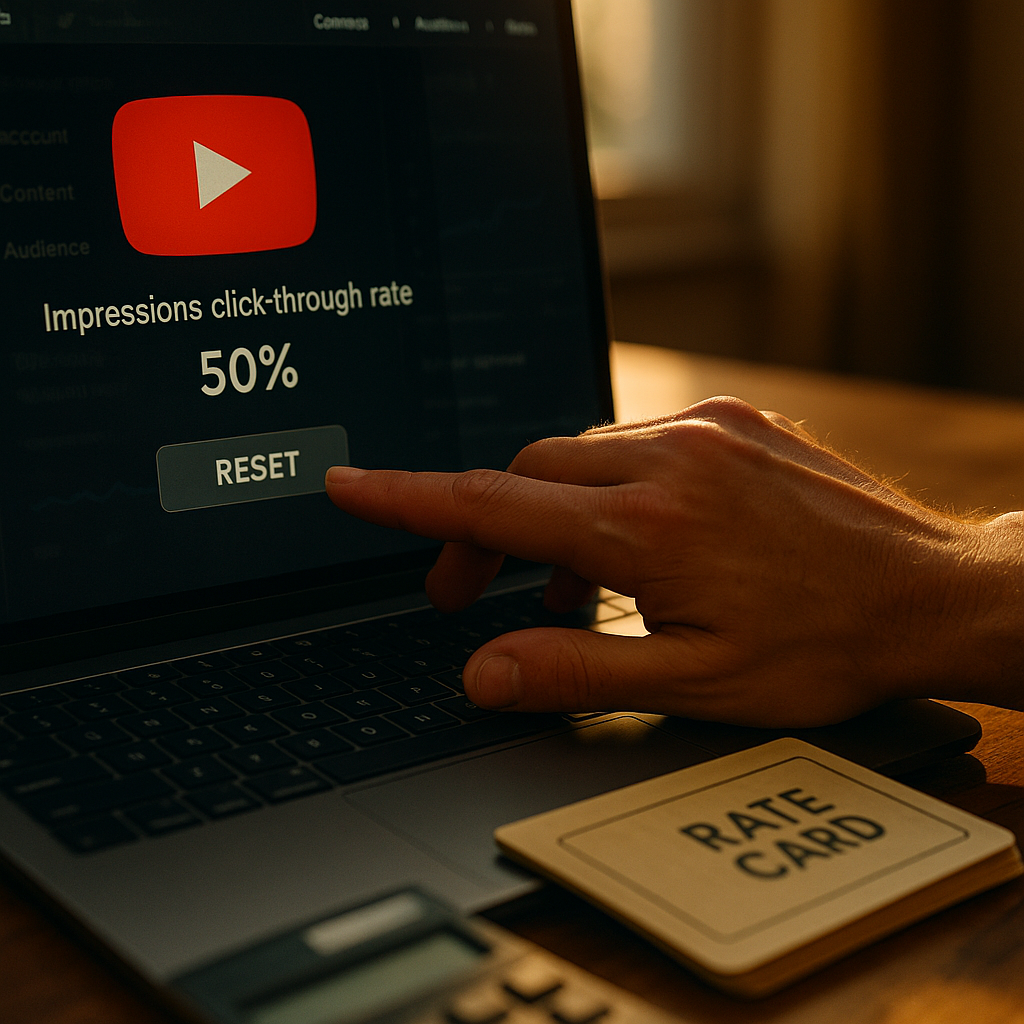
A single autoplay preview on a homepage feed can now count toward a creator’s “view” total before anyone has clicked, watched, or even registered what they saw. That’s the uncomfortable truth behind YouTube’s impression-click view model, and it’s why so many brand media plans built on legacy CPV assumptions are quietly overpaying. If your rate card still treats every view as equal, you’re negotiating with outdated math.
What YouTube’s Impression-Click View Model Actually Measures
YouTube has never had one single definition of a “view.” Historically, the platform blended autoplay starts, click-initiated plays, and Shorts loops into aggregate numbers that looked impressive on a channel dashboard but told brands very little about actual attention. The impression-click model formalizes a split that YouTube’s ad systems have used internally for years: an impression is served, a click (or intentional play) is a separate, weighted event, and only sustained watch time converts that click into something monetizable.
For creators, this distinction barely matters, YouTube still pays out based on its own ad revenue logic. For brands buying sponsorship placements or negotiating flat-fee integrations, it matters enormously. A channel reporting 500,000 “views” per video might have only 60,000 genuine click-through plays, with the rest coming from autoplay carousels, Shorts shelf impressions, or muted background plays that never register real engagement. first-frame view counting already forced brands to rethink what “seen” means on this platform. The impression-click split takes that reset further.
A channel showing half a million total views might convert as few as 12 percent of those into intentional, click-initiated plays, meaning most legacy CPV rate cards are pricing against phantom attention.
Why Legacy Rate Cards Break Under the New Model
Most rate cards in market today were built on a simple formula: average views times a CPM benchmark, adjusted for niche and engagement rate. That formula assumes views are a uniform unit of attention. They’re not, and they never really were, but the impression-click data makes the gap impossible to ignore.
Consider a mid-tier tech reviewer charging $8,000 for a dedicated integration based on 400,000 average views. If YouTube’s impression-click breakdown shows only 90,000 of those views came from active clicks, the brand’s effective cost per genuinely engaged viewer nearly quadruples. That’s not a rounding error, it’s a budget-altering discrepancy that finance teams will eventually catch, and marketing leads should get ahead of it rather than explain it after the fact.
This isn’t unique to YouTube. Every platform has wrestled with the gap between served impressions and real attention. watch depth on Reels and replay-driven view counts on TikTok Shop both suffer from similar inflation. But YouTube’s scale, and its role as the default long-form platform for considered-purchase categories, makes the stakes higher here.
The Autoplay Problem Nobody Wants to Talk About
Autoplay was designed to keep users on-platform longer, and it works well for that goal. It was never designed to be a fair attention metric for advertisers. Yet for years, sponsorship rates have quietly baked in autoplay-inflated view counts because nobody had the granular data to separate them out. YouTube’s impression-click reporting, now more accessible through Creator Studio and brand-facing analytics dashboards, finally gives buyers the receipts.
Google’s own documentation on YouTube analytics and view counting acknowledges the layered nature of these metrics, though it stops short of telling brands how to price against them. That’s the gap this reset needs to fill.
Building a Rate Card That Reflects Intent, Not Just Volume
A modern rate card needs at least three tiers of pricing logic instead of one blended CPV number.
- Impression-based baseline: A low floor rate reflecting raw reach, useful for brand awareness campaigns where any exposure has value.
- Click-verified rate: A middle tier priced against confirmed click-initiated plays, the closest proxy to genuine interest.
- Watch-time-weighted premium: The top tier, reserved for creators who can show sustained retention past the first 30 seconds, which is where actual message absorption happens.
This tiered structure mirrors how programmatic ad buyers have priced video inventory for years, viewability first, engagement second, completion third. Influencer sponsorships are simply catching up to a discipline that eMarketer’s video ad benchmarks have tracked in paid media for over a decade.
Brands running long-form integrations should also revisit payout timing. retroactive monetization adjustments on YouTube can shift a video’s performance numbers weeks after publish, which means a rate card locked at launch might already be stale by the time the campaign report lands on a CMO’s desk.
Negotiating With Creators Who Don’t Want to Give Up Their Numbers
Here’s the friction point: creators have spent years building rate cards around total view counts because bigger numbers command bigger fees. Asking them to expose click-through and watch-time breakdowns feels, to some, like asking them to negotiate against themselves.
The fix isn’t confrontation, it’s reframing. Brands that lead with data transparency rather than accusation get further, faster.
Practical negotiation tactics that work in the current environment:
- Request a screenshot of Creator Studio’s audience retention and traffic source breakdown before finalizing rates, not after the campaign runs.
- Offer a hybrid deal structure: a lower flat fee plus a performance bonus tied to click-verified views or watch time thresholds.
- Benchmark against comparable creators in the same niche using third-party tools like Sprout Social’s influencer analytics to avoid relying solely on the creator’s self-reported numbers.
- Build renegotiation clauses into contracts, similar to how brands handle rate drop renegotiations on Twitch, so pricing can adjust if platform reporting changes mid-campaign.
The creators worth partnering with long-term will welcome this shift. It rewards the ones producing genuinely engaging content and penalizes those who’ve been coasting on algorithmic autoplay luck.
The Compliance Angle Nobody’s Pricing In
There’s a quieter risk here too. If a brand pays a premium CPV rate based on inflated view counts and later discloses campaign performance to investors, board members, or regulators as part of marketing ROI reporting, that discrepancy becomes a disclosure problem, not just a budget one. Pairing rate card resets with proper branded content labeling compliance ensures the campaign holds up to scrutiny from both a performance and a regulatory lens. The FTC’s endorsement guidance doesn’t dictate how brands price media, but it does expect accurate reporting of sponsored content performance when that data feeds into public claims.
How This Compares Across Platforms
YouTube isn’t operating in isolation. Brands running cross-platform creator programs are already dealing with similar recalibrations elsewhere. The rate gap between YouTube and Twitch has widened as each platform’s measurement philosophy diverges, and understanding engagement density over raw follower count has become the connective thread across every major platform reset in the last two years. The lesson is consistent: raw scale metrics are losing pricing power, and intent-weighted metrics are gaining it.
According to HubSpot’s ongoing marketing benchmark research, brands that shifted budget allocation toward engagement-weighted creator metrics in the past year reported measurably tighter cost-per-acquisition figures than those still buying on raw reach. That’s not a coincidence, it’s the market correcting itself.
Takeaway
Don’t wait for a quarterly review to discover your YouTube CPV rates were built on autoplay noise. Pull the impression-click breakdown for your top three creator partners this week, recalculate your effective cost per engaged view, and use that number, not the vanity total, as your next negotiation opening.
Frequently Asked Questions
What is YouTube’s impression-click view model?
It’s the platform’s layered approach to counting attention, separating raw impressions (a video being shown or autoplayed) from click-initiated plays and sustained watch time. Brands can use this breakdown to understand how much of a creator’s reported view count reflects genuine viewer intent versus passive autoplay exposure.
Why do brands need to reset creator rate cards because of this?
Most existing rate cards price sponsorships against total view counts, which blend autoplay impressions with real click-through engagement. Once you separate the two, the effective cost per genuinely engaged viewer often rises significantly, meaning brands may be overpaying without realizing it.
How can a brand verify a creator’s click-through view data?
Ask for a Creator Studio traffic source and audience retention screenshot before finalizing a deal. Third-party influencer analytics platforms can also help benchmark a creator’s numbers against similar channels in the same niche.
Should brands stop paying for impression-based reach entirely?
No. Impression-based reach still has value for top-of-funnel brand awareness goals. The key is pricing it separately and at a lower rate than click-verified or watch-time-weighted placements, rather than blending everything into one CPV number.
Does this change affect Shorts differently than long-form YouTube content?
Yes. Shorts rely heavily on autoplay loops within the feed, which tend to inflate raw view counts more aggressively than long-form videos that require an intentional click from search or subscriptions. Brands buying Shorts integrations should apply an even more conservative discount to raw view totals.
How often should brands revisit their creator rate cards given these changes?
At minimum, quarterly. Platform reporting methodologies shift frequently enough that a rate card benchmarked a year ago may no longer reflect how views, clicks, and watch time are currently measured or weighted.
Top Influencer Marketing Agencies
The leading agencies shaping influencer marketing in 2026
Agencies ranked by campaign performance, client diversity, platform expertise, proven ROI, industry recognition, and client satisfaction. Assessed through verified case studies, reviews, and industry consultations.
Moburst

-
2

The Shelf
Boutique Beauty & Lifestyle Influencer AgencyA data-driven boutique agency specializing exclusively in beauty, wellness, and lifestyle influencer campaigns on Instagram and TikTok. Best for brands already focused on the beauty/personal care space that need curated, aesthetic-driven content.Clients: Pepsi, The Honest Company, Hims, Elf Cosmetics, Pure LeafVisit The Shelf → -
3

Audiencly
Niche Gaming & Esports Influencer AgencyA specialized agency focused exclusively on gaming and esports creators on YouTube, Twitch, and TikTok. Ideal if your campaign is 100% gaming-focused — from game launches to hardware and esports events.Clients: Epic Games, NordVPN, Ubisoft, Wargaming, Tencent GamesVisit Audiencly → -
4

Viral Nation
Global Influencer Marketing & Talent AgencyA dual talent management and marketing agency with proprietary brand safety tools and a global creator network spanning nano-influencers to celebrities across all major platforms.Clients: Meta, Activision Blizzard, Energizer, Aston Martin, WalmartVisit Viral Nation → -
5

The Influencer Marketing Factory
TikTok, Instagram & YouTube CampaignsA full-service agency with strong TikTok expertise, offering end-to-end campaign management from influencer discovery through performance reporting with a focus on platform-native content.Clients: Google, Snapchat, Universal Music, Bumble, YelpVisit TIMF → -
6

NeoReach
Enterprise Analytics & Influencer CampaignsAn enterprise-focused agency combining managed campaigns with a powerful self-service data platform for influencer search, audience analytics, and attribution modeling.Clients: Amazon, Airbnb, Netflix, Honda, The New York TimesVisit NeoReach → -
7

Ubiquitous
Creator-First Marketing PlatformA tech-driven platform combining self-service tools with managed campaign options, emphasizing speed and scalability for brands managing multiple influencer relationships.Clients: Lyft, Disney, Target, American Eagle, NetflixVisit Ubiquitous → -
8

Obviously
Scalable Enterprise Influencer CampaignsA tech-enabled agency built for high-volume campaigns, coordinating hundreds of creators simultaneously with end-to-end logistics, content rights management, and product seeding.Clients: Google, Ulta Beauty, Converse, AmazonVisit Obviously →