


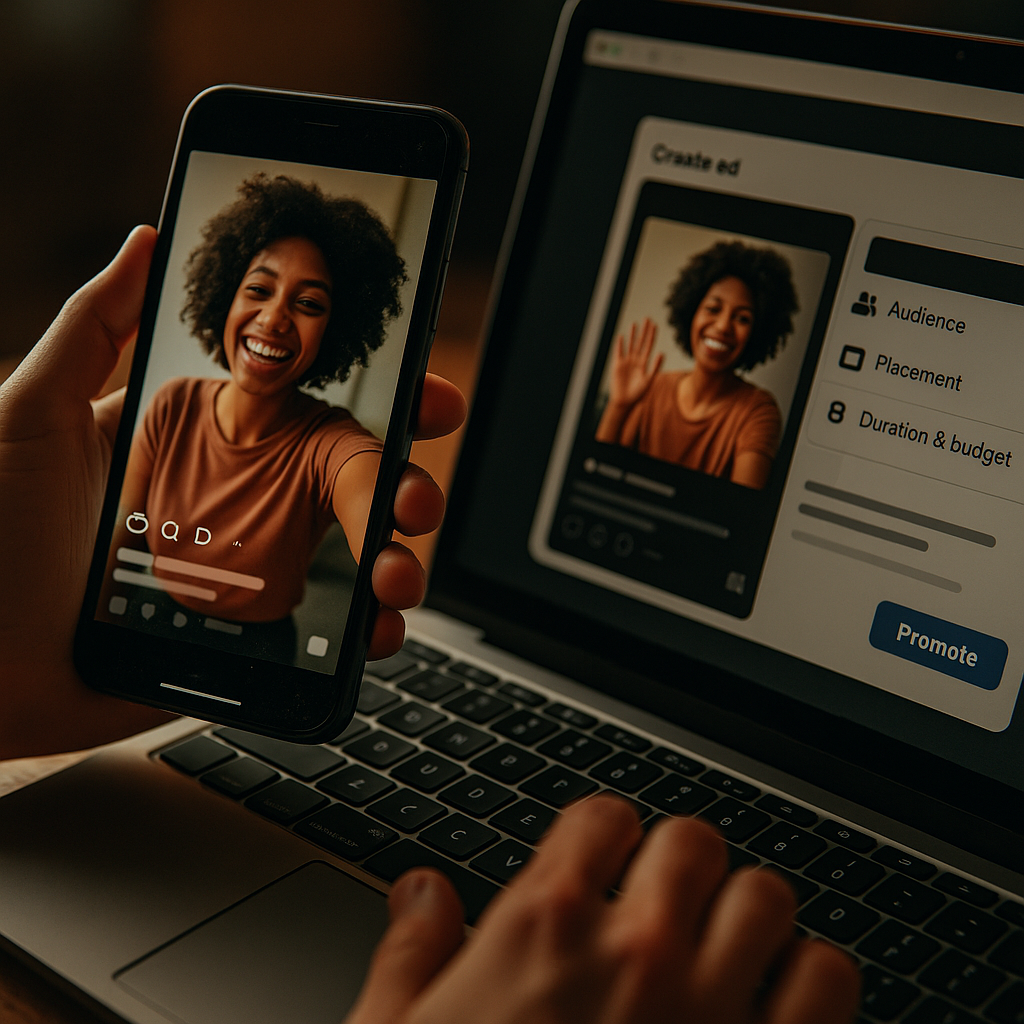
Roughly 70% of branded content on Meta platforms now runs through some form of paid amplification, and a growing share never appears on a creator’s public feed at all. That’s dark posting: publishing content only to a paid audience, using a creator’s handle and likeness, but skipping the organic post entirely. What used to be a niche whitelisting tactic has become the default playbook for performance-driven brands. If your team is still treating creator content as a one-off deliverable instead of a paid media asset, you’re leaving reach and revenue on the table.
What Dark Posting Actually Means in 2026
Dark posting (sometimes called whitelisting or creator amplification) lets brands run ads from a creator’s account without the post ever hitting that creator’s public timeline. The ad shows up in a target audience’s feed with the creator’s name, profile photo, and content, but their existing followers never see it organically. Meta’s Partnership Ads and TikTok’s Spark Ads formalized this years ago, giving brands programmatic access to creator handles for paid distribution.
The shift now is scale and sophistication. Brands aren’t dark posting a handful of hero assets anymore. They’re running hundreds of micro-tests, treating creator content like a raw material for a paid content factory rather than a finished campaign.
Dark posting turns every creator collaboration into a testable ad unit, not a single post you hope performs.
Why Brands Are Doubling Down Now
Three forces converged to push dark posting from tactic to strategy. First, organic reach on creator posts has been declining for years as platforms reset algorithms and prioritize paid delivery, a pattern documented in our coverage of algorithm resets forcing publishing audits. Second, budgets have shifted structurally: as we noted when covering how ad budgets shift from media buys to creator distribution, brands increasingly see creator content as their primary ad creative pipeline, not a side channel. Third, attribution tooling finally caught up, letting brands tie dark post spend to actual revenue rather than vague engagement metrics.
Put those together and dark posting stops looking like a gray-area growth hack. It looks like table stakes performance marketing.
There’s also a simple economic reason. Creator content consistently outperforms brand-produced ad creative on cost per click and click-through rate, particularly on TikTok and Instagram Reels. Rather than shooting new ad creative from scratch, brands are recycling the organic-style videos creators already made, then feeding the strongest ones into paid rotation. It’s cheaper, faster, and tests better with audiences that have grown numb to polished brand ads.
The Mechanics: How Brands Turn Organic Posts Into Paid Ads
The operational flow looks fairly consistent across brands, even if the tools differ:
- Content sourcing: Brands negotiate usage rights upfront, either bundled into the creator contract or as a separate paid media addendum.
- Handle access: Creators grant partnership ad permissions through native platform tools (Meta Business Suite, TikTok’s Creator Marketplace) rather than sharing login credentials, which is both safer and compliant with platform terms.
- Creative testing: Marketing teams run the same organic asset across multiple hooks, captions, and audience segments, treating one creator video as the seed for a dozen ad variants.
- Performance monitoring: Teams track cost per acquisition, view-through rate, and increasingly, incremental sales lift rather than just impressions.
This is where the connection between creator content and paid media has gotten genuinely tighter. Publishing layers that connect creator platforms directly to ad accounts have made the handoff nearly instant. Our piece on API driven publishing closing the attribution gap covers how these integrations eliminate the manual export-and-upload process that used to slow dark post campaigns down by days.
Licensing Terms Are the New Battleground
Here’s where things get contentious. Creators who agreed to a flat fee for one organic post are increasingly finding that same content running as a paid ad for months, sometimes reaching audiences far larger than their organic following ever could. Without clear usage rights baked into the original contract, that’s a legal gray zone, and creator advocacy groups have taken notice.
Smart brands are getting ahead of this by structuring deals in tiers: a base fee for organic posting rights, a separate (often larger) fee for paid amplification rights, and a defined usage window (30, 60, or 90 days is standard). Some are moving toward the licensing-first model we covered in creator licensing deals turning content into paid media, where the content itself is treated as a licensable media asset with its own rate card, independent of the original posting fee.
The brands winning at dark posting aren’t the ones with the cleverest ad copy. They’re the ones with the cleanest usage rights contracts.
This matters for risk mitigation too. Regulators, including the Federal Trade Commission, have made clear that disclosure obligations don’t disappear just because content is running as a paid ad instead of an organic post. If anything, paid amplification increases scrutiny, since the FTC treats sponsored ad placements as commercial speech subject to clear and conspicuous disclosure rules. Brands that skip this step in the rush to scale dark post campaigns are exposing themselves to enforcement risk they don’t need.
Disclosure and Compliance: Don’t Skip This Part
A dark post is still an ad. That sounds obvious, but plenty of teams treat the disclosure requirement as an organic-content problem and forget it applies just as much (arguably more) when the content is paid media. Platforms have built-in disclosure tools: Meta’s “Paid partnership” tag and TikTok’s branded content toggle both carry over into Partnership Ads and Spark Ads formats. Use them. Skipping the tag to make an ad “feel” more organic is exactly the kind of shortcut that invites regulatory attention and erodes the audience trust that made the creator’s content valuable in the first place.
This ties into a broader trust problem the industry is grappling with. As AI-generated content floods feeds, audiences have gotten sharper at spotting inauthenticity, a trend we detailed in AI content trust falling to 34 percent. Dark posting done well leans into a creator’s authentic voice and existing credibility. Dark posting done sloppily (undisclosed, over-tested, stripped of the creator’s real point of view) just becomes another form of ad fatigue.
Measuring What Actually Matters
The old scorecard for dark posts was impressions and engagement rate. That’s no longer enough for teams under pressure to justify budget. Brands now expect dark post campaigns to tie into the same revenue attribution standards applied to any other paid channel, echoing the position taken at the e4m D2C Summit that revenue attribution is the only metric that matters.
Practically, that means tracking:
- Cost per acquisition compared against brand-produced ad creative running the same offer.
- Incremental lift through holdout testing, not just last-click conversion.
- Creative fatigue curves, since dark posted creator content tends to wear out faster once it’s pushed at paid scale.
- Cross-platform performance, especially as brands repurpose the same asset across Meta, TikTok, and connected TV inventory, a growing option as streaming platforms court creators and redraw CTV ad budgets.
Industry measurement standards are also catching up. The IAB’s move to unify brand lift and sales data into a single scorecard, covered in our piece on the IAB framework unifying brand lift and sales data, gives dark posting campaigns a common measurement language that finance teams actually trust. That matters when you’re asking for budget renewal.
Third-party analytics platforms like Sprout Social and research from eMarketer continue to show creator-sourced ad creative outperforming brand-shot assets on click-through rate, which is exactly why the dark posting trend keeps accelerating rather than plateauing.
Where This Is Headed
Expect three things to define the next phase of dark posting. Contracts will get more granular, with usage rights, paid amplification windows, and revenue-share clauses becoming standard rather than negotiated case by case. Measurement will keep converging with standard paid media reporting, pulling creator content fully into the same dashboards as programmatic and search spend. And platforms will keep building deeper native tools, since Meta and TikTok both benefit when brands run more paid spend through creator handles instead of building separate ad creative from scratch.
The brands that get ahead of this aren’t necessarily spending more. They’re spending smarter, treating every creator post as a potential ad unit from the moment the contract is signed, not as an afterthought once the organic post underperforms.
Next step: Before your next creator campaign brief goes out, add a paid amplification clause with a defined usage window and fee structure. Retrofitting rights after the fact costs more, in both dollars and creator goodwill, than negotiating them upfront.
FAQs
What is dark posting in influencer marketing?
Dark posting is running paid ads from a creator’s social account without publishing the content to that creator’s public organic feed. The ad appears only to a targeted paid audience, using the creator’s handle, photo, and content as the ad unit.
Is dark posting the same as whitelisting?
They’re closely related terms used interchangeably by most marketers. Whitelisting typically refers to the permission a creator grants a brand to run ads through their account, while dark posting describes the practice of running that content as an ad without an organic post.
Do creators need to disclose dark posted ads?
Yes. Disclosure requirements apply to paid ads just as much as organic sponsored posts. Brands should use native platform tools like Meta’s paid partnership tag or TikTok’s branded content toggle to stay compliant with FTC guidelines.
How should brands negotiate usage rights for dark posting?
Best practice is a tiered contract: a base fee for the organic post, a separate fee for paid amplification rights, and a defined usage window (commonly 30 to 90 days) after which the brand must renegotiate or stop running the ad.
What metrics should brands track for dark post campaigns?
Cost per acquisition, incremental lift through holdout testing, creative fatigue rate, and cross-platform performance matter more than impressions or organic engagement, since dark posts are paid media assets and should be judged by paid media standards.
Top Influencer Marketing Agencies
The leading agencies shaping influencer marketing in 2026
Agencies ranked by campaign performance, client diversity, platform expertise, proven ROI, industry recognition, and client satisfaction. Assessed through verified case studies, reviews, and industry consultations.
Moburst

-
2

The Shelf
Boutique Beauty & Lifestyle Influencer AgencyA data-driven boutique agency specializing exclusively in beauty, wellness, and lifestyle influencer campaigns on Instagram and TikTok. Best for brands already focused on the beauty/personal care space that need curated, aesthetic-driven content.Clients: Pepsi, The Honest Company, Hims, Elf Cosmetics, Pure LeafVisit The Shelf → -
3

Audiencly
Niche Gaming & Esports Influencer AgencyA specialized agency focused exclusively on gaming and esports creators on YouTube, Twitch, and TikTok. Ideal if your campaign is 100% gaming-focused — from game launches to hardware and esports events.Clients: Epic Games, NordVPN, Ubisoft, Wargaming, Tencent GamesVisit Audiencly → -
4

Viral Nation
Global Influencer Marketing & Talent AgencyA dual talent management and marketing agency with proprietary brand safety tools and a global creator network spanning nano-influencers to celebrities across all major platforms.Clients: Meta, Activision Blizzard, Energizer, Aston Martin, WalmartVisit Viral Nation → -
5

The Influencer Marketing Factory
TikTok, Instagram & YouTube CampaignsA full-service agency with strong TikTok expertise, offering end-to-end campaign management from influencer discovery through performance reporting with a focus on platform-native content.Clients: Google, Snapchat, Universal Music, Bumble, YelpVisit TIMF → -
6

NeoReach
Enterprise Analytics & Influencer CampaignsAn enterprise-focused agency combining managed campaigns with a powerful self-service data platform for influencer search, audience analytics, and attribution modeling.Clients: Amazon, Airbnb, Netflix, Honda, The New York TimesVisit NeoReach → -
7

Ubiquitous
Creator-First Marketing PlatformA tech-driven platform combining self-service tools with managed campaign options, emphasizing speed and scalability for brands managing multiple influencer relationships.Clients: Lyft, Disney, Target, American Eagle, NetflixVisit Ubiquitous → -
8

Obviously
Scalable Enterprise Influencer CampaignsA tech-enabled agency built for high-volume campaigns, coordinating hundreds of creators simultaneously with end-to-end logistics, content rights management, and product seeding.Clients: Google, Ulta Beauty, Converse, AmazonVisit Obviously →