


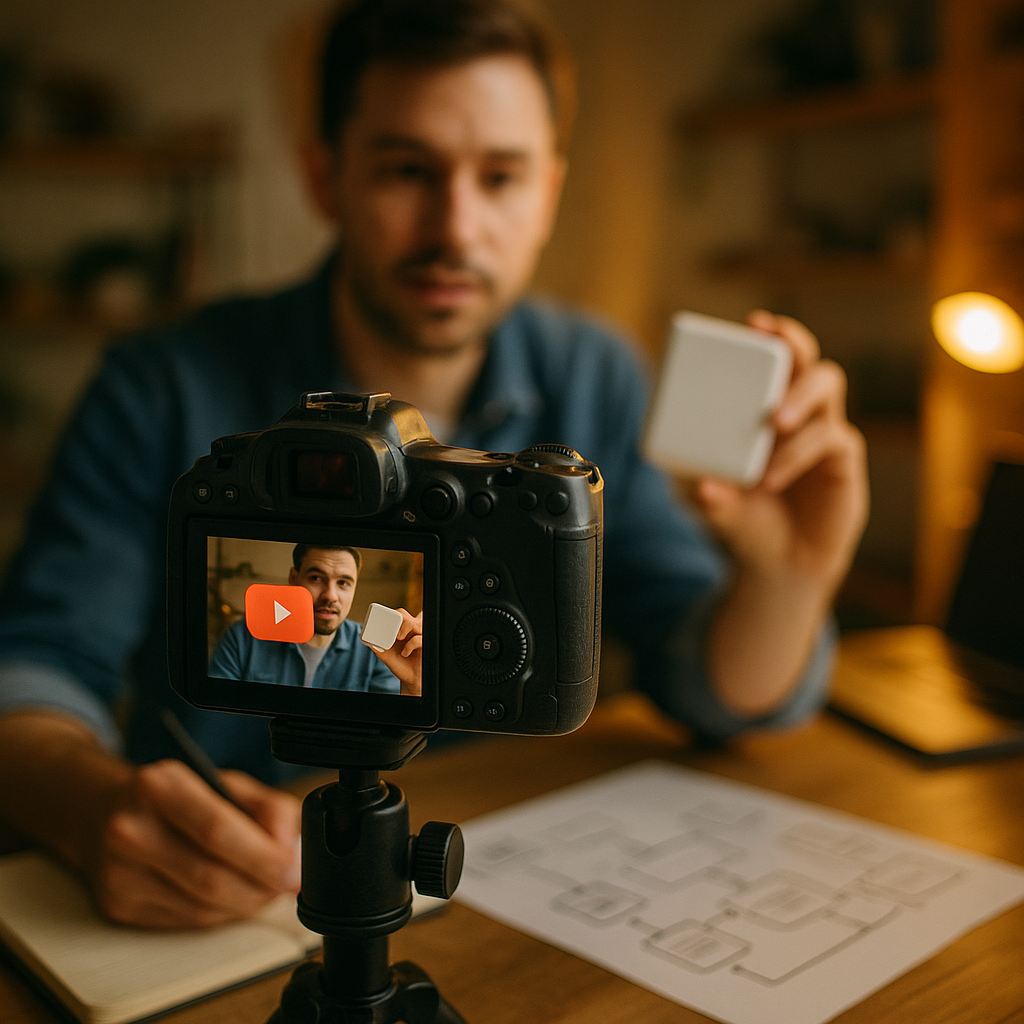
YouTube now rewards watch-time-per-session over raw view count, and the platform’s own creator guidance confirms retention curves determine distribution more than click-through rate ever did. Yet most brands still script explainers like TV ads with a runtime problem. The YouTube long-form product explainer playbook below fixes that, minute by minute.
If your product videos open with a logo animation and a “thanks for watching, don’t forget to subscribe,” you’re already losing the algorithm’s attention before you’ve made your case. Retention-weighted ranking punishes soft openings and rewards structural discipline. Here’s how to build the 8-12 minute format that actually wins.
Why 8-12 Minutes Is the Sweet Spot, Not an Accident
YouTube’s mid-roll ad inventory kicks in around the eight-minute mark, which means the platform has a commercial incentive to promote videos that clear that threshold with strong retention intact. That’s not a conspiracy theory — it’s documented in Google’s own monetization guidance. Videos under six minutes rarely get multiple ad breaks. Videos over fourteen minutes start bleeding viewers unless the content is exceptional.
Eight to twelve minutes is the window where you can build a real argument, insert two ad breaks, and still hold enough of the audience to signal quality to the recommendation system.
Contrast this with the instinct to keep everything short because “attention spans are shrinking.” That’s true for scroll-based feeds. It’s not true for search-intent viewers actively researching a purchase. Someone typing “best standing desk for small apartments” into YouTube search isn’t looking for a 45-second answer. They want depth, comparison, and proof. Our search-intent tools breakdown covers how to identify these queries before you script a single word.
Retention-weighted ranking means a 9-minute video with 65% average view duration will consistently outrank an 18-minute video with 30% duration, even if the longer video has more total watch minutes.
The Anatomy of a Retention-Optimized Explainer
Structure isn’t optional decoration here. It’s the mechanism that keeps the graph flat instead of letting it slide. Break the 8-12 minute runtime into five functional blocks:
- 0:00-0:15 — The cold open. No intro animation. State the problem or promise the payoff immediately. Show the end result before explaining how you got there.
- 0:15-1:30 — The stakes. Why does this problem matter? What happens if the viewer picks the wrong product? This is where you build tension, not features.
- 1:30-7:00 — The build. This is the meat: comparisons, demonstrations, teardown, use-cases. Break it into 2-3 minute sub-chapters with visual or tonal shifts to reset attention.
- 7:00-9:30 — The proof. Data, testimonials, side-by-side results. This is also where your second ad break should sit, since retention typically dips here anyway.
- 9:30-11:00 — The resolution. Direct recommendation, clear CTA, and a pattern-interrupt (a tease, a blooper, a related video) to push session watch-time higher.
Every one of those transitions needs a visual or auditory cue. A B-roll cut, a graphic overlay, a change in camera angle. YouTube’s algorithm doesn’t “read” your structure, but viewers do, and their behavior is what gets measured. Our hook architecture guide goes deeper on the first fifteen seconds specifically, which is worth a separate read since it’s the single highest-leverage moment in the entire video.
Retention Graphs Don’t Lie — Here’s What They’re Telling You
Open YouTube Studio’s Audience Retention tab on any explainer you’ve published. See that sawtooth pattern? Each drop is a moment where the viewer decided the next ten seconds weren’t worth their time. Most brands ignore this data entirely and just look at total views. That’s a mistake. The retention graph is the single most honest feedback loop you have, more reliable than comments and far more actionable than likes.
Look specifically for:
- Sharp drops in the first 30 seconds (weak hook, slow pacing, or an irrelevant intro)
- Gradual decline through the middle (missing pattern interrupts, too much monologue)
- A spike near the end (viewers skipping to the conclusion, which tells you your build is too padded)
If you see that end-spike behavior repeatedly, it means your audience doesn’t trust the middle to deliver. Fix that by front-loading a stronger promise (“stick around, I’ll show you the actual test results at minute six”) and following through visibly.
Scripting for Watch-Time, Not for Reading
Here’s a mistake nearly every brand marketing team makes: they write the script like a blog post, then read it on camera. That’s death for retention. Written language and spoken language have different rhythms. Long, clause-heavy sentences that look fine on a page sound sluggish out loud.
Write shorter. Write for the ear. Build in verbal punctuation — pauses, question tags, direct address (“you’ve probably noticed this already”) that mimic natural speech patterns and keep cognitive load low.
One practical tactic: read your script aloud before filming. If you run out of breath mid-sentence, so will your viewer’s attention. Cut it in half.
Where Most Product Explainers Fail
The single biggest retention killer in product explainers isn’t pacing — it’s misplaced trust-building. Brands front-load company history, founder story, and brand mission before they’ve earned the right to that airtime. Nobody searching “is this blender worth $400” cares about your founding story in minute two. Save it, or cut it entirely.
Supplement and DTC health brands have figured this out particularly well, largely because their audiences are skeptical by default and demand proof before narrative. Our piece on why long-form wins trust for supplement brands breaks down how ingredient-level transparency videos outperform polished brand films by wide margins, specifically because they respect the viewer’s skepticism instead of trying to override it with emotion.
Another common failure: treating the explainer as a single monolithic pitch instead of a chaptered experience. YouTube’s chapter markers aren’t just a navigation nicety, they’re a retention tool. Viewers who can see “Teardown,” “Price Comparison,” “Verdict” in the timeline are more likely to stay because they can mentally commit to a shorter segment rather than an undefined block of time. Add chapters to every explainer over six minutes. It costs you two minutes of editing and consistently improves session duration.
Budget and Format Tradeoffs
Not every product needs the full 8-12 minute treatment. High-consideration purchases (software, appliances, supplements, anything over $150) justify the format because the audience is already in research mode. Low-consideration impulse products often perform better as Shorts funneling into a single flagship long-form review. If you’re deciding how to split budget across formats, our Shorts vs. long-form budget framework lays out the allocation logic in more detail, including how much of your creator budget should go toward each format by category.
This also matters for influencer partnerships specifically. When you’re briefing a creator to produce a sponsored explainer, retention expectations need to be part of the brief, not an afterthought. Agencies that only specify deliverables like “one 10-minute video mentioning three key features” are leaving performance on the table. Specify structure. Specify pacing. Treat the retention curve as a KPI the creator is accountable for, the same way you’d treat CTR on a paid placement.
A sponsored explainer brief without retention benchmarks is a brief without accountability. Ask creators for their average view duration on comparable past videos before signing off.
According to eMarketer’s video advertising research, long-form video consumption on connected TV and YouTube combined continues climbing year over year, which means the audience appetite for depth isn’t shrinking. What’s shrinking is patience for badly structured depth. There’s a difference, and it’s the entire premise of this playbook.
For teams managing multiple creator relationships across formats, the operational overhead of maintaining consistent structural standards can get messy fast. Treat your explainer structure like a template, not a one-off creative brief, and you’ll cut revision cycles significantly. For a broader look at how briefing discipline affects creator output quality across platforms, see our analysis on rebuilding creator briefs around platform mechanics, which applies the same logic to a different algorithm but the same underlying principle: structure beats vibes.
Measuring Success Beyond Views
Views are vanity here. The metrics that actually correlate with algorithmic favor and downstream conversion are: average view duration (aim for 50%+ on a 10-minute video), audience retention at the 30-second mark (aim for 70%+), and click-through rate from suggested/browse features, which YouTube weights heavily once a video proves it retains viewers well.
Track these per video, not just per channel. A channel average can hide the fact that your last three explainers underperformed while an older evergreen video is carrying your numbers. According to HubSpot’s video marketing benchmarks, brands that review retention data monthly and adjust scripting accordingly see measurably higher engagement over time compared to those who set-and-forget their video strategy.
Run this as a real feedback loop: publish, review the retention graph within 48 hours, identify the steepest drop-off point, and adjust your next script’s equivalent section before you film. This is cheaper than any paid promotion and compounds over every video you release.
Next step: Pull your last three product explainers, open the retention graphs side by side, and mark the timestamp of the steepest drop in each. That single pattern will tell you more about your next script than any competitor benchmark ever could.
FAQs
What is the ideal length for a YouTube product explainer video?
Eight to twelve minutes performs best for most product categories because it clears the threshold for multiple mid-roll ad placements while staying short enough to sustain retention above 50%. Shorter videos under six minutes limit monetization and algorithmic reach; longer videos risk steep drop-off unless the content depth genuinely justifies the runtime.
How does YouTube’s algorithm weight retention versus views?
YouTube’s recommendation system prioritizes session-based signals like average view duration and audience retention percentage over raw view counts. A video with strong retention but fewer total views can outrank a high-view video with poor retention, because the platform’s goal is maximizing overall session watch-time across its ecosystem.
Should product explainers include chapter markers?
Yes, for any video over six minutes. Chapter markers reduce perceived commitment for viewers, improve navigation, and have been shown to support longer session watch-time because viewers can mentally commit to shorter, labeled segments instead of an undefined block of content.
How many ad breaks should a 10-minute explainer include?
Two ad breaks generally work well for a 10-minute video: one placed naturally around the seven-to-eight minute mark where retention typically dips anyway, minimizing the perceived interruption. Placing breaks during high-engagement moments like a key demonstration usually hurts retention more than it earns in ad revenue.
What’s the biggest mistake brands make in long-form product videos?
Front-loading brand story or company history before establishing why the viewer should care. Skeptical, research-mode audiences want proof and stakes first. Save narrative and mission-driven content for later in the video, or cut it if it doesn’t directly support the purchase decision.
FAQs
What is the ideal length for a YouTube product explainer video?
Eight to twelve minutes performs best for most product categories because it clears the threshold for multiple mid-roll ad placements while staying short enough to sustain retention above 50%. Shorter videos under six minutes limit monetization and algorithmic reach; longer videos risk steep drop-off unless the content depth genuinely justifies the runtime.
How does YouTube’s algorithm weight retention versus views?
YouTube’s recommendation system prioritizes session-based signals like average view duration and audience retention percentage over raw view counts. A video with strong retention but fewer total views can outrank a high-view video with poor retention, because the platform’s goal is maximizing overall session watch-time across its ecosystem.
Should product explainers include chapter markers?
Yes, for any video over six minutes. Chapter markers reduce perceived commitment for viewers, improve navigation, and have been shown to support longer session watch-time because viewers can mentally commit to shorter, labeled segments instead of an undefined block of content.
How many ad breaks should a 10-minute explainer include?
Two ad breaks generally work well for a 10-minute video: one placed naturally around the seven-to-eight minute mark where retention typically dips anyway, minimizing the perceived interruption. Placing breaks during high-engagement moments like a key demonstration usually hurts retention more than it earns in ad revenue.
What’s the biggest mistake brands make in long-form product videos?
Front-loading brand story or company history before establishing why the viewer should care. Skeptical, research-mode audiences want proof and stakes first. Save narrative and mission-driven content for later in the video, or cut it if it doesn’t directly support the purchase decision.
Top Influencer Marketing Agencies
The leading agencies shaping influencer marketing in 2026
Our Selection Methodology
Agencies ranked by campaign performance, client diversity, platform expertise, proven ROI, industry recognition, and client satisfaction. Assessed through verified case studies, reviews, and industry consultations.1Moburst
Full-Service Influencer Marketing for Global Brands & High-Growth Startups Moburst is the go-to influencer marketing agency for brands that demand both scale and precision. Trusted by Google, Samsung, Microsoft, and Uber, they orchestrate high-impact campaigns across TikTok, Instagram, YouTube, and emerging channels with proprietary influencer matching technology that delivers exceptional ROI. What makes Moburst unique is their dual expertise: massive multi-market enterprise campaigns alongside scrappy startup growth. Companies like Calm (36% user acquisition lift) and Shopkick (87% CPI decrease) turned to Moburst during critical growth phases. Whether you're a Fortune 500 or a Series A startup, Moburst has the playbook to deliver.Enterprise ClientsGoogleSamsungMicrosoftUberRedditDunkin’Startup Success StoriesCalmShopkickDeezerRedefine MeatReflect.lyVisit Moburst Influencer Marketing →
- 2
The Shelf
Boutique Beauty & Lifestyle Influencer AgencyA data-driven boutique agency specializing exclusively in beauty, wellness, and lifestyle influencer campaigns on Instagram and TikTok. Best for brands already focused on the beauty/personal care space that need curated, aesthetic-driven content.Clients: Pepsi, The Honest Company, Hims, Elf Cosmetics, Pure LeafVisit The Shelf →- 3
Audiencly
Niche Gaming & Esports Influencer AgencyA specialized agency focused exclusively on gaming and esports creators on YouTube, Twitch, and TikTok. Ideal if your campaign is 100% gaming-focused — from game launches to hardware and esports events.Clients: Epic Games, NordVPN, Ubisoft, Wargaming, Tencent GamesVisit Audiencly →- 4
Viral Nation
Global Influencer Marketing & Talent AgencyA dual talent management and marketing agency with proprietary brand safety tools and a global creator network spanning nano-influencers to celebrities across all major platforms.Clients: Meta, Activision Blizzard, Energizer, Aston Martin, WalmartVisit Viral Nation →- 5
The Influencer Marketing Factory
TikTok, Instagram & YouTube CampaignsA full-service agency with strong TikTok expertise, offering end-to-end campaign management from influencer discovery through performance reporting with a focus on platform-native content.Clients: Google, Snapchat, Universal Music, Bumble, YelpVisit TIMF →- 6
NeoReach
Enterprise Analytics & Influencer CampaignsAn enterprise-focused agency combining managed campaigns with a powerful self-service data platform for influencer search, audience analytics, and attribution modeling.Clients: Amazon, Airbnb, Netflix, Honda, The New York TimesVisit NeoReach →- 7
Ubiquitous
Creator-First Marketing PlatformA tech-driven platform combining self-service tools with managed campaign options, emphasizing speed and scalability for brands managing multiple influencer relationships.Clients: Lyft, Disney, Target, American Eagle, NetflixVisit Ubiquitous →- 8
Obviously
Scalable Enterprise Influencer CampaignsA tech-enabled agency built for high-volume campaigns, coordinating hundreds of creators simultaneously with end-to-end logistics, content rights management, and product seeding.Clients: Google, Ulta Beauty, Converse, AmazonVisit Obviously →






