


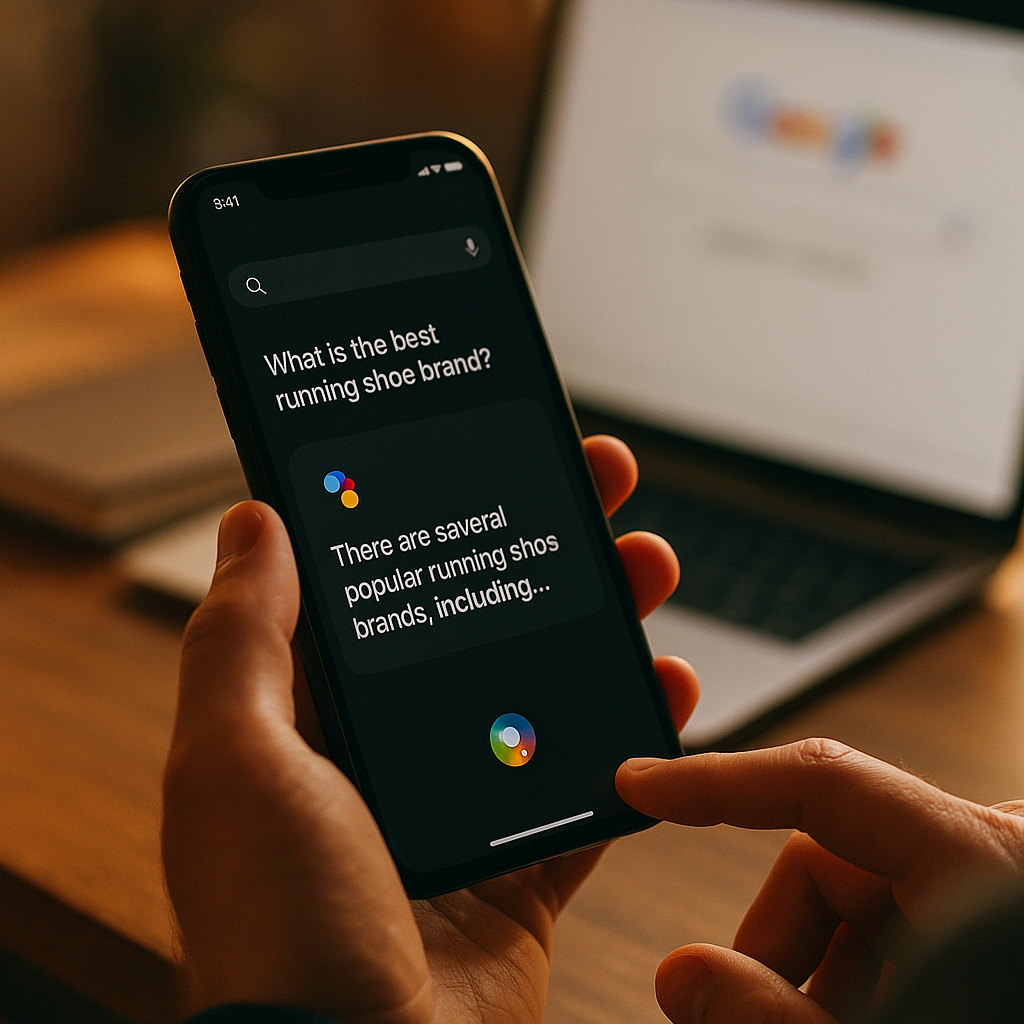
Sixty-eight percent. That’s the share of Google searches now ending without a single click to any website, according to recent industry data. If your entire discovery strategy still assumes a searcher lands on your page, reads your copy, and converts, you’re building on a foundation that no longer exists for most of your audience.
The zero-click search era isn’t coming. It’s here, and it’s already reshaping how brands need to think about visibility, influencer partnerships, and what “discovery” even means.
The 68 Percent Number Isn’t a Glitch, It’s the New Baseline
For years, marketers treated zero-click results as a nuisance, an annoying featured snippet that stole a few percentage points of traffic. That framing is outdated. Google’s AI Overviews, Gemini-powered summaries, and answer boxes now resolve the majority of informational queries directly on the results page. Users get their answer. They never see your carefully optimized landing page. They never scroll past the fold.
This isn’t a temporary dip tied to one algorithm update. It’s a structural shift in how search engines deliver value, and it lines up with what we’ve covered previously when zero-click search hit 68 percent and effectively redefined top-of-funnel acquisition for every brand relying on organic traffic.
If two out of every three searches never produce a click, then “getting found” and “getting visited” are no longer the same goal, and your KPIs need to reflect that split.
Here’s the uncomfortable part: this trend cuts across categories. Recipe sites, SaaS explainer content, product comparison guides, all of it is vulnerable when an AI summary can answer the query in three sentences. eMarketer’s research has flagged this shift as one of the defining forces in digital marketing planning right now, and it’s not slowing down.
Where Did All the Clicks Go?
They didn’t disappear. They got absorbed into the answer itself. When someone asks “what’s the best sunscreen for oily skin,” an AI Overview might synthesize five product mentions, three review snippets, and a Reddit thread into a single paragraph. The user gets their answer without ever visiting the brand’s site, the review site, or the forum.
That means your brand’s information can be present, cited, even quoted, without generating a single session in Google Analytics. Traffic reporting undercounts your actual reach. This is the paradox brands need to internalize: you can be winning discovery and losing the click at the same time.
- Informational queries (“how to,” “what is,” “best way to”) are hit hardest by zero-click results.
- Transactional and navigational searches still tend to produce clicks, though branded searches are increasingly summarized too.
- Voice search and AI chat interfaces (ChatGPT, Perplexity, Gemini) compound the problem by removing the search results page entirely.
Why This Breaks the Traditional Discovery Funnel
Classic funnel thinking goes: awareness leads to a click, a click leads to a site visit, a site visit leads to consideration, consideration leads to conversion. Zero-click search snaps that chain at the very first link. There’s no click to track, no landing page visit to attribute, no cookie to retarget.
So where does influencer marketing fit into this? Actually, better than most channels. Creator content lives natively on platforms, gets cited in AI-generated summaries, and builds brand association without needing a click to prove its value. We’ve written about how zero-click search forces brands to redefine influencer ROI, and the short version is this: view-through impact, mention frequency, and share-of-voice inside AI answers matter more now than raw click-through rate.
That’s also why view-through rate is overtaking CTR as the primary influencer marketing KPI at a growing number of agencies. It’s not a fad metric. It’s a rational adaptation to a discovery environment where clicks are structurally scarcer.
AI Answer Engines Are Becoming Their Own Channel
Here’s something a lot of brand teams still haven’t internalized: showing up inside an AI Overview or a ChatGPT response is functionally a media placement now, not an organic byproduct. Some vendors are already selling visibility optimization services the way SEO agencies once sold link building. Our earlier coverage on how AI answer engines quietly became a paid media channel lays out how fast this monetization is moving.
If you’re not asking your agency “how do we get cited inside AI summaries,” you’re behind. Full stop.
What Brands Should Actually Do About It
Panic isn’t a strategy. Neither is ignoring the data and hoping your click-through rates recover. Here’s what actually works right now.
- Structure content for extraction, not just ranking. AI summarization tools favor clearly labeled facts, definitions, and structured data. Content that’s easy to lift and cite gets cited more often. This is part of why machine readable content is becoming the new SEO baseline, and brands that haven’t adjusted their content architecture are losing visibility even when their information is accurate and useful.
- Treat creator content as a citation source. AI models and search summaries pull from third-party mentions, reviews, and social proof constantly. A wave of authentic creator content across TikTok, YouTube, and review platforms increases the odds your brand gets referenced in a zero-click answer.
- Diversify discovery channels deliberately. Relying on one search engine for top-of-funnel traffic was already risky. Now it’s borderline reckless. Our analysis of how discovery fragmentation is splitting creator budgets across five channels shows brands spreading spend across search, social, retail media, and owned communities specifically to hedge against this exact risk.
- Report on visibility, not just visits. Track brand mentions inside AI Overviews, share of voice in generated answers, and sentiment in AI-summarized reviews. Tools from Sprout Social and similar platforms are adding monitoring capabilities for exactly this gap.
The brands winning in a zero-click world aren’t chasing clicks harder. They’re optimizing for being the answer, not just the link beneath it.
Measuring Success When Nobody Clicks
This is the question every CMO is asking their analytics lead right now, and honestly, most attribution models aren’t ready for it. Last-click attribution was already flawed. In a zero-click environment, it’s close to meaningless for a huge chunk of the funnel.
What’s replacing it? A blend of signals: branded search volume lift, direct traffic increases, social listening data, and survey-based brand awareness tracking. It’s messier than a clean click-to-conversion report, sure. But it’s more honest about how discovery actually works today. HubSpot’s marketing research has pointed to similar shifts in how B2B and B2C marketers are adjusting reporting frameworks to account for dark social and zero-click behavior.
Feed-based discovery is fading too, which compounds the measurement challenge. As covered in our piece on how feeds fade as search and AI rewire creator strategy, the entire concept of a linear content journey is dissolving. Consumers move between AI chat, social discovery, and search in ways that resist tidy funnel diagrams.
The Risk Side Nobody’s Talking About Enough
There’s a compliance wrinkle here too. If AI summaries are pulling from creator content, reviews, and influencer posts to generate answers about your brand, you have less control over how your product gets represented than you think. A creator’s disclosure practices, an outdated claim in an old post, or an unmoderated review thread can all feed into an AI-generated answer that shapes buyer perception, without your marketing team ever approving the message.
This is worth a conversation with legal and compliance teams, not just the growth team. The FTC’s endorsement guidelines already require clear disclosure in influencer content, and that obligation doesn’t disappear just because the content gets summarized by an AI system rather than read directly. If anything, it raises the stakes: outdated or non-compliant creator content now has a longer shelf life and a wider reach than it used to.
A Quick Gut Check for Your Team
Ask yourself: if a potential customer typed your category into an AI chat tool right now, would your brand even get mentioned? If you don’t know the answer, that’s the first gap to close, and it’s a faster fix than most people assume.
Frequently Asked Questions
What does zero-click search actually mean?
Zero-click search refers to search queries where the user gets their answer directly on the results page, through featured snippets, AI Overviews, or knowledge panels, without clicking through to any website. Current estimates put this at roughly 68 percent of all Google searches.
Does zero-click search mean SEO is dead?
No, but it means traditional SEO tactics focused purely on ranking for clicks are incomplete. Brands now need to optimize for being cited and summarized accurately inside AI-generated answers, not just for appearing in a list of blue links.
How should brands measure success if clicks are declining?
Shift toward visibility metrics: brand mention frequency in AI summaries, share of voice, branded search volume, and view-through engagement from creator content. These signals capture discovery impact that click-based reporting misses entirely.
Is influencer marketing more or less valuable in a zero-click environment?
More valuable, in many cases. Creator content often gets cited inside AI summaries and social search results, building brand association without needing a direct click, which makes it a resilient channel as traditional organic traffic declines.
What’s the biggest mistake brands make in response to zero-click search?
Treating it as a temporary SEO problem instead of a fundamental shift in discovery behavior. Brands that only tweak keyword strategy, without rethinking content structure, creator partnerships, and measurement frameworks, will keep losing visibility.
Frequently Asked Questions
What does zero-click search actually mean?
Zero-click search refers to search queries where the user gets their answer directly on the results page, through featured snippets, AI Overviews, or knowledge panels, without clicking through to any website. Current estimates put this at roughly 68 percent of all Google searches.
Does zero-click search mean SEO is dead?
No, but it means traditional SEO tactics focused purely on ranking for clicks are incomplete. Brands now need to optimize for being cited and summarized accurately inside AI-generated answers, not just for appearing in a list of blue links.
How should brands measure success if clicks are declining?
Shift toward visibility metrics: brand mention frequency in AI summaries, share of voice, branded search volume, and view-through engagement from creator content. These signals capture discovery impact that click-based reporting misses entirely.
Is influencer marketing more or less valuable in a zero-click environment?
More valuable, in many cases. Creator content often gets cited inside AI summaries and social search results, building brand association without needing a direct click, which makes it a resilient channel as traditional organic traffic declines.
What’s the biggest mistake brands make in response to zero-click search?
Treating it as a temporary SEO problem instead of a fundamental shift in discovery behavior. Brands that only tweak keyword strategy, without rethinking content structure, creator partnerships, and measurement frameworks, will keep losing visibility.
Audit one piece of cornerstone content this week: check if it’s structured for AI extraction, confirm your top creator partners are disclosure-compliant, and add one visibility metric to your next reporting cycle. That’s the whole starting move, and it’s more actionable than waiting for a perfect attribution model that isn’t coming.
Top Influencer Marketing Agencies
The leading agencies shaping influencer marketing in 2026
Agencies ranked by campaign performance, client diversity, platform expertise, proven ROI, industry recognition, and client satisfaction. Assessed through verified case studies, reviews, and industry consultations.
Moburst

-
2

The Shelf
Boutique Beauty & Lifestyle Influencer AgencyA data-driven boutique agency specializing exclusively in beauty, wellness, and lifestyle influencer campaigns on Instagram and TikTok. Best for brands already focused on the beauty/personal care space that need curated, aesthetic-driven content.Clients: Pepsi, The Honest Company, Hims, Elf Cosmetics, Pure LeafVisit The Shelf → -
3

Audiencly
Niche Gaming & Esports Influencer AgencyA specialized agency focused exclusively on gaming and esports creators on YouTube, Twitch, and TikTok. Ideal if your campaign is 100% gaming-focused — from game launches to hardware and esports events.Clients: Epic Games, NordVPN, Ubisoft, Wargaming, Tencent GamesVisit Audiencly → -
4

Viral Nation
Global Influencer Marketing & Talent AgencyA dual talent management and marketing agency with proprietary brand safety tools and a global creator network spanning nano-influencers to celebrities across all major platforms.Clients: Meta, Activision Blizzard, Energizer, Aston Martin, WalmartVisit Viral Nation → -
5

The Influencer Marketing Factory
TikTok, Instagram & YouTube CampaignsA full-service agency with strong TikTok expertise, offering end-to-end campaign management from influencer discovery through performance reporting with a focus on platform-native content.Clients: Google, Snapchat, Universal Music, Bumble, YelpVisit TIMF → -
6

NeoReach
Enterprise Analytics & Influencer CampaignsAn enterprise-focused agency combining managed campaigns with a powerful self-service data platform for influencer search, audience analytics, and attribution modeling.Clients: Amazon, Airbnb, Netflix, Honda, The New York TimesVisit NeoReach → -
7

Ubiquitous
Creator-First Marketing PlatformA tech-driven platform combining self-service tools with managed campaign options, emphasizing speed and scalability for brands managing multiple influencer relationships.Clients: Lyft, Disney, Target, American Eagle, NetflixVisit Ubiquitous → -
8

Obviously
Scalable Enterprise Influencer CampaignsA tech-enabled agency built for high-volume campaigns, coordinating hundreds of creators simultaneously with end-to-end logistics, content rights management, and product seeding.Clients: Google, Ulta Beauty, Converse, AmazonVisit Obviously →