


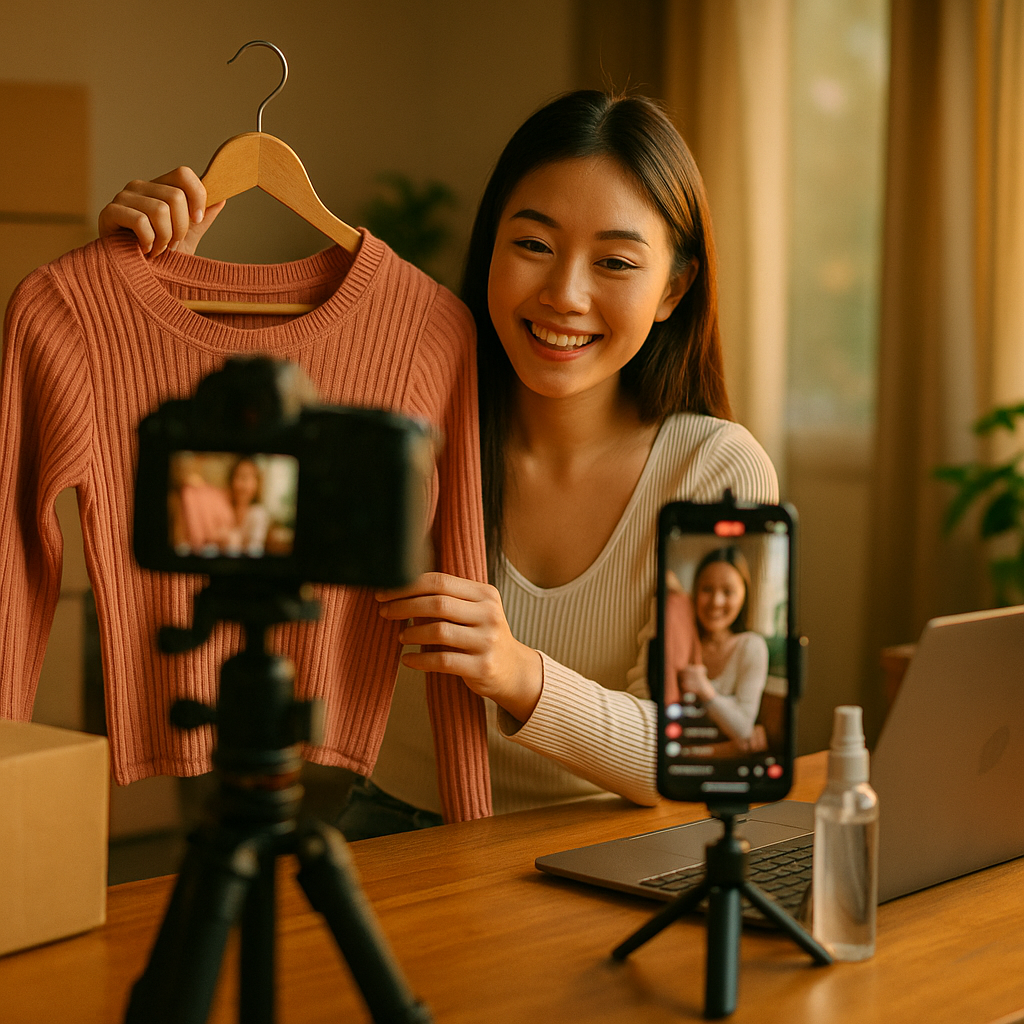
Creator-Led Livestream Commerce Is Outperforming Every Other Shoppable Format
Live commerce generated an estimated $50 billion in the U.S. alone last year, according to Statista’s commerce data. That number is climbing fast — and the brands winning aren’t just “going live.” They’re briefing creators to run creator-led vertical livestream formats that convert by blending real-time entertainment with frictionless purchasing across TikTok Live, Instagram Live, and YouTube Live. The gap between brands dabbling in livestream and brands systematically converting through it comes down to one thing: the brief.
Why Vertical Livestream Formats Convert Where Pre-Recorded Content Stalls
Pre-recorded shoppable videos work. Nobody disputes that. But livestreams introduce urgency, interactivity, and parasocial intimacy that a polished 30-second clip simply cannot replicate. When a creator holds up a product, responds to a viewer’s question about sizing, and drops a limited-time pin — that’s a compression of the entire purchase funnel into a single moment.
The conversion mechanics are different from static social commerce. Viewers who engage in live chat are 40% more likely to purchase than passive viewers, per McKinsey’s retail research. The real-time social proof of watching other people buy creates a momentum effect that no product page can simulate.
Livestream commerce doesn’t replace your shoppable content strategy — it accelerates the middle and bottom of the funnel by collapsing discovery, consideration, and purchase into a single interactive session.
This is precisely why brands that already invest in shoppable creator briefs are layering live formats on top. The pre-recorded assets build awareness. The livestream closes the sale.
Platform-Specific Briefing: One Format Does Not Fit Three Platforms
The biggest mistake brands make? Writing a single livestream brief and deploying it identically across TikTok Live, Instagram Live, and YouTube Live. Each platform has distinct audience behaviors, shoppable integrations, and algorithmic cues that demand tailored approaches.
TikTok Live
TikTok’s algorithm surfaces live content to non-followers aggressively — especially when engagement velocity is high in the first 10 minutes. This means the creator’s brief needs a “cold open hook” designed for strangers, not just existing fans. TikTok Shop’s native integration allows product pins to appear directly in the stream, and creators can feature items from a pre-loaded product catalog without leaving the frame.
Brief the creator to front-load a demonstration or unboxing within the first 90 seconds. Prompt viewers to comment specific keywords (“drop the link,” “what shade is that”) because comment velocity signals TikTok’s algorithm to push the stream wider. If you’re already structuring briefs around TikTok Shop commerce, your livestream brief should be an extension — not a separate document.
Instagram Live
Instagram Live skews toward existing followers. The discovery mechanism is weaker than TikTok’s, but the audience quality is often higher — especially for mid-market and premium brands. Meta’s business tools support product tagging in Live, though the checkout experience varies by region.
Brief creators to use the “go live with a guest” feature. Co-streams between a brand ambassador and a complementary creator double the audience pool instantly. Structure the session as a conversation, not a pitch. Instagram audiences punish overt selling harder than TikTok audiences do — the commerce needs to feel like a natural extension of the dialogue.
YouTube Live
YouTube Live favors longer sessions. Thirty minutes minimum; sixty to ninety minutes is the sweet spot for conversion-oriented streams. YouTube’s shoppable integration through Google Merchant Center allows product shelves beneath the stream, and Super Chat interactions provide an additional engagement signal.
The brief here should encourage a “deep dive” format — think extended tutorials, multi-product comparisons, or live Q&A with detailed answers. YouTube viewers expect substance. A creator rattling through 15 products in 10 minutes will lose them. Give the creator three to five hero SKUs and the freedom to spend real time on each.
The Anatomy of a Livestream Brief That Actually Drives Revenue
A standard influencer brief won’t cut it for live commerce. Live is unpredictable by nature. The brief has to function more like a show rundown than a content spec.
Here’s what high-performing livestream briefs include:
- Run of show with timing guardrails: Not a rigid script, but a structured sequence — hook (0-2 min), first product feature (2-8 min), audience interaction prompt (8-12 min), scarcity/offer reveal (12-15 min), and so on.
- Platform-specific audience cues: Exact language for prompting comments, shares, or pin taps. These differ by platform. “Tap the yellow basket” works on TikTok. “Check the link in the product shelf below” works on YouTube. Getting this wrong kills conversion.
- Objection-handling talking points: Anticipated viewer questions about price, shipping, returns, or ingredients — with approved responses the creator can deliver naturally.
- Scarcity and urgency mechanics: Limited-time discount codes, exclusive bundles available only during the stream, or countdown-based offers. These need to be built into the brief with specific timing.
- Clip extraction markers: Pre-identified moments that will be repurposed into short-form content post-stream. Brands that plan for livestream clip extraction from the brief stage see dramatically better content ROI.
The brief should also include a one-page “if things go wrong” guide. What does the creator say if the product link breaks? If a troll dominates the chat? If inventory sells out mid-stream? These aren’t hypotheticals — they happen constantly.
Measuring What Matters: Attribution in a Live Environment
Attribution is the perennial headache. Livestream commerce makes it simultaneously easier and harder. Easier because platforms like TikTok Shop provide direct, in-stream purchase data. Harder because many viewers watch a livestream, leave, and buy hours later through a different touchpoint.
Smart brands are solving this with layered attribution models. Track in-stream purchases as your baseline. Layer on unique discount codes per creator per stream. Then monitor 24-hour and 72-hour post-stream sales lifts against your daily baseline. The combination gives you a realistic picture of total livestream-driven revenue.
Brands using unique per-stream promo codes alongside platform-native transaction tracking report 15-25% higher attributed revenue than those relying on platform data alone. The code captures what the pixel misses.
If attribution modeling is still a gap in your program, start with a framework built around revenue attribution before scaling livestream spend.
What Separates Brands Getting 8x ROAS From Those Breaking Even
After analyzing dozens of brand livestream programs, a clear pattern emerges. The winners share three habits:
They rehearse. Not a full dress rehearsal, but a 15-minute pre-stream alignment call where the creator walks through the run of show, tests product links, and confirms the discount mechanic is live. The number of streams that fail because a product pin wasn’t activated is staggering.
They build audience before they sell. Top-performing brands run a pre-launch seeding sequence — teaser posts, countdown stickers, email blasts — in the 48 hours before the stream. Cold-starting a livestream with zero pre-built anticipation is like opening a pop-up store with no signage. For a structured approach to pre-stream audience building, look at a phased seeding brief template.
They iterate weekly, not quarterly. Livestream commerce rewards frequency. A brand running one stream per month learns almost nothing. Brands running two to three streams per week — even short ones — develop a data flywheel that compounds. They learn which products move live versus on-demand, which time slots attract buyers versus browsers, and which creator styles generate the highest revenue per viewer.
The compliance layer matters too. FTC disclosure guidelines apply to livestreams just as they do to static posts. Brief creators to disclose the partnership verbally at the start and at regular intervals. A pinned comment isn’t sufficient — the verbal disclosure needs to be clear and repeated, especially since viewers drop in and out throughout the stream.
The Bottom Line for Brand Teams
Start with one platform, one creator, and a tightly structured brief that includes a run of show, platform-specific audience cues, and a post-stream clip extraction plan — then measure, iterate, and scale from a foundation of actual conversion data rather than vanity viewership metrics.
FAQs
What are creator-led vertical livestream formats that convert?
These are real-time, vertical video commerce events hosted by creators on platforms like TikTok Live, Instagram Live, and YouTube Live. They combine entertainment, product demonstration, and shoppable integration — such as product pins, tagged items, or discount codes — to drive purchases during the broadcast. The format works because it compresses discovery, consideration, and conversion into a single interactive session.
How should brands brief creators differently for TikTok Live versus YouTube Live?
TikTok Live briefs should prioritize a strong cold-open hook for non-followers, rapid product demos, and comment-velocity prompts because TikTok’s algorithm pushes high-engagement streams to new audiences. YouTube Live briefs should emphasize longer, deeper content — tutorials, multi-product comparisons, and detailed Q&A — because YouTube viewers expect substance and sessions of 30 to 90 minutes perform best for conversion.
How do you measure ROI from a creator livestream commerce event?
Use a layered attribution approach: track in-stream purchases via the platform’s native commerce tools, assign unique discount codes per creator per stream to capture off-platform conversions, and monitor 24- to 72-hour post-stream sales lifts against your daily baseline. Combining these three data points gives the most accurate picture of total livestream-driven revenue.
Do FTC disclosure rules apply to shoppable livestreams?
Yes. FTC guidelines require clear and conspicuous disclosure of material connections during livestreams. Creators should verbally disclose the brand partnership at the start of the stream and at regular intervals throughout, since viewers join and leave at different times. A pinned chat comment alone is not considered sufficient disclosure.
How often should a brand run creator-led livestream commerce events?
Brands that run two to three livestreams per week — even shorter sessions — develop a data flywheel that enables rapid optimization. Running one stream per month provides too little data to iterate meaningfully. Frequency compounds learning about optimal products, time slots, creator styles, and audience behavior, leading to significantly higher return on investment over time.
Top Influencer Marketing Agencies
The leading agencies shaping influencer marketing in 2026
Agencies ranked by campaign performance, client diversity, platform expertise, proven ROI, industry recognition, and client satisfaction. Assessed through verified case studies, reviews, and industry consultations.
Moburst

-
2

The Shelf
Boutique Beauty & Lifestyle Influencer AgencyA data-driven boutique agency specializing exclusively in beauty, wellness, and lifestyle influencer campaigns on Instagram and TikTok. Best for brands already focused on the beauty/personal care space that need curated, aesthetic-driven content.Clients: Pepsi, The Honest Company, Hims, Elf Cosmetics, Pure LeafVisit The Shelf → -
3

Audiencly
Niche Gaming & Esports Influencer AgencyA specialized agency focused exclusively on gaming and esports creators on YouTube, Twitch, and TikTok. Ideal if your campaign is 100% gaming-focused — from game launches to hardware and esports events.Clients: Epic Games, NordVPN, Ubisoft, Wargaming, Tencent GamesVisit Audiencly → -
4

Viral Nation
Global Influencer Marketing & Talent AgencyA dual talent management and marketing agency with proprietary brand safety tools and a global creator network spanning nano-influencers to celebrities across all major platforms.Clients: Meta, Activision Blizzard, Energizer, Aston Martin, WalmartVisit Viral Nation → -
5

The Influencer Marketing Factory
TikTok, Instagram & YouTube CampaignsA full-service agency with strong TikTok expertise, offering end-to-end campaign management from influencer discovery through performance reporting with a focus on platform-native content.Clients: Google, Snapchat, Universal Music, Bumble, YelpVisit TIMF → -
6

NeoReach
Enterprise Analytics & Influencer CampaignsAn enterprise-focused agency combining managed campaigns with a powerful self-service data platform for influencer search, audience analytics, and attribution modeling.Clients: Amazon, Airbnb, Netflix, Honda, The New York TimesVisit NeoReach → -
7

Ubiquitous
Creator-First Marketing PlatformA tech-driven platform combining self-service tools with managed campaign options, emphasizing speed and scalability for brands managing multiple influencer relationships.Clients: Lyft, Disney, Target, American Eagle, NetflixVisit Ubiquitous → -
8

Obviously
Scalable Enterprise Influencer CampaignsA tech-enabled agency built for high-volume campaigns, coordinating hundreds of creators simultaneously with end-to-end logistics, content rights management, and product seeding.Clients: Google, Ulta Beauty, Converse, AmazonVisit Obviously →