


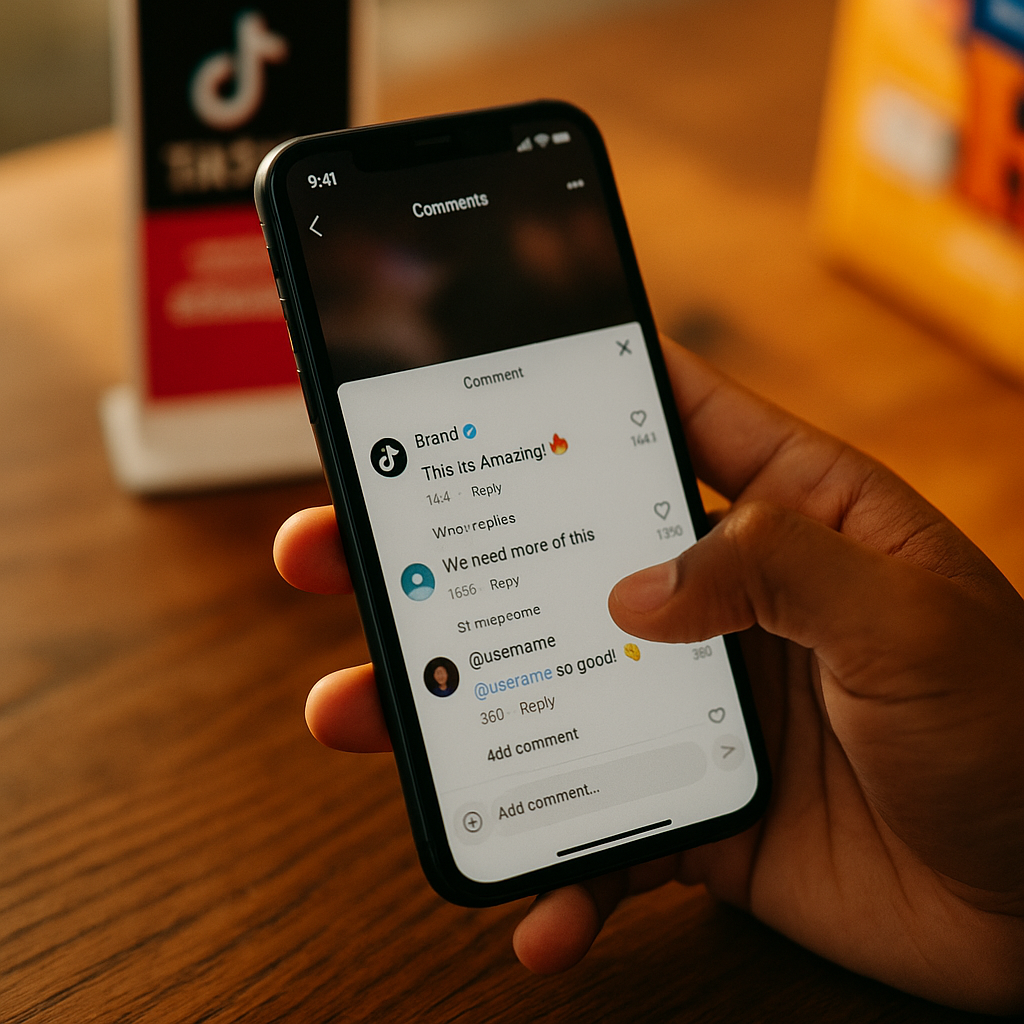
When was the last time a consumer visited your brand’s homepage to feel something? TikTok’s comment section is replacing the brand homepage as the primary site of audience engagement, humor, and emotional connection — and most brand briefs are still optimized for the wrong metric. Here’s what that shift demands from your creator strategy.
The Comment Section Is Now a Cultural Address
Scroll any high-performing TikTok from a brand-adjacent creator and notice where the real content lives. Not in the video. In the replies. Duets are built off comments. Trends spawn from pinned responses. The joke format that becomes a meme this week started as three words underneath a video about someone’s morning routine.
According to Statista, TikTok surpassed 1.8 billion active monthly users globally, with engagement rates that consistently outpace Instagram and YouTube for short-form content. But raw usage data misses the cultural mechanics. The comment section isn’t a feedback mechanism — it’s a community performance stage. Users don’t come to TikTok just to watch. They come to participate in the bit.
This matters enormously for brand strategy because it reframes the ROI question entirely. You’re not measuring views. You’re measuring whether your content entered the conversation.
Why Humor and Emotional Relief Are the Operating System
TikTok has become the platform Gen Z and younger millennials turn to for comfort, absurdity, and parasocial warmth. It functions less like a media channel and more like a group chat between 1.8 billion people who share references.
Brands that brief creators to “educate and inform” are playing chess while TikTok’s culture is playing an entirely different game — one where the funniest comment wins more real estate than the video itself.
This isn’t a soft observation. Sprout Social research has repeatedly shown that humor is the top content attribute audiences want from brands on social. On TikTok specifically, the emotional texture of relief — a sense that the creator understands your particular frustration or absurdity — drives comment engagement more than aspirational content does. Relatability beats polish. Timing beats production value.
What does that mean for how you brief? Stop describing what the video should look like. Start describing the emotional state the viewer should be in when they open the comment section.
What Most Brand Briefs Get Wrong
The standard brand brief for a TikTok partnership reads something like this: “Create an authentic, engaging video featuring [product] that showcases [key benefit] and drives awareness with [target demographic].” That brief produces compliance, not culture.
It treats the creator as a delivery vehicle for messaging rather than as a cultural operator whose value is their relationship with a specific audience’s sense of humor, grief, irony, or joy. And it typically contains zero instruction about how the content should function in the comment section — which is where the cultural impact actually lives.
For a more structural breakdown of how search behavior is reshaping what creators need to produce, the work on Gen Z social search and creator briefs is directly relevant here. Comment-driving content and search-intent content are increasingly the same asset — content that answers a felt question or validates a felt experience.
The other common failure: briefing for the brand’s comfort zone rather than the creator’s native format. A beauty brand that briefs a comedic creator to do a straight tutorial wastes the creator’s cultural capital. That creator’s comment section runs on chaos and relatability. Straightforward tutorials get polite views. The right brief unlocks the creator’s actual audience dynamic.
Briefing for Comment Velocity: A Framework
Comment-driving content isn’t accidental. It has a structure. Briefs that generate cultural presence on TikTok tend to share several operational characteristics:
- Premise tension: The video sets up a scenario the audience immediately recognizes but hasn’t seen named. “That specific type of customer” or “the energy of buying this at 2am” — specificity creates the “that’s so me” comment trigger.
- An open loop the audience can close: The video asks an implicit or explicit question the comment section answers. “What’s yours?” is the most blunt version. More sophisticated execution leaves a cultural blank for the audience to fill.
- Pinnable comedy: The creator or brand account pins a comment that extends the joke. This is underused as a tactic. A pinned creator response becomes a secondary punchline and signals the brand is actually in the conversation.
- Response architecture: Brief the creator to respond to at least five early comments. TikTok’s algorithm surfaces content with comment-reply activity. Engagement density within the first two hours matters structurally, not just culturally.
Understanding which content formats generate this comment velocity by category is worth cross-referencing — the data on content format ROI by vertical shows that humor-led formats consistently outperform tutorial formats for comment engagement in lifestyle and CPG categories.
The Brand Presence Flywheel TikTok Is Building
When a brand’s creator content consistently generates comment activity — when people show up specifically to see how the community has responded — something strategic shifts. The comment section starts functioning like owned media.
Consider what Duolingo built. Not through ads, but through a consistent comedic posture that made people show up to the comment section to participate. The owl became a character audiences performed alongside, not a mascot they watched. That’s a different class of brand asset than any homepage or paid placement can produce.
The comment section is where cultural presence compounds. Each high-engagement post trains both the algorithm and the audience to expect something from your brand — and that expectation is worth more than most paid media buys.
This compounds across the creator roster. If five creators in your program are each generating comment sections that feel like the same cultural universe, you’re building distributed brand presence that no single channel can replicate. The micro-community trust dynamic that makes niche creators effective is the same dynamic that makes comment sections culturally sticky — it’s insider language, shared reference, and earned belonging.
Risk Management: When the Comment Section Works Against You
This model has real operational risk that brand teams need to plan for explicitly. An open comment section on a brand-adjacent post is an invitation for critique, competitor activity, and occasionally coordinated negativity. The brand teams that handle this well have three things in place:
First, a rapid response protocol — not a legal-cleared PR statement, but a brand voice-aligned quick reply that acknowledges and redirects. Second, a clear brief to creators about what types of negative comments to engage with versus ignore. Third, a monitoring tool in place before the content goes live. TikTok’s Business Center provides comment moderation tools, but most brands underuse them.
The risk of an unmanaged comment section is real. The risk of avoiding comment-driven content entirely is worse. Brands that opt for low-engagement, safe content are effectively invisible on TikTok — and invisible on TikTok increasingly means invisible in the cultural conversation that shapes purchase intent. For a deeper look at how the platform’s commerce mechanics reinforce emotional engagement, the analysis on TikTok Shop’s emotional engagement lift quantifies exactly what’s at stake.
Measuring Cultural Presence, Not Just Comment Count
CMOs asking for ROI on comment-driving strategy deserve a better answer than “vibes.” The measurable proxies for cultural presence on TikTok include: comment-to-view ratio (industry benchmark sits around 1–3% for strong engagement; anything above 5% signals genuine cultural traction), stitch and duet rate, and saves-to-shares ratio. Saves indicate utility; shares indicate cultural currency.
Beyond platform metrics, brands running sophisticated programs are tracking share-of-search lift and brand sentiment velocity using tools like Brandwatch and HubSpot’s social listening suite. The question isn’t “did people comment?” It’s “did this content change how people talk about us?”
That’s a more demanding measurement standard. It’s also the one that justifies meaningful investment in creator programs built around cultural presence rather than just reach. If your current measurement framework doesn’t capture this, restructuring it — alongside how you measure influencer cultural relevance — is the first operational change worth making.
Start there: audit the last three creator briefs your team issued for TikTok and ask one question — does this brief give the creator any instruction about what should happen in the comment section? If the answer is no, that’s the gap your next brief needs to close.
FAQs
Why is TikTok’s comment section considered more valuable than the brand homepage?
The TikTok comment section functions as a live, participatory cultural space where audiences co-create meaning with creators and brands. Unlike a brand homepage — which is static and brand-controlled — the comment section is where humor spreads, audiences signal identity, and cultural presence compounds through real interaction. For most consumer brands, this is where purchase intent is now formed.
How should brands brief creators to drive comment engagement on TikTok?
Briefs should specify the emotional state the audience should be in when they reach the comment section, not just what the video should show. Include specific guidance on premise tension (a relatable scenario named sharply), open loops the audience can fill, and instructions for the creator to respond to early comments. Comment-reply velocity within the first two hours affects algorithmic distribution.
What content formats generate the most comments on TikTok?
Humor-led formats, relatable scenario content, and “name the thing” style videos consistently outperform tutorials and aspirational content for comment engagement — particularly in lifestyle, CPG, and service categories. Specificity drives recognition, and recognition drives comments. Generic content gets polite views; specific, culturally attuned content generates conversation.
How do you measure cultural presence on TikTok beyond comment count?
Track comment-to-view ratio (5%+ signals strong traction), stitch and duet rate, saves-to-shares ratio, and downstream brand sentiment velocity using social listening tools like Brandwatch. Share-of-search lift following a campaign is a strong proxy for whether content moved cultural needle, not just drove momentary engagement.
What are the main risks of comment-driven creator content for brands?
The primary risks include unmoderated negative sentiment, competitor activity in comment threads, and off-brand creator responses. Brands should establish rapid-response protocols in brand voice before content launches, give creators clear guidance on which comments to engage with, and use TikTok’s Business Center moderation tools proactively rather than reactively.
Top Influencer Marketing Agencies
The leading agencies shaping influencer marketing in 2026
Agencies ranked by campaign performance, client diversity, platform expertise, proven ROI, industry recognition, and client satisfaction. Assessed through verified case studies, reviews, and industry consultations.
Moburst

-
2

The Shelf
Boutique Beauty & Lifestyle Influencer AgencyA data-driven boutique agency specializing exclusively in beauty, wellness, and lifestyle influencer campaigns on Instagram and TikTok. Best for brands already focused on the beauty/personal care space that need curated, aesthetic-driven content.Clients: Pepsi, The Honest Company, Hims, Elf Cosmetics, Pure LeafVisit The Shelf → -
3

Audiencly
Niche Gaming & Esports Influencer AgencyA specialized agency focused exclusively on gaming and esports creators on YouTube, Twitch, and TikTok. Ideal if your campaign is 100% gaming-focused — from game launches to hardware and esports events.Clients: Epic Games, NordVPN, Ubisoft, Wargaming, Tencent GamesVisit Audiencly → -
4

Viral Nation
Global Influencer Marketing & Talent AgencyA dual talent management and marketing agency with proprietary brand safety tools and a global creator network spanning nano-influencers to celebrities across all major platforms.Clients: Meta, Activision Blizzard, Energizer, Aston Martin, WalmartVisit Viral Nation → -
5

The Influencer Marketing Factory
TikTok, Instagram & YouTube CampaignsA full-service agency with strong TikTok expertise, offering end-to-end campaign management from influencer discovery through performance reporting with a focus on platform-native content.Clients: Google, Snapchat, Universal Music, Bumble, YelpVisit TIMF → -
6

NeoReach
Enterprise Analytics & Influencer CampaignsAn enterprise-focused agency combining managed campaigns with a powerful self-service data platform for influencer search, audience analytics, and attribution modeling.Clients: Amazon, Airbnb, Netflix, Honda, The New York TimesVisit NeoReach → -
7

Ubiquitous
Creator-First Marketing PlatformA tech-driven platform combining self-service tools with managed campaign options, emphasizing speed and scalability for brands managing multiple influencer relationships.Clients: Lyft, Disney, Target, American Eagle, NetflixVisit Ubiquitous → -
8

Obviously
Scalable Enterprise Influencer CampaignsA tech-enabled agency built for high-volume campaigns, coordinating hundreds of creators simultaneously with end-to-end logistics, content rights management, and product seeding.Clients: Google, Ulta Beauty, Converse, AmazonVisit Obviously →