


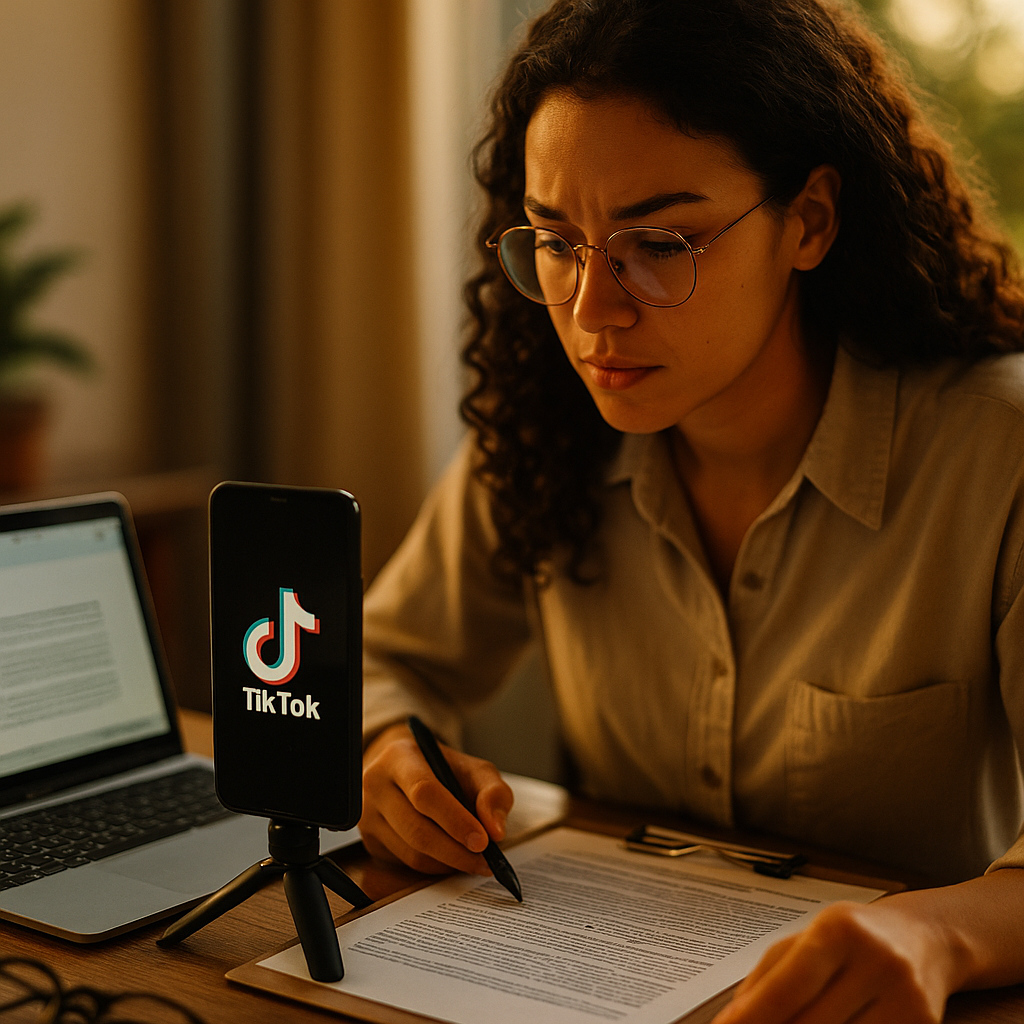
Your TikTok Creator Campaign May Already Be a Privacy Liability
Over 60% of brands running TikTok creator commerce campaigns have no documented consent architecture for the platform’s backend data collection — and regulators are closing that gap fast. If your team is activating TikTok Shop integrations, Spark Ads, or affiliate creator flows without a configured consent mechanism for TikTok creator commerce privacy compliance, you’re not just exposed on paper. You’re exposed in practice.
What TikTok’s Ad Network Actually Collects
Let’s be specific. When a user interacts with a creator-driven TikTok ad or TikTok Shop listing, TikTok’s ad platform can collect IP addresses, device identifiers (IDFA, GAID, and platform-specific equivalents), browsing and content interaction data, purchase intent signals, and cross-app behavioral data via the TikTok Pixel and Events API.
This isn’t just TikTok storing watch time. The Events API integration — which many brands now favor over pixel-only setups for accuracy — sends server-side signals that include hashed email addresses, phone numbers, and transaction values. That’s first-party data flowing into TikTok’s infrastructure with every completed checkout.
Brands running always-on creator programs often don’t realize that when a creator links to a TikTok Shop affiliate product, the data collection begins the moment a user taps — not when they buy. That click-level tracking is where your consent obligation starts.
The Events API doesn’t just improve attribution accuracy — it creates a direct pipeline of hashed first-party data into TikTok’s systems. Brands without a server-side consent gate are effectively sharing customer data without documented user permission.
The Consent Architecture Brands Are Getting Wrong
Most brands treat consent as a website problem. Cookie banner goes up, legal signs off, done. But TikTok creator commerce operates in a hybrid environment — part in-app, part landing page, part third-party checkout — and consent needs to follow the user across that journey.
Here’s where the gaps typically appear:
- In-app consent is platform-controlled. TikTok’s native app experience has its own consent flows for logged-in users, but brands cannot modify or supplement those flows. What you can control is what happens when users exit the TikTok environment — landing pages, product pages, checkout flows.
- Consent banners don’t cover server-side signals. If you’re using TikTok’s Events API with a CAPI gateway, your consent management platform (CMP) must be configured to suppress or delay server-side event transmission until consent is granted. Most aren’t.
- Affiliate creator links skip the brand’s consent layer entirely. When a creator posts an organic TikTok with an affiliate link, users who tap and land on a third-party retailer hit that retailer’s consent flow — which may not be yours, and may not cover TikTok’s pixel installed on that page.
For teams managing multi-creator campaigns, the campaign pre-flight checklist should include explicit verification that every landing destination in the creator brief has a compliant consent configuration that covers TikTok tracking scripts.
Configuring Privacy Notices That Actually Hold Up
A privacy notice that says “we use third-party advertising partners” is not adequate disclosure for TikTok’s data collection scope. Regulators under GDPR, CCPA/CPRA, and state-level equivalents increasingly expect granular disclosure. That means naming the partner, specifying the data categories collected, explaining the processing purpose, and providing a mechanism for users to opt out or withdraw consent.
Practically, this means your privacy policy needs a dedicated section for TikTok that covers:
- IP address and device identifier collection via TikTok Pixel or Events API
- Behavioral data collected through TikTok’s SDK if your brand app integrates it
- Data sharing for ad targeting and lookalike audience creation
- Retention periods, if TikTok’s data processing agreement specifies them
- User rights: access, deletion, and opt-out links
The UK’s Information Commissioner’s Office has issued guidance specifically on third-party pixel transparency, and the standard it sets is a useful baseline even for US-only brands. If your disclosures wouldn’t satisfy the ICO, they probably won’t survive a California AG inquiry either.
One operational note: if your brand runs campaigns across TikTok and Meta simultaneously, your privacy notice language needs to be specific to each platform’s data practices. Generic bundled disclosures create ambiguity that regulators treat as non-disclosure. For a comparison of how these requirements differ across platforms, the approach to data privacy in creator campaigns varies meaningfully by channel.
User Choice Controls — The Part Brands Consistently Underbuild
Consent isn’t a checkbox. It’s a system. Users must be able to grant, modify, and withdraw consent — and those choices must propagate to your TikTok data pipeline in near real-time.
This requires integration between your CMP (OneTrust, Cookiebot, Usercentrics, or equivalent) and your TikTok Events API configuration. Specifically:
- Your CMP must pass consent signals to your server-side tagging container (Google Tag Manager server-side, Stape, or similar)
- The server-side container must conditionally fire TikTok CAPI events only when a valid consent record exists
- Opt-out requests submitted via your privacy preference center must trigger suppression of future event firing for that user identifier
For California residents, CPRA mandates a “Do Not Sell or Share My Personal Information” link. Sharing behavioral data with TikTok for ad targeting likely qualifies as “sharing” under CPRA’s definition — meaning that link must actually suppress TikTok’s data receipt, not just flag a preference in your CRM.
The FTC’s commercial surveillance guidance adds another layer: if your creator campaign targets or foreseeably reaches minors, additional data minimization obligations apply regardless of your consent architecture. This intersects directly with how TikTok’s own teen protections interact with brand campaign targeting — something worth reviewing alongside platform-level safeguards like those discussed in teen safeguard compliance frameworks.
A “Do Not Sell or Share” link that doesn’t actually suppress TikTok event firing is a compliance theater exercise. It creates documentation of a choice mechanism while leaving the data pipeline fully intact — which is precisely the scenario regulators are targeting in enforcement actions.
Contract Language With Creators and Agencies
Your data compliance obligations don’t stop at your own infrastructure. When creators use TikTok’s native affiliate tools, or when your agency places Spark Ads on creator content, the data flows involve multiple parties — and your agreements need to reflect that.
Creator contracts should specify that creators may not install unauthorized tracking scripts on linked landing pages, must use only brand-approved affiliate links that route through compliant tracking setups, and must disclose material connections in compliance with FTC endorsement guidelines. Agency agreements should include representations that any TikTok campaign configuration — including pixel placement and Events API setup — meets the brand’s documented privacy standards. For a deeper look at where these contract gaps appear, creator contract risk is an area most brands underinvest in until an enforcement action forces the conversation.
Data Processing Agreements (DPAs) with TikTok are non-negotiable if you’re operating in the EU or UK. TikTok’s Business Center includes DPA documentation, but brands should confirm the applicable Standard Contractual Clauses (SCCs) are current and that any sub-processor disclosures cover the Events API integration specifically.
Before Your Next Campaign Brief Goes Out
Run a consent architecture audit on every active TikTok campaign property — brand landing pages, TikTok Shop storefronts, and any creator-linked microsites. Verify that your CMP suppresses server-side TikTok event firing prior to consent. Confirm your privacy policy names TikTok explicitly with data category specificity. And check that your “Do Not Sell or Share” mechanism actually communicates a suppression signal to your Events API configuration, not just a database flag that nobody reads. Also review your TikTok ad network data practices documentation to ensure it reflects your current Events API setup — many brands are operating on outdated configurations that predate server-side integrations.
If you’re launching a new creator commerce campaign before that audit is complete, pause the Events API integration. Running attribution at reduced fidelity is recoverable. A regulatory enforcement action is not.
Frequently Asked Questions
Does TikTok’s in-app consent cover brand obligations under GDPR?
No. TikTok’s in-app consent mechanism covers TikTok’s own data processing as a controller. When your brand integrates TikTok Pixel or Events API on your own properties, you become a separate data controller with independent consent obligations. You must obtain and document consent for your brand’s use of those tracking tools — TikTok’s app-level consent does not transfer to your website or checkout flow.
What’s the difference between TikTok Pixel and Events API from a compliance perspective?
TikTok Pixel fires from the user’s browser, making it visible to browser-based consent management platforms. Events API fires server-side, meaning it bypasses browser-level consent controls unless your server-side tagging container is explicitly configured to check consent records before sending events. Events API requires additional consent architecture to remain compliant — browser consent banners alone are insufficient.
Are affiliate creator links subject to the same privacy requirements as paid Spark Ads?
Yes, if TikTok tracking scripts are present on the destination page. The triggering factor for your brand’s consent obligation is not the payment model — it’s whether TikTok’s tracking technology is collecting data on your brand’s behalf when users land on that page. If a creator’s affiliate link routes to a page with your TikTok Pixel installed, your consent architecture must cover that touchpoint.
What does CPRA’s “sharing” definition mean for TikTok campaign data?
Under CPRA, “sharing” includes disclosing personal information to a third party for cross-context behavioral advertising — which covers sending behavioral signals to TikTok for ad targeting and lookalike audience creation. This means California residents must be given a functional “Do Not Share” mechanism that actually suppresses data transmission to TikTok, not just a preference flag. Brands that don’t implement this suppression at the technical layer are likely out of compliance with CPRA.
How should brands handle consent requirements when targeting teen audiences on TikTok?
Brands should not target teen audiences (under 18) with behavioral advertising on TikTok. TikTok’s own policies restrict certain ad targeting for users under 18, and FTC commercial surveillance guidance imposes data minimization requirements when campaigns foreseeably reach minors. If your campaign could reach teen users through creator content, your consent architecture must include age-gating or data minimization controls that prevent behavioral data collection for that cohort.
Top Influencer Marketing Agencies
The leading agencies shaping influencer marketing in 2026
Agencies ranked by campaign performance, client diversity, platform expertise, proven ROI, industry recognition, and client satisfaction. Assessed through verified case studies, reviews, and industry consultations.
Moburst

-
2

The Shelf
Boutique Beauty & Lifestyle Influencer AgencyA data-driven boutique agency specializing exclusively in beauty, wellness, and lifestyle influencer campaigns on Instagram and TikTok. Best for brands already focused on the beauty/personal care space that need curated, aesthetic-driven content.Clients: Pepsi, The Honest Company, Hims, Elf Cosmetics, Pure LeafVisit The Shelf → -
3

Audiencly
Niche Gaming & Esports Influencer AgencyA specialized agency focused exclusively on gaming and esports creators on YouTube, Twitch, and TikTok. Ideal if your campaign is 100% gaming-focused — from game launches to hardware and esports events.Clients: Epic Games, NordVPN, Ubisoft, Wargaming, Tencent GamesVisit Audiencly → -
4

Viral Nation
Global Influencer Marketing & Talent AgencyA dual talent management and marketing agency with proprietary brand safety tools and a global creator network spanning nano-influencers to celebrities across all major platforms.Clients: Meta, Activision Blizzard, Energizer, Aston Martin, WalmartVisit Viral Nation → -
5

The Influencer Marketing Factory
TikTok, Instagram & YouTube CampaignsA full-service agency with strong TikTok expertise, offering end-to-end campaign management from influencer discovery through performance reporting with a focus on platform-native content.Clients: Google, Snapchat, Universal Music, Bumble, YelpVisit TIMF → -
6

NeoReach
Enterprise Analytics & Influencer CampaignsAn enterprise-focused agency combining managed campaigns with a powerful self-service data platform for influencer search, audience analytics, and attribution modeling.Clients: Amazon, Airbnb, Netflix, Honda, The New York TimesVisit NeoReach → -
7

Ubiquitous
Creator-First Marketing PlatformA tech-driven platform combining self-service tools with managed campaign options, emphasizing speed and scalability for brands managing multiple influencer relationships.Clients: Lyft, Disney, Target, American Eagle, NetflixVisit Ubiquitous → -
8

Obviously
Scalable Enterprise Influencer CampaignsA tech-enabled agency built for high-volume campaigns, coordinating hundreds of creators simultaneously with end-to-end logistics, content rights management, and product seeding.Clients: Google, Ulta Beauty, Converse, AmazonVisit Obviously →