


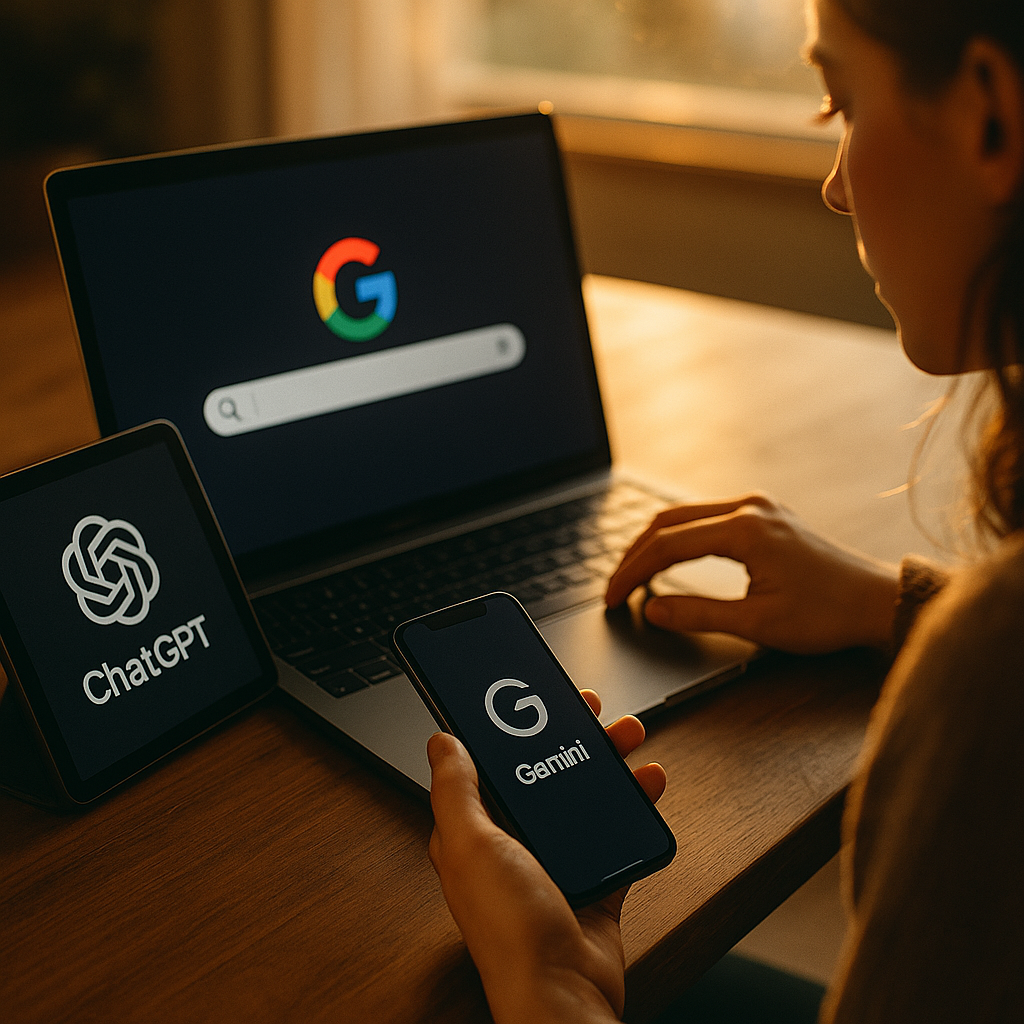
31 Percent of AI-Search Users Are Already Gone From Google. Is Your Creator Strategy Built for Where They Went?
According to recent survey data, 31 percent of AI-search users now use ChatGPT as a primary search interface, with Gemini adoption accelerating alongside it. That’s not a rounding error. That’s a structural shift in how consumers discover brands, products, and opinions — and most influencer programs are still optimized for a discovery layer that’s losing ground fast.
Why This Isn’t Just a Search Problem
Brand and agency teams tend to file “AI search” under the SEO team’s problem. That’s the wrong filing cabinet. When a consumer asks ChatGPT “what’s the best protein powder for endurance athletes,” the answer they get isn’t pulled from a paid search auction. It’s synthesized from content the model has indexed, crawled, and weighted based on authority signals — many of which originate from creator content, editorial mentions, and structured brand data.
This is why your influencer budget is now an AI visibility budget, whether your organization recognizes it yet or not.
Creator-generated content is increasingly one of the primary signals that AI systems use to surface brand mentions in generative answers. A brand invisible to creators is becoming a brand invisible to AI search.
The implication is blunt: if your creators aren’t producing content that gets picked up, cited, or synthesized by large language models, your brand doesn’t exist in those discovery interfaces. And with 31 percent of AI-search users already anchored in ChatGPT, the audience you’re missing isn’t fringe — it’s mainstream.
How Gemini Changes the Brand Visibility Equation
ChatGPT gets the headlines, but Gemini’s growing adoption inside Google’s own ecosystem deserves equal strategic attention. Gemini is embedded into Google Search, Gmail, Google Workspace, and now Android natively. That means it surfaces brand and product information through a different content graph than ChatGPT — one that leans more heavily on structured data, Google Business Profiles, and indexed content from high-authority domains.
For a deeper breakdown of how Gemini’s content architecture affects brand visibility specifically, the analysis on Google AI Mode and brand visibility is worth your team’s time.
The practical difference: ChatGPT and Perplexity tend to favor editorial and long-form creator content. Gemini favors structured signals, location data, and tightly indexed web content. A sophisticated brand strategy accounts for both content surfaces — not just one.
What Creator Content Actually Does in Generative Answers
Let’s be specific about the mechanism, because vague directives to “create more AI-friendly content” don’t move budgets.
When a large language model generates a product recommendation or category overview, it draws on a training corpus and, in retrieval-augmented systems, live web data. Creator content contributes to brand presence in these outputs through several pathways:
- Citation frequency: Reviews, tutorials, and comparison content from creators with authoritative domain signals get cited more often in retrieval-augmented generation (RAG) systems like Perplexity and Bing Copilot.
- Sentiment weighting: LLMs synthesize sentiment from multiple sources. A brand with 40 positive creator reviews and 5 negative editorial mentions will surface differently than a brand with the inverse ratio.
- Entity association: Repeated co-occurrence of a brand name with specific use cases (“great for travel,” “dermatologist-approved”) in creator content trains models to associate that brand with those attributes.
- Topical authority by proxy: When credible niche creators consistently reference a brand in expert contexts, it elevates the brand’s perceived authority in that vertical within model outputs.
This is what creator earned media as a generative engine signal means operationally. It’s not metaphorical. The content your creators produce today is shaping the AI answers your prospects will receive next quarter.
Rethinking Budget Allocation Across Discovery Layers
The uncomfortable math: most mid-market brands still allocate influencer budgets primarily to drive engagement metrics on Instagram, TikTok, and YouTube — platforms where discovery is algorithmically mediated and measurable through first-party analytics. That model made sense when social feeds were the dominant discovery interface. The discovery landscape now has a third channel that most influencer programs aren’t funding against.
The strategic reallocation isn’t about slashing social creator spend. It’s about adding criteria to creator selection and content briefs that serve both social and AI discovery simultaneously. Specifically:
- Prioritize creators who produce long-form written or captioned content in addition to video, since text-based content is more readily indexed by LLMs.
- Brief creators to include specific use-case language (“I use this for X because Y”) rather than generic endorsements, since specificity improves entity association in model outputs.
- Favor creators with their own indexed web presence (newsletters, blogs, Substack) alongside social reach, since owned web content is more reliably crawled by AI search systems.
- Invest in niche vertical creators whose content density in a specific topic area gives their brand mentions more weight in model training data.
The piece on splitting your budget between AI search and creator content offers a practical framework if your team is working through the reallocation arithmetic right now.
The brands winning non-traditional discovery aren’t necessarily spending more on creators. They’re briefing them differently — with AI indexability built into the content requirements from the start.
The Measurement Gap Nobody Wants to Talk About
Here’s the honest problem: attributing AI-driven discovery to creator content investment is genuinely hard. You can’t drop a UTM parameter into a ChatGPT response. Perplexity doesn’t pass referral data cleanly. Gemini’s AI overviews surface brand mentions without click-through.
So how do you build a measurement case for the CMO?
Proxy metrics matter more than ever here. Track branded search volume as a downstream signal of AI-assisted discovery. Monitor mention frequency in AI tools using platforms like HubSpot’s AI monitoring integrations or third-party tools like Brandwatch and Mention that are building LLM citation tracking features. Run periodic AI audits — literally query ChatGPT, Gemini, and Perplexity with your target category keywords and log where your brand surfaces versus competitors.
For teams building a more formal measurement stack, the work on AEO budget and measurement for AI search lays out a usable framework that goes beyond branded search as a proxy.
The key point: imperfect measurement isn’t a reason to underinvest. It’s a reason to establish baselines now, before competitors do, so your program has comparative data when attribution tooling catches up — and it will.
Creator Selection Criteria Are Changing
The shift to AI-search discovery doesn’t just change content briefs. It changes who you should be partnering with.
Mega-influencers with massive reach but thin content depth are less valuable in an AI discovery context than mid-tier creators who produce dense, specific, expert-level content in a defined vertical. A 200,000-subscriber YouTube creator who does weekly in-depth product comparisons in the home audio space will generate more AI-search influence for a speaker brand than a 2M-follower lifestyle account posting 30-second reels.
This aligns with the broader niche creator investment wave that’s reshaping partnership economics across the industry. VC dollars are flowing to niche creator platforms and formats precisely because the content density they generate has compounding value across multiple discovery surfaces, including AI.
The strategic implication: reweight your creator tier mix toward mid-size, high-specificity creators. They produce the content that feeds AI systems, earns editorial citations, and builds long-term entity associations — all while still delivering social engagement. And as Statista’s influencer marketing data consistently shows, mid-tier creators often outperform mega-influencers on engagement rate and cost-per-action, making this a sound ROI decision independent of AI search considerations.
You’ll also want to review creator contract structures if you’re extending usage rights for AI indexability purposes. The current market on creator rates and exclusivity negotiations is moving quickly as both sides start to understand the extended value of owned web content.
Platform-Level Signals Worth Watching
OpenAI’s own evolving advertising and creator strategy is relevant context here. The OpenAI dual-CMO model signals that the company is actively building out the commercial infrastructure around ChatGPT’s discovery role — which means brand visibility within ChatGPT is likely to become a more formal, structured marketplace, not just an organic outcome of content strategy. Getting your creator content indexed and associated with brand entities now, before that marketplace formalizes, is a first-mover advantage worth taking.
Google’s position with Gemini is similarly in flux. The Google Search support documentation has been updated repeatedly to reflect AI-mode behavior, and the signals about what content gets surfaced in Gemini overviews versus traditional SERPs are still being decoded by the industry. Brands that invest in creator content with structured, specific, entity-rich attributes are better positioned across both surfaces regardless of how Google’s algorithm evolves.
For brands operating in regulated categories, it’s also worth flagging that the FTC’s disclosure guidelines apply to AI-surfaced content just as they do to traditional social posts. If a creator’s sponsored content is being cited by an AI system, the disclosure requirement doesn’t disappear. Legal teams need to be looped in as you expand creator programs into AI-discovery-optimized content formats.
Finally, if you want to understand how the broader advertising market is restructuring around generative AI, eMarketer’s AI advertising projections provide the market-level context that makes the case internally for budget reallocation.
The Action Set Your Team Should Take This Quarter
Run an AI search audit of your brand across ChatGPT, Gemini, and Perplexity using 10 to 15 category and use-case keywords. Map where you appear, where competitors appear, and what content is being cited. That audit will tell you more about the gaps in your current creator program than any engagement report.
Frequently Asked Questions
What does the 31 percent ChatGPT AI-search stat mean for influencer marketing budgets?
It means that nearly a third of consumers using AI search are discovering brands through interfaces that aren’t influenced by paid social or traditional SEO. Influencer programs need to account for this by producing content formats — long-form, specific, indexed — that AI systems can surface in generative answers. This affects how you brief creators, which creators you select, and how you measure program impact.
How does creator content influence what ChatGPT or Gemini recommends?
Large language models and retrieval-augmented generation systems synthesize brand information from indexed web content, editorial sources, and creator-generated material. When creators produce specific, authoritative content about a brand or product — especially in text-indexed formats like newsletters, blogs, or detailed captions — those signals feed into how AI systems associate a brand with category attributes and surface it in relevant answers.
Should brands shift budget away from social platforms toward AI search optimization?
Not necessarily away from, but in addition to. The most efficient approach is selecting and briefing creators whose output serves both social engagement and AI indexability simultaneously. Mid-tier niche creators who produce dense, specific content in defined verticals tend to deliver both. A portion of budget should also be directed toward structured data, brand entity optimization, and content formats that AI systems can reliably crawl and cite.
How do you measure the impact of creator content on AI search visibility?
Direct attribution is currently limited, but proxy metrics include: branded search volume trends, brand mention frequency in AI outputs (tracked via periodic manual audits or tools like Brandwatch), share of voice in AI-generated category answers, and downstream conversion signals from dark social and direct traffic. Establish baselines now so you have comparative data as attribution tooling improves.
Does FTC disclosure apply when creator content is cited by AI systems?
Yes. The FTC’s disclosure requirements apply to sponsored creator content regardless of where that content is subsequently surfaced or cited. If a paid partnership post gets cited in an AI-generated answer, the original disclosure requirement still stands. Brands should ensure their creator contracts include language that accounts for AI republication and that disclosures are embedded in the content itself, not just in platform-specific tags that may not travel with the content.
Top Influencer Marketing Agencies
The leading agencies shaping influencer marketing in 2026
Agencies ranked by campaign performance, client diversity, platform expertise, proven ROI, industry recognition, and client satisfaction. Assessed through verified case studies, reviews, and industry consultations.
Moburst

-
2

The Shelf
Boutique Beauty & Lifestyle Influencer AgencyA data-driven boutique agency specializing exclusively in beauty, wellness, and lifestyle influencer campaigns on Instagram and TikTok. Best for brands already focused on the beauty/personal care space that need curated, aesthetic-driven content.Clients: Pepsi, The Honest Company, Hims, Elf Cosmetics, Pure LeafVisit The Shelf → -
3

Audiencly
Niche Gaming & Esports Influencer AgencyA specialized agency focused exclusively on gaming and esports creators on YouTube, Twitch, and TikTok. Ideal if your campaign is 100% gaming-focused — from game launches to hardware and esports events.Clients: Epic Games, NordVPN, Ubisoft, Wargaming, Tencent GamesVisit Audiencly → -
4

Viral Nation
Global Influencer Marketing & Talent AgencyA dual talent management and marketing agency with proprietary brand safety tools and a global creator network spanning nano-influencers to celebrities across all major platforms.Clients: Meta, Activision Blizzard, Energizer, Aston Martin, WalmartVisit Viral Nation → -
5

The Influencer Marketing Factory
TikTok, Instagram & YouTube CampaignsA full-service agency with strong TikTok expertise, offering end-to-end campaign management from influencer discovery through performance reporting with a focus on platform-native content.Clients: Google, Snapchat, Universal Music, Bumble, YelpVisit TIMF → -
6

NeoReach
Enterprise Analytics & Influencer CampaignsAn enterprise-focused agency combining managed campaigns with a powerful self-service data platform for influencer search, audience analytics, and attribution modeling.Clients: Amazon, Airbnb, Netflix, Honda, The New York TimesVisit NeoReach → -
7

Ubiquitous
Creator-First Marketing PlatformA tech-driven platform combining self-service tools with managed campaign options, emphasizing speed and scalability for brands managing multiple influencer relationships.Clients: Lyft, Disney, Target, American Eagle, NetflixVisit Ubiquitous → -
8

Obviously
Scalable Enterprise Influencer CampaignsA tech-enabled agency built for high-volume campaigns, coordinating hundreds of creators simultaneously with end-to-end logistics, content rights management, and product seeding.Clients: Google, Ulta Beauty, Converse, AmazonVisit Obviously →