


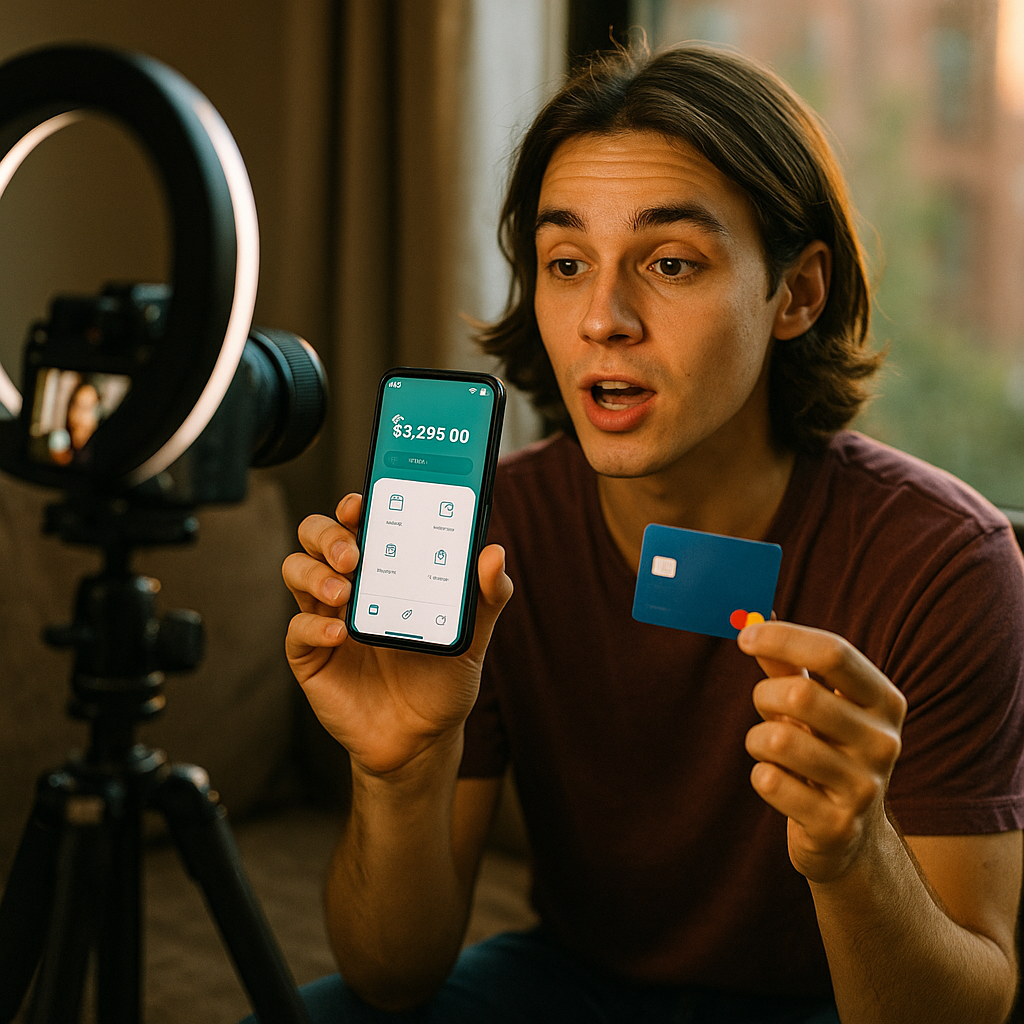
Only 24% of Gen Z trusts traditional banks, yet they’ll sit through a 90-second TikTok breaking down APY math from a stranger with a whiteboard. That gap is the entire opportunity behind the fintech TikTok playbook challenger banks have quietly perfected. Trust isn’t bought with logos anymore. It’s built one clear explanation at a time.
Why Explainer Creators Beat Traditional Finfluencers
The “finfluencer” era peaked and cracked. Regulators cracked down, audiences grew skeptical of anyone pushing crypto picks or credit card hacks with undisclosed sponsorships. What’s replaced it is quieter, less flashy, and frankly more useful: explainer creators. These are the people who make a 45-second video answering “why did my direct deposit post two days early” or “what actually happens to your money in a high-yield savings account.”
Challenger banks like Current, Chime, and Varo have leaned into this shift hard. Instead of paying a creator to hold up a debit card and say “life-changing,” they’re funding creators who break down fee structures, overdraft protection mechanics, and FDIC insurance limits in plain language. It’s less glamorous. It converts better.
Explainer content doesn’t just build awareness — it pre-answers the objections that kill signups during onboarding, which is exactly why challenger banks treat it as a compliance and conversion tool at once.
The Trust Deficit Gen Z Actually Has With Banking
Gen Z isn’t anti-bank. They’re anti-opacity. Ask any product marketer at a neobank and they’ll tell you the same thing: the number one churn driver isn’t price, it’s confusion. Surprise fees. Unclear hold periods. Vague “your application is under review” messaging with no timeline.
Explainer creators fill that gap because they operate outside the brand’s own voice. A 22-year-old creator saying “here’s what actually happens when you dispute a charge with Chime” carries more credibility than the same claim in an app notification. It’s third-party validation wearing a friendly, low-production-value costume.
This matches broader data on trust formation. According to Sprout Social’s research on social trust, younger consumers consistently rank peer and creator recommendations above brand-owned channels for financial and health decisions — categories where the stakes of being wrong feel personal.
What “Explainer” Actually Means in Practice
Not every finance TikTok is an explainer video. The format has specific mechanics that brands need to understand before briefing creators:
- Problem-first framing: Opens with the exact confusion the viewer already has, not a brand message.
- Visual proof: Screen recordings of the actual app, not stock footage or slides.
- No jargon without translation: “APY” gets defined in the same breath it’s used.
- A clear resolution: The viewer walks away knowing exactly what to do next.
- Minimal brand puffery: The product gets mentioned, not worshipped.
Compare this to a typical YouTube Shorts hook that leads with entertainment value first. Explainer content flips that priority — the payoff is clarity, not surprise. If you’re building creator briefs for this format, the hook principles from our Shorts algorithm guide still apply, just retooled for information delivery instead of entertainment loops.
How Challenger Banks Are Structuring These Campaigns
The operational model looks different from a typical influencer partnership. Most fintech brands running explainer programs at scale use a three-tier creator structure:
- Micro explainer creators (10K–100K followers): Niche personal finance accounts producing high-frequency, low-cost content. These handle volume — answering the long tail of “what if” questions.
- Mid-tier finance educators (100K–500K): Often former accountants, financial planners, or credit union employees who bring credibility plus reach. This is the bread and butter of most challenger bank programs.
- Anchor creators (500K+): Used sparingly, usually for major product launches or category-defining explainers, like “how neobanks are regulated differently than traditional banks.”
Current has reportedly built relationships with dozens of creators in the mid-tier bucket specifically because they can produce compliance-reviewed content quickly without the negotiation overhead of a celebrity-tier deal. Volume and consistency beat one viral hit, especially when the goal is sustained trust-building rather than a single acquisition spike.
Compliance Isn’t Optional — It’s the Whole Point
Here’s the tension every fintech marketer lives with: creator content needs to feel authentic and unscripted, but financial claims are regulated. The FTC’s endorsement guidelines apply fully to fintech creator content, and getting APY figures, fee disclosures, or FDIC/NCUA insurance claims wrong isn’t just a bad look, it’s a legal exposure.
Smart challenger banks have built creator content through a review layer that doesn’t kill authenticity:
- Pre-approved talking points instead of full scripts, so the creator’s voice stays intact.
- A compliance checklist covering rate accuracy, disclosure placement, and required disclaimers.
- Version-controlled content calendars so legal can track what’s live and when rates change.
- Clear disclosure language baked into the creator brief, not left to their discretion.
This is where a lot of brands stumble. They either over-script (killing the trust the format was built on) or under-review (creating regulatory risk). The winning approach treats compliance as a creative constraint, similar to how navigating platform moderation filters forces sharper, more specific content rather than vaguer messaging.
Format Details That Actually Move Metrics
Not all explainer formats perform equally. Based on patterns across neobank campaigns, a few structures consistently outperform generic “finance tips” content:
- “What happens when” videos: What happens when you overdraft, when a check bounces, when you close an account. These map directly to search intent and anxiety points.
- Side-by-side comparisons: Traditional bank fee structure vs. neobank, shown with real screenshots. Concrete, not abstract.
- “I switched banks” narratives: Personal story format wrapped around an explainer core. Builds emotional buy-in alongside the informational content.
- Myth-busting series: “Neobanks aren’t FDIC insured” — false, and creators debunking it directly address a real trust barrier.
The myth-busting format deserves extra attention because it’s doing double duty: educating while directly countering the skepticism that keeps Gen Z from switching. It’s not unlike how brands on Reddit have to rebuild power-user trust after AI skepticism spread through communities — the counter-narrative has to be as specific as the original doubt.
Measurement: What ROI Actually Looks Like Here
Standard influencer KPIs (views, engagement rate) undersell explainer content’s value. The metrics that matter more for fintech brands:
- App store search lift: Branded search spikes 24–72 hours after an explainer video performs well.
- Support ticket deflection: If a creator video explains overdraft fees clearly, support tickets on that topic often drop measurably in the following weeks.
- Onboarding completion rate: Users who watched an explainer before signing up tend to complete KYC and funding steps at higher rates, because they know what to expect.
- Cost per funded account: The metric that ultimately matters most to finance leadership, and the one explainer content tends to beat paid social on once you factor in creator lifetime output.
According to eMarketer’s creator economy research, financial services brands are among the fastest-growing categories in influencer spend, precisely because the category has such high explanation overhead compared to, say, a skincare product.
Where This Goes Wrong
A few recurring mistakes show up across fintech creator programs:
- Treating explainer creators like ad reads. If the creator’s video feels like a script with a product bolt-on, Gen Z audiences clock it instantly and trust evaporates.
- Ignoring rate change velocity. APY and fee content goes stale fast. A video with an outdated rate sitting live for months is a liability, not an asset.
- Skipping the disclosure. The FTC has specifically flagged fintech and crypto content for inadequate disclosure. This isn’t a gray area anymore.
- Over-indexing on one big-name creator. A single anchor partnership can’t sustain the ongoing “what happens when” content library that actually builds trust over time.
The brands getting this right treat explainer creator programs less like a campaign and more like an ongoing content operation, with the same rigor you’d apply to owned media, just with a creator’s face and voice attached. There’s a useful parallel in how B2B brands are approaching long-form thought leadership content — the format looks casual, but the underlying strategy is disciplined and repeatable.
Next Step
If your fintech brand hasn’t audited its top ten support ticket categories against your creator content library, start there. The overlap between “what confuses users most” and “what creators should explain next” is usually bigger than most marketing teams assume — and closing that gap is worth more than another viral hook.
FAQs
What makes explainer creator content different from standard influencer marketing for banks?
Explainer content prioritizes clarity and problem-solving over entertainment or lifestyle aspiration. It’s built around specific user confusions — fees, holds, disputes — rather than brand image, which is why it performs better on trust metrics for financial products.
How do challenger banks handle compliance with creator-generated financial content?
Most use pre-approved talking points rather than full scripts, paired with a compliance checklist covering rate accuracy and required disclosures, so legal teams can review content without stripping out the creator’s authentic voice.
What size creators work best for fintech explainer content?
Mid-tier creators (100K–500K followers) with finance backgrounds tend to deliver the best mix of credibility and reach. Micro-creators handle content volume and long-tail questions, while large anchor creators are reserved for major launches.
How should brands measure ROI on explainer creator campaigns?
Look beyond views and engagement. Track branded app search lift, support ticket deflection on topics covered, onboarding completion rates, and cost per funded account — metrics that tie directly to business outcomes.
What’s the biggest compliance risk in fintech creator marketing?
Outdated or inaccurate rate and fee claims left live after terms change, plus inadequate sponsorship disclosure. Both are directly within FTC enforcement scope for financial services content.
Top Influencer Marketing Agencies
The leading agencies shaping influencer marketing in 2026
Agencies ranked by campaign performance, client diversity, platform expertise, proven ROI, industry recognition, and client satisfaction. Assessed through verified case studies, reviews, and industry consultations.
Moburst

-
2

The Shelf
Boutique Beauty & Lifestyle Influencer AgencyA data-driven boutique agency specializing exclusively in beauty, wellness, and lifestyle influencer campaigns on Instagram and TikTok. Best for brands already focused on the beauty/personal care space that need curated, aesthetic-driven content.Clients: Pepsi, The Honest Company, Hims, Elf Cosmetics, Pure LeafVisit The Shelf → -
3

Audiencly
Niche Gaming & Esports Influencer AgencyA specialized agency focused exclusively on gaming and esports creators on YouTube, Twitch, and TikTok. Ideal if your campaign is 100% gaming-focused — from game launches to hardware and esports events.Clients: Epic Games, NordVPN, Ubisoft, Wargaming, Tencent GamesVisit Audiencly → -
4

Viral Nation
Global Influencer Marketing & Talent AgencyA dual talent management and marketing agency with proprietary brand safety tools and a global creator network spanning nano-influencers to celebrities across all major platforms.Clients: Meta, Activision Blizzard, Energizer, Aston Martin, WalmartVisit Viral Nation → -
5

The Influencer Marketing Factory
TikTok, Instagram & YouTube CampaignsA full-service agency with strong TikTok expertise, offering end-to-end campaign management from influencer discovery through performance reporting with a focus on platform-native content.Clients: Google, Snapchat, Universal Music, Bumble, YelpVisit TIMF → -
6

NeoReach
Enterprise Analytics & Influencer CampaignsAn enterprise-focused agency combining managed campaigns with a powerful self-service data platform for influencer search, audience analytics, and attribution modeling.Clients: Amazon, Airbnb, Netflix, Honda, The New York TimesVisit NeoReach → -
7

Ubiquitous
Creator-First Marketing PlatformA tech-driven platform combining self-service tools with managed campaign options, emphasizing speed and scalability for brands managing multiple influencer relationships.Clients: Lyft, Disney, Target, American Eagle, NetflixVisit Ubiquitous → -
8

Obviously
Scalable Enterprise Influencer CampaignsA tech-enabled agency built for high-volume campaigns, coordinating hundreds of creators simultaneously with end-to-end logistics, content rights management, and product seeding.Clients: Google, Ulta Beauty, Converse, AmazonVisit Obviously →