


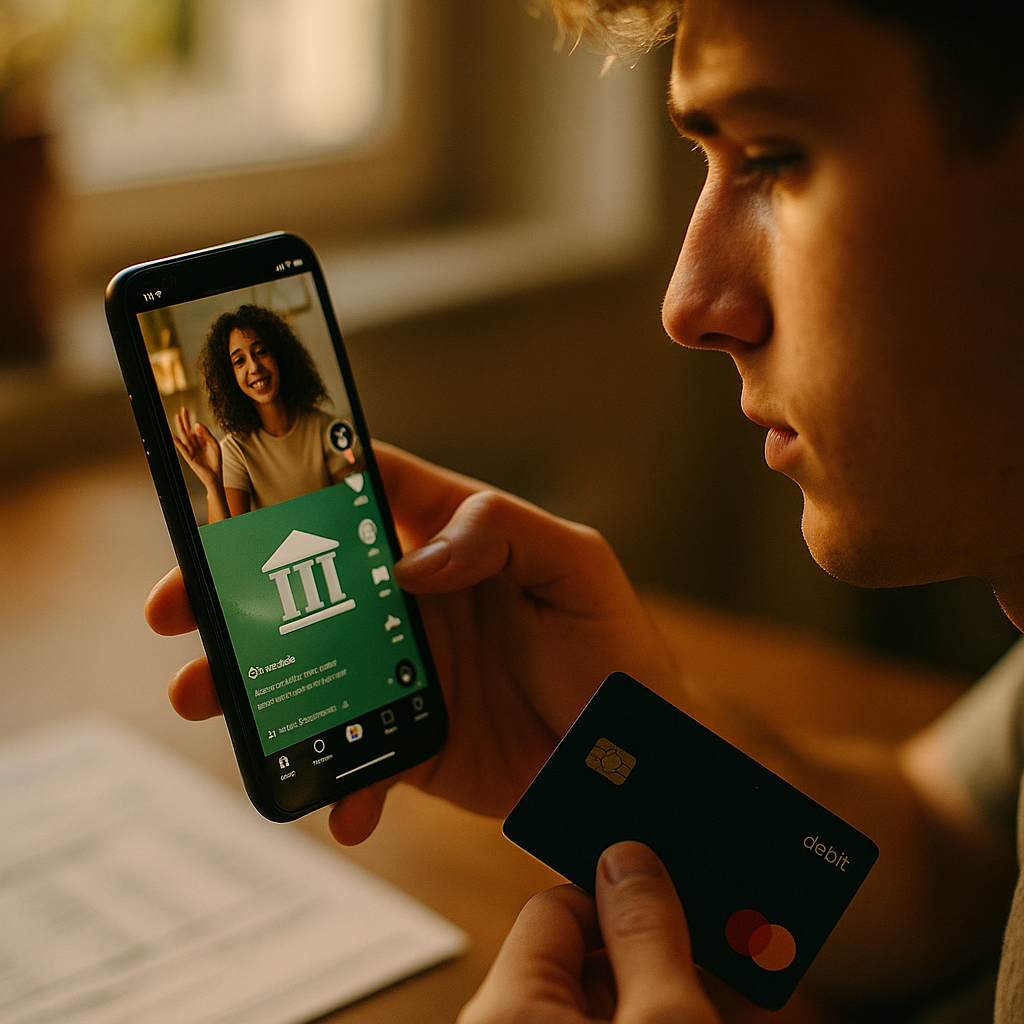
Only 20% of Gen Z say they trust traditional banks, yet they’ll sit through a 90-second TikTok on APY calculations from a creator with 40,000 followers. That’s not an accident. It’s a strategy. The fintech TikTok playbook challenger banks are running right now treats explainer creators as compliance-friendly trust engines, not just top-of-funnel noise makers.
If you’re running growth marketing for a neobank, a BNPL product, or a crypto-adjacent app, you’ve probably noticed the shift. Polished brand ads get skipped. A creator sitting on their bed explaining overdraft fees gets 2 million views and a comment section full of “wait, my bank does WHAT?” That gap is the whole opportunity.
Why Trust Is the Actual Product Being Sold
Banking is a low-interest, high-stakes category. Nobody wants to think about their checking account. But when they do think about it, they want certainty — will my paycheck clear on time, will I get hit with a surprise fee, is my money actually safe with an app that didn’t exist five years ago?
Challenger banks like Chime, Current, and Varo don’t have branch networks or decades of brand equity to lean on. What they have is speed, better UX, and a demographic that grew up getting financial advice from strangers on the internet instead of parents or advisors. So the product being marketed isn’t really the debit card or the savings APY. It’s confidence that the institution won’t screw you over.
Explainer creators work because they translate legal-approved language into something that sounds like a friend explaining a decision, not a bank pitching a product.
That translation layer is the entire value proposition. Compliance teams write disclosures nobody reads. Creators turn those disclosures into 60-second scripts that get watched three times.
What an “Explainer Creator” Actually Does
This isn’t influencer marketing in the traditional sense — no lifestyle flexing, no unboxing. Explainer creators in fintech occupy a specific niche: part educator, part translator, part skeptic-turned-convert. Think creators who built audiences explaining tax brackets, credit utilization, or how overdraft protection actually works.
The format usually follows a pattern:
- Open with a myth or a number that sounds wrong (“Your bank makes money when you overdraft — here’s how”)
- Break down the mechanism in plain language, often with on-screen text or a whiteboard-style graphic
- Compare it to what the sponsoring challenger bank does differently
- Close with a soft CTA, usually a referral link or promo code
Chime’s creator partnerships lean heavily into this structure. So does Current, which has worked with personal finance creators to explain early paycheck access instead of just advertising it as a feature. The creator does the heavy lifting of making a fee structure or APY calculation feel like useful information rather than an ad.
Compare that to the stitch-and-reaction format that’s dominated other categories. It’s a related mechanic — reacting to a claim, breaking it down, adding context — and if you haven’t tested it for financial content, it’s worth studying how it works in adjacent verticals. The stitch and duet playbook covers the format mechanics that translate surprisingly well to financial myth-busting.
The Compliance Tightrope Nobody Talks About Enough
Here’s where most brand marketers get nervous, and rightly so. Financial services content is one of the most regulated categories on any platform. The FTC’s endorsement guidelines require clear disclosure of paid relationships, and financial promotions carry additional scrutiny because bad information can cause real harm, not just brand embarrassment.
Challenger banks that do this well build creator content through a structured review pipeline: legal-approved talking points, banned phrases (guaranteed returns, risk-free, anything implying FDIC coverage where it doesn’t apply), and a sign-off step before anything goes live. Some brands provide creators with a “compliance card” — a one-pager listing what can and can’t be said about APY, fees, and insurance coverage.
The brands getting burned skip this step. A creator says “this account is basically free money” and now legal is fielding questions from a regulator. It happens more than people admit publicly.
If you’re building this pipeline from scratch, budget real time for it. Compliance review isn’t a bottleneck to route around — it’s the reason this channel is defensible at all.
Picking Creators: Micro Beats Macro, Almost Every Time
Fintech brands running this playbook consistently choose creators in the 10K-100K follower range over mega-influencers. Why? Trust density. A creator with 40,000 followers who consistently posts money tips has an audience that actually watches for the content, not the personality. Engagement rates on niche financial explainer content routinely beat lifestyle influencer posts, according to data Sprout Social has published on niche creator performance trends.
There’s also a cost logic here. Micro-creators are cheaper per post, which means you can run dozens of them simultaneously and A/B test messaging across audience segments — students, gig workers, young parents — instead of betting the entire budget on one creator whose audience may not even match your target user.
A useful screening checklist for fintech creator vetting:
- Does their existing content show financial literacy, or just financial opinions?
- Have they previously disclosed paid partnerships correctly and consistently?
- Does their comment section show engaged, skeptical followers (good) or bot-like praise (bad)?
- Are they willing to go through a script review process without pushing back on every note?
That last point matters more than people expect. Creators who resist compliance review are a liability, no matter how good their engagement numbers look.
The Format That’s Working Right Now
Three formats are outperforming everything else in the challenger bank creator playbook:
- “Bank fee autopsy” videos — a creator breaks down a real (anonymized) fee statement, explains what triggered each charge, then shows how a fee-free alternative works.
- “POV: your first paycheck” series — aimed squarely at Gen Z entering the workforce, walking through direct deposit timing, early access features, and budgeting basics.
- Myth-vs-reality duets — reacting to viral claims about credit scores, overdrafts, or “banks hate this one trick” style content with actual data.
The common thread: none of these lead with the product. They lead with information the viewer didn’t have, then position the product as the natural conclusion. That sequencing is what separates an explainer creator post from a disguised ad, at least in the eyes of the algorithm and the audience.
For brands newer to short-form creator formats generally, the mechanics of hook construction translate across platforms. The hooks and loops framework built for YouTube Shorts applies almost directly to how fintech explainer videos need to open in the first three seconds to survive the scroll.
Measuring What Actually Matters
Vanity metrics don’t cut it in this category. A video with 3 million views and zero app installs is a marketing team’s nightmare during a budget review. The metrics that matter for challenger banks running this playbook:
- Cost per funded account, not cost per click. A funded account (one with a direct deposit or minimum balance) is the real conversion event.
- Time-to-fund after click, which tells you whether the explainer content built enough trust to shorten the decision cycle.
- Comment sentiment, tracked qualitatively. Are people asking genuine follow-up questions, or are they calling out the content as an obvious ad?
- Referral code attribution, since most challenger banks run creator-specific promo codes that make attribution far cleaner than most verticals get.
One thing worth flagging: TikTok Shop-style commission structures, which reward creators based on downstream performance rather than flat fees, are starting to show up in fintech affiliate deals too. If you’re curious how commission tiering works elsewhere, the mechanics in commission tier structures offer a transferable model, even though fintech products obviously can’t use shoppable video the same way retail does.
Cost per funded account is the only metric that survives a serious budget conversation with finance leadership.
Where Brands Get This Wrong
A few recurring mistakes show up across challenger bank creator programs:
Treating creators like media buys instead of collaborators. Handing a creator a script with zero flexibility kills the authenticity that makes the format work. The best programs give creators a compliance framework, not a word-for-word script.
Ignoring platform-specific disclosure requirements. TikTok’s branded content tools, Instagram’s paid partnership labels, and FTC disclosure rules all need to line up. Brands that rely on creators to self-police disclosure are taking on risk they don’t need to.
Underestimating the shelf life of explainer content. A well-made explainer video about overdraft fees doesn’t decay the way a trend-jacked meme does. These videos keep getting discovered via search and stitches for months. That’s a reason to invest in quality over quantity, and to negotiate usage rights that let brands repost top performers as paid ads.
Not testing creator content as paid media. Organic reach is nice, but the real leverage comes when a top-performing explainer video gets boosted through TikTok’s Spark Ads or Instagram’s partnership ad tools, extending its life well past the organic curve. TikTok’s own advertising platform makes this handoff from organic creator content to paid media fairly seamless if the usage rights are negotiated up front.
What’s Next for This Playbook
Expect more challenger banks to build always-on creator programs rather than one-off campaigns. That means retainer deals with a bench of vetted explainer creators, a standing content review pipeline, and creative briefs tied to seasonal financial moments — tax season, back-to-school budgeting, holiday spending. Some are already experimenting with creator-hosted live sessions answering real user questions, a format that borrows heavily from the AMA structure used in community platforms like Discord stage channel AMAs.
The brands that treat explainer creators as a long-term trust infrastructure, not a campaign line item, are the ones building the kind of Gen Z loyalty that survives the next viral banking scandal.
Next step: Before your next creator brief goes out, build the compliance card first. A tight, pre-approved list of what can and can’t be said about fees, APY, and insurance coverage will save more budget and more headaches than any targeting refinement ever will.
FAQs
What makes an explainer creator different from a typical finance influencer?
Explainer creators focus on breaking down mechanisms — how fees work, how APY is calculated, how direct deposit timing functions — rather than giving generic financial advice or promoting lifestyle content. The format is educational first, promotional second.
How do challenger banks stay compliant with creator content?
Most run a structured review pipeline: pre-approved talking points, banned phrases, and legal sign-off before publishing. FTC endorsement guidelines require clear disclosure of paid partnerships, and financial claims face additional scrutiny beyond standard influencer marketing rules.
Why do micro-creators outperform larger influencers in fintech marketing?
Micro-creators, typically in the 10K-100K follower range, tend to have more engaged, trust-dense audiences that actively watch for financial content. They’re also cheaper per post, allowing brands to test messaging across multiple audience segments simultaneously.
What metrics should brands track for fintech creator campaigns?
Cost per funded account, time-to-fund after click, comment sentiment, and referral code attribution matter more than views or likes. A funded account with direct deposit is the real conversion event, not a click or an app install.
Can explainer content be reused as paid advertising?
Yes, provided usage rights are negotiated upfront. Top-performing organic explainer videos are frequently boosted through TikTok’s Spark Ads or similar partnership ad tools to extend reach beyond the organic curve.
FAQs
What makes an explainer creator different from a typical finance influencer?
Explainer creators focus on breaking down mechanisms — how fees work, how APY is calculated, how direct deposit timing functions — rather than giving generic financial advice or promoting lifestyle content. The format is educational first, promotional second.
How do challenger banks stay compliant with creator content?
Most run a structured review pipeline: pre-approved talking points, banned phrases, and legal sign-off before publishing. FTC endorsement guidelines require clear disclosure of paid partnerships, and financial claims face additional scrutiny beyond standard influencer marketing rules.
Why do micro-creators outperform larger influencers in fintech marketing?
Micro-creators, typically in the 10K-100K follower range, tend to have more engaged, trust-dense audiences that actively watch for financial content. They’re also cheaper per post, allowing brands to test messaging across multiple audience segments simultaneously.
What metrics should brands track for fintech creator campaigns?
Cost per funded account, time-to-fund after click, comment sentiment, and referral code attribution matter more than views or likes. A funded account with direct deposit is the real conversion event, not a click or an app install.
Can explainer content be reused as paid advertising?
Yes, provided usage rights are negotiated upfront. Top-performing organic explainer videos are frequently boosted through TikTok’s Spark Ads or similar partnership ad tools to extend reach beyond the organic curve.
Top Influencer Marketing Agencies
The leading agencies shaping influencer marketing in 2026
Agencies ranked by campaign performance, client diversity, platform expertise, proven ROI, industry recognition, and client satisfaction. Assessed through verified case studies, reviews, and industry consultations.
Moburst

-
2

The Shelf
Boutique Beauty & Lifestyle Influencer AgencyA data-driven boutique agency specializing exclusively in beauty, wellness, and lifestyle influencer campaigns on Instagram and TikTok. Best for brands already focused on the beauty/personal care space that need curated, aesthetic-driven content.Clients: Pepsi, The Honest Company, Hims, Elf Cosmetics, Pure LeafVisit The Shelf → -
3

Audiencly
Niche Gaming & Esports Influencer AgencyA specialized agency focused exclusively on gaming and esports creators on YouTube, Twitch, and TikTok. Ideal if your campaign is 100% gaming-focused — from game launches to hardware and esports events.Clients: Epic Games, NordVPN, Ubisoft, Wargaming, Tencent GamesVisit Audiencly → -
4

Viral Nation
Global Influencer Marketing & Talent AgencyA dual talent management and marketing agency with proprietary brand safety tools and a global creator network spanning nano-influencers to celebrities across all major platforms.Clients: Meta, Activision Blizzard, Energizer, Aston Martin, WalmartVisit Viral Nation → -
5

The Influencer Marketing Factory
TikTok, Instagram & YouTube CampaignsA full-service agency with strong TikTok expertise, offering end-to-end campaign management from influencer discovery through performance reporting with a focus on platform-native content.Clients: Google, Snapchat, Universal Music, Bumble, YelpVisit TIMF → -
6

NeoReach
Enterprise Analytics & Influencer CampaignsAn enterprise-focused agency combining managed campaigns with a powerful self-service data platform for influencer search, audience analytics, and attribution modeling.Clients: Amazon, Airbnb, Netflix, Honda, The New York TimesVisit NeoReach → -
7

Ubiquitous
Creator-First Marketing PlatformA tech-driven platform combining self-service tools with managed campaign options, emphasizing speed and scalability for brands managing multiple influencer relationships.Clients: Lyft, Disney, Target, American Eagle, NetflixVisit Ubiquitous → -
8

Obviously
Scalable Enterprise Influencer CampaignsA tech-enabled agency built for high-volume campaigns, coordinating hundreds of creators simultaneously with end-to-end logistics, content rights management, and product seeding.Clients: Google, Ulta Beauty, Converse, AmazonVisit Obviously →