


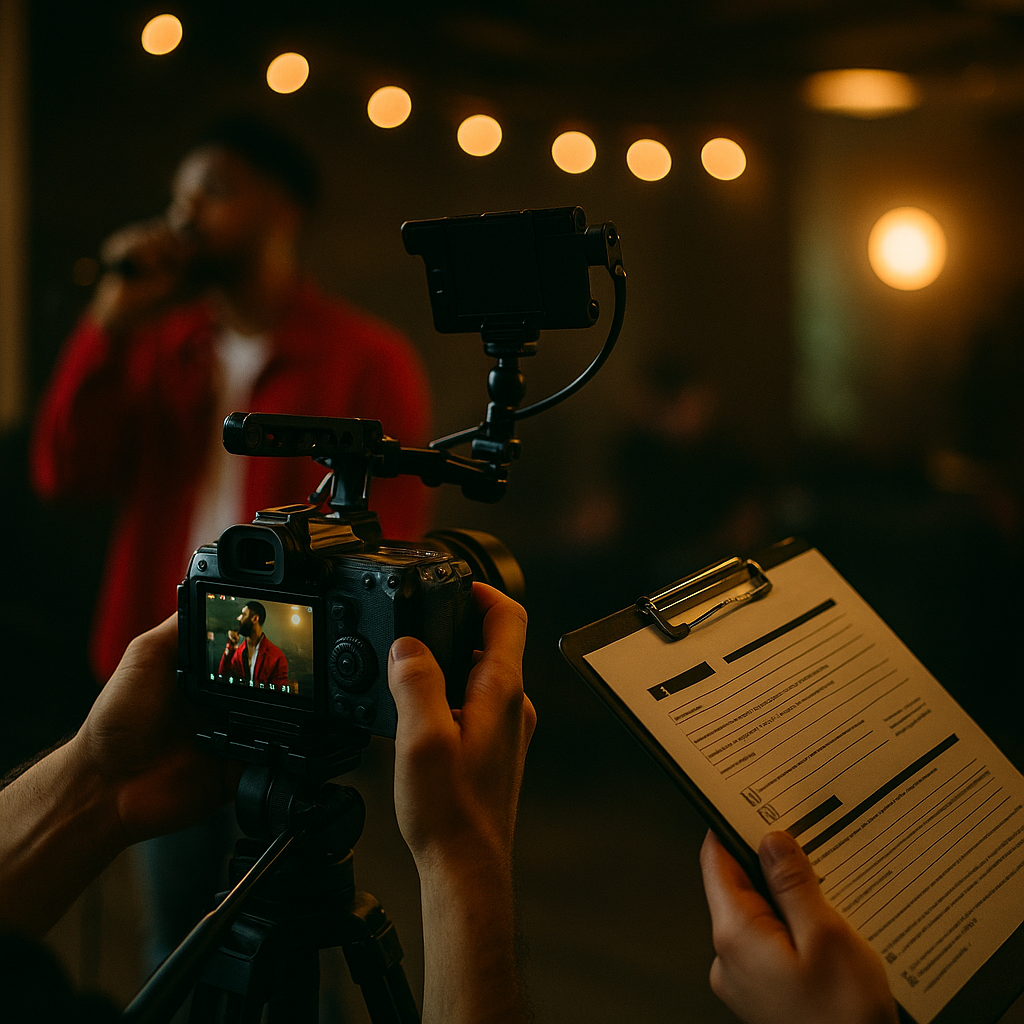
When Gap dropped its creator-led music video campaign and Hawaiian Tropic followed with a sun-soaked, narrative-driven short, both pieces racked up millions of organic views without a single “swipe up” prompt. The music-video brand spot revival is real, and brands that master the brief will dominate earned media this cycle.
Why Entertainment-First Is Winning Again
Ad fatigue numbers are brutal. HubSpot research consistently shows that audiences skip or ignore interruptive formats at rates above 65%. Meanwhile, content that feels native to a platform’s entertainment ecosystem earns organic sharing that no media budget can simply purchase. The calculus shifted: a well-produced 90-second creator-led music video that earns 4 million organic views delivers CPMs that programmatic display cannot touch.
What changed is the brief. Brands used to hand creators a product shot, three mandatory talking points, and a disclosure checklist. Now the brief opens with a narrative premise. The product earns its place inside the story rather than interrupting it.
Brands that brief for entertainment first and product integration second are consistently outperforming interruptive formats on share rate, save rate, and earned reach — the three metrics that signal genuine audience pull.
Anatomy of a Music-Video Brand Brief
The briefs coming out of Gap’s agency partners and Hawaiian Tropic’s production team share a structural pattern worth reverse-engineering. They are not shorter than traditional briefs. They are differently ordered.
1. The narrative premise comes first. Before any brand asset or product mention, the brief defines an emotional world: a feeling, a season, a cultural tension. Gap’s recent work lives inside the feeling of collective joy — street corners, spontaneous dance, the city as a stage. Hawaiian Tropic anchors in sensory nostalgia: golden light, beach culture, the permission to slow down.
2. The creator’s voice is the production pillar. These briefs do not prescribe camera angles or choreography. They define a tonal guardrail (aspirational but not aspirational-adjacent, warm but not saccharine) and then give the creator authorship of execution. This is not laziness on the brand’s part. It is a deliberate strategy to protect the authenticity signal that makes organic sharing happen.
3. Product integration is storyboarded, not scripted. The brief specifies when and how the product appears — wearable during the climax movement sequence, applied during the golden-hour scene transition — without scripting the words around it. This distinction matters enormously for FTC compliance, as we will get to shortly.
4. Music licensing is a first-class line item. Not an afterthought. Music selection drives share behavior on short-form platforms in ways that visual treatment alone cannot. Both Gap and Hawaiian Tropic work with music supervision partners early in production, not post. If your brief doesn’t include a music direction section with licensed-or-original guidance, it is incomplete.
For teams building multi-channel production pipelines, the principles around briefing for CTV and mobile social from a single shoot apply directly here. Music-video formats are among the most asset-efficient content types available when the brief is structured correctly from day one.
FTC Compliance Without Killing the Format
Here is where many brand teams flinch. The entertainment-first premise feels, instinctively, like it conflicts with transparent disclosure. It does not. But you have to understand why, or you will either over-disclose in ways that damage the content’s performance or under-disclose in ways that create regulatory and reputational risk.
The FTC’s endorsement guidelines require clear and conspicuous disclosure of material connections between creators and brands. They do not require the disclosure to be the first thing a viewer reads or hears. They require it to be impossible to miss. On TikTok and Instagram, the platform’s native paid partnership label, placed at the top of the post, satisfies this requirement when used correctly. On YouTube, a verbal disclosure within the first 30 seconds plus a description tag is the standard.
The practical insight here: disclosure placement and content entertainment value are not in competition. A 90-second music video with a clear “Paid partnership with Hawaiian Tropic” tag still earns organic shares from viewers who experience the content as entertainment. The research on this is clear. Our own coverage of disclosure as a performance driver shows that transparent disclosure, handled well, can actually increase audience trust and extend content shelf life.
What brands must avoid is burying disclosure inside lengthy description copy, using ambiguous language like “Thanks to [Brand]” instead of “Paid partnership,” or relying on a hashtag alone on platforms where that tag is not prominent. Those are the gaps that trigger FTC scrutiny, not the entertainment-first format itself.
Production Partner Selection: What the Brief Should Demand
The production partner conversation is where entertainment-first campaigns either gain momentum or stall out. Traditional brand production shops build for control. Music-video-native production partners build for feel. You need both in the room, which is why the briefing process itself has to do the integration work.
Brands running these formats at scale are looking for production partners who can operate in what the industry is now calling a “one-shoot, multi-format” model. A single shoot day captures the long-form music video anchor, the vertical short-form cut for TikTok and Reels, the still assets for brand and creator social, and sometimes the CTV-ready version. The economics only work if the brief specifies all required outputs before the shoot, not after. The guidance on mobile-to-CTV asset pipelines from a single shoot is directly applicable to this format.
Look for production partners who ask about the platform’s native sharing mechanics before they ask about the brand’s visual guidelines. That question sequencing tells you where their creative instincts sit.
Creator Selection Criteria for This Format
Not every creator with a strong following is suited to a music-video brand spot. The format demands specific capabilities that follower count does not measure.
- Musicality and movement literacy: Can the creator embody a sonic environment, not just react to it? This shows up in their organic content, not in their media kit.
- Narrative composure on camera: Music-video formats require holding a character or emotional arc across multiple takes and setups. Interview-style creators may not translate.
- Audience alignment with the brand’s emotional world: Not demographic alignment. Emotional alignment. A creator whose community gathers around irony and detachment will not authentically carry a brand narrative built on warmth and sincerity.
- Prior disclosure compliance history: Before any entertainment-first brief goes out, the brand’s influencer team should audit the creator’s past sponsored content for disclosure consistency. One FTC-adjacent past mistake is a manageable conversation. A pattern is a risk the format cannot absorb.
Teams managing this at scale will benefit from the frameworks around brand consistency across multiple creators without sacrificing what makes each creator’s voice work.
The creator brief for a music-video brand spot is, in effect, a casting document. Skill fit, tonal fit, and compliance history all carry equal weight. Discount any one of them and the format’s ROI case collapses.
Measuring What Actually Matters
Entertainment-first formats generate measurement anxiety in teams accustomed to tracking direct-response metrics. The answer is not to abandon performance measurement. It is to expand the metric stack.
Share rate is the primary signal for earned reach efficiency. Save rate indicates content with lasting utility or emotional resonance, both valuable for brand equity. View-through rate on the long-form anchor reveals whether the narrative is holding. Branded search lift, measured via incrementality testing, connects entertainment content to lower-funnel intent in ways that last-click attribution cannot see.
Platforms like TikTok Ads Manager and Meta Business Suite now offer brand lift study tools that can isolate the awareness and consideration impact of entertainment-first formats separately from direct-response campaigns. Run them. The data will make your next budget conversation significantly easier.
For teams thinking about how this content performs in AI-assisted discovery environments, creator briefs structured for LLM citation offer a forward-looking framework for ensuring entertainment-first content earns discoverability beyond social feeds.
One more data point worth anchoring: according to Statista, video content consistently accounts for the majority of internet traffic, and creator-led video formats continue to outperform brand-produced equivalents on engagement metrics across age demographics. The entertainment-first revival is not a trend. It is a structural shift in how audiences decide what they share.
The Brief Is the Strategy
Everything above collapses into one operational truth: the quality of your brief determines whether this format works. Brands that hand creators a product spec sheet with a music note emoji at the bottom will not produce the next Gap spot. Brands that open the brief with an emotional world, build the narrative architecture around the creator’s voice, storyboard the product integration, solve the music licensing question early, and bake disclosure language into the deliverables checklist will.
Start by auditing your current brief template. If the product description appears before the narrative premise, reorder it. That single change will shift every conversation that follows.
Frequently Asked Questions
What is a music-video brand spot and how does it differ from a standard creator ad?
A music-video brand spot is a creator-produced short-form video that prioritizes narrative and entertainment value over direct product promotion. Unlike a standard creator ad, which typically leads with a product demonstration or call to action, a music-video brand spot integrates the product organically into a story or performance arc. The goal is to produce content audiences choose to watch and share, rather than content they tolerate before accessing something else.
How do brands maintain FTC compliance in entertainment-first creator content?
FTC compliance in entertainment-first formats depends on using platform-native disclosure tools correctly and prominently. On TikTok and Instagram, the paid partnership label at the top of the post satisfies the “clear and conspicuous” standard. On YouTube, verbal disclosure within the first 30 seconds combined with description-field language is required. The entertainment quality of the content does not reduce or eliminate the disclosure requirement. Brands should include specific disclosure language and placement requirements as mandatory deliverables in every creator brief.
What production formats work best for music-video brand spots?
The most efficient production model is a single-shoot, multi-format approach: one shoot day captures a long-form anchor video (60 to 120 seconds), a vertical short-form cut for TikTok and Reels, still assets for social, and a CTV-ready version where applicable. Music supervision should be included as a first-class production line item, not an afterthought. This model reduces total production cost while maximizing the number of platform-ready assets generated per campaign.
How should brands select creators for music-video brand spot campaigns?
Creator selection for this format should prioritize musicality, narrative composure on camera, and emotional alignment with the brand’s creative world over raw follower count. Brands should also audit the creator’s history of sponsored content disclosure before contracting. One past disclosure inconsistency is manageable; a pattern of non-compliance represents a regulatory and reputational risk that the format cannot absorb, regardless of how large the creator’s audience is.
What metrics should brands use to measure entertainment-first creator content?
The core metric stack for entertainment-first formats includes share rate (as the primary proxy for earned reach efficiency), save rate (indicating lasting value or emotional resonance), view-through rate on the long-form anchor, and branded search lift measured through incrementality testing. Platform brand lift studies available through TikTok Ads Manager and Meta Business Suite can isolate awareness and consideration impact from direct-response campaign data. Last-click attribution models undercount the impact of entertainment-first formats significantly and should not be used as the sole measurement framework.
Top Influencer Marketing Agencies
The leading agencies shaping influencer marketing in 2026
Agencies ranked by campaign performance, client diversity, platform expertise, proven ROI, industry recognition, and client satisfaction. Assessed through verified case studies, reviews, and industry consultations.
Moburst

-
2

The Shelf
Boutique Beauty & Lifestyle Influencer AgencyA data-driven boutique agency specializing exclusively in beauty, wellness, and lifestyle influencer campaigns on Instagram and TikTok. Best for brands already focused on the beauty/personal care space that need curated, aesthetic-driven content.Clients: Pepsi, The Honest Company, Hims, Elf Cosmetics, Pure LeafVisit The Shelf → -
3

Audiencly
Niche Gaming & Esports Influencer AgencyA specialized agency focused exclusively on gaming and esports creators on YouTube, Twitch, and TikTok. Ideal if your campaign is 100% gaming-focused — from game launches to hardware and esports events.Clients: Epic Games, NordVPN, Ubisoft, Wargaming, Tencent GamesVisit Audiencly → -
4

Viral Nation
Global Influencer Marketing & Talent AgencyA dual talent management and marketing agency with proprietary brand safety tools and a global creator network spanning nano-influencers to celebrities across all major platforms.Clients: Meta, Activision Blizzard, Energizer, Aston Martin, WalmartVisit Viral Nation → -
5

The Influencer Marketing Factory
TikTok, Instagram & YouTube CampaignsA full-service agency with strong TikTok expertise, offering end-to-end campaign management from influencer discovery through performance reporting with a focus on platform-native content.Clients: Google, Snapchat, Universal Music, Bumble, YelpVisit TIMF → -
6

NeoReach
Enterprise Analytics & Influencer CampaignsAn enterprise-focused agency combining managed campaigns with a powerful self-service data platform for influencer search, audience analytics, and attribution modeling.Clients: Amazon, Airbnb, Netflix, Honda, The New York TimesVisit NeoReach → -
7

Ubiquitous
Creator-First Marketing PlatformA tech-driven platform combining self-service tools with managed campaign options, emphasizing speed and scalability for brands managing multiple influencer relationships.Clients: Lyft, Disney, Target, American Eagle, NetflixVisit Ubiquitous → -
8

Obviously
Scalable Enterprise Influencer CampaignsA tech-enabled agency built for high-volume campaigns, coordinating hundreds of creators simultaneously with end-to-end logistics, content rights management, and product seeding.Clients: Google, Ulta Beauty, Converse, AmazonVisit Obviously →