


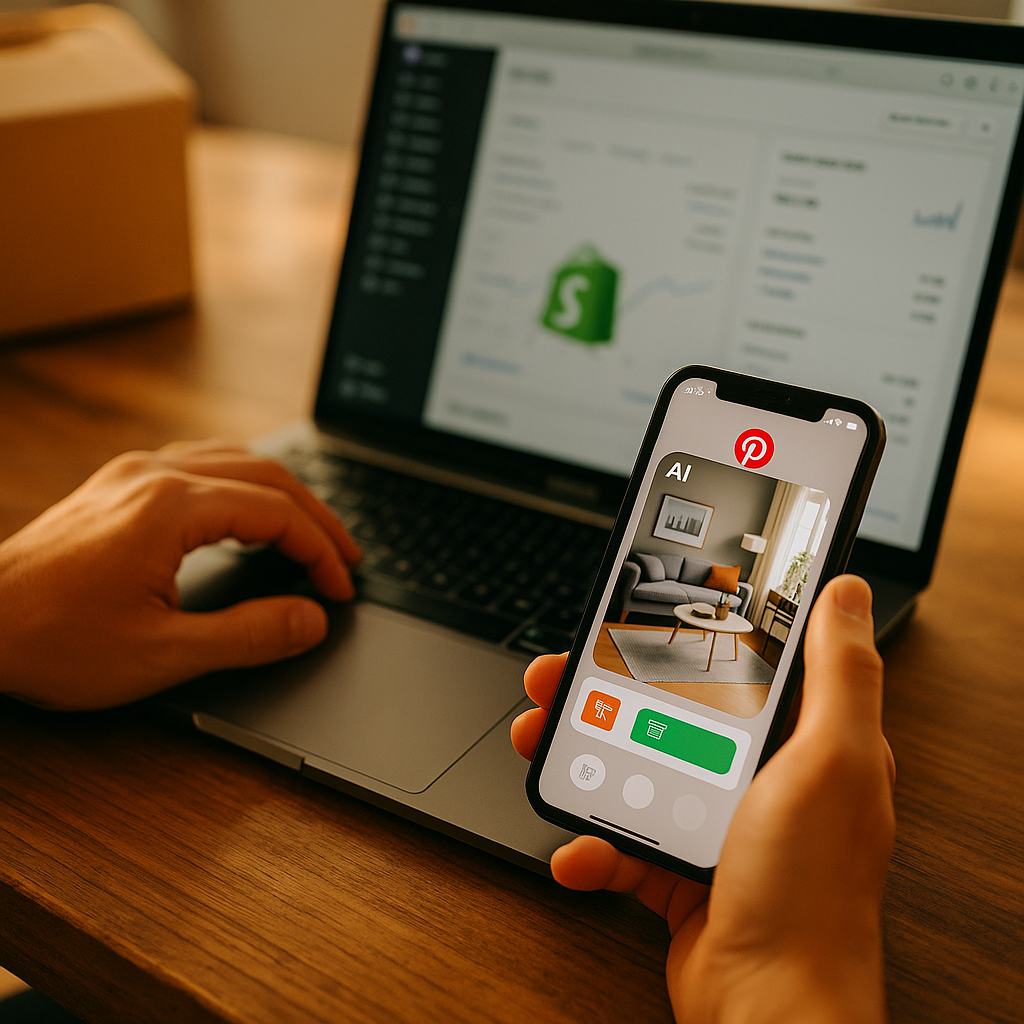
Pinterest Converts Intent Into Revenue Faster Than Any Other Visual Platform
Over 96% of Pinterest’s top searches are unbranded, meaning users arrive without a brand in mind. That is an extraordinary opening for small and mid-sized brands running creator-adjacent campaigns through the Pinterest AI ad suite and Shopify integration. If you are not already treating Pinterest as a bottom-of-funnel asset, you are misreading the platform entirely.
What “Creator-Adjacent” Actually Means on Pinterest
Pinterest does not operate like TikTok or Instagram, where creator content and paid content occupy the same emotional register. On Pinterest, users are planners. They are building boards, comparing options, and deciding. Creator-adjacent campaigns here lean on creator aesthetics and formats without requiring a formal influencer relationship for every placement.
Think of it this way: a skincare brand might work with three creators to produce aspirational “morning routine” content. That content then gets amplified through Pinterest’s Performance+ suite, retargeted to lookalike audiences, and linked directly to a Shopify product page. The creator provides the trust signal. Pinterest AI does the distribution work. Shopify closes the sale.
This differs sharply from how brands approach Instagram live shopping attribution, where the creator is the primary conversion engine. On Pinterest, the platform’s search and discovery architecture does much of the heavy lifting.
Breaking Down Pinterest’s Expanded AI Ad Tools
Pinterest launched its Performance+ suite as a direct challenge to Meta Advantage+ and Google’s Performance Max. The core components worth understanding for SMBs are:
- Performance+ campaigns: Automated campaign type that uses AI to optimize targeting, bidding, and creative selection simultaneously. SMBs with limited media-buying bandwidth benefit most here.
- Performance+ creative: Pinterest’s AI generates background variations, adjusts aspect ratios, and tests copy overlays against your existing creative assets. No additional production budget required.
- Predictive audience targeting: The platform’s algorithm identifies users who exhibit intent signals similar to your existing converters, pulling from board saves, search history, and click patterns.
- Shopping Spotlight: A curated placement format that surfaces products alongside editorially-adjacent content. This is where creator-adjacent positioning becomes structurally built into the ad unit itself.
Pinterest users are 7x more likely to say the platform is the most influential in their purchase journey compared to other social platforms. For SMBs selling lifestyle, home, fashion, food, or wellness products, this is not a supplementary channel. It is the channel.
For teams already running Meta creator affiliate programs, the operational logic is familiar: connect your product catalog, let AI optimize placements, and measure against revenue outcomes. Pinterest’s version simply arrives with a user base already in purchase-intent mode.
Configuring the Shopify Integration: What Actually Matters
The Pinterest and Shopify integration has matured significantly. Here is the configuration sequence that drives performance, not just connectivity:
Step 1: Install and verify the Pinterest Sales Channel app. Available natively inside Shopify, this app syncs your product catalog automatically. Verify the feed is pulling live inventory, prices, and product images. Stale catalog data is the single biggest cause of Pinterest ad underperformance for SMBs.
Step 2: Enable the Pinterest Tag via Shopify’s native pixel manager. Do not install the tag manually. Use Shopify’s built-in pixel management to fire the Pinterest tag server-side where possible, which improves match rates and reduces data loss from browser-side blocking. This matters enormously for attribution accuracy.
Step 3: Configure catalog groups for campaign segmentation. Do not send your entire product catalog into a single campaign. Group products by margin tier, audience intent stage, or seasonal priority. A high-margin bestseller should not compete for budget against a clearance item in the same ad group.
Step 4: Set conversion events at the product page level, not just checkout. Pinterest’s AI needs mid-funnel signals to optimize effectively. Configure “Add to Cart” and “View Category” events alongside the standard purchase event. This gives the algorithm more data points to work with, especially for newer accounts with low conversion volume.
Step 5: Use Shopify’s UTM auto-tagging. Pinterest’s native analytics are improving but remain incomplete. Cross-reference Pinterest conversion data with Shopify’s order attribution and Google Analytics 4 to get a full picture. Relying solely on Pinterest’s reported ROAS will typically overstate performance by 15-25%.
Building the Creator-Adjacent Campaign Architecture
The phrase “creator-adjacent” requires a specific operational definition for campaign setup. You are not necessarily running paid posts from a creator’s account. You are using content that mirrors creator aesthetics: lifestyle imagery, real-use-context photography, aspirational but accessible styling. Pinterest’s audience responds to this framing because it matches the organic content they already save.
For SMBs running this without a large creator roster, there are two practical approaches. First, license UGC from platforms like Billo or Insense, and use that content as your Performance+ creative inputs. Second, use creators to produce content specifically formatted for Pinterest (vertical, save-worthy, text-on-image friendly) under a paid partnership, then run that content as a promoted pin directly from the brand account.
The second approach creates a cleaner attribution chain. Compare this to how TikTok Shop creator briefs are structured for AI-driven discovery. The principle is similar: brief the creator for the platform’s native discovery mechanics, not for general brand awareness.
When structuring the campaign, use two ad groups within each Performance+ campaign: one for prospecting (predictive audiences, interest expansion) and one for retargeting (users who visited your Shopify store but did not convert). Keep budgets separate. Retargeting on Pinterest converts at significantly higher rates but has a smaller addressable audience. Letting the AI blend the two audiences under a single ad group will bias toward lower-intent users.
Measurement Framework for SMB Teams
Pinterest’s attribution window defaults to a 30-day click, 1-day view model. For SMBs with lower traffic volume, this is generally appropriate. But if your product has a longer consideration cycle (furniture, jewelry, premium kitchenware), extend the view-through window to 7 days to capture more of the platform’s genuine influence on purchase decisions.
Track these metrics as your primary KPIs:
- Save-to-click ratio: High saves with low clicks suggest strong creative resonance but weak conversion intent. Adjust landing page relevance or product page copy.
- Outbound click-through rate (CTR): Pinterest benchmarks this at 0.2-0.5% for standard shopping ads. Performance+ campaigns with good creative typically hit 0.4-0.8%.
- Return on ad spend (ROAS) by catalog group: Not blended ROAS. Break it down by product category so you can reallocate budget toward your highest-performing segments.
- New customer rate: Pinterest’s strength is top-of-funnel discovery. If your new customer percentage from Pinterest is below 60%, you are underutilizing its prospecting capability.
Do not benchmark Pinterest ROAS against Meta. Pinterest’s longer consideration cycle means attributed revenue often appears 7-14 days after initial exposure. A campaign that looks like a 1.8x ROAS in week one may close at 3.2x by week three.
For teams also running shoppable formats across other platforms, the measurement logic from TikTok’s shoppable ad formats applies here: build a cross-platform attribution model before launching, not after.
Risk Factors and What to Watch
A few operational risks specific to this setup deserve attention. Pinterest’s catalog sync can lag during high-traffic periods, meaning ads may serve against out-of-stock products. Enable Shopify’s automatic pause rules for out-of-stock items inside the Pinterest Sales Channel app. This is not a default setting.
Creative fatigue on Pinterest moves slower than on Meta or TikTok because users encounter pins across sessions that may span weeks. But when fatigue hits, it hits hard. Frequency caps matter. Refresh creative assets every six to eight weeks for active campaigns, and rotate your creator-adjacent imagery seasonally to stay aligned with how users are building boards in your category.
Finally, FTC disclosure requirements apply even on Pinterest. Promoted pins and paid partnership content must be clearly labeled. Review the FTC’s endorsement guidelines and ensure any creator-produced content used in paid placements carries appropriate disclosure, regardless of which account it runs from.
For a broader view of how AI is reshaping product discovery across platforms, eMarketer’s commerce media research provides useful benchmarking context on where Pinterest sits relative to Amazon and Meta in purchase-intent environments. And for the technical integration layer, Shopify’s Help Center and Pinterest Business both maintain up-to-date documentation on the catalog feed requirements and tag implementation specifics.
If your creative process involves AI-generated assets, review how platforms are handling AI content signals. There is growing evidence that creator authenticity signals affect distribution, as covered in the context of AI-generated video suppression on major platforms.
Run a catalog audit and tag verification before you touch the campaign settings. Everything else builds on those two foundations, and every hour spent on media strategy is wasted if the feed is broken or the pixel is misfiring.
FAQs
Does the Pinterest and Shopify integration work for SMBs with small product catalogs?
Yes. The Pinterest Sales Channel app works effectively with catalogs as small as 10-15 products. Smaller catalogs actually perform better when properly segmented by margin and intent stage, since the algorithm has fewer variables to optimize. Focus on your top five to ten SKUs for initial campaign testing before expanding to the full catalog.
What budget should an SMB allocate to Pinterest Performance+ campaigns?
For meaningful data within 30 days, most SMBs should allocate a minimum of $1,500-$2,500 per month, split roughly 70/30 between prospecting and retargeting. Below this threshold, the AI optimization engine lacks sufficient conversion signal to exit the learning phase. Budget scaling should follow ROAS validation, not calendar timing.
How is Pinterest creator-adjacent advertising different from running a standard Pinterest shopping ad?
Standard shopping ads pull directly from the product catalog and display in a transactional format. Creator-adjacent campaigns use lifestyle imagery, UGC-style content, or creator-produced assets as the primary visual, with the shopping tag embedded. This format drives higher save rates and stronger brand association while still linking directly to the Shopify product page for conversion.
Can a brand run Pinterest ads directly from a creator’s account?
Pinterest allows brands to run ads using content from a creator’s profile through its paid partnership tools, similar to Meta’s branded content ad format. The creator must be tagged in the post and the brand must be granted ad access. This format tends to perform well in Shopping Spotlight placements because it carries the creator’s organic engagement history as a relevance signal.
How does Pinterest attribution compare to Shopify’s native order attribution?
Pinterest typically reports a higher ROAS than Shopify’s last-click model because it uses a multi-touch window that credits view-through and assist clicks. Expect a 15-25% gap between Pinterest-reported ROAS and Shopify-attributed revenue. Build a reconciliation process using UTM parameters and GA4 to understand the true contribution. Neither number is “wrong” — they measure different things.
Top Influencer Marketing Agencies
The leading agencies shaping influencer marketing in 2026
Agencies ranked by campaign performance, client diversity, platform expertise, proven ROI, industry recognition, and client satisfaction. Assessed through verified case studies, reviews, and industry consultations.
Moburst

-
2

The Shelf
Boutique Beauty & Lifestyle Influencer AgencyA data-driven boutique agency specializing exclusively in beauty, wellness, and lifestyle influencer campaigns on Instagram and TikTok. Best for brands already focused on the beauty/personal care space that need curated, aesthetic-driven content.Clients: Pepsi, The Honest Company, Hims, Elf Cosmetics, Pure LeafVisit The Shelf → -
3

Audiencly
Niche Gaming & Esports Influencer AgencyA specialized agency focused exclusively on gaming and esports creators on YouTube, Twitch, and TikTok. Ideal if your campaign is 100% gaming-focused — from game launches to hardware and esports events.Clients: Epic Games, NordVPN, Ubisoft, Wargaming, Tencent GamesVisit Audiencly → -
4

Viral Nation
Global Influencer Marketing & Talent AgencyA dual talent management and marketing agency with proprietary brand safety tools and a global creator network spanning nano-influencers to celebrities across all major platforms.Clients: Meta, Activision Blizzard, Energizer, Aston Martin, WalmartVisit Viral Nation → -
5

The Influencer Marketing Factory
TikTok, Instagram & YouTube CampaignsA full-service agency with strong TikTok expertise, offering end-to-end campaign management from influencer discovery through performance reporting with a focus on platform-native content.Clients: Google, Snapchat, Universal Music, Bumble, YelpVisit TIMF → -
6

NeoReach
Enterprise Analytics & Influencer CampaignsAn enterprise-focused agency combining managed campaigns with a powerful self-service data platform for influencer search, audience analytics, and attribution modeling.Clients: Amazon, Airbnb, Netflix, Honda, The New York TimesVisit NeoReach → -
7

Ubiquitous
Creator-First Marketing PlatformA tech-driven platform combining self-service tools with managed campaign options, emphasizing speed and scalability for brands managing multiple influencer relationships.Clients: Lyft, Disney, Target, American Eagle, NetflixVisit Ubiquitous → -
8

Obviously
Scalable Enterprise Influencer CampaignsA tech-enabled agency built for high-volume campaigns, coordinating hundreds of creators simultaneously with end-to-end logistics, content rights management, and product seeding.Clients: Google, Ulta Beauty, Converse, AmazonVisit Obviously →