


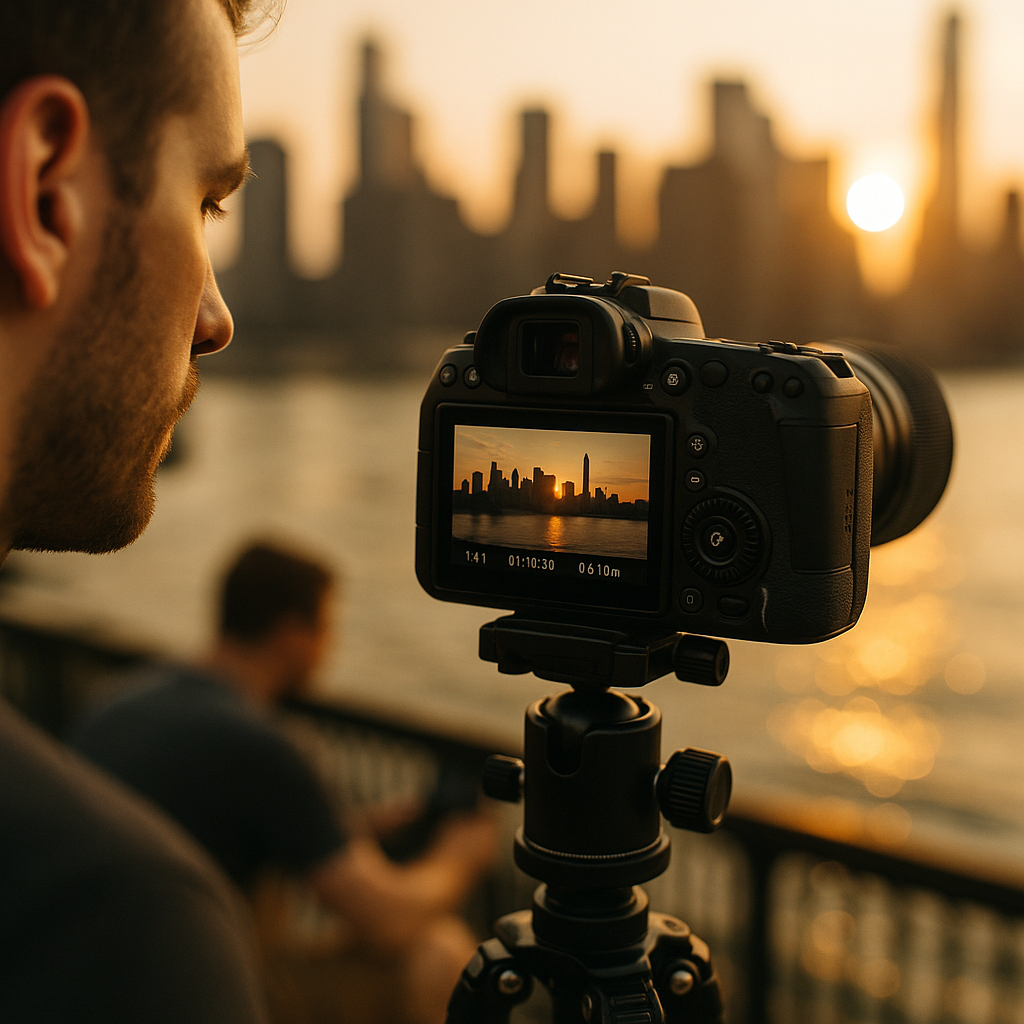
Twelve hours of concrete curing, compressed into nine seconds. That’s the pitch. The time-lapse format has quietly become one of the highest-retention tools in a brand’s creative arsenal, yet most marketers still treat it as a novelty transition rather than a storytelling strategy. If your process is your product’s best argument, why are you still hiding it in a 90-second explainer nobody finishes?
Time-lapse and hyper-lapse aren’t the same tool, and conflating them is where most briefs go wrong. Time-lapse compresses stationary footage over a long duration — a bakery proofing dough overnight, a mural going up over three days. Hyper-lapse adds camera movement through space, walking a warehouse floor or driving a supply route while frames skip forward. Both manipulate time. Only one manipulates distance. Get this distinction wrong in a creative brief and you’ll end up with mismatched shot lists, wasted production days, and an editor asking you what you actually wanted.
Why Process Content Is Outperforming Polish
Audiences are fatigued by finished products. They’ve seen the hero shot, the studio lighting, the perfect unboxing a thousand times. What they haven’t seen enough of is the messy, slow, unglamorous middle: the twelve hours of curing, the six-week fabric sourcing, the overnight fermentation. Time-lapse exists precisely to make that invisible labor visible, and visible labor builds trust in a way finished polish never will.
Process transparency isn’t a nice-to-have anymore — it’s becoming the receipt consumers demand before they’ll believe a quality claim.
This aligns with broader shifts in how brands are expected to substantiate claims. According to eMarketer research on consumer trust, authenticity signals now outperform traditional brand messaging in driving purchase consideration among younger demographics. A time-lapse of your actual manufacturing floor does more credibility work than a paragraph of copy claiming “handcrafted quality.” It’s the same instinct behind before-and-after briefs that win views while staying compliant — show, don’t assert.
The Brief: What Actually Needs to Be Specified
Most creative briefs for this format fail because they specify the concept (“show our roasting process”) but not the mechanics. A time-lapse brief needs to answer questions a standard video brief never touches:
- Interval and duration: Are we shooting one frame every 2 seconds for a 6-hour process, or every 10 seconds for a 3-day build? This determines camera setup, storage needs, and whether you need a dedicated intervalometer or can rely on native phone time-lapse tools.
- Fixed vs. moving frame: Is this a locked-off tripod shot (time-lapse) or a walk-and-shoot sequence (hyper-lapse)? Mixing the two within one sequence without a clear transition plan looks like an editing mistake, not a stylistic choice.
- Lighting continuity: Natural light shifts across hours change color temperature dramatically. Brief whether you want that visible (dusk-to-dawn drama) or whether you need supplemental lighting to keep it consistent.
- Sound design ownership: Time-lapse footage is silent by default. Who’s building the audio layer — a licensed track, ambient recreation, or voiceover explaining what’s happening?
- Platform cut-downs: A 45-second hero time-lapse for YouTube needs a 9-second TikTok teaser and a Reels version with captions burned in. Specify these as deliverables up front, not as an afterthought during editing.
Skip any one of these and you’ll be back in a revision loop, paying for reshoots that a tighter brief would have prevented. This is the same discipline required in POV video storytelling briefs — the format only works when the technical spec is as detailed as the creative concept.
Hyper-Lapse: When Movement Is the Story
Hyper-lapse earns its keep when the story is about scale or journey, not just duration. A logistics brand walking through a distribution center. A construction firm driving the length of a project site. A skincare brand moving through a lab, bench to bench, ingredient to finished formula. The moving camera implies momentum and scope in a way a static time-lapse can’t.
The catch: hyper-lapse is technically harder and more expensive. It requires either specialized stabilization rigs or software-based stabilization in post (tools like Adobe After Effects’ warp stabilizer or dedicated apps like Hyperlapse Pro), and even then, footage often needs multiple takes to nail the walking pace and frame rate. Budget for this. Don’t assume a creator with a gimbal can freehand it in one take, no matter how confident they sound on the call.
Briefing Creators, Not Just Production Crews
Here’s where it gets interesting for influencer marketers specifically. Time-lapse and hyper-lapse aren’t exclusively studio-production formats. Creators shoot these natively, constantly, often better than agency crews because they understand platform pacing instinctively. A creator filming their own product-making process — a candle maker, a small-batch food brand, a tattoo artist — already has the instinct for compression. Your job as the brand is to direct that instinct toward your narrative goals without killing the authenticity that made the creator worth partnering with in the first place.
That means briefing for outcome, not shot list. Tell the creator what emotional beat you need at the 3-second mark (curiosity), the 15-second mark (payoff), and the final frame (product reveal or CTA). Let them choose their own interval settings and camera handling. This mirrors the approach outlined in product-as-character content briefs — you’re briefing a relationship between subject and camera, not dictating technical minutiae to someone who already knows their gear better than you do.
The best time-lapse briefs specify emotional beats at three timestamps and leave the technical execution to the person holding the camera.
Where This Format Breaks Down
A few recurring failure modes worth flagging before you greenlight a shoot:
- Compression without payoff. Twenty seconds of accelerated footage with no clear “reveal” moment reads as filler, not craft. Every time-lapse needs a before-state and an after-state the viewer can register instantly.
- Over-scoring. Trending audio slapped onto process footage without regard for pacing kills the hypnotic quality that makes the format work. The rhythm of the cuts should match the rhythm of the track, not fight it.
- No context caption. Viewers scrolling past need one line telling them what they’re looking at within the first second. “6 months of leather aging, compressed to 12 seconds” does more work than any visual alone.
- FTC and disclosure gaps. If a creator is compressing a sponsored process and implying a result (weight loss, skin improvement, performance gain) within that compression, functional claims rules still apply. Review the FTC’s endorsement guidance before greenlighting anything that implies an outcome, and cross-reference your brief against the standards in our functional claims compliance guide.
Measuring What Actually Matters
Completion rate is the north star metric for this format, more than for almost any other content type. Time-lapse content lives or dies on whether people watch to the reveal. Track average watch time against your platform’s typical benchmark: on Instagram Reels and TikTok, process content in this format frequently posts completion rates 20-30% above standard product demos, based on aggregate performance patterns agencies report through platforms like Sprout Social’s analytics tools.
Saves and shares matter more than comments here. Process content gets bookmarked as reference material (“how did they do that?”) far more than it gets discussed in a comment thread. If your reporting dashboard weights comments heavily, you’ll undervalue this format. Weight saves instead — it’s a stronger signal of perceived utility, similar to how carousel briefs built for saves outperform comment-bait formats on ROI, even when engagement totals look smaller on paper.
Don’t ignore rewatch behavior either. Platforms like Meta Business and TikTok Ads Manager both surface loop and replay metrics — time-lapse content, because of its hypnotic pacing, tends to get rewatched at rates standard talking-head content rarely hits. That’s a strong secondary signal for creative teams deciding whether to scale a format into a paid boost.
Where It Fits in a Broader Content Calendar
Time-lapse shouldn’t be your only format, obviously. It’s a proof mechanism, best deployed alongside narrative formats that carry emotional weight, like day-in-the-life briefs, and authority-building formats like myth-busting video series. Think of it as the format you deploy when you need to answer “how is this actually made” without a single line of spoken claim. It’s evidence content. Treat it that way in your planning calendar, and slot it where your funnel needs trust-building, not top-of-funnel awareness.
Start with one process worth showing, brief the emotional beats and technical spec separately, and measure completion and saves before you scale spend. That’s the whole playbook — the rest is just execution discipline.
FAQs
What’s the difference between time-lapse and hyper-lapse?
Time-lapse uses a fixed camera position to compress a long stationary process into seconds. Hyper-lapse adds camera movement through space while still compressing time, making it better suited to journeys, tours, or scale-driven stories.
How long should a time-lapse brand video be?
Most performing versions run 9 to 45 seconds depending on platform. TikTok and Reels favor the shorter end; YouTube and owned channels can support longer cuts if the process itself has multiple visually distinct stages worth showing.
Do creators need special equipment to shoot hyper-lapse content?
Not always. Many creators use gimbals or stabilization apps, and software-based stabilization in post-production can smooth out handheld footage. Budget for extra takes regardless, since hyper-lapse pacing is difficult to nail on the first attempt.
Does time-lapse content need an FTC disclosure?
Yes, if it’s sponsored and implies any functional outcome or result. Standard influencer disclosure rules apply regardless of how the footage is edited or compressed.
What metrics should brands prioritize for this format?
Completion rate, saves, and rewatch/loop rate matter more than comment volume. This format performs as reference content, so bookmarking behavior is a stronger signal than conversation.
FAQs
What’s the difference between time-lapse and hyper-lapse?
Time-lapse uses a fixed camera position to compress a long stationary process into seconds. Hyper-lapse adds camera movement through space while still compressing time, making it better suited to journeys, tours, or scale-driven stories.
How long should a time-lapse brand video be?
Most performing versions run 9 to 45 seconds depending on platform. TikTok and Reels favor the shorter end; YouTube and owned channels can support longer cuts if the process itself has multiple visually distinct stages worth showing.
Do creators need special equipment to shoot hyper-lapse content?
Not always. Many creators use gimbals or stabilization apps, and software-based stabilization in post-production can smooth out handheld footage. Budget for extra takes regardless, since hyper-lapse pacing is difficult to nail on the first attempt.
Does time-lapse content need an FTC disclosure?
Yes, if it’s sponsored and implies any functional outcome or result. Standard influencer disclosure rules apply regardless of how the footage is edited or compressed.
What metrics should brands prioritize for this format?
Completion rate, saves, and rewatch/loop rate matter more than comment volume. This format performs as reference content, so bookmarking behavior is a stronger signal than conversation.
Top Influencer Marketing Agencies
The leading agencies shaping influencer marketing in 2026
Agencies ranked by campaign performance, client diversity, platform expertise, proven ROI, industry recognition, and client satisfaction. Assessed through verified case studies, reviews, and industry consultations.
Moburst

-
2

The Shelf
Boutique Beauty & Lifestyle Influencer AgencyA data-driven boutique agency specializing exclusively in beauty, wellness, and lifestyle influencer campaigns on Instagram and TikTok. Best for brands already focused on the beauty/personal care space that need curated, aesthetic-driven content.Clients: Pepsi, The Honest Company, Hims, Elf Cosmetics, Pure LeafVisit The Shelf → -
3

Audiencly
Niche Gaming & Esports Influencer AgencyA specialized agency focused exclusively on gaming and esports creators on YouTube, Twitch, and TikTok. Ideal if your campaign is 100% gaming-focused — from game launches to hardware and esports events.Clients: Epic Games, NordVPN, Ubisoft, Wargaming, Tencent GamesVisit Audiencly → -
4

Viral Nation
Global Influencer Marketing & Talent AgencyA dual talent management and marketing agency with proprietary brand safety tools and a global creator network spanning nano-influencers to celebrities across all major platforms.Clients: Meta, Activision Blizzard, Energizer, Aston Martin, WalmartVisit Viral Nation → -
5

The Influencer Marketing Factory
TikTok, Instagram & YouTube CampaignsA full-service agency with strong TikTok expertise, offering end-to-end campaign management from influencer discovery through performance reporting with a focus on platform-native content.Clients: Google, Snapchat, Universal Music, Bumble, YelpVisit TIMF → -
6

NeoReach
Enterprise Analytics & Influencer CampaignsAn enterprise-focused agency combining managed campaigns with a powerful self-service data platform for influencer search, audience analytics, and attribution modeling.Clients: Amazon, Airbnb, Netflix, Honda, The New York TimesVisit NeoReach → -
7

Ubiquitous
Creator-First Marketing PlatformA tech-driven platform combining self-service tools with managed campaign options, emphasizing speed and scalability for brands managing multiple influencer relationships.Clients: Lyft, Disney, Target, American Eagle, NetflixVisit Ubiquitous → -
8

Obviously
Scalable Enterprise Influencer CampaignsA tech-enabled agency built for high-volume campaigns, coordinating hundreds of creators simultaneously with end-to-end logistics, content rights management, and product seeding.Clients: Google, Ulta Beauty, Converse, AmazonVisit Obviously →