


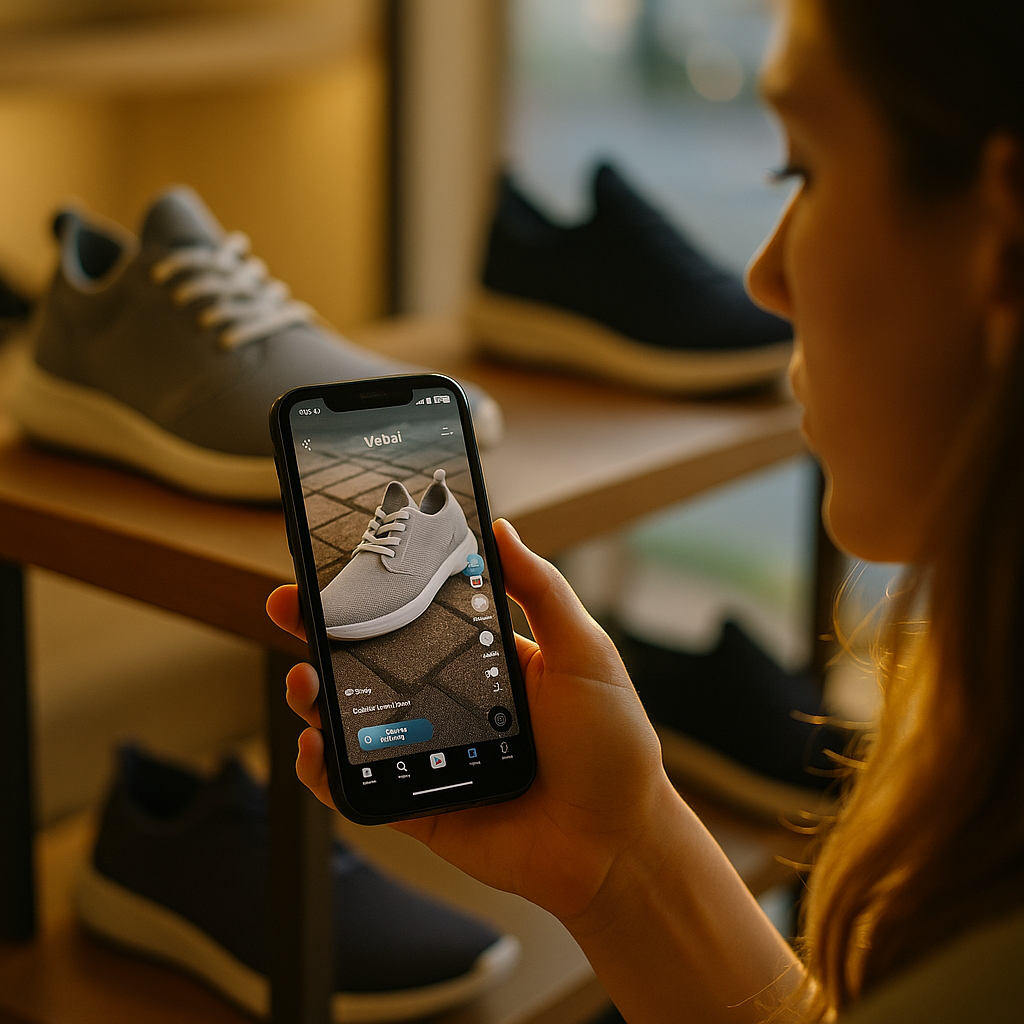
One waterproof shoe demo. One creator. Zero paid boost. That’s all it took for Vessi to stumble into a TikTok Shop playbook that now drives a meaningful share of its direct-to-consumer revenue. If you’re still treating TikTok Shop as a side hustle rather than a referral engine, Vessi’s story should change your mind.
The brand didn’t set out to build a system. It set out to sell shoes. But the mechanics behind what happened next — one video, one spike, one repeatable loop — are worth dissecting for any brand strategist trying to make sense of creator-led commerce in 2026.
The Video That Started It
The now-famous clip was unglamorous: a creator stepping into a puddle, wearing Vessi’s knit sneakers, showing dry socks afterward. No script. No studio lighting. Just a wet sidewalk and a proof point that couldn’t be faked on camera.
That’s the thing about waterproof product demos — they’re inherently verifiable. You can’t fake dry feet after standing in a puddle for thirty seconds. The format did the persuasion work that a paid ad never could, because the audience trusted their own eyes over any brand claim.
The single highest-converting asset in Vessi’s TikTok Shop catalog wasn’t produced by an agency — it was a fifteen-second demo that any creator could replicate with a puddle and a phone.
The video didn’t go viral in the traditional sense of hitting some enormous view count overnight. It performed steadily, kept getting recommended, and — critically — kept converting inside TikTok Shop’s native checkout. That combination of durability and conversion is what separates a moment from a mechanism.
Why One Video Wasn’t Enough (and Why That’s the Point)
Here’s where most brands get it wrong. They see a viral hit and try to recreate it exactly: same creator, same script, same shot. Vessi did the opposite. It treated the demo as a template, not a masterpiece, and opened the format to dozens of creators through TikTok’s affiliate program.
Each creator brought their own spin — different puddles, different neighborhoods, different punchlines — but the core proof point stayed identical. Step in water. Show dry socks. Tag the product. That repeatability is what turned a lucky break into infrastructure.
This is the same logic behind creator camp models that other DTC brands have used to scale earned media: give creators a proven structure, not a rigid script, and let volume do the rest.
The Referral Engine, Explained
What Vessi actually built is a low-friction commission loop. Here’s the mechanical breakdown:
- Open affiliate access: Almost any creator can join Vessi’s TikTok Shop affiliate program without lengthy vetting, lowering the barrier to content volume.
- Commission-only economics: Creators earn a percentage of sales rather than flat fees, meaning Vessi pays for performance, not impressions.
- Native checkout: Every video links directly into TikTok Shop, collapsing the path from “watch” to “buy” into a couple of taps.
- Sample seeding: Free or discounted product goes out to creators willing to film the puddle test, keeping content costs near zero relative to output.
- Algorithmic amplification: TikTok’s recommendation system rewards proven formats with more reach, so winning demos get pushed further without extra spend.
None of these levers are exotic. What’s notable is how tightly they interlock. Take away the native checkout and the content still entertains, but it stops converting. Take away the commission structure and creators lose the incentive to keep filming variations. The engine only runs because every part reinforces the next.
Why TikTok Shop Rewards This Model Specifically
TikTok Shop isn’t just a storefront bolted onto a social app. Its algorithm actively favors content that has already proven it can convert, pushing high-performing product videos to new audiences long after the original posting date. That’s a meaningfully different distribution logic than Instagram or a traditional affiliate network, where reach decays fast after the first 48 hours.
eMarketer has tracked social commerce as one of the fastest-growing slices of U.S. ecommerce spend, and TikTok Shop specifically has become a proving ground for brands testing whether creator content can replace, not just supplement, paid acquisition. Vessi’s demo videos benefit from exactly this dynamic: a piece of content posted months ago can still be actively driving purchases today because the algorithm hasn’t stopped recommending it.
Compare that to how GARVEE structured its TikTok Shop Super Brand Day around concentrated bursts of creator content timed to a single event. Vessi’s model is the opposite: it’s not a campaign, it’s a standing operation that never really turns off.
What Brand Strategists Should Actually Steal From This
Let’s get practical. If you’re running influencer programs and want to replicate the mechanics rather than the exact tactic, here’s what matters.
Pick a product truth that’s visually undeniable. Waterproofing works because it’s binary and demonstrable on camera. Ask yourself: does your product have a moment like that? A skincare texture change, a battery life test, a fit comparison? If the proof requires narration instead of visual evidence, the format will underperform.
Build the referral loop before you chase virality. Vessi’s affiliate infrastructure was already in place when the demo video took off, which is why the brand could capitalize on it immediately instead of scrambling to onboard creators after the fact. Set up your TikTok Shop affiliate settings and commission tiers before you need them, not after a video pops.
Let format win over follower count. Vessi didn’t chase mega-influencers for this play. Micro and mid-tier creators with modest followings produced most of the volume, because the format itself — not personal brand equity — was doing the persuading. This mirrors what Unilever found when prioritizing interest over follower count in its own creator discovery process.
When the product proof is strong enough, the creator becomes a distribution vehicle rather than the main attraction — which is precisely why this model scales so cheaply.
The Risk Side Nobody Talks About
Open affiliate programs sound great until you consider the compliance exposure. Every creator posting under an affiliate link is making implicit or explicit product claims on your behalf, and the FTC’s endorsement guidelines apply regardless of whether the creator has ten thousand followers or ten million. Waterproofing claims are especially sensitive because they’re testable — if a creator overstates durability or submersion time, that’s a liability sitting inside your affiliate content, not a stray influencer post you can quietly ignore.
Brands scaling affiliate volume need disclosure language built into onboarding, not left to creator discretion. A one-line reminder in a creator brief isn’t sufficient once you’re running dozens of active affiliates simultaneously. This is the same operational discipline discussed in authenticity risk lessons from other creator campaigns that skipped guardrails and paid for it in backlash.
Practical mitigation steps worth building into any TikTok Shop affiliate program:
- Require #ad or #TikTokShopPartner disclosure as a non-negotiable onboarding condition, not a suggestion.
- Set explicit claim boundaries (e.g., “waterproof up to X minutes”) that creators must stick to, backed by your own product testing data.
- Audit top-performing affiliate content monthly, since the videos driving the most sales are also the ones with the most compliance exposure if something goes wrong.
- Keep a takedown process ready for creators who exaggerate claims, even unintentionally.
Measuring the Engine, Not Just the Moment
Vanity metrics don’t tell you if a referral engine is actually working. What matters is whether the loop keeps producing without constant brand intervention. A few signals worth tracking if you’re building something similar:
- Affiliate content velocity: Are new creators posting variations weekly without being prompted, or has output stalled after the initial wave?
- Revenue concentration: Is sales volume spread across many creators (healthy, durable) or dependent on the original viral video (fragile)?
- Conversion decay: How quickly does a given video’s conversion rate drop as it ages, and does new content refresh the pipeline before that happens?
- Cost per acquisition versus paid channels: Commission payouts should be benchmarked against your blended CAC on paid social to prove the model is actually cheaper, not just more novel.
Tools like Sprout Social and native TikTok Shop analytics can surface most of this, but the real work is building a dashboard that ties affiliate content directly to revenue rather than engagement. Engagement is a vanity signal here. Revenue attribution is the only metric that justifies scaling the program further.
Where This Model Hits Its Ceiling
No engine runs forever without maintenance. Formats fatigue. Puddle-test content eventually becomes predictable, and TikTok users are quick to scroll past anything that feels templated rather than genuine. Vessi’s next challenge isn’t finding more creators, it’s finding the next visually undeniable proof point before the current one wears out.
That’s a lesson that applies well beyond footwear. Brands leaning hard into a single winning format need a pipeline of format experiments running in parallel, the same way J.Crew rotated seasonal creator formats rather than leaning on one campaign structure indefinitely.
The Takeaway
Vessi’s real innovation wasn’t the puddle video. It was having the affiliate infrastructure and commission economics ready to absorb and multiply that moment instantly. If you want a TikTok Shop referral engine of your own, find your product’s most undeniable visual proof, build the affiliate and compliance rails first, and let volume — not virality — do the compounding.
FAQs
What made Vessi’s TikTok Shop strategy different from a typical influencer campaign?
Vessi built an open, commission-based affiliate structure before its viral moment happened, allowing dozens of creators to replicate a proven demo format instantly rather than waiting on brand-led production cycles.
Why did the waterproof shoe demo format work so well on TikTok Shop?
The product claim was visually verifiable in real time — dry socks after standing in water — which removed the need for persuasive copy or brand credibility and let viewers trust their own eyes.
How does TikTok Shop’s algorithm support long-term creator referral programs?
TikTok Shop continues recommending high-converting product videos well after their initial posting date, unlike platforms where reach drops off quickly, giving proven formats extended commercial life.
What compliance risks come with open TikTok Shop affiliate programs?
Every affiliate creator makes implicit product claims covered under FTC endorsement guidelines, so brands need mandatory disclosure requirements and clear claim boundaries built into onboarding, not left to individual discretion.
Can smaller brands replicate Vessi’s referral engine model?
Yes, provided the brand has a genuinely demonstrable product truth, functioning affiliate commission infrastructure, and a willingness to prioritize content volume from micro-creators over a handful of expensive, high-follower partnerships.
FAQs
What made Vessi’s TikTok Shop strategy different from a typical influencer campaign?
Vessi built an open, commission-based affiliate structure before its viral moment happened, allowing dozens of creators to replicate a proven demo format instantly rather than waiting on brand-led production cycles.
Why did the waterproof shoe demo format work so well on TikTok Shop?
The product claim was visually verifiable in real time — dry socks after standing in water — which removed the need for persuasive copy or brand credibility and let viewers trust their own eyes.
How does TikTok Shop’s algorithm support long-term creator referral programs?
TikTok Shop continues recommending high-converting product videos well after their initial posting date, unlike platforms where reach drops off quickly, giving proven formats extended commercial life.
What compliance risks come with open TikTok Shop affiliate programs?
Every affiliate creator makes implicit product claims covered under FTC endorsement guidelines, so brands need mandatory disclosure requirements and clear claim boundaries built into onboarding, not left to individual discretion.
Can smaller brands replicate Vessi’s referral engine model?
Yes, provided the brand has a genuinely demonstrable product truth, functioning affiliate commission infrastructure, and a willingness to prioritize content volume from micro-creators over a handful of expensive, high-follower partnerships.
Top Influencer Marketing Agencies
The leading agencies shaping influencer marketing in 2026
Agencies ranked by campaign performance, client diversity, platform expertise, proven ROI, industry recognition, and client satisfaction. Assessed through verified case studies, reviews, and industry consultations.
Moburst

-
2

The Shelf
Boutique Beauty & Lifestyle Influencer AgencyA data-driven boutique agency specializing exclusively in beauty, wellness, and lifestyle influencer campaigns on Instagram and TikTok. Best for brands already focused on the beauty/personal care space that need curated, aesthetic-driven content.Clients: Pepsi, The Honest Company, Hims, Elf Cosmetics, Pure LeafVisit The Shelf → -
3

Audiencly
Niche Gaming & Esports Influencer AgencyA specialized agency focused exclusively on gaming and esports creators on YouTube, Twitch, and TikTok. Ideal if your campaign is 100% gaming-focused — from game launches to hardware and esports events.Clients: Epic Games, NordVPN, Ubisoft, Wargaming, Tencent GamesVisit Audiencly → -
4

Viral Nation
Global Influencer Marketing & Talent AgencyA dual talent management and marketing agency with proprietary brand safety tools and a global creator network spanning nano-influencers to celebrities across all major platforms.Clients: Meta, Activision Blizzard, Energizer, Aston Martin, WalmartVisit Viral Nation → -
5

The Influencer Marketing Factory
TikTok, Instagram & YouTube CampaignsA full-service agency with strong TikTok expertise, offering end-to-end campaign management from influencer discovery through performance reporting with a focus on platform-native content.Clients: Google, Snapchat, Universal Music, Bumble, YelpVisit TIMF → -
6

NeoReach
Enterprise Analytics & Influencer CampaignsAn enterprise-focused agency combining managed campaigns with a powerful self-service data platform for influencer search, audience analytics, and attribution modeling.Clients: Amazon, Airbnb, Netflix, Honda, The New York TimesVisit NeoReach → -
7

Ubiquitous
Creator-First Marketing PlatformA tech-driven platform combining self-service tools with managed campaign options, emphasizing speed and scalability for brands managing multiple influencer relationships.Clients: Lyft, Disney, Target, American Eagle, NetflixVisit Ubiquitous → -
8

Obviously
Scalable Enterprise Influencer CampaignsA tech-enabled agency built for high-volume campaigns, coordinating hundreds of creators simultaneously with end-to-end logistics, content rights management, and product seeding.Clients: Google, Ulta Beauty, Converse, AmazonVisit Obviously →