


63% of consumers say they’ve stopped trusting a brand after seeing it “over-explain” a product claim, according to Sprout Social’s ongoing trust research. That’s the trap waiting for every brand that tries to correct the record on a category myth. Get defensive, and you confirm the suspicion. Get it right, and the myth-busting video format becomes one of the highest-trust assets in your content library.
The format sounds simple: creator debunks a common misconception about your category, viewer walks away smarter, brand walks away credible. In practice, most briefs sabotage themselves in the first ten seconds. The creator sounds like they’re reading a legal rebuttal. The tone tips from “helpful expert” to “brand apologist.” And the audience, primed by years of skeptic-bait content, smells it instantly.
Why This Format Is Having a Moment
Category misinformation spreads faster than most brands can respond to it. A single viral TikTok claiming “sunscreen causes cancer” or “collagen supplements do nothing” can undo years of category education in a weekend. Search behavior backs this up: eMarketer has repeatedly flagged short-form video as the fastest-growing source of health, beauty, and finance information for under-40 consumers, often outpacing search engines entirely.
Brands can’t out-shout misinformation with press releases. Nobody reads those. But a creator with existing trust equity, explaining the science or logic behind a misconception, can reset the narrative in 30 seconds.
The catch is that this only works if the video doesn’t feel brand-commissioned. The moment it reads as damage control, you’ve lost the exact audience you needed to convince.
Myth-busting content succeeds or fails on tone before it succeeds or fails on facts. Get the tone wrong and the facts don’t matter.
The Defensive Trap: What It Looks Like on Camera
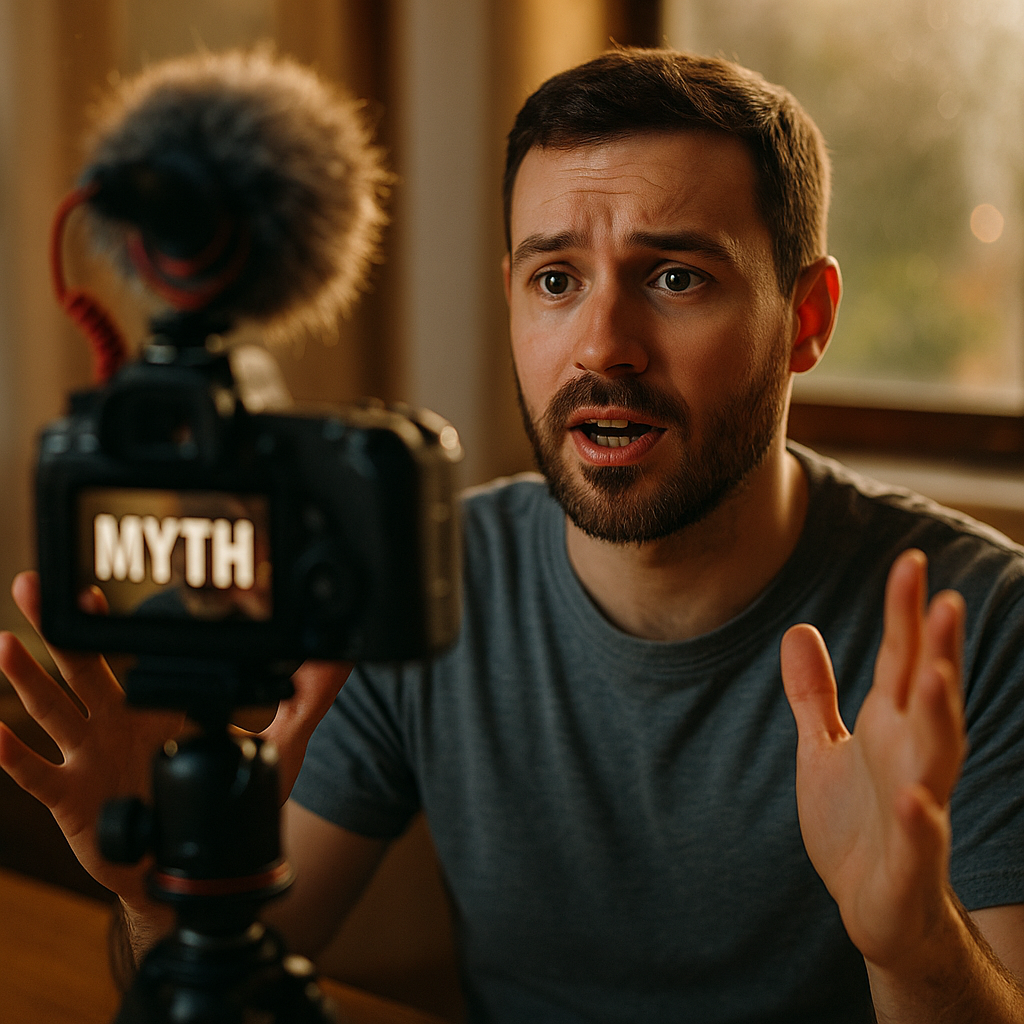
Defensiveness has a look. It’s the furrowed brow, the “well, actually” opener, the tone that says I need you to believe me rather than here’s something interesting. Briefs that push creators toward defending the brand — instead of educating the viewer — almost always produce this energy.
Watch for these tells in early cuts:
- Opening with the myth as an accusation. “People say our product doesn’t work, but…” immediately puts the creator on the back foot.
- Naming the brand too early. If the brand shows up before the misconception is even explained, viewers assume bias before the argument starts.
- Over-citing sources. Three studies and a disclaimer in the first 15 seconds signals anxiety, not authority.
- No acknowledgment of why the myth exists. Dismissing a misconception without validating why people believed it reads as condescending.
None of this is the creator’s fault, usually. It’s baked into the brief. If your talking points read like a rebuttal document, you’ll get a rebuttal performance.
So What Should the Brief Actually Ask For?
Direct creators to play investigator, not defense attorney. The best myth-busting videos follow a curiosity arc: notice the myth, question it out loud, walk through the evidence, land on a conclusion the viewer discovers alongside the creator. The brand’s product should support the conclusion, not drive it.
This is the same instinct behind split-test reaction formats, where trust comes from the creator appearing to test something live, not recite a script. Myth-busting works on the same psychological principle: people trust conclusions they watch someone arrive at.
Structure the Brief Around Curiosity, Not Correction
A workable four-beat structure for a 30-60 second myth-busting video:
- The hook (0-5 seconds): State the myth as something the creator has genuinely heard or believed. “I used to think retinol just thins your skin over time.” Personal framing beats brand framing.
- The turn (5-20 seconds): Introduce the counter-evidence conversationally. This is where dermatologists, engineers, or category experts can lend credibility — similar to the borrowed-authority approach covered in expert takeover content.
- The demonstration (20-45 seconds): Show, don’t just tell. A visual comparison, a simple test, or a before-and-after moment does more work than narration. Briefs can borrow structure from before-and-after formats here, since both rely on visible proof over verbal claims.
- The soft landing (45-60 seconds): Land on a takeaway, not a sales pitch. Mention the product as one example of the corrected principle in action, not the entire point of the video.
Notice what’s missing: a hard CTA in the first half, brand logos before the reveal, or language like “don’t believe the myths.” Save the commercial beat for the very end, and keep it light.
Give Creators Permission to Disagree With the Brief
This one trips up a lot of marketing teams. If you hand a creator a script that sounds like it came from legal, they’ll perform it like it came from legal. Instead, brief the facts and structure, then let the creator translate it into their own words.
Build in a review step where creators flag anything that sounds “brand-y” to them — they know their audience’s tolerance for polish better than your team does. This mirrors the guidance in our GRWM scripting breakdown, where over-direction is consistently the top reason authentic-feeling formats fall flat.
Handling the Legal and Compliance Layer
Myth-busting content sits closer to regulatory scrutiny than most creator formats, especially in health, finance, beauty, and supplements. If a creator is correcting a health claim, that correction itself can be treated as a claim by regulators.
The FTC’s endorsement guidance applies fully here: any material connection between brand and creator needs disclosure, and any corrected claim needs to be substantiated, not just asserted. UK brands should check equivalent guidance from the ICO on data and marketing claims where relevant.
Practical compliance steps for the brief:
- Require creators to cite sources verbally or on-screen when correcting a factual claim, not just in captions.
- Route any health, safety, or efficacy claim through legal review before the creator posts, not after.
- Keep #ad or #sponsored disclosure visible and early, even though disclosure can feel like it undercuts the “unbiased investigator” tone. It doesn’t have to — plenty of creators disclose cleanly within the first few seconds without losing momentum.
- Document the substantiation trail for every myth addressed, in case a competitor or watchdog challenges the claim later.
This is also where the format overlaps with confessional testimonial briefs — both rely on personal credibility, and both carry real compliance exposure if the brand treats disclosure as an afterthought.
Picking the Right Creator for the Job
Not every creator can pull off myth-busting. The format demands someone comfortable with mild disagreement on camera, someone whose audience already trusts them to have an informed opinion. Lifestyle creators with big followings but no category authority tend to underperform here, because the audience already senses they’re reciting talking points.
Look instead for:
- Category-adjacent professionals (nurses, mechanics, chemists, personal trainers) who post as a side practice, not full-time influencers.
- Skeptic-coded creators whose whole brand is questioning claims — recruiting one of these to debunk a myth in your favor carries huge credibility transfer.
- Mid-tier creators with engaged, niche audiences over mega-influencers with broad, shallow reach. Sprout Social’s engagement benchmarks consistently show higher trust signals in comment sentiment among smaller, niche creator audiences.
Vet past content for how the creator has handled brand partnerships before. If their sponsored content history is full of stiff, obviously-scripted reads, that’s a preview of how your myth-busting brief will land too.
Measuring Success Beyond Views
Standard engagement metrics undersell this format. The real signal is comment sentiment and save rate, not raw views. A myth-busting video that gets modest reach but pulls comments like “wait, I didn’t know that” or “sending this to my mom” is outperforming a viral clip that gets dismissed as an ad in the replies.
Track these specifically:
- Sentiment shift in comments — are viewers debating the myth or debating the brand?
- Save and share rate relative to the creator’s average, since educational content tends to get saved for reference.
- Duet/stitch response on platforms like TikTok, where other creators engaging with the debunk (rather than mocking it) signals real credibility transfer.
- Branded search lift in the days following posting, a leading indicator that the video changed minds rather than just entertained.
HubSpot’s content research has long shown that educational formats outperform promotional ones on time-on-content and return visits — myth-busting videos are essentially educational content wearing category-defense clothing, and the metrics should be read that way.
For a deeper structural breakdown of why this format builds long-term category authority rather than one-off engagement spikes, see our companion piece on myth-busting as a category authority play.
The Takeaway
Brief for curiosity, not correction. Let the creator sound like they’re discovering the truth alongside the viewer, keep the brand’s role modest until the very end, and route every factual claim through legal before it goes live. Do that, and the myth-busting format stops sounding defensive — it starts sounding like the most trustworthy thing your brand has posted all quarter.
FAQs
What makes a myth-busting video sound defensive?
Defensiveness usually comes from the brief, not the creator. Opening with the brand name too early, over-citing sources, or framing the myth as an accusation against the brand all signal bias before the argument even starts. Structuring the video as a personal curiosity arc instead avoids this.
How long should a myth-busting creator video be?
Most effective versions run 30-60 seconds, following a hook, turn, demonstration, and soft-landing structure. Longer formats work for complex health or finance claims, but attention drops sharply past the 90-second mark on short-form platforms.
Do myth-busting videos need FTC disclosure?
Yes. Any sponsored correction of a category claim still requires clear, early disclosure under FTC endorsement guidelines. Correcting a myth doesn’t exempt the content from standard material-connection rules.
What kind of creator works best for this format?
Category-adjacent professionals and niche experts tend to outperform broad-reach lifestyle influencers, because audiences already credit them with informed opinions. Skeptic-coded creators debunking a myth in a brand’s favor can produce outsized credibility transfer.
How do you measure whether a myth-busting video actually worked?
Look past view count. Comment sentiment, save rate, stitch/duet response, and branded search lift in the following days are stronger indicators that the video changed minds rather than just generated impressions.
Top Influencer Marketing Agencies
The leading agencies shaping influencer marketing in 2026
Agencies ranked by campaign performance, client diversity, platform expertise, proven ROI, industry recognition, and client satisfaction. Assessed through verified case studies, reviews, and industry consultations.
Moburst

-
2

The Shelf
Boutique Beauty & Lifestyle Influencer AgencyA data-driven boutique agency specializing exclusively in beauty, wellness, and lifestyle influencer campaigns on Instagram and TikTok. Best for brands already focused on the beauty/personal care space that need curated, aesthetic-driven content.Clients: Pepsi, The Honest Company, Hims, Elf Cosmetics, Pure LeafVisit The Shelf → -
3

Audiencly
Niche Gaming & Esports Influencer AgencyA specialized agency focused exclusively on gaming and esports creators on YouTube, Twitch, and TikTok. Ideal if your campaign is 100% gaming-focused — from game launches to hardware and esports events.Clients: Epic Games, NordVPN, Ubisoft, Wargaming, Tencent GamesVisit Audiencly → -
4

Viral Nation
Global Influencer Marketing & Talent AgencyA dual talent management and marketing agency with proprietary brand safety tools and a global creator network spanning nano-influencers to celebrities across all major platforms.Clients: Meta, Activision Blizzard, Energizer, Aston Martin, WalmartVisit Viral Nation → -
5

The Influencer Marketing Factory
TikTok, Instagram & YouTube CampaignsA full-service agency with strong TikTok expertise, offering end-to-end campaign management from influencer discovery through performance reporting with a focus on platform-native content.Clients: Google, Snapchat, Universal Music, Bumble, YelpVisit TIMF → -
6

NeoReach
Enterprise Analytics & Influencer CampaignsAn enterprise-focused agency combining managed campaigns with a powerful self-service data platform for influencer search, audience analytics, and attribution modeling.Clients: Amazon, Airbnb, Netflix, Honda, The New York TimesVisit NeoReach → -
7

Ubiquitous
Creator-First Marketing PlatformA tech-driven platform combining self-service tools with managed campaign options, emphasizing speed and scalability for brands managing multiple influencer relationships.Clients: Lyft, Disney, Target, American Eagle, NetflixVisit Ubiquitous → -
8

Obviously
Scalable Enterprise Influencer CampaignsA tech-enabled agency built for high-volume campaigns, coordinating hundreds of creators simultaneously with end-to-end logistics, content rights management, and product seeding.Clients: Google, Ulta Beauty, Converse, AmazonVisit Obviously →