


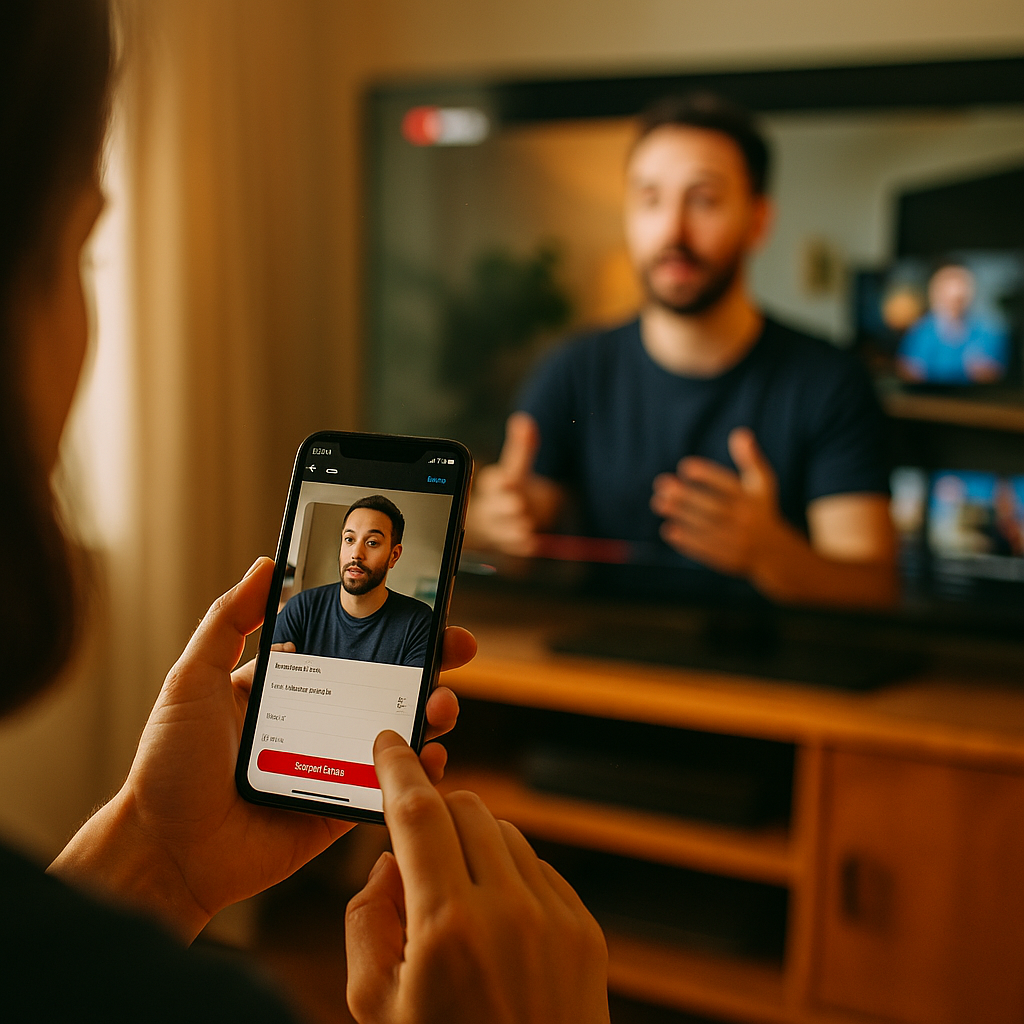
Nielsen now puts YouTube at the top of U.S. TV screen time, ahead of every traditional network. If your media plan still treats mobile and connected TV as separate line items, you’re leaving reach — and frequency efficiency — on the table. The YouTube CTV-social-performance ecosystem is no longer a buzzword; it’s how the platform’s inventory actually behaves in 2026, and buyers who plan for it are winning cheaper conversions on the big screen.
Why the Old Funnel Doesn’t Work Anymore
For years, media plans separated “social” and “TV” into different buckets, different budgets, different agencies sometimes. YouTube blew that up. A single creator video can be discovered on a phone during a commute, get algorithmically pushed to a living room screen that evening, and drive a purchase from a QR code or Shopping ad the next morning. That’s one asset, three environments, one measurement headache — unless you plan for it upfront.
Google’s own inventory data shows connected TV is now one of the fastest-growing watch surfaces for YouTube, with a meaningful share of daily watch time happening on television sets rather than phones. Creators aren’t just mobile-first talent anymore. They’re TV talent, whether they intended to be or not.
The brands winning on YouTube CTV aren’t buying “TV ads with influencers in them.” They’re buying one creator asset engineered to perform across three completely different attention spans.
Mobile, CTV, and the Performance Layer: Three Different Jobs
Think of the ecosystem as three interconnected but distinct jobs the same content has to do.
- Mobile discovery: Shorts and in-feed video win attention in under three seconds. This is where creators build the audience and prove the hook works.
- CTV amplification: The same creator’s long-form video (or a recut) gets served on the biggest screen in the house, often during passive, lean-back viewing. No thumb to swipe with. Completion rates climb.
- Performance capture: Shopping tags, QR codes, and branded search terms translate all that attention into a measurable action, frequently on a third device entirely — the phone sitting next to the remote.
Buyers who plan for all three simultaneously get materially better cost-per-acquisition numbers than those who treat CTV as a brand-awareness afterthought bolted onto a mobile-first influencer buy.
What This Means for Creative Briefs
Creative that only works on mobile — fast cuts, on-screen captions, vertical framing — often falls flat on a 65-inch screen. And creative built for lean-back TV viewing, with slower pacing and no captions, can lose viewers within the first two seconds on mobile. Smart buyers now brief creators for both formats from the start, not as an afterthought edit. That means asking for a horizontal master file with clean B-roll, deliberate pauses for CTV pacing, and a vertical cutdown with the hook front-loaded for mobile Shorts.
This isn’t hypothetical extra cost. Most established creators already shoot in a way that supports both; the difference is whether your brief and your production timeline account for it, or whether you’re stuck trying to reformat post-hoc.
Is CTV Actually Driving Performance, or Just Views?
Fair question, and one every CFO asks. The honest answer: it depends entirely on your measurement setup.
YouTube’s CTV inventory historically got dinged for being “top of funnel only” — great reach, lousy attribution. That’s changed with the growth of shoppable overlays, Brand Lift studies tied to CTV exposure, and better cross-device modeling inside Google’s ad platforms. Advertisers can now link a household’s CTV ad exposure to a subsequent mobile purchase with reasonable confidence, particularly when using Google’s own conversion modeling alongside first-party data feeds.
The catch: this only works if you’re running a unified campaign structure. If your CTV buy and your mobile creator buy sit in separate campaigns with separate goals, you’re measuring two disconnected stories instead of one funnel. Performance Max campaigns that include YouTube inventory across screens tend to outperform siloed placements precisely because the algorithm can shift budget toward whichever screen is converting that week.
A Quick Gut-Check for Your Media Plan
- Are your creator assets tagged with the same campaign ID across mobile and CTV placements?
- Can you see device-level completion rates, or only blended averages?
- Is your landing page or Shopping feed optimized for someone who saw the ad on TV an hour ago, not just someone who clicked directly?
- Does your creator contract cover usage rights for both Shorts and long-form CTV placement, or did you only license one format?
If you answered “no” or “not sure” to more than one of those, you’re not actually running a cross-screen strategy. You’re running two campaigns that happen to share a logo.
Planning the Buy: A Practical Sequence
Here’s roughly how experienced buyers are sequencing creator-led YouTube campaigns to flow across screens without wasting budget on redundant reach.
Step one: build mobile momentum first. Launch the Shorts cutdown and in-feed placements to build initial velocity and gather engagement signals. This also gives you real performance data — completion rate, click-through, comment sentiment — before you commit heavier CTV budget to an unproven creative concept.
Step two: layer in CTV once signal is strong. Once a creator asset is showing above-benchmark engagement on mobile, push the long-form or extended cut into CTV placements. You’re now spending TV-grade budget on creative that’s already validated, instead of guessing.
Step three: close the loop with performance formats. Shopping ads, branded search capture, and retargeting sequences should be live before the CTV flight starts, not added afterward. Someone who watches a 30-second creator spot on their TV and then searches your brand name on their phone needs to land on something that continues the story, not a generic homepage.
This sequencing mirrors what’s worked well in adjacent creator-commerce channels — the same “build momentum, then convert” logic that shows up in livestream commerce openings or shoppable Reels strategy. Attention has to be earned on the fast surface before it’s worth amplifying on the slow one.
Budget Allocation: Where the Money Actually Should Go
There’s no universal split, but a workable starting ratio for mid-size brands testing this ecosystem for the first time looks something like 50% mobile discovery, 30% CTV amplification, 20% performance/retargeting formats. Adjust based on category: DTC ecommerce brands often need more weight on the performance layer, while considered-purchase categories (finance, automotive, home services) tend to lean harder into CTV for trust-building, since that screen still carries more perceived credibility with older, higher-intent audiences.
Worth noting: this is directly relevant if you’re already running explainer-style creator content in regulated or trust-sensitive categories. The same logic that works for challenger bank creator campaigns on mobile applies doubly on CTV, where a single misleading claim in a bigger, more “official-feeling” format invites more regulatory scrutiny, not less. The FTC’s endorsement guidance doesn’t distinguish between screen sizes.
CTV doesn’t just amplify reach. It amplifies risk. A disclosure that’s borderline acceptable on a 15-second Short becomes a much bigger liability at TV scale.
Compliance and Rights: The Part Buyers Skip
Most influencer contracts were written for social-first usage: a set number of Instagram or TikTok posts, maybe a paid boost clause. Very few older templates anticipate CTV placement, and that’s an expensive gap to discover mid-flight.
Before you commit media dollars to pushing a creator’s video onto connected TV inventory, confirm three things in writing: usage rights explicitly cover CTV and broadcast-adjacent placement, the disclosure language is baked into the video itself (not just the caption, which won’t render on TV), and the licensing term covers your full flight plus any retargeting windows. FTC disclosure rules require the endorsement to be clear within the content a viewer actually sees — an on-screen caption that only appears in a mobile feed’s text field doesn’t count once that same video is playing on a TV.
This is also where creator selection matters more than people expect. Talent who already understand multi-format production, and who bake disclosure into the spoken content rather than relying on caption cards, save you a re-shoot later.
Measurement: What “Good” Actually Looks Like
Benchmarks are still shaking out across categories, but a few patterns are consistent across advertisers running unified cross-screen creator campaigns, per data referenced by eMarketer and industry reporting from Statista: completion rates on CTV creator content routinely run higher than standard pre-roll, often because the creator’s existing audience trust carries over even in a passive viewing environment. Cross-device conversion lift — meaning a mobile purchase attributable to a CTV exposure — tends to show up most clearly in the 24 to 72 hour window after the ad airs, which is exactly why your retargeting and search-capture assets need to be live before the flight starts, not scrambled together after.
If your reporting dashboard can’t show you device-path conversion (CTV exposure to mobile purchase), you’re flying blind on half the value this ecosystem creates. Push your ad ops team or agency to build that view before scaling budget.
Where This Is Headed
Expect YouTube to keep blurring the line between “creator content” and “TV content” as more households cut the cord entirely. Shoppable overlays on CTV are still clunky compared to mobile, but that gap is closing fast, and buyers who’ve already built cross-screen creative workflows will have a real head start when it does. The brands still treating YouTube as two separate media buys — one for “influencer,” one for “video” — are going to look increasingly behind as this consolidates. For adjacent format thinking, it’s worth studying how Shorts hook mechanics and subscriber-building series are evolving, since both feed directly into what eventually gets amplified on the big screen.
Next step: Audit one current creator campaign this week. Check whether the same asset ID, the same disclosure copy, and the same measurement framework actually connects your mobile buy to your CTV buy. If it doesn’t, that’s your first fix, not your next big creative idea.
FAQs
What is the YouTube CTV-social-performance ecosystem?
It’s the interconnected way YouTube inventory now works across three environments: mobile discovery (Shorts, in-feed), connected TV amplification (long-form, lean-back viewing), and performance capture (Shopping ads, retargeting). The same creator asset can move through all three, and buyers who plan media and measurement across all of them see stronger results than those running siloed campaigns.
Do I need different creative for mobile versus CTV?
Generally yes. Mobile-first vertical cuts with fast pacing and front-loaded hooks often underperform on a large screen, and CTV-paced long-form content can lose viewers quickly in a mobile feed. Brief creators for both formats from the start rather than reformatting after the fact.
Can I actually measure CTV’s impact on conversions?
Yes, but only with a unified campaign structure. Using shared campaign IDs, cross-device conversion modeling, and retargeting assets that are live before the CTV flight starts allows you to trace household-level exposure to mobile purchases, typically within a 24 to 72 hour window.
Does FTC disclosure guidance apply differently on CTV?
The rules themselves don’t change, but the risk profile does. Disclosures need to be visible within the video content itself, not just in a caption or text field that won’t render on a television screen. Bigger screen, bigger scrutiny.
What budget split should I start with for a cross-screen creator campaign?
A reasonable starting point is roughly 50% mobile discovery, 30% CTV amplification, and 20% performance and retargeting formats, adjusted based on category and purchase consideration length.
Top Influencer Marketing Agencies
The leading agencies shaping influencer marketing in 2026
Agencies ranked by campaign performance, client diversity, platform expertise, proven ROI, industry recognition, and client satisfaction. Assessed through verified case studies, reviews, and industry consultations.
Moburst

-
2

The Shelf
Boutique Beauty & Lifestyle Influencer AgencyA data-driven boutique agency specializing exclusively in beauty, wellness, and lifestyle influencer campaigns on Instagram and TikTok. Best for brands already focused on the beauty/personal care space that need curated, aesthetic-driven content.Clients: Pepsi, The Honest Company, Hims, Elf Cosmetics, Pure LeafVisit The Shelf → -
3

Audiencly
Niche Gaming & Esports Influencer AgencyA specialized agency focused exclusively on gaming and esports creators on YouTube, Twitch, and TikTok. Ideal if your campaign is 100% gaming-focused — from game launches to hardware and esports events.Clients: Epic Games, NordVPN, Ubisoft, Wargaming, Tencent GamesVisit Audiencly → -
4

Viral Nation
Global Influencer Marketing & Talent AgencyA dual talent management and marketing agency with proprietary brand safety tools and a global creator network spanning nano-influencers to celebrities across all major platforms.Clients: Meta, Activision Blizzard, Energizer, Aston Martin, WalmartVisit Viral Nation → -
5

The Influencer Marketing Factory
TikTok, Instagram & YouTube CampaignsA full-service agency with strong TikTok expertise, offering end-to-end campaign management from influencer discovery through performance reporting with a focus on platform-native content.Clients: Google, Snapchat, Universal Music, Bumble, YelpVisit TIMF → -
6

NeoReach
Enterprise Analytics & Influencer CampaignsAn enterprise-focused agency combining managed campaigns with a powerful self-service data platform for influencer search, audience analytics, and attribution modeling.Clients: Amazon, Airbnb, Netflix, Honda, The New York TimesVisit NeoReach → -
7

Ubiquitous
Creator-First Marketing PlatformA tech-driven platform combining self-service tools with managed campaign options, emphasizing speed and scalability for brands managing multiple influencer relationships.Clients: Lyft, Disney, Target, American Eagle, NetflixVisit Ubiquitous → -
8

Obviously
Scalable Enterprise Influencer CampaignsA tech-enabled agency built for high-volume campaigns, coordinating hundreds of creators simultaneously with end-to-end logistics, content rights management, and product seeding.Clients: Google, Ulta Beauty, Converse, AmazonVisit Obviously →