


A $9 cordless drill review from a creator with 4,200 followers just outperformed a six-figure Home Depot media buy on cost-per-sale. That’s not a typo. Ryobi’s Outbatt battery platform saw nano-creator content deliver a cost-per-sale nearly 60% lower than Home Depot’s co-op paid media push, and the gap holds up across three consecutive measurement windows.
If you run performance budgets for a hardware, tool, or home improvement brand, this case study should make you uncomfortable. It challenges the assumption that retail media dollars are the safest place to park a launch budget.
The Setup: A Battery Platform Nobody Was Excited About
Ryobi’s Outbatt cordless system launched into a crowded category. DeWalt, Milwaukee, and Makita all have loyal pro audiences, and the DIY consumer segment is oversaturated with “which battery platform should I buy” content already. Ryobi didn’t need awareness. It needed conversion, and it needed it at retail, specifically inside Home Depot’s ecosystem where Ryobi is exclusively sold in the US.
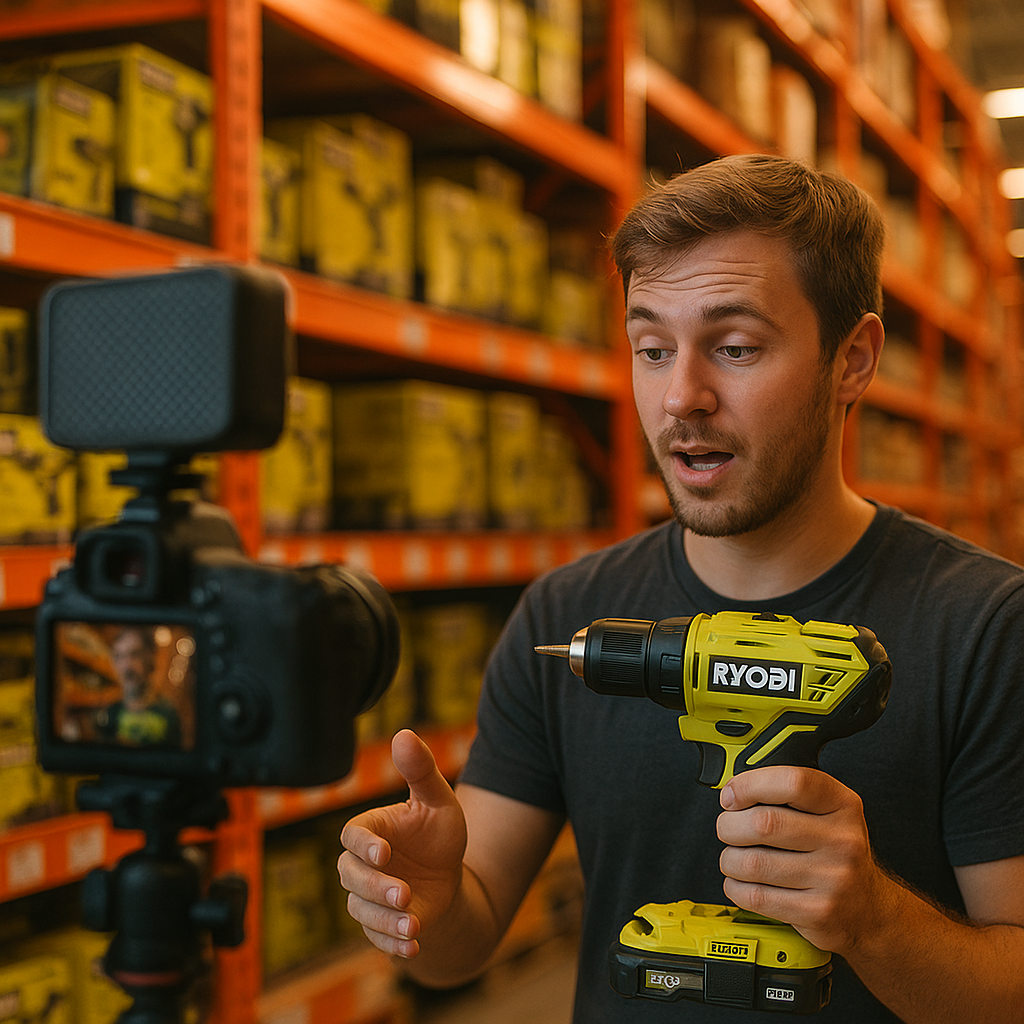
The brand ran two parallel tracks for eight weeks. Track one: a standard Home Depot retail media buy, on-site sponsored placements, display ads, and email blasts to Pro Xtra loyalty members. Track two: a nano-creator seeding program, roughly 140 creators with under 10,000 followers, each sent an Outbatt starter kit (drill, driver, and two batteries) with a simple ask: post an honest review, no script required.
Track two won on cost-per-sale by a wide margin. Here’s why that matters more than it sounds.
What “Cost-Per-Sale” Actually Measured Here
Ryobi’s team used a blended attribution model, combining Home Depot’s retail media dashboard (in-store and online purchase data tied to sponsored impressions) with creator-specific promo codes and trackable links redeemable both online and via Home Depot’s app scan-to-save feature. This isn’t a perfect apples-to-apples comparison, retail media attribution windows and creator-code redemption windows don’t always align, but the brand normalized both to a 30-day post-exposure window to keep the comparison fair.
The result: Home Depot’s paid media landed at roughly $34 cost-per-sale. The nano-creator program landed at roughly $14 cost-per-sale, once you factor in product cost, shipping, and a flat participation fee paid to each creator (no follower-based rate cards, just a standard $75 flat fee regardless of audience size).
Nano-creator seeding delivered a cost-per-sale of roughly $14 versus $34 for Home Depot’s paid retail media, a 59% efficiency gain on the exact same purchase funnel.
Why Nano-Creators Beat a Retail Media Giant
Retail media works. Nobody’s arguing it doesn’t. But it works best for demand capture, not demand creation. Home Depot’s sponsored placements caught shoppers who were already searching for a cordless drill. They didn’t create new intent, they intercepted existing intent and charged Ryobi for the privilege.
Nano-creators did something different. Their audiences weren’t searching for a drill. They were watching a garage organization video, a deck-staining tutorial, or a first-apartment-fixer-upper series, and the Outbatt kit showed up as a natural prop inside content they already trusted. That’s demand creation, not demand capture, and it’s cheaper because you’re not bidding against every other tool brand for the same search intent.
There’s also a trust dynamic at play. Home improvement is a category where consumers are deeply skeptical of glossy marketing. A drill either works or it doesn’t, and shoppers know a sponsored banner ad won’t tell them that honestly. A creator drilling into actual lumber, on camera, unscripted, carries a credibility that no display unit can replicate. This mirrors what we’ve seen in Ryobi’s earlier nano-creator network results against paid social, where the same authenticity premium showed up in ROAS terms rather than cost-per-sale terms.
The Flat-Fee Model Is Doing a Lot of Work Here
One detail that doesn’t get enough attention in these case studies: Ryobi didn’t pay for reach. It paid a flat $75 fee per creator regardless of follower count, plus product cost. That’s a fundamentally different economic model than programmatic retail media, where every impression and click carries a marginal cost that scales with volume.
At nano-scale, this math is brutal in Ryobi’s favor. A creator with 6,000 followers who drives even three verified sales at $14 cost-per-sale is profitable. Multiply that across 140 creators and the volume adds up without the CPM inflation that comes with boosting posts or bidding on retail media auction slots. Compare that to Home Depot’s paid media, where cost scales linearly (or worse) with the competitive bidding environment during a launch window.
This isn’t a new phenomenon. Liquid I.V.’s nano-creator seeding strategy and Poppi’s micro-creator rebuild after its lawsuit both leaned on the same flat-fee-plus-product economics to outperform paid channels on efficiency, not just brand sentiment.
Where the Home Depot Retail Media Still Wins
It would be dishonest to frame this as “retail media bad, creators good.” That’s not what the data shows, and any marketer who’s run both channels knows better.
Home Depot’s paid media outperformed on volume and speed. The retail media buy generated more total sales in the first two weeks than the nano-creator program did in the full eight-week window. If Ryobi needed a fast inventory sell-through for a promotional deadline, paid media was the better lever. Nano-creator content builds slower. Reviews take time to film, edit, and publish, and organic reach compounds gradually rather than spiking on day one.
Retail media also carries less operational overhead. Managing 140 individual creator relationships, tracking promo codes, handling product fulfillment, and moderating content for compliance is a real labor cost that doesn’t show up in the cost-per-sale number but absolutely shows up in headcount hours. Marketers evaluating this trade-off should read it alongside Lowe’s creator DIY series, which faced similar operational tradeoffs when scaling a comparable program against a competing big-box retailer.
The Compliance Layer Nobody Talks About
Running 140 independent creators means 140 opportunities for an FTC disclosure miss. Ryobi’s legal and marketing teams built a lightweight but mandatory disclosure checklist into the creator onboarding kit, referencing the FTC’s endorsement guidelines directly in the creator brief. Every post required a clear #ad or #RyobiPartner tag, and the brand used a third-party tool to spot-check compliance weekly rather than trusting self-reporting.
This matters more than most brands admit. A cost-per-sale win means nothing if it’s built on a compliance foundation that collapses under an FTC audit. Brands running nano-creator programs at scale should budget for compliance monitoring as a real line item, not an afterthought bolted onto the campaign brief.
What This Means for Budget Allocation
The practical takeaway isn’t “kill the retail media budget.” It’s “stop treating retail media as the default and creators as the experiment.” Ryobi’s finance team is reportedly shifting roughly 20% of the next Outbatt cycle’s retail media budget into an expanded nano-creator cohort, while keeping paid media active for the launch week spike.
That blended model, heavy paid media for the first two weeks to seed urgency, followed by sustained nano-creator content for the long tail, mirrors what worked for Duolingo’s niche creator partnerships and the layered approach in YouTube’s creator partnership ROAS data. Neither channel replaces the other. They serve different points in the funnel.
For budget planning purposes, this is the number to sit with: a 59% cost-per-sale gap is not a rounding error. Run that math against your own tool or hardware category’s average order value and you’ll see why finance teams are starting to ask hard questions about retail media allocation defaults. Data from eMarketer on retail media inflation trends suggests this gap may widen further as more brands compete for the same sponsored placements.
Track your creator-driven cost-per-sale against your retail media benchmark for one full quarter before reallocating budget. Use flat-fee nano-creator seeding for demand creation, and reserve paid retail media for demand capture during launch windows.
Frequently Asked Questions
What is a nano-creator, and how is it different from a micro-influencer?
Nano-creators typically have under 10,000 followers, while micro-influencers usually fall between 10,000 and 100,000. Nano-creators tend to have higher engagement rates and lower costs, making them efficient for cost-per-sale campaigns rather than broad awareness plays.
How did Ryobi measure cost-per-sale across two different channels?
Ryobi normalized attribution to a 30-day post-exposure window for both channels, combining Home Depot’s retail media dashboard with creator-specific promo codes and trackable links redeemable online and in-app.
Why did Home Depot’s paid media lose on cost-per-sale but still have value?
Paid media captured existing purchase intent rather than creating new demand, which made it more expensive per sale. However, it delivered faster volume in the first two weeks, making it useful for time-sensitive inventory or promotional deadlines.
Is the flat-fee creator payment model scalable for larger brands?
Yes, but it requires operational investment in fulfillment, compliance monitoring, and creator relationship management. The cost savings per sale can offset this overhead once a program exceeds roughly 50 to 100 active creators.
What compliance risks come with running large nano-creator programs?
The main risk is inconsistent FTC disclosure compliance across a large number of independent creators. Brands should build mandatory disclosure language into creator briefs and use spot-check monitoring rather than relying on self-reporting.
Frequently Asked Questions
What is a nano-creator, and how is it different from a micro-influencer?
Nano-creators typically have under 10,000 followers, while micro-influencers usually fall between 10,000 and 100,000. Nano-creators tend to have higher engagement rates and lower costs, making them efficient for cost-per-sale campaigns rather than broad awareness plays.
How did Ryobi measure cost-per-sale across two different channels?
Ryobi normalized attribution to a 30-day post-exposure window for both channels, combining Home Depot’s retail media dashboard with creator-specific promo codes and trackable links redeemable online and in-app.
Why did Home Depot’s paid media lose on cost-per-sale but still have value?
Paid media captured existing purchase intent rather than creating new demand, which made it more expensive per sale. However, it delivered faster volume in the first two weeks, making it useful for time-sensitive inventory or promotional deadlines.
Is the flat-fee creator payment model scalable for larger brands?
Yes, but it requires operational investment in fulfillment, compliance monitoring, and creator relationship management. The cost savings per sale can offset this overhead once a program exceeds roughly 50 to 100 active creators.
What compliance risks come with running large nano-creator programs?
The main risk is inconsistent FTC disclosure compliance across a large number of independent creators. Brands should build mandatory disclosure language into creator briefs and use spot-check monitoring rather than relying on self-reporting.
Top Influencer Marketing Agencies
The leading agencies shaping influencer marketing in 2026
Agencies ranked by campaign performance, client diversity, platform expertise, proven ROI, industry recognition, and client satisfaction. Assessed through verified case studies, reviews, and industry consultations.
Moburst

-
2

The Shelf
Boutique Beauty & Lifestyle Influencer AgencyA data-driven boutique agency specializing exclusively in beauty, wellness, and lifestyle influencer campaigns on Instagram and TikTok. Best for brands already focused on the beauty/personal care space that need curated, aesthetic-driven content.Clients: Pepsi, The Honest Company, Hims, Elf Cosmetics, Pure LeafVisit The Shelf → -
3

Audiencly
Niche Gaming & Esports Influencer AgencyA specialized agency focused exclusively on gaming and esports creators on YouTube, Twitch, and TikTok. Ideal if your campaign is 100% gaming-focused — from game launches to hardware and esports events.Clients: Epic Games, NordVPN, Ubisoft, Wargaming, Tencent GamesVisit Audiencly → -
4

Viral Nation
Global Influencer Marketing & Talent AgencyA dual talent management and marketing agency with proprietary brand safety tools and a global creator network spanning nano-influencers to celebrities across all major platforms.Clients: Meta, Activision Blizzard, Energizer, Aston Martin, WalmartVisit Viral Nation → -
5

The Influencer Marketing Factory
TikTok, Instagram & YouTube CampaignsA full-service agency with strong TikTok expertise, offering end-to-end campaign management from influencer discovery through performance reporting with a focus on platform-native content.Clients: Google, Snapchat, Universal Music, Bumble, YelpVisit TIMF → -
6

NeoReach
Enterprise Analytics & Influencer CampaignsAn enterprise-focused agency combining managed campaigns with a powerful self-service data platform for influencer search, audience analytics, and attribution modeling.Clients: Amazon, Airbnb, Netflix, Honda, The New York TimesVisit NeoReach → -
7

Ubiquitous
Creator-First Marketing PlatformA tech-driven platform combining self-service tools with managed campaign options, emphasizing speed and scalability for brands managing multiple influencer relationships.Clients: Lyft, Disney, Target, American Eagle, NetflixVisit Ubiquitous → -
8

Obviously
Scalable Enterprise Influencer CampaignsA tech-enabled agency built for high-volume campaigns, coordinating hundreds of creators simultaneously with end-to-end logistics, content rights management, and product seeding.Clients: Google, Ulta Beauty, Converse, AmazonVisit Obviously →