


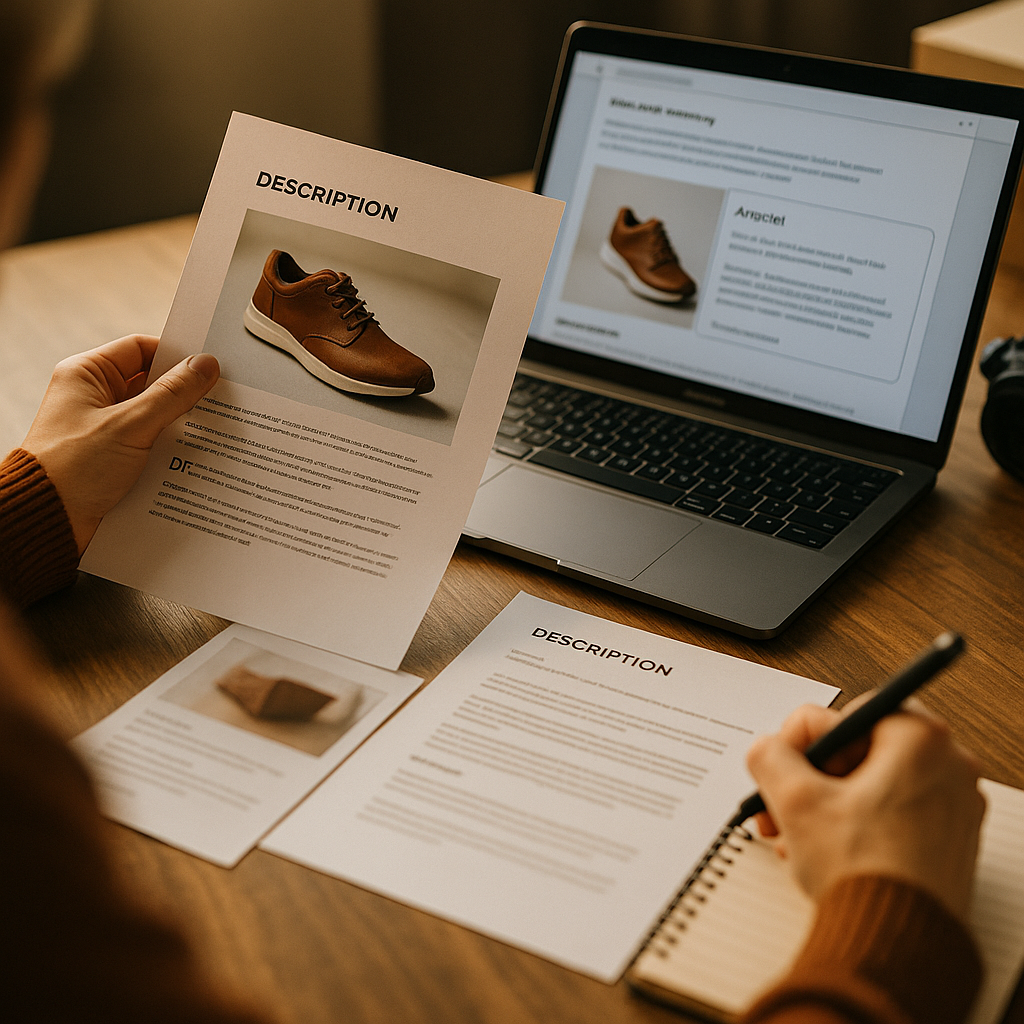
Sixty percent of Google searches now end without a click. That’s not a Chicken Little stat — it’s Similarweb’s actual measurement of zero-click search behavior, and for retail brands, it means the product description you spent three years perfecting is now raw material for an AI Overview summary someone else’s algorithm gets credit for. The question isn’t whether AI Overview zero-click loss is real. It’s whether your product content is structured to get cited inside the answer, instead of quietly buried beneath it.
This is a playbook for retail brands and the agencies that serve them: how to rebuild product descriptions so they survive — and profit from — the shift to generative, AI-mediated shopping discovery.
The Traffic Didn’t Disappear. It Got Reallocated.
Here’s the uncomfortable truth most retail SEO teams haven’t internalized yet: the searchers are still searching. The intent is still there. What’s changed is where the answer gets consumed. Google’s AI Overviews, ChatGPT’s shopping integrations, and Perplexity’s product comparisons are now intercepting queries like “best waterproof hiking boots under $150” and answering them directly, often citing three or four brands in a synthesized paragraph instead of ten blue links.
If your product page isn’t one of those citations, you didn’t lose a click. You lost the sale entirely, because the shopper never needed to leave the answer box.
Retailers optimizing only for traditional SEO rankings are optimizing for a shrinking share of the discovery journey. The real KPI now is citation frequency inside AI-generated answers, not blue-link position.
This mirrors what we’ve covered around zero-click attribution models more broadly — the mechanics apply just as directly to product pages as they do to editorial content. The difference is retail has a harder recovery problem: product descriptions are transactional, template-driven, and often written for feed compliance rather than semantic clarity.
That’s exactly why they’re getting skipped.
Why AI Engines Skip Most Product Descriptions
Ask yourself: would you cite your own product description if you were an LLM trying to answer “what’s the most breathable running shoe for hot climates”? Most retail copy fails this test for a few predictable reasons.
First, it’s adjective-heavy and fact-light. “Innovative,” “premium,” “game-changing” — these words carry zero semantic weight for a model trying to extract verifiable attributes. Second, specs are often buried in a separate tab or table that isn’t part of the crawlable description block. Third, descriptions rarely answer comparative or use-case questions directly; they describe the product in isolation, not in the context of the query someone actually typed.
Generative engines reward specificity, structure, and answerability. Marketing fluff gets summarized away or ignored entirely.
This is the same failure mode we’ve seen in pages ranking well on Google but invisible in AI answers — strong keyword targeting, weak semantic extractability. Product pages have it worse because e-commerce platforms were built for conversion rate optimization, not machine readability.
The Four Failure Patterns to Audit For
- Vague attribute language: “durable construction” instead of “reinforced double-stitched seams rated for 500+ wash cycles.”
- Missing comparative context: no mention of how the product differs from alternatives in its own category.
- Spec fragmentation: materials, dimensions, and use cases split across tabs, PDFs, or accordion menus AI crawlers may not fully parse.
- No direct question-answer framing: nothing in the copy resembles how a real shopper phrases a query.
GEO-Optimized Product Descriptions: What Actually Changes
Generative Engine Optimization for product copy isn’t a rebrand of SEO with new buzzwords. It requires rewriting descriptions around three principles: extractable facts, structured answerability, and citation-worthy specificity.
Extractable facts means leading with concrete, verifiable attributes — material composition, dimensions, certifications, compatibility — in the first two sentences, not the fifth paragraph. LLMs weight early, declarative statements more heavily when constructing summaries.
Structured answerability means writing at least one sentence that mirrors a natural-language query pattern. If shoppers ask “is this safe for sensitive skin,” your description should contain a sentence that answers that almost verbatim, not force the model to infer it from ingredient lists.
Citation-worthy specificity means numbers, standards, and comparisons beat adjectives every time. “30% lighter than our previous model” gets cited. “Ultra-lightweight design” gets paraphrased into oblivion or dropped.
A product description written to be skimmed by a human in eight seconds is not the same asset as one written to be extracted by a model in eight milliseconds. Retailers need both — and most currently have only the first.
This is where the discipline overlaps heavily with feed and catalog structure work. If you haven’t already, review how product feeds need rebuilding for AI shopping agents — because structured data and description copy now have to work as one system, not two separate workstreams owned by different teams.
Building the Recovery Framework, Step by Step
Recovering lost zero-click value isn’t a copywriting sprint. It’s an operational rebuild with four phases.
Phase one: audit citation gaps. Run your top 50 revenue-driving product queries through Google’s AI Overviews, ChatGPT, and Perplexity. Log which brands get cited and which don’t. This is tedious but non-negotiable — you can’t fix what you haven’t measured. Teams doing this manually should look at frameworks like the AI Overviews citation audit or a broader AI search visibility audit across engines to get a full picture rather than a single-platform snapshot.
Phase two: prioritize by revenue exposure, not traffic volume. Not every product page deserves the same rewrite effort. Rank SKUs by a blend of search volume, margin, and current zero-click exposure. A mid-tail SKU getting cited zero times but driving 4% of category revenue is a higher priority than a high-traffic SKU that’s already winning citations.
Phase three: rewrite in structured, extractable blocks. Lead paragraph states the core function and top three attributes in plain, factual language. Second block answers the two or three most common comparative or suitability questions. Third block covers specs in prose form, not just table form, since some crawlers weight prose more heavily than markup-only data.
Phase four: track share-of-model, not just rankings. Traditional rank tracking tells you nothing about whether you’re being cited in a generated answer. You need a recurring measurement of how often and how prominently your brand appears across AI answer surfaces. This is the same logic behind a share-of-model dashboard — it should sit alongside traditional SEO reporting, not replace it.
Should GEO Product Copy Have Its Own Budget?
Yes, and this trips up more organizations than it should. Retail marketing teams routinely fold GEO work into existing SEO or content budgets, then wonder why it gets deprioritized every time a paid media fire drill happens. Rewriting thousands of SKU descriptions at extractable-fact quality is a real labor cost, whether it’s done by in-house writers, an agency, or an AI-assisted pipeline with human QA.
The broader argument for giving GEO its own budget line applies with extra force in retail, where SKU count multiplies the workload fast. A brand with 3,000 active SKUs isn’t running a content sprint — it’s running a content operation, and it needs headcount and tooling budget accordingly.
Can AI Actually Write This Copy, or Does It Need Humans?
Both, and the split matters. AI-assisted drafting is genuinely useful for the mechanical parts: pulling spec sheets into prose, generating comparative sentences across a product line, and maintaining consistent structure across thousands of SKUs. What it’s worse at is judgment — knowing which attributes actually matter to a specific shopper segment, or catching when a generated claim is technically accurate but legally risky.
A recent test comparing AI-generated and human-written product copy found the AI drafts performed competitively on structure and speed but needed human review for accuracy and brand voice consistency, particularly on claims-heavy categories like skincare and supplements. That finding tracks with what we’ve seen testing AI product copy against human writers directly — AI gets you 80% of the way to extractable, structured copy fast. The last 20%, the part that avoids regulatory exposure and protects brand voice, still needs a human editor in the loop.
Don’t skip that step to save time. The FTC has been explicit about accountability for deceptive or unsubstantiated product claims, AI-generated or not — see their guidance on endorsements and advertising claims. A citation you win in an AI Overview isn’t worth much if the underlying claim triggers a compliance problem six months later.
Measuring Whether It’s Actually Working
The recovery isn’t real until it shows up in attribution, and this is where most retail teams stall. Zero-click sessions don’t generate the referral data your analytics stack is used to. You need a model that connects AI citation presence to downstream conversion behavior, even when the click never happens on your domain.
Practically, that means combining three data streams: citation frequency tracking (are you showing up in the answer), branded search lift (are more people searching your brand name after encountering it in an AI answer, a well-documented halo effect), and assisted conversion modeling that treats AI visibility as a upper-funnel input rather than a last-touch channel. Teams building this out should reference the broader zero-click attribution model for tying AI Overviews to revenue, and consider how reporting cadence affects executive buy-in — a monthly versus quarterly GEO reporting decision that shapes whether leadership sees this as a real program or a side experiment.
Industry data backs the urgency here. eMarketer and Similarweb have both tracked declining organic click-through rates on informational and commercial queries as AI-generated answers expand, a trend retail teams can track more granularly via eMarketer’s search and retail media research and Statista’s e-commerce benchmarking data. This isn’t a hypothetical future problem. It’s a current-quarter revenue leak for any retailer with meaningful organic search dependency.
Next Step
Run the citation audit on your top 50 SKUs this month, rewrite the ten worst-performing descriptions using the extractable-fact framework, and remeasure in 30 days. That single cycle will tell you more about your AI Overview zero-click loss than any amount of theorizing about the algorithm.
Frequently Asked Questions
What is AI Overview zero-click loss in a retail context?
It’s the revenue and traffic impact retailers experience when Google’s AI Overviews or similar generative answers summarize product information directly in the search results, satisfying the shopper’s query without a click to the retailer’s site.
How is GEO different from traditional SEO for product pages?
Traditional SEO optimizes for ranking position and keyword matching. GEO optimizes for extractability and citation, meaning the copy needs to be factually dense, structured for direct answers, and specific enough that an AI model chooses to quote or reference it in a generated response.
Which product categories are most affected by zero-click loss?
Comparative and informational-heavy categories tend to see the most impact: electronics, apparel, home goods, and health or beauty products where shoppers frequently ask “best for” or “which is better” style queries that AI Overviews are built to answer directly.
Can AI tools write GEO-optimized product descriptions at scale?
Yes, for structure and speed, but human review remains essential for accuracy, brand voice, and compliance, particularly in regulated or claims-heavy categories where an unsubstantiated AI-generated claim could create legal exposure.
How do you measure whether GEO product copy is working?
Track citation frequency across AI Overviews, ChatGPT, and Perplexity for priority queries, monitor branded search lift as a halo indicator, and build an assisted-conversion model that treats AI visibility as an upper-funnel input rather than expecting direct click attribution.
FAQs
Top Influencer Marketing Agencies
The leading agencies shaping influencer marketing in 2026
Agencies ranked by campaign performance, client diversity, platform expertise, proven ROI, industry recognition, and client satisfaction. Assessed through verified case studies, reviews, and industry consultations.
Moburst

-
2

The Shelf
Boutique Beauty & Lifestyle Influencer AgencyA data-driven boutique agency specializing exclusively in beauty, wellness, and lifestyle influencer campaigns on Instagram and TikTok. Best for brands already focused on the beauty/personal care space that need curated, aesthetic-driven content.Clients: Pepsi, The Honest Company, Hims, Elf Cosmetics, Pure LeafVisit The Shelf → -
3

Audiencly
Niche Gaming & Esports Influencer AgencyA specialized agency focused exclusively on gaming and esports creators on YouTube, Twitch, and TikTok. Ideal if your campaign is 100% gaming-focused — from game launches to hardware and esports events.Clients: Epic Games, NordVPN, Ubisoft, Wargaming, Tencent GamesVisit Audiencly → -
4

Viral Nation
Global Influencer Marketing & Talent AgencyA dual talent management and marketing agency with proprietary brand safety tools and a global creator network spanning nano-influencers to celebrities across all major platforms.Clients: Meta, Activision Blizzard, Energizer, Aston Martin, WalmartVisit Viral Nation → -
5

The Influencer Marketing Factory
TikTok, Instagram & YouTube CampaignsA full-service agency with strong TikTok expertise, offering end-to-end campaign management from influencer discovery through performance reporting with a focus on platform-native content.Clients: Google, Snapchat, Universal Music, Bumble, YelpVisit TIMF → -
6

NeoReach
Enterprise Analytics & Influencer CampaignsAn enterprise-focused agency combining managed campaigns with a powerful self-service data platform for influencer search, audience analytics, and attribution modeling.Clients: Amazon, Airbnb, Netflix, Honda, The New York TimesVisit NeoReach → -
7

Ubiquitous
Creator-First Marketing PlatformA tech-driven platform combining self-service tools with managed campaign options, emphasizing speed and scalability for brands managing multiple influencer relationships.Clients: Lyft, Disney, Target, American Eagle, NetflixVisit Ubiquitous → -
8

Obviously
Scalable Enterprise Influencer CampaignsA tech-enabled agency built for high-volume campaigns, coordinating hundreds of creators simultaneously with end-to-end logistics, content rights management, and product seeding.Clients: Google, Ulta Beauty, Converse, AmazonVisit Obviously →