


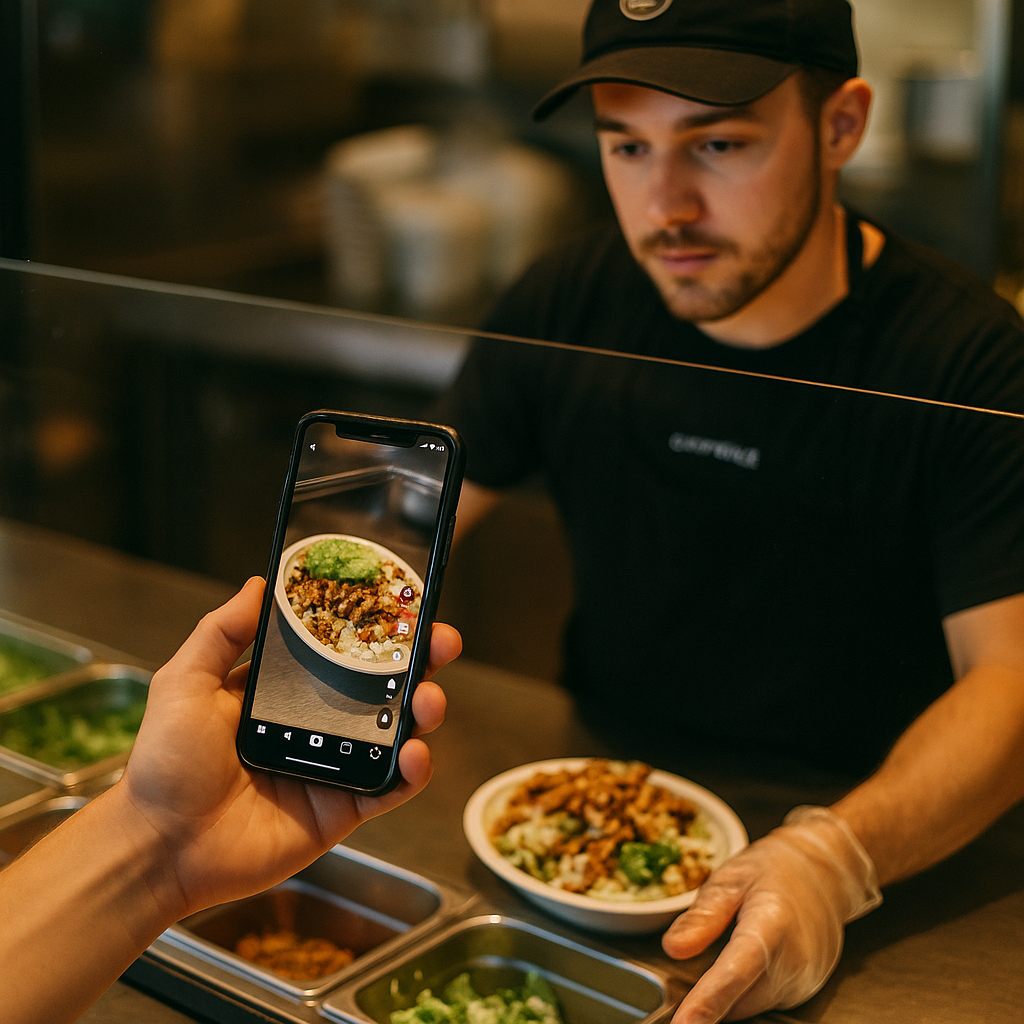
Every marketer knows the feeling: a menu hack video hits three million views, the comments are pure chaos, and the CFO still asks “so what did we actually sell?” Chipotle’s TikTok Shop affiliate program answered that question with same-day order data instead of a shrug. In an era where 61% of marketers still struggle to prove social ROI according to eMarketer research, that’s not a small win.
The Problem Chipotle Actually Had
Menu hacks have been Chipotle’s unpaid marketing department for years. Quesadilla folds, “burrito bowl but make it a taco,” secret Chipotle Honey Vanilla ordering combos — creators do this for free, constantly, and always have. The videos rack up views. Comments fill with “brb ordering this.” But until recently, none of that enthusiasm connected to a sale that Chipotle could point to and say, “this video drove this order.”
That’s the attribution gap that’s haunted quick-service restaurant marketing for a decade. Brand lift studies and sentiment analysis are fine for board decks, but they don’t tell a regional marketing director which creator partnership actually moved units in a specific market on a specific day. Chipotle needed a bridge between organic virality and the point-of-sale system. TikTok Shop’s affiliate infrastructure, originally built for physical product commerce, turned out to be that bridge — even for a company that doesn’t ship boxes.
Why TikTok Shop, and Why Now
TikTok Shop wasn’t designed with quick-service restaurants in mind. It was built for beauty brands and apparel sellers moving physical inventory through in-feed checkout. But TikTok expanded its affiliate and shoppable infrastructure to support service-based and restaurant partners, letting brands attach trackable order links and promo codes directly to organic and creator content rather than just product listings.
Chipotle’s move was to treat every menu hack video as a potential commerce touchpoint, not just a brand awareness moment. Creators posting hack content could enroll in the affiliate program, attach a trackable ordering link or unique code to their video, and earn commission on resulting orders placed through Chipotle’s app or site within a defined attribution window. Suddenly, a fan-made “secret menu” video wasn’t just noise. It was a measurable acquisition channel.
The shift wasn’t about paying creators to make content — it was about making content creators were already making trackable, turning unpaid virality into a measurable revenue line for the first time.
How the Program Actually Worked
The mechanics were deliberately simple, because friction kills conversion faster than almost anything else in commerce. Chipotle structured the program around three components:
- Trackable affiliate links embedded in creator bios and video captions, tied to unique creator IDs so every order could be attributed to a specific piece of content.
- Time-boxed promo codes tied to specific menu hacks, which created urgency and made same-day conversion easy to isolate in reporting.
- Commission tiers based on order volume, not follower count, which meant a nano-creator with 8,000 followers and a genuinely clever hack could out-earn a mid-tier influencer posting generic reviews.
That last point matters more than it looks. Chipotle wasn’t chasing reach. They were chasing orders. A creator with a small but hyper-engaged audience who posts a hack that’s easy to replicate and order will consistently outperform a bigger account posting passive brand content. This is the same logic behind nano-creator grocery haul strategies that have quietly outperformed traditional CPG ad spend on cost-per-acquisition.
Same-Day Orders: The Number That Changed the Conversation
Internally, the metric that reframed how Chipotle’s marketing team talked to finance wasn’t impressions or engagement rate. It was same-day trackable orders per video. When a hack video linked to a code redeemable that same day, the team could see, almost in real time, whether a piece of content converted browsers into buyers before the algorithm moved on to the next trend.
This same-day window is critical for quick-service restaurants specifically. Unlike a $60 skincare purchase that might sit in a cart for a week, a burrito craving is impulsive and perishable. If you can’t capture that impulse within hours, you’ve lost it. TikTok Shop’s checkout speed and native app integration compressed the path from “I want that” to “I ordered that” into a window measured in minutes, not days.
Marketers running influencer programs in other verticals should pay attention here. The same urgency principle shows up in Vessi’s TikTok Shop referral engine, where a single viral video became a sustained sales channel because the purchase path stayed frictionless.
What the Data Actually Showed
Chipotle hasn’t published granular sales figures publicly, and any brand claiming precise attribution numbers for organic UGC deserves healthy skepticism. But directionally, the pattern was consistent across the program’s first several months: videos featuring specific, replicable menu combinations converted at meaningfully higher rates than generic “I tried Chipotle” content. Specificity sold. Vague enthusiasm didn’t.
This tracks with broader platform data. TikTok’s own commerce guidance, available through TikTok’s advertising platform, has repeatedly emphasized that shoppable content performs best when the call to action is embedded in the content itself rather than bolted on afterward. A menu hack video is, structurally, already a call to action. “Order it this way” is the entire premise. Chipotle just needed to make that instruction clickable.
Specificity outperformed enthusiasm every time: a video showing an exact order sequence converted better than ten videos saying “Chipotle is so good.”
Creator Selection: Skipping the Usual Playbook
Most fast food brands still lean on macro-influencers and celebrity tie-ins for big campaign moments. Chipotle’s affiliate program deliberately skipped that tier for this initiative. Instead, they opened enrollment broadly and let performance sort the roster.
This is a meaningful departure from how a lot of QSR marketing budgets still get allocated. It’s closer to the approach McDonald’s took with its Play-Doh toy promotion, where cost-efficiency beat celebrity wattage on a straight cost basis. It also echoes what Rare Beauty found when its creator cohort strategy outperformed celebrity marketing — smaller, more numerous partnerships with performance-based payout structures tend to beat single big-name deals when the goal is trackable conversion rather than brand halo.
The affiliate structure also solved a compliance headache that’s been nagging QSR marketers for years: disclosure consistency. Because creators are earning commission through a formal program, FTC endorsement guidelines around material connections apply cleanly, and Chipotle’s legal team can enforce disclosure standards through the platform itself rather than relying on informal creator goodwill. That’s a meaningfully lower risk profile than the old model of gifting product and hoping for the best. Brands still building out disclosure policies should review the FTC’s endorsement guidelines directly rather than assuming platform defaults cover them.
What Other Brands Should Steal From This
You don’t need a menu or a drive-thru to apply the core lesson here. The transferable principle is: find the organic behavior your audience is already doing for free, and build the thinnest possible tracking layer on top of it.
- Audit what’s already viral before commissioning anything new. Chipotle didn’t invent menu hacks. They instrumented them.
- Pay for performance, not reach. Commission tiers tied to conversion outperform flat sponsorship fees when the goal is bottom-line revenue.
- Shrink the attribution window to match the buying cycle. Same-day tracking only works if your purchase path is actually fast enough to close same-day.
- Let specificity win. Content that shows exactly what to do converts better than content that just expresses enthusiasm.
Brands in categories with longer consideration cycles will need to adapt the timeline, but the structural logic holds. Viator’s approach to turning travel micro-creators into bookings follows a similar model, just stretched across a longer decision window than a lunch order.
One more thing worth flagging: this only works if your commerce infrastructure can actually close the loop. If your app checkout is clunky or your promo code redemption process has friction, no amount of viral content will convert. Platforms like HubSpot and Sprout Social both publish decent frameworks for auditing the handoff between social engagement and conversion tracking, worth a look before you try to replicate this.
The Takeaway
Chipotle didn’t pay to create virality. It paid to measure virality that was already happening, and that’s a cheaper, lower-risk play than most brands realize. If your audience is already making free content about your product, your next move isn’t a bigger campaign budget — it’s a trackable link.
FAQs
What is Chipotle’s TikTok Shop affiliate program?
It’s a program that lets creators attach trackable ordering links and promo codes to organic content, including menu hack videos, so Chipotle can measure same-day orders generated by specific videos and pay creators commission based on resulting sales rather than flat sponsorship fees.
How does TikTok Shop track same-day restaurant orders?
TikTok Shop’s affiliate infrastructure assigns unique tracking links or codes to each creator, which are then tied to orders placed through Chipotle’s app or website within a defined attribution window, allowing the brand to attribute specific sales to specific content in near real time.
Why did Chipotle use menu hack videos instead of paid campaigns?
Menu hack videos were already going viral organically for free. Rather than commissioning new paid content, Chipotle built a tracking layer on top of behavior creators were already doing, which lowered cost and let performance data determine which creators and content formats actually drove orders.
Is TikTok Shop only for physical products?
No. While TikTok Shop was originally built for physical product commerce like apparel and beauty, its affiliate and shoppable link infrastructure has expanded to support service and restaurant partners who can attach trackable ordering links to content instead of product listings.
What compliance risks should brands watch for with affiliate creator programs?
Brands need to ensure creators clearly disclose paid or commissioned partnerships in line with FTC endorsement guidelines, since affiliate commissions count as a material connection. Formal affiliate programs actually make enforcement easier than informal gifting arrangements because disclosure terms can be built into program requirements.
Top Influencer Marketing Agencies
The leading agencies shaping influencer marketing in 2026
Agencies ranked by campaign performance, client diversity, platform expertise, proven ROI, industry recognition, and client satisfaction. Assessed through verified case studies, reviews, and industry consultations.
Moburst

-
2

The Shelf
Boutique Beauty & Lifestyle Influencer AgencyA data-driven boutique agency specializing exclusively in beauty, wellness, and lifestyle influencer campaigns on Instagram and TikTok. Best for brands already focused on the beauty/personal care space that need curated, aesthetic-driven content.Clients: Pepsi, The Honest Company, Hims, Elf Cosmetics, Pure LeafVisit The Shelf → -
3

Audiencly
Niche Gaming & Esports Influencer AgencyA specialized agency focused exclusively on gaming and esports creators on YouTube, Twitch, and TikTok. Ideal if your campaign is 100% gaming-focused — from game launches to hardware and esports events.Clients: Epic Games, NordVPN, Ubisoft, Wargaming, Tencent GamesVisit Audiencly → -
4

Viral Nation
Global Influencer Marketing & Talent AgencyA dual talent management and marketing agency with proprietary brand safety tools and a global creator network spanning nano-influencers to celebrities across all major platforms.Clients: Meta, Activision Blizzard, Energizer, Aston Martin, WalmartVisit Viral Nation → -
5

The Influencer Marketing Factory
TikTok, Instagram & YouTube CampaignsA full-service agency with strong TikTok expertise, offering end-to-end campaign management from influencer discovery through performance reporting with a focus on platform-native content.Clients: Google, Snapchat, Universal Music, Bumble, YelpVisit TIMF → -
6

NeoReach
Enterprise Analytics & Influencer CampaignsAn enterprise-focused agency combining managed campaigns with a powerful self-service data platform for influencer search, audience analytics, and attribution modeling.Clients: Amazon, Airbnb, Netflix, Honda, The New York TimesVisit NeoReach → -
7

Ubiquitous
Creator-First Marketing PlatformA tech-driven platform combining self-service tools with managed campaign options, emphasizing speed and scalability for brands managing multiple influencer relationships.Clients: Lyft, Disney, Target, American Eagle, NetflixVisit Ubiquitous → -
8

Obviously
Scalable Enterprise Influencer CampaignsA tech-enabled agency built for high-volume campaigns, coordinating hundreds of creators simultaneously with end-to-end logistics, content rights management, and product seeding.Clients: Google, Ulta Beauty, Converse, AmazonVisit Obviously →