


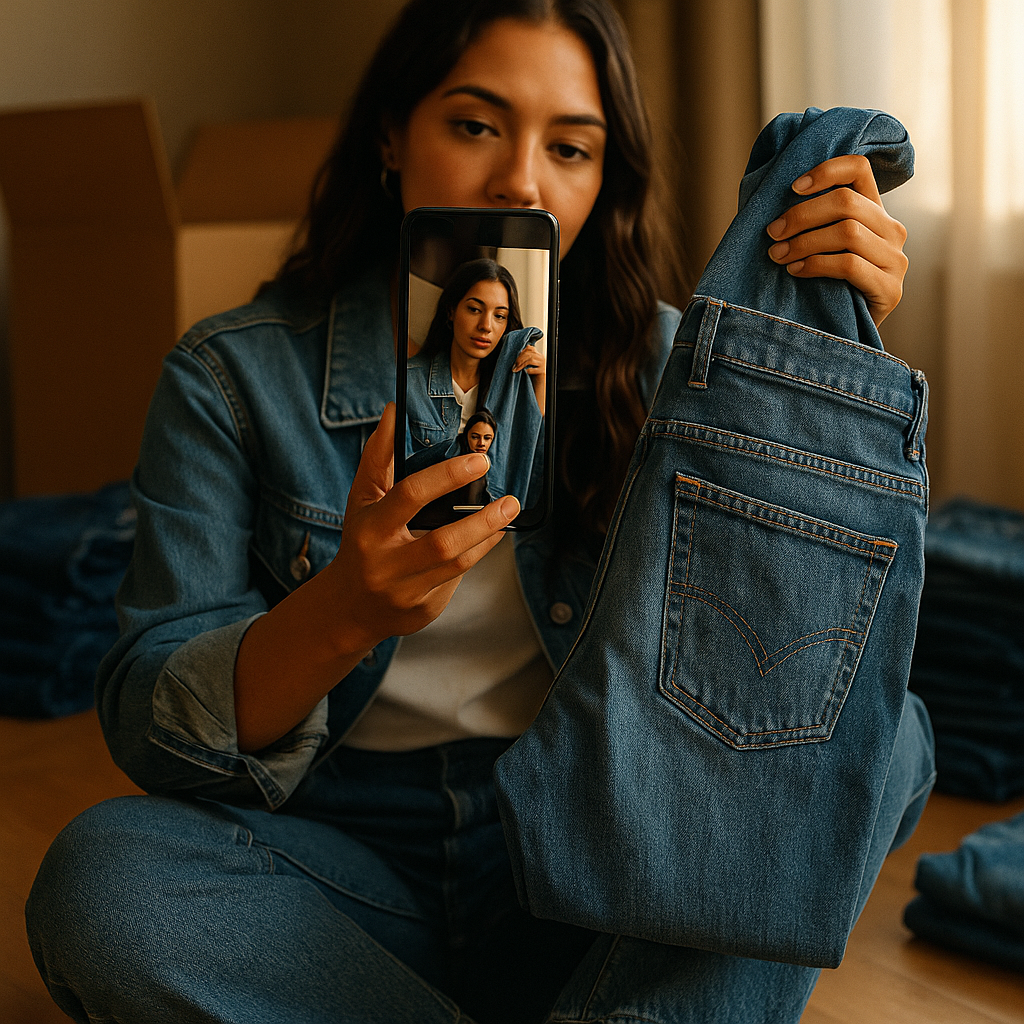
Sixty-eight percent inventory sell-through in five days. On a denim line, from a legacy mall brand nobody had called “cool” since the Clinton administration. Gap didn’t buy that outcome with a celebrity check alone — it engineered it with tiered creator seeding, and the Hailey Bieber collaboration became the case study every denim and apparel team is now dissecting in their planning decks.
The Setup: Why Gap Needed More Than a Famous Face
Gap’s denim business had been quietly bleeding relevance for years. Sales were fine. Cultural cachet was not. Signing Hailey Bieber as creative director was the headline move, but headlines don’t move size 27 straight-leg jeans off a shelf in six days. Gap’s marketing team knew that a single celebrity face, no matter how magnetic, creates awareness without necessarily creating urgency at the SKU level.
So the brief wasn’t “get Hailey to post.” It was “build a distribution system where Hailey’s launch content gets amplified, contextualized, and re-validated by dozens of other credible voices before the average shopper ever sees a paid ad.” That’s tiered seeding, and it’s a very different discipline than celebrity endorsement.
A single celebrity post creates a spike. A tiered seeding structure creates a wave that keeps cresting for days after the spike fades — which is exactly what a five-day sellout requires.
What “Tiered Creator Seeding” Actually Means Here
Gap’s team, working with its creator agency partners, structured the campaign in three distinct waves, each with a different job to do. This wasn’t improvised. It was scheduled, briefed, and measured like a media plan, because that’s essentially what it was.
- Tier 1 — The anchor (Hailey Bieber + a small cluster of mega and macro creators): High-production launch content, styled editorial imagery, and the “official” campaign narrative. This tier’s job was reach and credibility transfer — borrowing Hailey’s fashion authority to make the denim line feel like an event, not a rerelease.
- Tier 2 — The translators (mid-tier fashion and lifestyle creators, roughly 50K–500K followers): These accounts got early product access before public launch, styled the pieces in their own aesthetic, and posted “get ready with me” and try-on content. Their job was relatability — showing the jeans on bodies and in contexts that weren’t studio-lit.
- Tier 3 — The proof layer (nano and micro creators, largely under 20K followers): Seeded product directly to denim-obsessed niche accounts, thrifted-fashion commentators, and even a handful of tailoring and fit-focused creators. This tier generated the unscripted, slightly imperfect content that reads as authentic rather than sponsored — the reviews, the fit comparisons, the “is this worth it” videos.
Each tier launched on a staggered timeline, roughly 48 to 72 hours apart, so that by the time general consumers were seeing Tier 3 content in their feeds, they’d likely already caught a glimpse of the Hailey campaign somewhere else. That repetition, across different creator credibility levels, is what built purchase confidence fast.
Why Sequencing Mattered More Than Volume
Plenty of brands run multi-tier influencer campaigns and still get mediocre results, because they launch everything simultaneously. Gap’s team deliberately staggered releases to mimic how organic trends actually spread: a big cultural signal, followed by peer validation, followed by grassroots proof. It’s the same content distribution logic used in Skims’ seeding strategy for fast sellouts, applied to a legacy category that hadn’t seen this kind of urgency in over a decade.
The nano tier is worth dwelling on, because it’s the piece most legacy brands still underinvest in. Gap reportedly seeded product to several hundred nano and micro creators, well beyond the handful of macro names getting the trade press attention. That’s consistent with a broader pattern this publication has tracked across categories — nano-creator seeding routinely beats paid acquisition on cost efficiency, and denim, with its fit-and-feel purchase anxiety, is a near-perfect category for that kind of grassroots proof.
The Numbers That Made This a Case Study, Not Just a Campaign
Gap doesn’t disclose granular sell-through by SKU publicly, but trade reporting and retail analytics tracked in the days following launch pointed to specific denim styles selling out in-store and online within the first week, with restocks unable to keep pace in several core sizes. Search interest for “Gap Hailey Bieber denim” spiked dramatically in the 48 hours following the Tier 2 wave, not the initial announcement — a signal that the mid-tier translators, not the anchor talent, drove the conversion spike.
That detail matters enormously for anyone building a budget around this model. It suggests the expensive top-of-funnel talent did its job (awareness, credibility, press pickup), but the mid-tier and nano layers did the actual selling. If your media plan allocates 80% of budget to the anchor talent and treats the lower tiers as an afterthought, you’re likely inverting where the ROI actually lives.
Search and conversion data both pointed to the same conclusion: the celebrity opened the door, but mid-tier and nano creators pushed people through it.
Legacy Brand, Modern Playbook
Part of why this case study resonates beyond fashion is that Gap is, structurally, a legacy retailer with legacy retail problems: broad size runs, seasonal buy cycles, wholesale and owned-retail inventory to coordinate, and a customer base that skews older and less trend-reactive than a DTC startup’s. Executing a viral-speed sellout inside that kind of operational structure is genuinely hard.
Compare that to how much easier this playbook is for a brand built natively for creator-driven drops. It’s a similar structural challenge to what Chamberlain Coffee faced winning retail shelf space through nano-creator proof rather than traditional trade marketing — legacy retail systems weren’t designed for creator-speed demand spikes, and brands are having to retrofit inventory and replenishment planning to match.
The Inventory Risk Nobody Talks About
Selling out in under a week sounds like unambiguous good news. It isn’t, entirely. Sellouts create secondary problems: resale markup on platforms like Depop and Poshmark, frustrated full-price customers who can’t get their size, and pressure on merchandising teams to chase replenishment on a category that was planned six to nine months out. Gap’s team reportedly had contingency restock planned for the highest-velocity sizes, but even well-prepared teams get caught short when tiered seeding works better than the forecast assumed.
This is the operational risk side of the ROI conversation that brand teams need to have with merchandising and supply chain partners before launch, not after. A creator campaign that outperforms inventory planning isn’t a marketing win if it means empty shelves and a customer service backlog for three weeks.
What Brand Teams Should Actually Take From This
If you’re planning a comparable collaboration launch, a few operational principles from this case translate cleanly across categories:
- Budget the middle, not just the top. Anchor talent buys credibility and press. Mid-tier creators appear to be doing more of the conversion heavy lifting — fund that tier accordingly.
- Stagger, don’t blast. A 48-72 hour cadence between tiers mimics organic discovery and builds compounding trust signals rather than one-time reach.
- Brief for fit and function, not just style. Denim lives or dies on fit anxiety. Nano creators doing genuine try-on and fit-comparison content solve a purchase objection that polished editorial content can’t.
- War-game the sellout scenario with supply chain before launch. If the campaign works, can operations actually respond fast enough to capture the demand tail, or does it evaporate into backorders and resale markups?
- Track search and social listening data by tier launch date, not just campaign-wide, so you can see which layer is actually driving the conversion lift — the way Gap’s data pointed to Tier 2, not Tier 1, as the real sales driver.
This same tiering logic shows up in categories far outside fashion. REI’s nano-influencer trail review strategy and Warby Parker’s try-on video approach both lean on the same principle: authentic, lower-tier proof content closes the purchase decision that top-of-funnel awareness content can only open.
None of this works without disclosure discipline, either. With this many creators across this many tiers, FTC compliance monitoring becomes a genuine operational lift, not a checkbox — worth reviewing the FTC’s endorsement guidance if you’re scaling a similar multi-tier program, since inconsistent disclosure across hundreds of creators is exactly the kind of thing that draws regulatory attention.
Industry data from firms like eMarketer and Statista has shown creator-driven campaigns consistently outperforming traditional celebrity-only endorsement models on engagement-to-conversion ratios, and Gap’s denim relaunch fits that pattern almost exactly — proof that even a 50-year-old category can behave like a hype drop when the seeding structure is right.
FAQs
What is tiered creator seeding?
Tiered creator seeding is a campaign structure that sends product and briefs to multiple creator tiers — typically mega/celebrity, mid-tier, and nano/micro — on a staggered schedule, so each tier’s content builds credibility and urgency for the next wave rather than launching all at once.
Why did Gap use Hailey Bieber alongside smaller creators instead of relying on her alone?
Celebrity content drives awareness and press coverage but rarely resolves purchase hesitation on its own. Mid-tier and nano creators provided relatable styling, fit demonstrations, and unscripted reviews that addressed real shopper objections, which appears to have driven more of the actual conversion.
How fast did the Gap denim collaboration sell out?
Trade reporting and retail tracking indicated key styles sold through in roughly under a week, with several core sizes experiencing stockouts faster than replenishment could respond.
Is tiered seeding more cost-effective than a celebrity-only campaign?
Generally yes, on a cost-per-conversion basis. Celebrity fees consume a large share of budget for reach and credibility, while nano and micro tiers tend to cost far less per creator and often drive stronger conversion signals, similar to patterns seen in other nano-creator seeding case studies across retail and CPG.
What’s the biggest operational risk with this kind of campaign?
Inventory planning. A campaign that outperforms forecast can sell out faster than supply chains can restock, creating stockouts, customer frustration, and resale price inflation on secondary marketplaces.
Can smaller or legacy brands realistically replicate this playbook?
Yes, though it requires cross-functional coordination between marketing, merchandising, and supply chain that many legacy retail structures aren’t built for by default. The creator strategy itself scales down well; the operational readiness is the harder part to replicate.
Next step: if you’re planning a legacy-category relaunch, don’t just budget the anchor talent. Model your creator spend across all three tiers, stagger the launch calendar by 48-72 hours per wave, and get supply chain in the room before the brief is finalized, not after the sellout headline.
FAQs
What is tiered creator seeding?
Tiered creator seeding is a campaign structure that sends product and briefs to multiple creator tiers — typically mega/celebrity, mid-tier, and nano/micro — on a staggered schedule, so each tier’s content builds credibility and urgency for the next wave rather than launching all at once.
Why did Gap use Hailey Bieber alongside smaller creators instead of relying on her alone?
Celebrity content drives awareness and press coverage but rarely resolves purchase hesitation on its own. Mid-tier and nano creators provided relatable styling, fit demonstrations, and unscripted reviews that addressed real shopper objections, which appears to have driven more of the actual conversion.
How fast did the Gap denim collaboration sell out?
Trade reporting and retail tracking indicated key styles sold through in roughly under a week, with several core sizes experiencing stockouts faster than replenishment could respond.
Is tiered seeding more cost-effective than a celebrity-only campaign?
Generally yes, on a cost-per-conversion basis. Celebrity fees consume a large share of budget for reach and credibility, while nano and micro tiers tend to cost far less per creator and often drive stronger conversion signals, similar to patterns seen in other nano-creator seeding case studies across retail and CPG.
What’s the biggest operational risk with this kind of campaign?
Inventory planning. A campaign that outperforms forecast can sell out faster than supply chains can restock, creating stockouts, customer frustration, and resale price inflation on secondary marketplaces.
Can smaller or legacy brands realistically replicate this playbook?
Yes, though it requires cross-functional coordination between marketing, merchandising, and supply chain that many legacy retail structures aren’t built for by default. The creator strategy itself scales down well; the operational readiness is the harder part to replicate.
Top Influencer Marketing Agencies
The leading agencies shaping influencer marketing in 2026
Agencies ranked by campaign performance, client diversity, platform expertise, proven ROI, industry recognition, and client satisfaction. Assessed through verified case studies, reviews, and industry consultations.
Moburst

-
2

The Shelf
Boutique Beauty & Lifestyle Influencer AgencyA data-driven boutique agency specializing exclusively in beauty, wellness, and lifestyle influencer campaigns on Instagram and TikTok. Best for brands already focused on the beauty/personal care space that need curated, aesthetic-driven content.Clients: Pepsi, The Honest Company, Hims, Elf Cosmetics, Pure LeafVisit The Shelf → -
3

Audiencly
Niche Gaming & Esports Influencer AgencyA specialized agency focused exclusively on gaming and esports creators on YouTube, Twitch, and TikTok. Ideal if your campaign is 100% gaming-focused — from game launches to hardware and esports events.Clients: Epic Games, NordVPN, Ubisoft, Wargaming, Tencent GamesVisit Audiencly → -
4

Viral Nation
Global Influencer Marketing & Talent AgencyA dual talent management and marketing agency with proprietary brand safety tools and a global creator network spanning nano-influencers to celebrities across all major platforms.Clients: Meta, Activision Blizzard, Energizer, Aston Martin, WalmartVisit Viral Nation → -
5

The Influencer Marketing Factory
TikTok, Instagram & YouTube CampaignsA full-service agency with strong TikTok expertise, offering end-to-end campaign management from influencer discovery through performance reporting with a focus on platform-native content.Clients: Google, Snapchat, Universal Music, Bumble, YelpVisit TIMF → -
6

NeoReach
Enterprise Analytics & Influencer CampaignsAn enterprise-focused agency combining managed campaigns with a powerful self-service data platform for influencer search, audience analytics, and attribution modeling.Clients: Amazon, Airbnb, Netflix, Honda, The New York TimesVisit NeoReach → -
7

Ubiquitous
Creator-First Marketing PlatformA tech-driven platform combining self-service tools with managed campaign options, emphasizing speed and scalability for brands managing multiple influencer relationships.Clients: Lyft, Disney, Target, American Eagle, NetflixVisit Ubiquitous → -
8

Obviously
Scalable Enterprise Influencer CampaignsA tech-enabled agency built for high-volume campaigns, coordinating hundreds of creators simultaneously with end-to-end logistics, content rights management, and product seeding.Clients: Google, Ulta Beauty, Converse, AmazonVisit Obviously →