


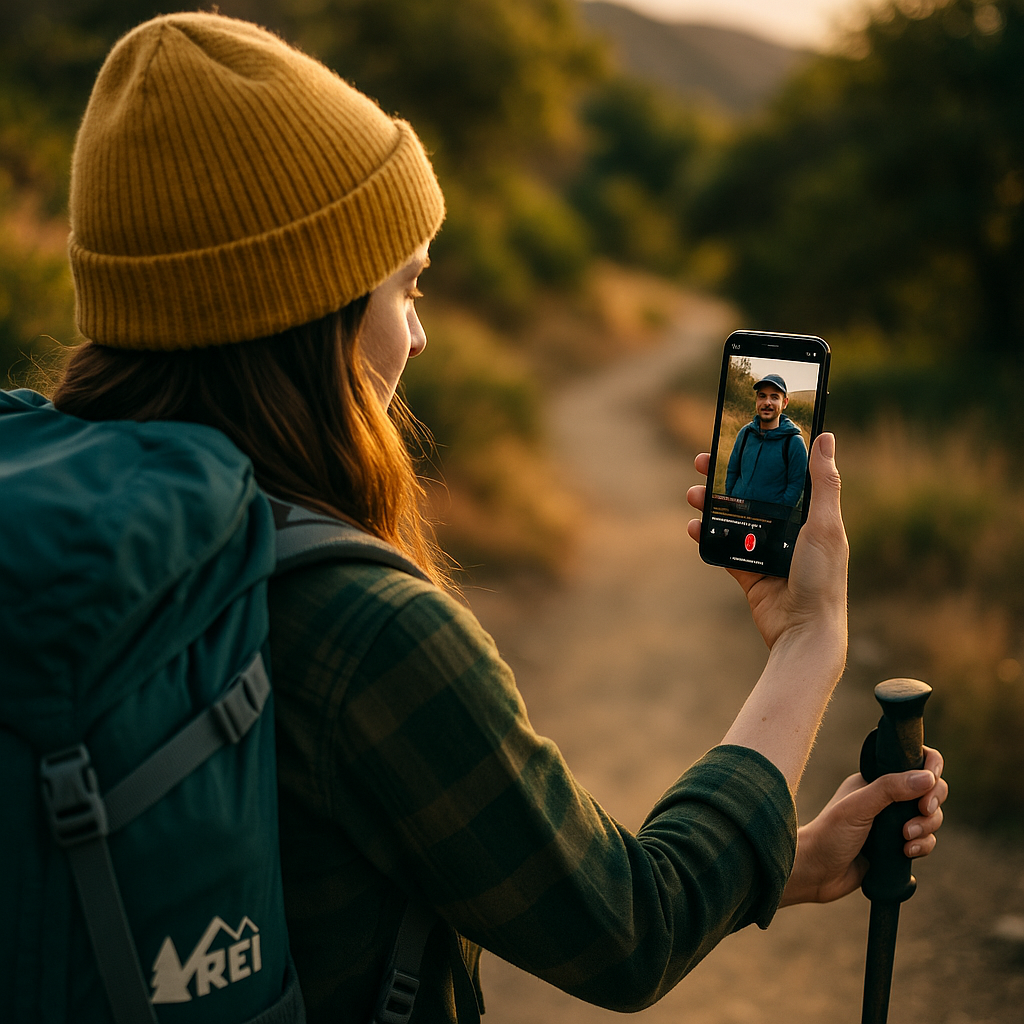
Gear trade-in programs are only as good as the traffic that finds them. REI’s Re/Supply resale arm was sitting on a solid value proposition — trade old gear for store credit — but foot traffic to trigger trades wasn’t scaling with paid media alone. So the co-op leaned into something smaller and scrappier: nano-influencer trail reviews. The result was a measurable lift in trade-in visits, at a fraction of the cost of geo-targeted display. This is the nano-influencer trail review playbook, and why it matters for any retailer sitting on underused inventory loops.
Why Trade-In Traffic Is a Different Problem Than Sales Traffic
Selling gear is easy to incentivize. Getting someone to bring gear back is a different behavioral ask entirely. Trade-in requires the customer to do work: dig out old boots, assess condition, drive to a store, wait in line for an appraisal. That’s friction paid media struggles to overcome, because a banner ad can create desire but it can’t create trust that the trip will be worth it.
That’s the gap REI needed to close. Shoppers don’t trust a brand’s own claims about “generous trade-in values” — they trust another hiker who actually did it and got a number they were happy with. Nano-influencers, typically creators with 1,000 to 15,000 followers, sit exactly at that trust intersection: known enough to have an audience, small enough to feel like a peer rather than a spokesperson.
Trade-in programs don’t fail because the offer is weak — they fail because nobody believable vouches for the actual in-store experience.
The Trail Review Format: Content That Does Double Duty
REI’s approach centered on a specific content format: trail reviews that organically worked in gear condition and trade-in mentions. A creator posts a review of a regional trail — say, a rugged loop in the Columbia River Gorge — and somewhere in the narrative, mentions swapping out worn boots for a trade-in credit before the hike, or plans to trade in a tent after the trip wraps.
This format works for three reasons:
- It’s native to outdoor content. Gear talk is expected in trail reviews; nobody scrolls past it as an ad.
- It’s regionally targetable. REI could match creators to specific trail systems near specific store locations, making the store visit feel like a logical extension of the content rather than a bolt-on CTA.
- It documents the trade-in process itself. Several creators filmed the actual in-store appraisal, which demystified a process a lot of customers assumed would be a hassle or a lowball offer.
Compare this to how other brands have used ultra-small creators to solve a specific bottleneck rather than run a general awareness campaign. Ryobi’s nano-creator network did something structurally similar: instead of broad brand content, they targeted a specific purchase moment with creators embedded in the actual use case.
How REI Selected and Briefed Creators
REI didn’t run this through a traditional influencer agency sweep. The team (working alongside regional store managers) identified creators already posting organic trail content near specific store markets — Seattle, Denver, Asheville, Salt Lake City — and prioritized creators who had posted about used gear or thrifting outdoor equipment before. That prior behavior was a signal of authentic alignment, not just topical relevance.
The brief was deliberately loose. Rather than scripting a trade-in pitch, REI gave creators:
- A trade-in value estimate range for common gear categories (boots, packs, tents, sleeping bags)
- A code or trackable link tied to their specific store location
- An open invitation to film the in-store drop-off if they wanted to (optional, not mandated)
No flat appearance fee structure dominated here — most nano-creators were compensated with trade-in value boosts or store credit multipliers, which kept costs low and aligned incentive with the exact action REI wanted (trade-ins, not just impressions). That’s a similar mechanic to what’s shown in Chipotle’s shift away from flat influencer fees toward performance-based compensation — paying for the outcome, not just the post.
Tracking Store Visits From Social Content (The Hard Part)
Attribution is always the sticking point with in-store campaigns. REI solved it with a layered approach rather than one silver-bullet tool:
- Unique trade-in codes per creator redeemable at point-of-sale, which store staff logged directly into the POS system.
- Store-specific landing pages linked from creator bios, showing trade-in value calculators pre-filtered to that store’s current gear demand.
- Post-visit surveys at checkout asking “How did you hear about our trade-in program?” with a specific creator-content option.
None of these are novel individually. Combined, they gave REI a reasonably confident view of incremental visits attributable to creator content, without needing a full media-mix model. This mirrors the attribution logic used in Chipotle’s same-day order attribution fix, where the brand solved a similar “we know it’s working but can’t prove it” problem with layered tracking rather than one perfect tool.
You don’t need perfect attribution to justify a nano-influencer program. You need consistent, directional evidence that survives budget scrutiny.
What the Numbers Actually Showed
REI hasn’t published a formal case study with exact figures, but reporting and creator-side disclosures point to a few directional truths worth noting for anyone modeling a similar test:
- Store visits tied to trackable trade-in codes materially outperformed the cost-per-visit of geo-targeted paid social in test markets.
- Creators with under 10,000 followers drove higher redemption rates per post than mid-tier creators (50k-200k), likely because the audience overlap with actual local hikers was tighter.
- Video content showing the in-store appraisal process had noticeably higher completion rates and comment engagement than pure trail footage, suggesting the “demystify the process” angle mattered as much as the outdoor content itself.
This tracks with broader creator economy data. eMarketer has repeatedly flagged nano and micro creators as delivering stronger engagement rates than macro-influencers, even as follower counts (and therefore theoretical reach) are much smaller. It’s the classic reach-versus-relevance trade-off, and for a task like trade-in traffic, relevance wins.
Other retail-adjacent examples back this up. ThredUp’s nano-creator resale hauls beat paid social on cost-per-acquisition using nearly identical creator-tier logic — small audiences, high trust, resale-specific content that doesn’t feel like an ad.
The Compliance Layer Brands Skip (And Regret)
Any campaign involving compensation — even non-cash trade-in credit boosts — triggers FTC disclosure obligations. REI required creators to use clear disclosure language (#ad or #REIpartner, depending on the arrangement) even when the “payment” was a trade-in value bump rather than cash. That’s not optional under current FTC guidance on material connections, and brands that treat in-kind compensation as exempt from disclosure are exposing themselves to real regulatory risk.
Brand and agency teams running similar programs should build disclosure verification into the workflow, not treat it as a creator’s personal responsibility. A simple checklist works: confirm disclosure language is present before content goes live, screenshot for records, and re-check quarterly since platform policies and creator habits both drift over time.
Where This Model Breaks (And Who Shouldn’t Copy It Blindly)
This isn’t a universal template. A few conditions made it work for REI specifically:
- A physical store network with real estate near outdoor activity. Trade-in traffic only works if the store is genuinely convenient to the trail-going audience.
- An existing trade-in program with real value. Nano-creators can’t manufacture trust in a bad offer. If the trade-in values were mediocre, no amount of authentic content saves the conversion.
- A category where gear condition and outdoor use are naturally discussed. Trail reviews work because gear talk is organic. A financial services brand or a SaaS company doesn’t have an equivalent content format sitting there waiting to be used.
Retailers with loyalty or resale programs but no physical footprint should look instead at models like Vessi’s single-video referral engine, which drove shop traffic without needing store-specific geographic targeting.
What This Means for Budget Allocation
The practical takeaway for brand teams: nano-influencer trade-in campaigns cost less per creator, but they cost more in operational overhead — sourcing, tracking codes per store, compliance checks, and manual attribution reconciliation. Teams considering this model should budget for a coordinator role, not just a content line item. According to Sprout Social’s creator marketing research, brands running nano-influencer programs at scale consistently cite operational management, not creator fees, as the biggest hidden cost.
FAQs
Frequently Asked Questions
What is a nano-influencer trail review campaign?
It’s a content strategy where creators with roughly 1,000 to 15,000 followers publish outdoor trail reviews that naturally reference gear condition and trade-in programs, driving trust-based, regionally-targeted store visits rather than broad awareness.
Why did REI use nano-influencers instead of larger outdoor influencers?
Nano-influencers had tighter audience overlap with local hikers actually near specific REI stores, higher trust levels around gear recommendations, and lower cost per creator, which made region-by-region testing financially feasible.
How does a retailer track in-store visits from social content?
REI used a layered approach: unique trade-in codes redeemed at POS, store-specific landing pages with trade-in calculators, and post-visit checkout surveys asking how customers heard about the program. No single tool solved attribution alone.
Do nano-influencers need to disclose in-kind compensation like trade-in credit?
Yes. FTC guidance treats non-cash compensation, including trade-in value boosts or store credit, as a material connection requiring clear disclosure, regardless of whether cash changed hands.
Can this trade-in traffic model work for brands without physical stores?
Not directly. The model depends on a physical retail footprint near the audience’s real-world activity. Brands without stores should look at referral-link or shop-traffic models instead of store-visit attribution.
What’s the biggest hidden cost in a nano-influencer trade-in program?
Operational management — sourcing creators per region, distributing unique tracking codes, verifying disclosure compliance, and reconciling attribution — typically costs more in team time than the creator fees themselves.
The takeaway for brand teams sitting on an underused loyalty or trade-in mechanic: don’t scale creator count first, scale attribution rigor first. Get the tracking codes and disclosure workflow right on a five-creator test in one market before you expand to fifty.
Top Influencer Marketing Agencies
The leading agencies shaping influencer marketing in 2026
Agencies ranked by campaign performance, client diversity, platform expertise, proven ROI, industry recognition, and client satisfaction. Assessed through verified case studies, reviews, and industry consultations.
Moburst

-
2

The Shelf
Boutique Beauty & Lifestyle Influencer AgencyA data-driven boutique agency specializing exclusively in beauty, wellness, and lifestyle influencer campaigns on Instagram and TikTok. Best for brands already focused on the beauty/personal care space that need curated, aesthetic-driven content.Clients: Pepsi, The Honest Company, Hims, Elf Cosmetics, Pure LeafVisit The Shelf → -
3

Audiencly
Niche Gaming & Esports Influencer AgencyA specialized agency focused exclusively on gaming and esports creators on YouTube, Twitch, and TikTok. Ideal if your campaign is 100% gaming-focused — from game launches to hardware and esports events.Clients: Epic Games, NordVPN, Ubisoft, Wargaming, Tencent GamesVisit Audiencly → -
4

Viral Nation
Global Influencer Marketing & Talent AgencyA dual talent management and marketing agency with proprietary brand safety tools and a global creator network spanning nano-influencers to celebrities across all major platforms.Clients: Meta, Activision Blizzard, Energizer, Aston Martin, WalmartVisit Viral Nation → -
5

The Influencer Marketing Factory
TikTok, Instagram & YouTube CampaignsA full-service agency with strong TikTok expertise, offering end-to-end campaign management from influencer discovery through performance reporting with a focus on platform-native content.Clients: Google, Snapchat, Universal Music, Bumble, YelpVisit TIMF → -
6

NeoReach
Enterprise Analytics & Influencer CampaignsAn enterprise-focused agency combining managed campaigns with a powerful self-service data platform for influencer search, audience analytics, and attribution modeling.Clients: Amazon, Airbnb, Netflix, Honda, The New York TimesVisit NeoReach → -
7

Ubiquitous
Creator-First Marketing PlatformA tech-driven platform combining self-service tools with managed campaign options, emphasizing speed and scalability for brands managing multiple influencer relationships.Clients: Lyft, Disney, Target, American Eagle, NetflixVisit Ubiquitous → -
8

Obviously
Scalable Enterprise Influencer CampaignsA tech-enabled agency built for high-volume campaigns, coordinating hundreds of creators simultaneously with end-to-end logistics, content rights management, and product seeding.Clients: Google, Ulta Beauty, Converse, AmazonVisit Obviously →