


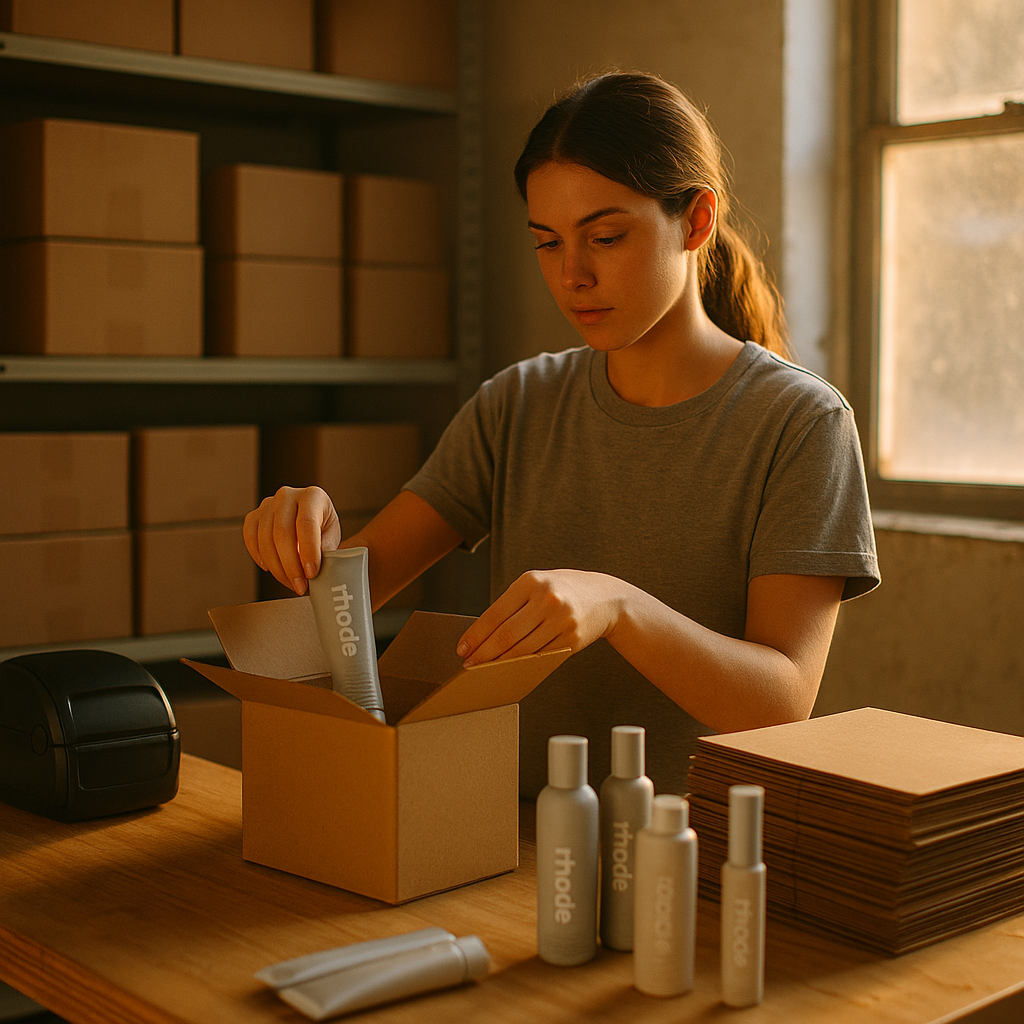
Zero warehouse. Zero returns processing. Zero paid media on launch day. And yet Rhode Skin has sold out every single US product launch since 2023, some in under an hour. The trick wasn’t scarcity marketing or influencer fees in the six figures. It was a direct-to-creator seeding model that skipped the warehouse entirely and shipped straight from the manufacturer to the mailbox of a few hundred creators. No fulfillment center. No inventory sitting idle. Just product moving straight into content.
That’s the case study worth dissecting. Not because Rhode is a celebrity brand with a built-in audience (though it helps), but because the operational model behind its seeding strategy is replicable for brands without a founder who has 45 million Instagram followers.
The Problem With Traditional Seeding
Most beauty brands run seeding programs the same way they’ve run them for a decade: bulk-ship product to a warehouse, wait for a 3PL to pick and pack, then mail out PR boxes weeks after the news cycle has moved on. By the time a creator receives the product, the launch buzz is gone. Worse, the brand has now paid for warehousing, packing labor, and shipping, on top of whatever gifting or fee arrangement exists with the creator.
Rhode’s team, led by former Glossier alums who understood direct-to-consumer operations intimately, built something different. They treat seeding as a logistics problem first and a marketing problem second. Product ships from the co-manufacturer’s facility directly to a curated creator list, often within 48 hours of a batch being finished. No middle step. No warehouse dwell time.
Rhode’s average time from production run to creator unboxing is reportedly under five days, compared to an industry norm of two to three weeks for brands routing through standard warehouse fulfillment.
Why Skipping the Warehouse Actually Works
Here’s the counterintuitive part. Brands assume a warehouse gives them control: quality checks, batch tracking, inventory visibility. Rhode’s team decided that control was less valuable than speed. When you’re launching a lip tint that will sell out in 11 minutes (as the Pocket Blush did on its debut), the marginal value of a week saved in fulfillment massively outweighs the marginal risk of skipping a formal QA checkpoint at a warehouse.
This isn’t reckless. Rhode still does quality control, just earlier in the chain, at the manufacturing partner level, rather than at a third-party warehouse. That’s a structural shift, not a corner cut.
The other advantage: cash flow. Warehousing ties up capital in held inventory. Rhode’s direct-ship model means product doesn’t sit anywhere long enough to become a balance-sheet liability. For a DTC brand that was, until recently, privately funded and famously scrappy, that matters. eMarketer’s research on DTC beauty economics consistently flags inventory carrying costs as one of the biggest margin killers for challenger brands. Rhode simply removed that line item from the seeding side of the business.
The Creator Selection Model: Small List, High Trust
Rhode doesn’t seed to thousands of creators. It seeds to a tight, rotating list, often fewer than 300 names per launch, built around three tiers:
- Anchor creators: a handful of mid-tier beauty and lifestyle creators who’ve worked with the brand across multiple launches and understand the aesthetic without a brief.
- Rotating discovery creators: new names each cycle, sourced from comment sections, UGC hashtags, and TikTok Shop affiliate data showing organic mentions of the brand.
- Employee and founder-adjacent voices: internal team members and close industry contacts who post organically, without being labeled “ambassadors.”
This tiered approach mirrors what other DTC brands have done successfully. Aritzia’s tiered seeding strategy sold out a pant with zero paid media, using a similarly layered creator list instead of a flat blast to every name in a spreadsheet. Rhode’s version is smaller and beauty-specific, but the operating logic is identical: fewer, better-matched creators beat volume every time.
The result is a feed that looks organic because it largely is. Nobody’s contractually obligated to post within 48 hours with a specific caption. Rhode bets that good product plus good timing produces content naturally, and the data backs that bet up. Posts about Rhode launches routinely rack up organic engagement rates well above the beauty category average tracked by Sprout Social’s industry benchmarking reports.
Timing the Drop: Scarcity as Operations, Not Marketing Copy
Every Rhode launch follows a near-identical operational rhythm. Seed product to creators five to seven days before public sale. Let organic content build for 72 hours. Open sales on a Thursday morning, historically the brand’s best-converting day. Sell out within hours. Restock, sometimes within the same week, sometimes not for a month.
Is the “sell out” moment engineered? Partly. Rhode intentionally under-produces initial batches relative to seeded-content demand signals. That’s a calculated risk: undersupply looks like scarcity marketing, but it’s really a hedge against overproducing a shade or formula that doesn’t resonate. If a launch flops in creator hands, Rhode hasn’t sunk six figures into inventory sitting in a warehouse. It’s sunk a much smaller cost into a limited seeded batch.
This is where the zero-warehouse model becomes a genuine risk-mitigation tool, not just a speed play. Brands that over-invest in inventory ahead of a launch are betting blind on demand. Rhode is testing demand through creator response before committing serious production capital. That’s a meaningfully different risk posture, and one more CPG and beauty brands should study, especially given how Olipop built a multi-billion-dollar category using a comparably lean, creator-first testing approach before scaling production.
What Rhode Doesn’t Do (And Why That Matters)
No large upfront influencer fees. No 20-page contracts requiring specific hashtags, disclosures beyond FTC minimums, or usage rights spanning 12 months of paid media. Rhode keeps agreements light, mostly gifting-based with occasional flat fees for anchor creators, which keeps legal and compliance overhead low.
That said, brands replicating this model shouldn’t skip disclosure compliance to move faster. The FTC’s endorsement guidelines apply regardless of whether product was “gifted” or paid for outright. Any brand running a seeding program at scale needs a documented disclosure policy, even if the creative brief itself stays loose. Skipping that step isn’t a shortcut, it’s a liability waiting to surface.
Applying the Rhode Model Without Rhode’s Budget
Most brands reading this aren’t backed by a founder with a pre-built audience of tens of millions. So what actually transfers?
- Ship direct from your manufacturer or co-packer where possible. Even a partial direct-ship lane for your top 50 creators removes days from the seeding timeline.
- Shrink your list before you grow it. A tight roster of creators who genuinely like the product outperforms a mass-gifting blast, a pattern also seen in how Gap sold out denim in days using tiered seeding rather than broad-reach gifting.
- Under-produce your first batch on purpose. Treat the initial run as a demand test, not a full commercial launch.
- Build a disclosure policy before you build a creator list. Compliance debt is expensive to pay down later.
- Track organic mentions, not just seeded posts. Rhode’s discovery-tier creators often come from TikTok Shop affiliate and comment-section data, not manual outreach.
The real lesson isn’t “skip the warehouse.” It’s “match your inventory commitment to your actual confidence in demand, and let creators tell you what that demand looks like before you scale production.”
Brands like Skims and Graza have run variations of this playbook in their own categories, proving it’s not beauty-specific or celebrity-founder-specific. It’s a supply chain philosophy dressed up as a marketing strategy.
FAQs
Frequently Asked Questions
What is direct-to-creator seeding?
Direct-to-creator seeding is a product distribution model where a brand ships items straight from its manufacturer or co-packer to creators, bypassing a traditional warehouse or third-party logistics provider. It shortens the time between production and content creation, which is critical for launches timed around social buzz.
How does Rhode Skin manage inventory without a warehouse?
Rhode ships seeded product directly from its manufacturing partner to a curated list of creators, and coordinates public sale inventory through a lean production run tied closely to demand signals gathered during the seeding phase. This reduces held inventory and the associated carrying costs.
Is under-producing a launch batch a legitimate business strategy?
Yes, when done deliberately. Treating an initial batch as a demand test rather than a full commercial rollout limits financial exposure if a product underperforms, while still allowing brands to scale quickly via restocks if creator content and early sales validate demand.
Do brands still need FTC disclosure compliance with gifted product?
Absolutely. The FTC’s endorsement guidelines apply to gifted and paid partnerships alike. Brands running seeding programs should have a documented disclosure policy regardless of whether creators receive free product, a flat fee, or commission-based compensation.
Can smaller brands without celebrity founders replicate this model?
Yes. The core mechanics, shrinking the creator list, shipping direct where possible, and under-producing the first batch, aren’t dependent on founder fame. They’re operational choices any brand with a responsive manufacturing partner can adopt.
Frequently Asked Questions
What is direct-to-creator seeding?
Direct-to-creator seeding is a product distribution model where a brand ships items straight from its manufacturer or co-packer to creators, bypassing a traditional warehouse or third-party logistics provider. It shortens the time between production and content creation, which is critical for launches timed around social buzz.
How does Rhode Skin manage inventory without a warehouse?
Rhode ships seeded product directly from its manufacturing partner to a curated list of creators, and coordinates public sale inventory through a lean production run tied closely to demand signals gathered during the seeding phase. This reduces held inventory and the associated carrying costs.
Is under-producing a launch batch a legitimate business strategy?
Yes, when done deliberately. Treating an initial batch as a demand test rather than a full commercial rollout limits financial exposure if a product underperforms, while still allowing brands to scale quickly via restocks if creator content and early sales validate demand.
Do brands still need FTC disclosure compliance with gifted product?
Absolutely. The FTC’s endorsement guidelines apply to gifted and paid partnerships alike. Brands running seeding programs should have a documented disclosure policy regardless of whether creators receive free product, a flat fee, or commission-based compensation.
Can smaller brands without celebrity founders replicate this model?
Yes. The core mechanics, shrinking the creator list, shipping direct where possible, and under-producing the first batch, aren’t dependent on founder fame. They’re operational choices any brand with a responsive manufacturing partner can adopt.
Next step: Before your next launch, map your current seeding timeline from production to creator unboxing. If it’s longer than a week, that’s your first place to cut, not your creator list, not your budget.
Top Influencer Marketing Agencies
The leading agencies shaping influencer marketing in 2026
Agencies ranked by campaign performance, client diversity, platform expertise, proven ROI, industry recognition, and client satisfaction. Assessed through verified case studies, reviews, and industry consultations.
Moburst

-
2

The Shelf
Boutique Beauty & Lifestyle Influencer AgencyA data-driven boutique agency specializing exclusively in beauty, wellness, and lifestyle influencer campaigns on Instagram and TikTok. Best for brands already focused on the beauty/personal care space that need curated, aesthetic-driven content.Clients: Pepsi, The Honest Company, Hims, Elf Cosmetics, Pure LeafVisit The Shelf → -
3

Audiencly
Niche Gaming & Esports Influencer AgencyA specialized agency focused exclusively on gaming and esports creators on YouTube, Twitch, and TikTok. Ideal if your campaign is 100% gaming-focused — from game launches to hardware and esports events.Clients: Epic Games, NordVPN, Ubisoft, Wargaming, Tencent GamesVisit Audiencly → -
4

Viral Nation
Global Influencer Marketing & Talent AgencyA dual talent management and marketing agency with proprietary brand safety tools and a global creator network spanning nano-influencers to celebrities across all major platforms.Clients: Meta, Activision Blizzard, Energizer, Aston Martin, WalmartVisit Viral Nation → -
5

The Influencer Marketing Factory
TikTok, Instagram & YouTube CampaignsA full-service agency with strong TikTok expertise, offering end-to-end campaign management from influencer discovery through performance reporting with a focus on platform-native content.Clients: Google, Snapchat, Universal Music, Bumble, YelpVisit TIMF → -
6

NeoReach
Enterprise Analytics & Influencer CampaignsAn enterprise-focused agency combining managed campaigns with a powerful self-service data platform for influencer search, audience analytics, and attribution modeling.Clients: Amazon, Airbnb, Netflix, Honda, The New York TimesVisit NeoReach → -
7

Ubiquitous
Creator-First Marketing PlatformA tech-driven platform combining self-service tools with managed campaign options, emphasizing speed and scalability for brands managing multiple influencer relationships.Clients: Lyft, Disney, Target, American Eagle, NetflixVisit Ubiquitous → -
8

Obviously
Scalable Enterprise Influencer CampaignsA tech-enabled agency built for high-volume campaigns, coordinating hundreds of creators simultaneously with end-to-end logistics, content rights management, and product seeding.Clients: Google, Ulta Beauty, Converse, AmazonVisit Obviously →