


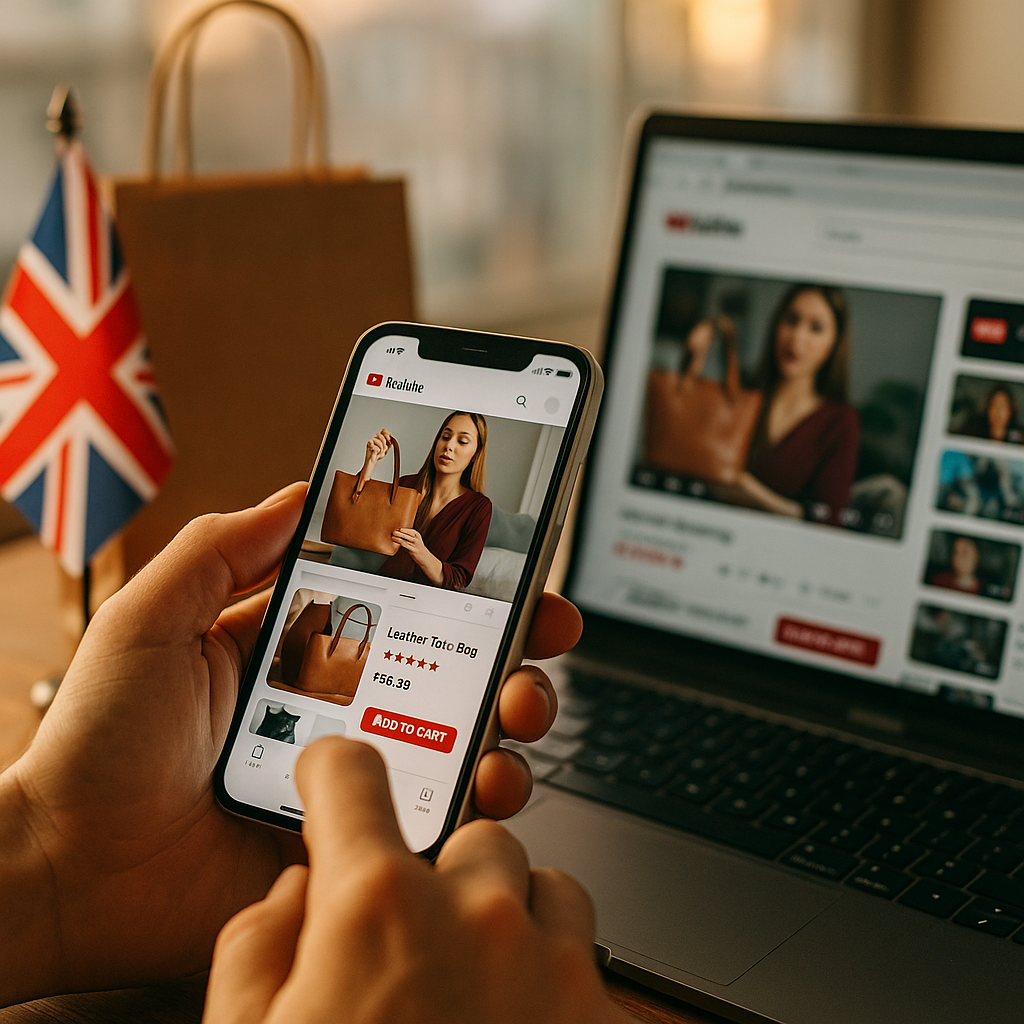
YouTube’s affiliate marketplace now touches over 25 million channels globally, yet most UK retailers still treat it as an afterthought bolted onto their Instagram and TikTok strategy. That’s a mistake. A properly built YouTube Shopping affiliate program can outperform short-form commerce on basket size and customer lifetime value, simply because long-form video builds trust before it builds a cart. This playbook shows you exactly how to launch one without the trial-and-error most brands go through first.
Why YouTube Shopping Deserves Its Own Line Item
Retailers love to lump YouTube into a generic “video influencer” budget alongside TikTok and Instagram. That’s lazy planning. YouTube viewers behave differently: they watch longer, they research more, and they convert on higher-consideration purchases. A 12-minute product review carries far more purchase intent than a 15-second Reel, and the affiliate infrastructure Google has built reflects that.
Since expanding its Shopping affiliate program across international markets, YouTube has given creators the ability to tag products directly in videos, Shorts, and live streams, with commissions tracked automatically through Google’s backend. For UK retailers, this means your products can appear as clickable tags beneath a tutorial, unboxing, or “what’s in my bag” video, with no manual link-tracking required.
Brands running structured YouTube affiliate programs report average order values 20-30% higher than short-form commerce channels, largely because purchase decisions happen after longer consideration windows.
Step One: Get Your Product Feed Shopping-Ready
Before you recruit a single creator, your catalogue needs to be technically sound. YouTube Shopping pulls from Google Merchant Center, so if your feed is messy, nothing downstream will work properly.
- Sync your product feed to Google Merchant Center and verify GTINs, pricing, and stock status are accurate and updating in near real-time.
- Confirm UK VAT-inclusive pricing displays correctly. Nothing kills conversion faster than a price mismatch at checkout.
- Enable “Shopping tags” eligibility inside your YouTube channel or partner storefront settings.
- Segment your catalogue. Not every SKU deserves affiliate promotion; prioritise products with healthy margins that can absorb commission without crushing profitability.
Skip this step and you’ll waste weeks debugging broken product tags after creators have already published content. Fix the plumbing first.
Structuring Commission Rates That Don’t Bleed Margin
This is where most retailers get nervous, and rightly so. Commission structures need to be generous enough to motivate creators but disciplined enough to protect your margin.
A common UK approach: tiered commissions starting at 8-10% for standard affiliate creators, rising to 15%+ for exclusive partners who commit to a minimum content cadence. Fashion and beauty retailers often run higher rates (12-20%) given category norms on platforms like eMarketer-tracked affiliate benchmarks, while electronics and home goods sit lower due to thinner margins.
Don’t just copy TikTok Shop rates. YouTube audiences convert differently, and creators there often expect compensation that reflects the production effort behind a 10-minute review versus a 30-second clip.
Rule of thumb: if your commission rate wouldn’t survive a 20% return rate on the category, it’s set too high.
Build in a returns clawback clause. Commissions should reconcile against confirmed, non-returned sales, not just click-throughs. Your finance team will thank you.
Finding and Vetting Creators Who Actually Sell
Subscriber count is a vanity metric here. What matters is whether a creator’s audience buys. Look at engagement quality, comment sentiment, and whether previous brand mentions drove any traceable action.
Three sourcing routes work well for UK retailers:
- YouTube’s own creator marketplace tools, which surface channels already opted into affiliate programs.
- Category-specific outreach, targeting mid-tier creators (50k-300k subscribers) in your niche who post consistent buying-guide or review content.
- Existing brand advocates, creators who’ve mentioned you organically without payment. They’re often your highest-converting affiliates because the endorsement already feels authentic.
Vetting should include a quick audit of past sponsored content performance where visible, and a conversation about whether they’re comfortable with FTC- and CMA-style disclosure requirements. UK creators must comply with FTC-adjacent transparency norms and, more directly, the Advertising Standards Authority’s rules on affiliate and gifted content labelling.
Briefing Creators for Commerce, Not Just Content
A weak brief is the single biggest reason affiliate programs underperform. Creators need more than a product link and a “make it authentic” note. They need context: what problem the product solves, who the ideal customer is, and what objections typically stop someone from buying.
Effective briefs for YouTube affiliate content include:
- A clear call-to-action moment (not just an end-card mention)
- Guidance on where to place product tags for maximum visibility without disrupting narrative flow
- Suggested formats: comparison videos, “day in the life” integrations, or dedicated review segments
- Disclosure language pre-approved by your legal or compliance team
If you’ve already built briefing frameworks for other platforms, don’t reinvent the wheel. Our affiliate brief template gives you a ready-made structure specifically calibrated for UK retail compliance and commerce goals. Pair it with insights from our piece on Shorts commerce briefs if you’re planning a mixed long-form and Shorts strategy.
Compliance Isn’t Optional
UK retailers face a stricter regulatory environment than many assume. The Advertising Standards Authority and Competition and Markets Authority have both increased scrutiny of undisclosed affiliate relationships. Every tagged product, every commission-earning mention, needs clear “#ad” or “includes affiliate links” disclosure, visible before the viewer has to click anything.
Data handling matters too. If you’re collecting creator payment details, tracking IDs, or customer data through affiliate links, make sure your program aligns with guidance from the Information Commissioner’s Office. This isn’t just legal box-ticking, a compliance failure here can trigger platform-level penalties and reputational damage that outlasts any single campaign.
One undisclosed affiliate post from a mid-sized creator can trigger an ASA complaint that costs more in reputational cleanup than the entire campaign’s media spend.
Tracking Performance Without Drowning in Dashboards
YouTube’s native analytics give you click-through and conversion data at the video level, but serious retailers should layer this with their own attribution tooling. UTM-tagged links alongside native Shopping tags let you cross-reference Google’s numbers against your own Shopify or Magento backend.
Key metrics to track monthly:
- Revenue per creator (not just clicks or views)
- Average order value from affiliate traffic versus paid social
- Return rate by creator and by product category
- Content lifespan: how long after publish does a video keep driving sales?
That last metric is where YouTube quietly beats every other platform. A well-made review video can keep generating affiliate revenue for 12-18 months, long after a TikTok or Reel has faded from the algorithm. Factor that longevity into how you value creator partnerships, and don’t be afraid to pay a premium for evergreen content formats like buying guides and comparison reviews.
Scaling: When to Move From Pilot to Program
Most UK retailers should pilot with 10-15 creators across two or three product categories before scaling wider. Give it a full quarter. Look at cohort-level ROI, not just individual creator wins, since a single breakout video can distort your read on the whole program.
Once you’ve validated commission rates and content formats, scale by category rather than by creator count. Adding 50 more affiliates without expanding your catalogue’s affiliate-eligible SKUs just dilutes attention across the same limited product set. If you’re also active on TikTok Shop, cross-reference onboarding efficiencies using frameworks like our category templates for creator onboarding, many of the operational lessons transfer directly.
It’s also worth revisiting your broader YouTube relationship strategy as the program matures. Loyalty-based creator deals, rather than one-off transactional asks, tend to outperform over time. Our analysis on why YouTube rewards loyalty over reach is a useful companion read here.
Next Step
Don’t launch wide. Pick three creators, one clean product category, and a 90-day test window with proper UTM tracking from day one. Everything else in this playbook only works once you’ve proven the mechanics on a small scale.
FAQs
How much does YouTube take from Shopping affiliate sales?
YouTube itself doesn’t take a cut from affiliate commissions in the way a marketplace platform might; the commission structure is negotiated between retailer and creator, tracked through Google Merchant Center integration. Retailers set the rate, and YouTube facilitates tagging and tracking.
Can small UK retailers use YouTube Shopping affiliate tools?
Yes. Eligibility is based on having an active Google Merchant Center account and a compliant product feed, not company size. Smaller retailers often see strong ROI because they can offer more competitive commission rates than larger competitors constrained by thin margins.
What disclosure rules apply to UK creators doing affiliate content?
UK creators must clearly disclose affiliate relationships in line with Advertising Standards Authority guidance, typically using labels like “#ad” or “includes affiliate links” placed prominently, not buried in a description box.
How long does it take to see results from a YouTube affiliate program?
Most retailers see initial traction within 4-8 weeks, but YouTube’s real strength is long-tail performance. Evergreen review and comparison content often continues generating sales 12 months or more after publication.
Should I run YouTube affiliate alongside TikTok Shop?
Most mature programs run both, treating them as complementary rather than competing channels. TikTok Shop tends to drive impulse purchases on lower-consideration items, while YouTube performs better for higher-value, research-driven purchases.
Top Influencer Marketing Agencies
The leading agencies shaping influencer marketing in 2026
Agencies ranked by campaign performance, client diversity, platform expertise, proven ROI, industry recognition, and client satisfaction. Assessed through verified case studies, reviews, and industry consultations.
Moburst

-
2

The Shelf
Boutique Beauty & Lifestyle Influencer AgencyA data-driven boutique agency specializing exclusively in beauty, wellness, and lifestyle influencer campaigns on Instagram and TikTok. Best for brands already focused on the beauty/personal care space that need curated, aesthetic-driven content.Clients: Pepsi, The Honest Company, Hims, Elf Cosmetics, Pure LeafVisit The Shelf → -
3

Audiencly
Niche Gaming & Esports Influencer AgencyA specialized agency focused exclusively on gaming and esports creators on YouTube, Twitch, and TikTok. Ideal if your campaign is 100% gaming-focused — from game launches to hardware and esports events.Clients: Epic Games, NordVPN, Ubisoft, Wargaming, Tencent GamesVisit Audiencly → -
4

Viral Nation
Global Influencer Marketing & Talent AgencyA dual talent management and marketing agency with proprietary brand safety tools and a global creator network spanning nano-influencers to celebrities across all major platforms.Clients: Meta, Activision Blizzard, Energizer, Aston Martin, WalmartVisit Viral Nation → -
5

The Influencer Marketing Factory
TikTok, Instagram & YouTube CampaignsA full-service agency with strong TikTok expertise, offering end-to-end campaign management from influencer discovery through performance reporting with a focus on platform-native content.Clients: Google, Snapchat, Universal Music, Bumble, YelpVisit TIMF → -
6

NeoReach
Enterprise Analytics & Influencer CampaignsAn enterprise-focused agency combining managed campaigns with a powerful self-service data platform for influencer search, audience analytics, and attribution modeling.Clients: Amazon, Airbnb, Netflix, Honda, The New York TimesVisit NeoReach → -
7

Ubiquitous
Creator-First Marketing PlatformA tech-driven platform combining self-service tools with managed campaign options, emphasizing speed and scalability for brands managing multiple influencer relationships.Clients: Lyft, Disney, Target, American Eagle, NetflixVisit Ubiquitous → -
8

Obviously
Scalable Enterprise Influencer CampaignsA tech-enabled agency built for high-volume campaigns, coordinating hundreds of creators simultaneously with end-to-end logistics, content rights management, and product seeding.Clients: Google, Ulta Beauty, Converse, AmazonVisit Obviously →