


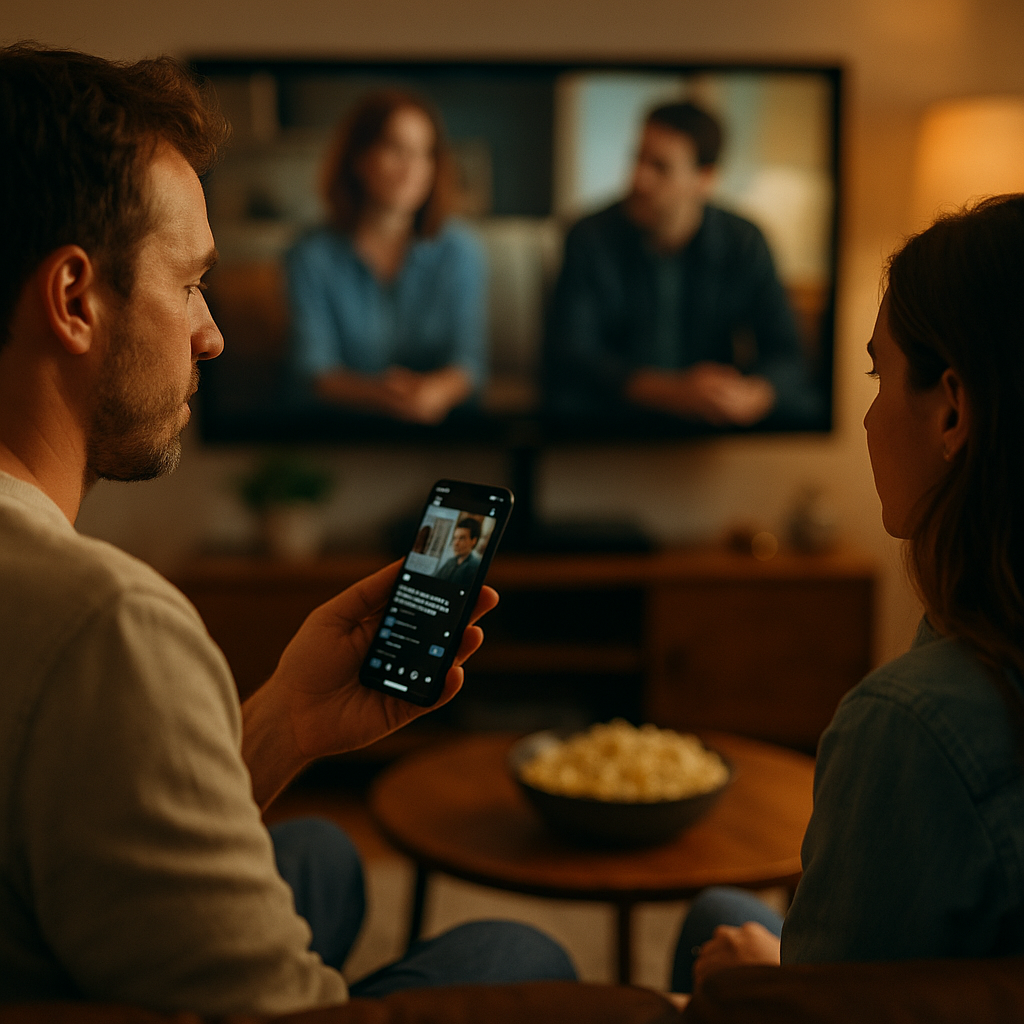
Nielsen has been saying it for years: over 70% of viewers use a second device while watching TV. Now ADWEEK is building an entire content strategy around that behavior. Its “From Second Screen to Media Empire” push isn’t just a publishing pivot — it’s a signal that second-screen experiences have graduated from a viewing habit into a legitimate content format. For brands still treating dual-screen behavior as a distraction to fight instead of a channel to build for, that’s an expensive blind spot.
What ADWEEK Is Actually Signaling
ADWEEK’s framing matters because it’s coming from a trade publication that watches media business models for a living, not a startup pitching a novel app. When a legacy outlet repositions itself around second-screen content, it’s telling advertisers something: the attention that used to leak away from the primary screen is now trackable, monetizable, and briefable. That’s a different posture than a decade ago, when second-screen apps (remember Zeebox, GetGlue, Viggle?) tried to bolt companion experiences onto TV and mostly failed.
What’s changed isn’t the behavior. It’s the infrastructure around it. Creators, live commerce, and short-form platforms have made the second screen the primary screen for engagement, even when the first screen holds the actual video. Sports leagues live-tweet during games. Reality TV franchises brief creators to react in real time on TikTok. Award shows now expect a parallel commentary economy on X and Instagram before the broadcast even ends.
The second screen isn’t competing with the first screen anymore. It’s where the actual conversation — and the actual purchase intent — is happening.
Why This Matters for Brand Budgets, Not Just Media Companies
Here’s the uncomfortable part for CMOs: most media plans still treat the second screen as an afterthought, a “social amplification” line item bolted onto a TV or streaming buy. That’s backwards. If ADWEEK is rebuilding its business model around second-screen content, brands need to ask why their briefs still separate “TV creative” from “social creative” as if they’re unrelated disciplines.
Consider what’s actually happening during a live event. A viewer watches the game on one screen. On the other, they’re checking a creator’s reaction, comparing prices, or tapping a shoppable link a brand seeded specifically for that moment. That second screen is where the purchase decision gets made — or abandoned. Brands that only show up on screen one are missing the moment of highest intent.
The ROI Case: Attention Is Already Split, So Design for It
eMarketer has tracked declining completion rates on traditional pre-roll and mid-roll for years, largely because attention fragments the moment a second device appears. Fighting that fragmentation is a losing battle. Designing content that lives natively in the second-screen moment — reaction content, live shopping overlays, creator commentary synced to broadcast timing — is the more efficient play. It doesn’t compete with the primary screen. It completes it.
This is where influencer programs have a structural advantage over traditional media buys. Creators are already fluent in second-screen behavior; their entire content model is built on reacting to something else happening in real time. Brands that brief creators around live moments (award shows, product drops, sports finals) are effectively renting a second-screen content engine that legacy TV buys can’t replicate.
Second Screen Isn’t One Format. It’s a Family of Behaviors
Treating “second screen” as a single content type is a mistake. It splits into at least three distinct brand use cases, each with different KPIs:
- Reaction and commentary content — creators responding live or near-live to a broadcast moment, driving engagement and shareability rather than direct conversion.
- Companion shopping experiences — synced product drops, shoppable overlays, or creator-hosted live commerce that runs parallel to a TV spot or streaming premiere.
- Second-screen research behavior — the viewer who sees an ad, then opens a browser or app to compare prices and read reviews before buying. This is less about brand-owned content and more about being findable in that window.
That third bucket is underrated. It’s why formats built around comparison and price transparency perform so well as second-screen companions — think silent comparison videos or a price-per-use breakdown that a viewer stumbles on while researching mid-broadcast. If your brand isn’t showing up in that search window, a competitor’s creator content will fill the gap instead.
Live Commerce Is the Clearest Proof Point
TikTok Shop’s live commerce push and Amazon’s continued investment in shoppable video are essentially second-screen experiences wearing a different label. The viewer is watching something (a livestream, a broadcast, a creator video) and simultaneously transacting on an adjacent surface. TikTok’s advertising platform has built entire product suites around this exact behavior pattern. Brands running shared-screen shopping formats are already ahead of this curve, whether they’ve labeled it “second-screen strategy” internally or not.
The Compliance Angle Nobody’s Talking About
Second-screen content moves fast, often live or near-live, which raises the same disclosure questions that trip up brands in any real-time creator format. If a creator is reacting to a broadcast moment while promoting a product, the material connection disclosure still applies under FTC guidelines. Speed doesn’t excuse compliance. It just means legal and compliance teams need pre-approved disclosure language baked into the brief before the live moment happens, not scrambled together in the comments section afterward.
This is also where briefing discipline pays off. Formats built for compliance-first execution, like a confession-booth format or a ghost ad redemption arc, show the value of building disclosure into the creative concept itself rather than treating it as a compliance afterthought. Second-screen content, because it’s often improvised and time-sensitive, needs that same upfront rigor even more.
Real-time content doesn’t get a pass on FTC disclosure. It just requires disclosure language to be pre-built into the brief, not improvised live.
How to Actually Brief for Second-Screen Moments
Practically, this means rethinking the creative brief itself. A few operational shifts brands should consider:
- Sync creator timelines to broadcast or launch schedules. If there’s a live event, product drop, or premiere, creator content should be scheduled to land in that exact window, not a day later when the moment’s cold.
- Brief for reaction, not polish. Second-screen content that feels overproduced reads as inauthentic. Formats built around reaction content work precisely because they feel unscripted.
- Build shoppable pathways in advance. Don’t wait until the live moment to figure out the checkout link. Have it tested and ready.
- Pre-clear disclosure language. Legal sign-off should happen before the live window, with flexible but pre-approved phrasing creators can drop in fast.
- Measure second-screen engagement separately from primary-screen metrics. Completion rate on a TV spot and engagement on a companion creator post are different KPIs measuring different behaviors. Don’t blend them into one dashboard and lose the signal.
This is also a good moment to revisit how you’re structuring multi-format shoots generally. Programs built around a multi-format creator brief already have the operational muscle to spin up second-screen-specific cuts without commissioning entirely new production.
Is This a Fad or a Structural Shift?
Skeptics will point out that “second screen” has been declared the future before, and it fizzled as a standalone app category. Fair. But the difference this time is that second-screen behavior isn’t trying to live in a dedicated app anymore. It’s living inside platforms people already use constantly (TikTok, Instagram, X, YouTube). The infrastructure question has been solved by the creator economy itself. ADWEEK repositioning its own media business around this format is a lagging indicator, not a leading one; the behavior was already there, and the content industry is now catching up to monetize it properly.
Data backs the durability. Statista’s media consumption research and eMarketer’s device usage tracking both show multi-screen behavior holding steady or climbing across age groups, not just Gen Z. Older demographics, once assumed to be single-screen loyalists, are increasingly checking phones during live TV too. This isn’t a niche audience quirk. It’s default viewing behavior now.
What Happens If Brands Ignore This
The risk isn’t abstract. Brands that don’t design for second-screen moments cede that window to competitors, or worse, to unaffiliated creators who fill the research gap with unbranded (and sometimes unfavorable) commentary. If a viewer opens a second screen mid-ad to check reviews and finds nothing from your brand, you’ve just handed that moment to whoever ranks or trends instead.
The fix isn’t complicated, but it does require cross-functional coordination between media planning, creator strategy, and legal that most orgs haven’t built yet.
FAQs
Frequently Asked Questions
What is a second-screen experience in marketing terms?
It’s any content or interaction a viewer engages with on a secondary device (phone, tablet, laptop) while simultaneously consuming primary content like TV, live events, or streaming video. In brand marketing, this includes creator reactions, companion shopping links, and real-time social commentary tied to a broadcast moment.
Why is ADWEEK’s second-screen pivot significant for brands?
It signals that a major trade publication is restructuring its business model around second-screen content consumption, treating it as a primary format rather than a secondary amplification channel. That’s a strong indicator brands should stop treating second-screen strategy as an afterthought in media planning.
How does second-screen content affect FTC disclosure requirements?
Disclosure rules apply regardless of how fast or live the content is. Creators reacting to broadcast moments while promoting a product still need clear material connection disclosures per FTC guidelines. Brands should pre-approve disclosure language before live events happen, not improvise it in real time.
What KPIs should brands track for second-screen campaigns?
Second-screen engagement should be measured separately from primary-screen metrics like TV completion rates. Relevant KPIs include companion content engagement rate, shoppable link click-through during live windows, and search/research behavior tied to broadcast timing.
Is second-screen strategy only relevant for live events and sports?
No. While live events are the clearest use case, second-screen behavior also applies to streaming premieres, product launches, and even standard ad breaks, where viewers research or comparison-shop on a second device while an ad plays on the first.
Next step: Audit your next live-moment campaign brief and ask whether it treats the second screen as a planned content surface or an afterthought — if it’s the latter, that’s the gap a competitor’s creator content will fill first.
Top Influencer Marketing Agencies
The leading agencies shaping influencer marketing in 2026
Agencies ranked by campaign performance, client diversity, platform expertise, proven ROI, industry recognition, and client satisfaction. Assessed through verified case studies, reviews, and industry consultations.
Moburst

-
2

The Shelf
Boutique Beauty & Lifestyle Influencer AgencyA data-driven boutique agency specializing exclusively in beauty, wellness, and lifestyle influencer campaigns on Instagram and TikTok. Best for brands already focused on the beauty/personal care space that need curated, aesthetic-driven content.Clients: Pepsi, The Honest Company, Hims, Elf Cosmetics, Pure LeafVisit The Shelf → -
3

Audiencly
Niche Gaming & Esports Influencer AgencyA specialized agency focused exclusively on gaming and esports creators on YouTube, Twitch, and TikTok. Ideal if your campaign is 100% gaming-focused — from game launches to hardware and esports events.Clients: Epic Games, NordVPN, Ubisoft, Wargaming, Tencent GamesVisit Audiencly → -
4

Viral Nation
Global Influencer Marketing & Talent AgencyA dual talent management and marketing agency with proprietary brand safety tools and a global creator network spanning nano-influencers to celebrities across all major platforms.Clients: Meta, Activision Blizzard, Energizer, Aston Martin, WalmartVisit Viral Nation → -
5

The Influencer Marketing Factory
TikTok, Instagram & YouTube CampaignsA full-service agency with strong TikTok expertise, offering end-to-end campaign management from influencer discovery through performance reporting with a focus on platform-native content.Clients: Google, Snapchat, Universal Music, Bumble, YelpVisit TIMF → -
6

NeoReach
Enterprise Analytics & Influencer CampaignsAn enterprise-focused agency combining managed campaigns with a powerful self-service data platform for influencer search, audience analytics, and attribution modeling.Clients: Amazon, Airbnb, Netflix, Honda, The New York TimesVisit NeoReach → -
7

Ubiquitous
Creator-First Marketing PlatformA tech-driven platform combining self-service tools with managed campaign options, emphasizing speed and scalability for brands managing multiple influencer relationships.Clients: Lyft, Disney, Target, American Eagle, NetflixVisit Ubiquitous → -
8

Obviously
Scalable Enterprise Influencer CampaignsA tech-enabled agency built for high-volume campaigns, coordinating hundreds of creators simultaneously with end-to-end logistics, content rights management, and product seeding.Clients: Google, Ulta Beauty, Converse, AmazonVisit Obviously →