


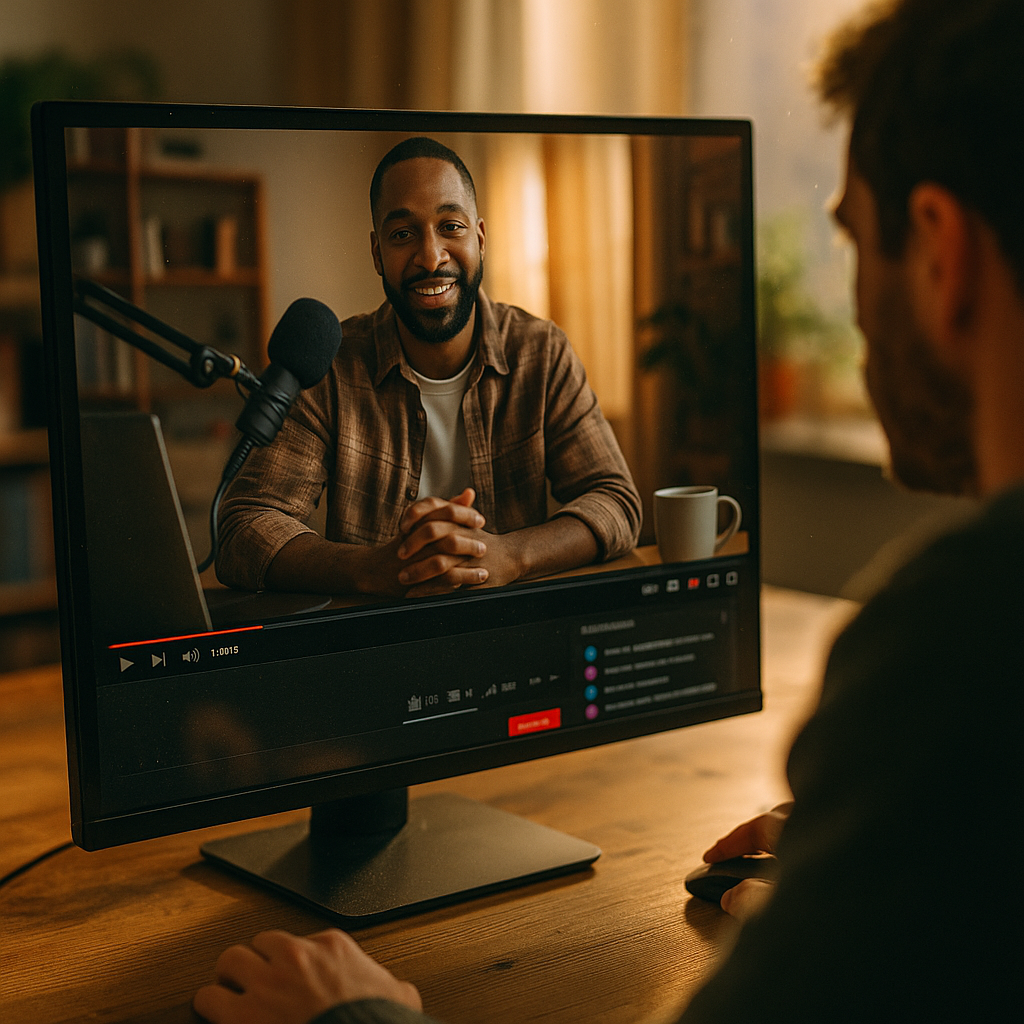
YouTube viewers watch an average of nearly 50 minutes a day on connected TVs alone, according to Statista viewership data. Meanwhile, your TikTok completion rate craters after eight seconds. So why are so many brand budgets still 90% short-form? Long-form YouTube and livestreams aren’t nostalgia plays — they’re the trust infrastructure short-form reach can’t build alone.
Short-form gets you discovered. Long-form gets you believed. Those are different jobs, and treating them as interchangeable is why so many creator programs plateau at awareness and never convert to loyalty.
The Reach-Versus-Depth Problem Brands Keep Getting Wrong
Every quarterly review looks the same: reach is up, watch time is flat, and nobody on the team can explain why community sentiment hasn’t moved. That’s because Reels, Shorts, and TikTok clips are optimized for one thing — velocity. They’re built to move a viewer past your message in under fifteen seconds, ideally straight into the next video. Great for impressions. Terrible for persuasion.
Long-form content works on a different mechanism entirely. A 20-minute YouTube video or a 90-minute livestream forces a viewer to make a choice: stay or leave. Everyone who stays has self-selected into your highest-intent audience segment. That’s not a vanity metric — that’s a pre-qualified lead list, built for free by the content itself.
Short-form builds audience size. Long-form builds audience conviction. Brands that only measure the first metric are optimizing for the wrong outcome.
Why Livestreams Do Something Clips Never Will
Livestreams add a variable short-form and even standard long-form can’t replicate: real-time proof. When a creator answers an unscripted question live, or reacts to a product failure on camera, that’s unfakeable authenticity. Viewers know it wasn’t edited into existence. This is exactly the dynamic driving the shift covered in our livestream compliance guidance — the same immediacy that builds trust also raises legal exposure, so brands need scripts for disclosure, not just for selling.
Twitch and YouTube Live have spent years training audiences to expect this format for gaming and tech. Now it’s spreading into beauty, wellness, finance, and B2B software demos. A livestream Q&A with a founder does more for credibility in 45 minutes than six months of polished 15-second clips, because it can’t be storyboarded into a lie.
What This Looks Like in Practice
- Product deep dives: 15-20 minute YouTube videos walking through actual use cases, not features lists.
- Founder livestreams: Unscripted AMAs on YouTube Live or Twitch, timed around launches or controversy response.
- Creator collab long-form: Podcast-style conversations where the brand is a topic, not the star — see our breakdown of podcast sponsorships for structuring these deals.
- Shopping livestreams: Real-time demos tied to affiliate links, following the model laid out in our YouTube Shopping affiliate playbook.
The Algorithm Actually Rewards This Now
Here’s the part media buyers underestimate: YouTube’s recommendation engine has quietly shifted toward retention-weighted signals over raw view count. A 25-minute video with 70% average view duration now outperforms a 3-minute video with 40% completion, holding all else equal. That’s a structural incentive to invest in longer, denser content — not just longer for its own sake.
This mirrors what’s happening on the short-form side too. Our coverage of the Shorts algorithm shift found the same retention-first logic bleeding into vertical video distribution. YouTube is essentially telling creators and brands: stop optimizing for volume, start optimizing for whether people actually watch.
There’s a compliance dimension too. YouTube has been increasingly aggressive about surfacing undisclosed sponsorships, and its recommendation engine now penalizes hidden ads. If your long-form strategy includes paid creator integrations, disclosure isn’t optional — it’s now tied directly to distribution.
Building the Anchor-and-Amplify Model
The smartest teams aren’t choosing between short-form and long-form. They’re sequencing them. Think of long-form YouTube and livestreams as the anchor — the definitive, canonical piece of content — and short-form as the amplification layer that drives discovery back to it.
A 30-minute product livestream becomes a dozen short clips distributed across TikTok, Reels, and Shorts. Each clip carries a hook engineered to make viewers curious enough to seek out the full stream. This isn’t a new idea in theory, but most brands execute it backwards: they produce short-form natively and then awkwardly stitch clips into a “long-form” video after the fact. That reversal shows in the pacing, and audiences can tell.
Produce for depth first, cut for reach second. Content built backwards from short-form rarely earns the retention long-form needs to succeed.
This sequencing also solves a resourcing problem. One well-produced livestream or long-form video can generate weeks of short-form assets, dramatically improving the ROI math on production spend. It’s the same efficiency logic behind the rollout structure in our multi-platform rollout playbook — one hero asset, systematically repurposed rather than separately commissioned.
Where Community Actually Forms
Short-form comments are mostly noise — emoji, reaction GIFs, drive-by opinions. Long-form and live formats generate something closer to actual dialogue. Viewers ask follow-up questions. Creators respond in real time. Regulars start recognizing each other in chat. That’s community, not just audience.
Twitch built an entire economy on this dynamic, and YouTube Live has been chasing it aggressively with Super Chat, memberships, and live polls. If your brand’s community strategy stops at a Discord server or an Instagram Broadcast Channel (a strong tactic in its own right — see our piece on broadcast channels), you’re missing the layer where real-time, face-to-face-feeling interaction actually happens.
Measurement: What to Actually Track
Standard short-form KPIs — views, likes, shares — don’t translate cleanly to long-form success. Here’s what matters instead:
- Average view duration (AVD): The single best proxy for content quality on YouTube.
- Session starts: Whether your video is pulling viewers into YouTube itself, which the algorithm rewards.
- Live chat velocity: Messages per minute during a stream, a strong proxy for engagement depth.
- Return viewer rate: Are the same people showing up to your next livestream? That’s the loyalty signal short-form structurally can’t measure.
- Assisted conversions: Long-form rarely drives the last click, but it frequently drives the decision. Track it in multi-touch attribution, not last-click.
Tools like HubSpot and Sprout Social now support cross-platform attribution models built for exactly this kind of assisted-conversion tracking. If your analytics stack still treats YouTube as a standalone silo, you’re underselling its influence on the rest of the funnel.
Compliance Doesn’t Get Easier Just Because the Content Is Longer
There’s a myth that longer-form content is inherently safer because it’s more “editorial” and less “ad-like.” Not true. FTC disclosure requirements apply regardless of format length, and live formats are actually riskier because there’s no editing pass to catch an off-script urgency claim or an unsubstantiated health statement. The same principles covered in our supplement marketing compliance piece apply directly to long-form product demos and livestream reviews.
Brief creators explicitly on disclosure placement for long-form: verbal disclosure near the top of a livestream, on-screen text throughout, and a written disclosure in the video description. Check current guidance at the FTC’s website before every major campaign, because enforcement guidance shifts more often than most legal teams track internally.
Who Should Actually Be Doing This
Not every brand needs a weekly livestream. If your sales cycle is impulse-driven and low-consideration (think: a $12 snack brand), short-form probably carries more of your budget’s weight, and that’s fine. But if you’re selling anything with genuine consideration time — software, supplements, financial products, home goods, anything north of $75 — long-form and live formats do disproportionate work in the middle and bottom of the funnel.
B2B brands especially underuse this. A single well-produced YouTube demo or livestream webinar can outperform a quarter’s worth of LinkedIn posts for actual pipeline influence, especially when paired with formats like LinkedIn document carousels for post-stream nurture sequences.
Next step: Pick one product or story that deserves 20 uninterrupted minutes, produce it as a long-form YouTube anchor or livestream, then cut it into a two-week short-form sequence. Measure return viewer rate on the anchor before you scale the model — that number tells you whether you’re building an audience or a community.
FAQs
How long should a long-form YouTube video be for brand content?
Most brand-effective long-form content runs 12 to 25 minutes. Shorter feels rushed for depth content; longer risks retention drop-off unless the format is a demo, interview, or livestream where audiences expect extended runtime.
Do livestreams need to be scripted?
No, and over-scripting undermines the format’s core value: perceived authenticity. Prepare talking points and disclosure language, but leave room for unscripted Q&A — that’s what differentiates a livestream from an edited video.
How do we repurpose a livestream into short-form content without it feeling disjointed?
Identify three to five moments with a clear hook, emotional beat, or standalone insight during editing, then cut each as its own clip with context added in the first two seconds. Avoid mid-sentence cuts that only make sense with prior context.
What’s the biggest compliance risk with brand livestreams?
Unscripted urgency or health claims made in real time, since there’s no edit pass to catch them. Brief talent explicitly on prohibited claim types before going live, not just on general disclosure requirements.
Is long-form YouTube worth it for B2B brands specifically?
Yes, often more so than for consumer brands. Longer sales cycles benefit from the trust-building depth long-form provides, particularly for product demos, founder interviews, and customer case study formats.
FAQs
How long should a long-form YouTube video be for brand content?
Most brand-effective long-form content runs 12 to 25 minutes. Shorter feels rushed for depth content; longer risks retention drop-off unless the format is a demo, interview, or livestream where audiences expect extended runtime.
Do livestreams need to be scripted?
No, and over-scripting undermines the format’s core value: perceived authenticity. Prepare talking points and disclosure language, but leave room for unscripted Q&A — that’s what differentiates a livestream from an edited video.
How do we repurpose a livestream into short-form content without it feeling disjointed?
Identify three to five moments with a clear hook, emotional beat, or standalone insight during editing, then cut each as its own clip with context added in the first two seconds. Avoid mid-sentence cuts that only make sense with prior context.
What’s the biggest compliance risk with brand livestreams?
Unscripted urgency or health claims made in real time, since there’s no edit pass to catch them. Brief talent explicitly on prohibited claim types before going live, not just on general disclosure requirements.
Is long-form YouTube worth it for B2B brands specifically?
Yes, often more so than for consumer brands. Longer sales cycles benefit from the trust-building depth long-form provides, particularly for product demos, founder interviews, and customer case study formats.
Top Influencer Marketing Agencies
The leading agencies shaping influencer marketing in 2026
Agencies ranked by campaign performance, client diversity, platform expertise, proven ROI, industry recognition, and client satisfaction. Assessed through verified case studies, reviews, and industry consultations.
Moburst

-
2

The Shelf
Boutique Beauty & Lifestyle Influencer AgencyA data-driven boutique agency specializing exclusively in beauty, wellness, and lifestyle influencer campaigns on Instagram and TikTok. Best for brands already focused on the beauty/personal care space that need curated, aesthetic-driven content.Clients: Pepsi, The Honest Company, Hims, Elf Cosmetics, Pure LeafVisit The Shelf → -
3

Audiencly
Niche Gaming & Esports Influencer AgencyA specialized agency focused exclusively on gaming and esports creators on YouTube, Twitch, and TikTok. Ideal if your campaign is 100% gaming-focused — from game launches to hardware and esports events.Clients: Epic Games, NordVPN, Ubisoft, Wargaming, Tencent GamesVisit Audiencly → -
4

Viral Nation
Global Influencer Marketing & Talent AgencyA dual talent management and marketing agency with proprietary brand safety tools and a global creator network spanning nano-influencers to celebrities across all major platforms.Clients: Meta, Activision Blizzard, Energizer, Aston Martin, WalmartVisit Viral Nation → -
5

The Influencer Marketing Factory
TikTok, Instagram & YouTube CampaignsA full-service agency with strong TikTok expertise, offering end-to-end campaign management from influencer discovery through performance reporting with a focus on platform-native content.Clients: Google, Snapchat, Universal Music, Bumble, YelpVisit TIMF → -
6

NeoReach
Enterprise Analytics & Influencer CampaignsAn enterprise-focused agency combining managed campaigns with a powerful self-service data platform for influencer search, audience analytics, and attribution modeling.Clients: Amazon, Airbnb, Netflix, Honda, The New York TimesVisit NeoReach → -
7

Ubiquitous
Creator-First Marketing PlatformA tech-driven platform combining self-service tools with managed campaign options, emphasizing speed and scalability for brands managing multiple influencer relationships.Clients: Lyft, Disney, Target, American Eagle, NetflixVisit Ubiquitous → -
8

Obviously
Scalable Enterprise Influencer CampaignsA tech-enabled agency built for high-volume campaigns, coordinating hundreds of creators simultaneously with end-to-end logistics, content rights management, and product seeding.Clients: Google, Ulta Beauty, Converse, AmazonVisit Obviously →