


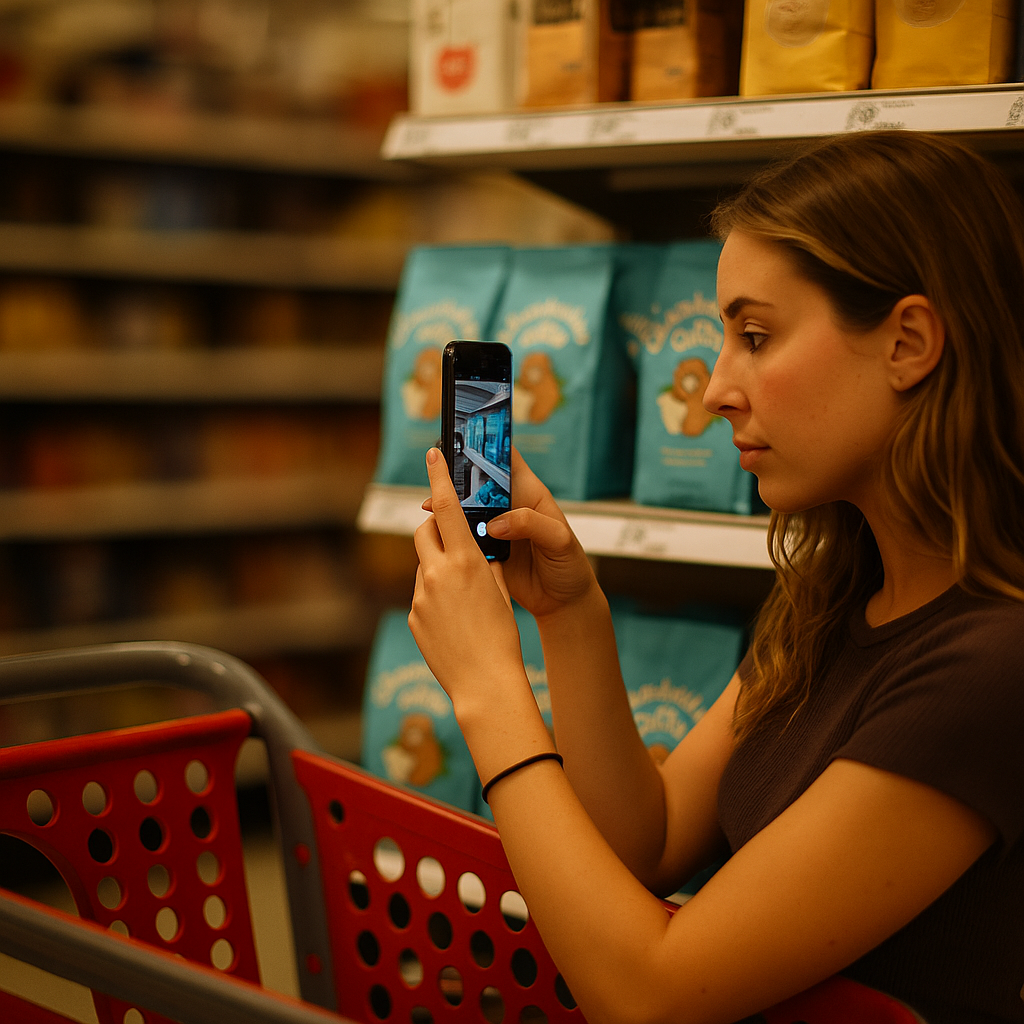
Retail buyers don’t care how many followers your founder has. They care whether shoppers will actually pick your box off the shelf. That’s the bet Chamberlain Coffee made when it built a nano-creator seeding strategy with zero celebrity halo, and it paid off with placement at Target. No paid celebrity push. No influencer with a blue check. Just hundreds of small, credible voices doing the convincing work retail buyers actually trust.
The Celebrity Founder Problem Nobody Talks About
Chamberlain Coffee has an obvious advantage: it was founded by Emma Chamberlain, a creator with millions of followers and genuine cultural cachet. Most brands would lean on that celebrity halo forever. Chamberlain Coffee didn’t.
Here’s the uncomfortable truth about founder-fame marketing: it works great for launch buzz, terribly for sustained retail credibility. Target buyers have seen a hundred celebrity-backed brands flame out after the initial press cycle. A founder’s Instagram following tells a buyer nothing about repeat purchase rates, shelf velocity, or whether real people outside the fanbase will buy the product twice.
Celebrity halo gets you a launch. Nano-creator proof gets you a reorder — and reorders are what retail buyers actually fund.
So Chamberlain Coffee shifted its entire influencer motion away from Emma-as-the-face and toward a distributed, unglamorous, extremely credible base of nano-creators. The goal wasn’t virality. It was documentation — proof that ordinary coffee drinkers, in ordinary kitchens, genuinely liked the product enough to talk about it unprompted.
What “Zero-Celebrity-Halo” Actually Means in Practice
Zero-celebrity-halo doesn’t mean Emma Chamberlain disappeared from the brand. It means the retail-facing proof point wasn’t her. The seeding program deliberately avoided macro-influencers and paid celebrity placements in the content used to build the retail pitch deck. Instead, the brand leaned on creators with 1,000 to 20,000 followers: coffee hobbyists, home baristas, budget-conscious grocery shoppers, college students doing dorm-room reviews.
Why does this matter for a retail pitch specifically? Because Target, like most big-box retailers, evaluates incoming CPG brands on more than sales data. Category buyers increasingly ask for social proof that reads as organic, not manufactured. A wall of nano-creator content showing real repurchase behavior, real unboxings, and real “I found this at my local store” posts is far more persuasive in a buyer meeting than a single celebrity endorsement clip.
This mirrors a pattern Influencers Time has tracked across CPG and beauty: brands increasingly treat nano-creators as retail sales tools, not just top-of-funnel awareness plays. The content becomes evidence, not just marketing.
Why Nano-Creators Read as More Trustworthy to Buyers
Retail buyers are skeptical by profession. They’ve watched too many brands buy their way onto a shelf and then underperform once the marketing spend dried up. Nano-creator content signals something different: unpaid or lightly compensated enthusiasm at scale.
Consider the math. A single celebrity post might reach two million people once. A thousand nano-creators posting about the same product, each to a following of a few thousand real, engaged people, produces something a celebrity post can’t: distributed repetition. Buyers see the same packaging, the same flavor notes, the same “you have to try this” language showing up across dozens of unconnected accounts. That pattern reads as authentic demand, not manufactured hype.
This is the same logic behind Grubhub’s shift away from celebrity marketing toward micro-creators, and it’s why Chubbies built its DTC growth on nano-creator comedy rather than big-name endorsement deals. The pattern isn’t unique to coffee. It’s a broader recalibration of what “proof” looks like to both consumers and retail buyers.
Building the Seeding Program: How It Actually Worked
Chamberlain Coffee’s nano-creator program followed a structure that’s becoming a template across the industry:
- Volume over reach. The brand prioritized shipping product to hundreds of small creators rather than negotiating a handful of expensive macro deals. Cost per creator dropped; total content volume went up.
- Category-adjacent targeting. Rather than chasing generic lifestyle influencers, the program targeted people already posting about coffee gear, grocery hauls, and budget meal prep — audiences retail buyers recognize as high-intent grocery shoppers.
- Unscripted UGC. Creators weren’t handed rigid scripts. They were given flavor notes and a simple ask: show how you actually drink it. That looseness produced content that felt native to each platform instead of obviously sponsored.
- Repost and syndication rights. Chamberlain Coffee secured usage rights on nano-creator content, then repurposed the strongest clips into paid social and, critically, into the retail sales deck used with Target category buyers.
That last point deserves more attention than it usually gets. Most brands treat creator content as disposable — post it, let it live for a week, move on. Chamberlain Coffee treated it as a durable asset, feeding it directly into retail negotiations. This is the same logic behind how the brand approached turning broadcast channels into retention tools rather than one-off announcement feeds.
The Retail Pitch: Turning Social Proof Into Shelf Space
Winning Target shelf space isn’t about a single killer pitch meeting. It’s a data argument. Buyers want evidence of demand before they allocate scarce shelf inventory, especially in a crowded category like ready-to-drink and bagged coffee where dozens of brands compete for the same four feet of shelf.
Chamberlain Coffee’s nano-creator content gave the sales team something concrete: geographic spread of organic mentions, repeat-purchase testimonials pulled straight from creator captions, and engagement data showing sustained interest rather than a single viral spike. That’s a fundamentally different pitch than “our founder has 12 million followers.” It says: real people, real markets, real repeat behavior.
A thousand small creators posting real repurchase moments is a stronger retail argument than one celebrity post with a million views and zero proof of loyalty.
This tactic isn’t exclusive to coffee. Retail-focused CPG brands across categories are learning that consumer trust in influencer content increasingly hinges on perceived authenticity rather than follower count — a dynamic worth watching if you’re building your own retail pitch deck around creator proof.
Compliance Considerations Brands Can’t Skip
Scaling to hundreds of nano-creators introduces disclosure risk that a single celebrity deal doesn’t. Every creator posting about free product needs a clear, compliant disclosure under FTC endorsement guidelines, and at nano-creator volume, manual compliance tracking becomes a genuine operational burden.
Brands running large seeding programs typically need:
- A standardized disclosure requirement baked into every seeding agreement, regardless of whether compensation is cash or product.
- Automated tracking tools to flag missing hashtags or disclosure language before content goes live.
- A refresher process for creators who post infrequently and may forget updated FTC guidance.
Brands that skip this step expose themselves to regulatory risk right at the moment they’re trying to look most credible to retail partners. It’s worth studying how Chubbies built FTC compliance directly into its nano-creator drops and how Ollie used credential-based vetting to reduce FTC exposure. Both offer operational templates for scaling seeding without scaling legal risk.
What This Means for Brands Chasing Retail Placement
If you’re a challenger brand eyeing a Target, Kroger, or Walmart placement, the Chamberlain Coffee model offers a repeatable framework: stop pitching buyers on your founder’s fame and start pitching them on documented, distributed demand. That means investing in seeding infrastructure well before you ever sit down with a category buyer — usually six to twelve months ahead of a pitch, since you need enough content volume and repeat-mention data to make the case credible.
It also means treating nano-creator relationships as a long-term asset class, not a campaign line item. Brands like Solo Stove have turned seeding into a year-round engine rather than a seasonal push, and that consistency is exactly what produces the kind of sustained proof retail buyers respond to.
None of this replaces strong product-market fit or category performance data. Retail buyers still run the numbers. But in categories where dozens of brands have comparable numbers, the tie-breaker is increasingly the strength of your organic proof. Social listening data and creator-sourced testimonials are becoming standard components of retail pitch decks, not nice-to-have extras.
Next Step for Brands Building Toward Retail
Start documenting organic nano-creator mentions now, even before a retail conversation is on the calendar. Buyers don’t want a pitch about potential demand; they want a folder full of proof that demand already exists.
Frequently Asked Questions
What is a zero-celebrity-halo nano-creator seeding strategy?
It’s an influencer marketing approach that deliberately avoids leaning on a founder’s or brand’s existing celebrity fame, instead building product credibility through hundreds of small creators (typically 1,000–20,000 followers) who post organic, unpaid or lightly compensated content.
Why did Chamberlain Coffee avoid using Emma Chamberlain’s fame for retail pitching?
Retail buyers discount celebrity-driven hype because it doesn’t prove sustained consumer demand. Nano-creator content showing repeat purchases and organic mentions across many unrelated accounts is a stronger, more credible signal for buyers evaluating long-term shelf performance.
How does nano-creator content actually help win retail shelf space?
Brands compile nano-creator content, engagement data, and repurchase testimonials into their retail sales decks. This gives category buyers concrete evidence of organic, geographically distributed demand rather than relying solely on projected sales figures.
What compliance risks come with scaling a nano-creator seeding program?
The main risk is inconsistent or missing FTC disclosures across a large creator base. Brands need standardized disclosure requirements, automated monitoring tools, and periodic creator education to stay compliant as programs scale into the hundreds of creators.
How long does it take to build enough nano-creator proof for a retail pitch?
Most brands need six to twelve months of consistent seeding to generate enough content volume, geographic spread, and repeat-mention data to make a compelling case to retail buyers.
FAQs
What is a zero-celebrity-halo nano-creator seeding strategy?
It’s an influencer marketing approach that deliberately avoids leaning on a founder’s or brand’s existing celebrity fame, instead building product credibility through hundreds of small creators (typically 1,000–20,000 followers) who post organic, unpaid or lightly compensated content.
Why did Chamberlain Coffee avoid using Emma Chamberlain’s fame for retail pitching?
Retail buyers discount celebrity-driven hype because it doesn’t prove sustained consumer demand. Nano-creator content showing repeat purchases and organic mentions across many unrelated accounts is a stronger, more credible signal for buyers evaluating long-term shelf performance.
How does nano-creator content actually help win retail shelf space?
Brands compile nano-creator content, engagement data, and repurchase testimonials into their retail sales decks. This gives category buyers concrete evidence of organic, geographically distributed demand rather than relying solely on projected sales figures.
What compliance risks come with scaling a nano-creator seeding program?
The main risk is inconsistent or missing FTC disclosures across a large creator base. Brands need standardized disclosure requirements, automated monitoring tools, and periodic creator education to stay compliant as programs scale into the hundreds of creators.
How long does it take to build enough nano-creator proof for a retail pitch?
Most brands need six to twelve months of consistent seeding to generate enough content volume, geographic spread, and repeat-mention data to make a compelling case to retail buyers.
Top Influencer Marketing Agencies
The leading agencies shaping influencer marketing in 2026
Agencies ranked by campaign performance, client diversity, platform expertise, proven ROI, industry recognition, and client satisfaction. Assessed through verified case studies, reviews, and industry consultations.
Moburst

-
2

The Shelf
Boutique Beauty & Lifestyle Influencer AgencyA data-driven boutique agency specializing exclusively in beauty, wellness, and lifestyle influencer campaigns on Instagram and TikTok. Best for brands already focused on the beauty/personal care space that need curated, aesthetic-driven content.Clients: Pepsi, The Honest Company, Hims, Elf Cosmetics, Pure LeafVisit The Shelf → -
3

Audiencly
Niche Gaming & Esports Influencer AgencyA specialized agency focused exclusively on gaming and esports creators on YouTube, Twitch, and TikTok. Ideal if your campaign is 100% gaming-focused — from game launches to hardware and esports events.Clients: Epic Games, NordVPN, Ubisoft, Wargaming, Tencent GamesVisit Audiencly → -
4

Viral Nation
Global Influencer Marketing & Talent AgencyA dual talent management and marketing agency with proprietary brand safety tools and a global creator network spanning nano-influencers to celebrities across all major platforms.Clients: Meta, Activision Blizzard, Energizer, Aston Martin, WalmartVisit Viral Nation → -
5

The Influencer Marketing Factory
TikTok, Instagram & YouTube CampaignsA full-service agency with strong TikTok expertise, offering end-to-end campaign management from influencer discovery through performance reporting with a focus on platform-native content.Clients: Google, Snapchat, Universal Music, Bumble, YelpVisit TIMF → -
6

NeoReach
Enterprise Analytics & Influencer CampaignsAn enterprise-focused agency combining managed campaigns with a powerful self-service data platform for influencer search, audience analytics, and attribution modeling.Clients: Amazon, Airbnb, Netflix, Honda, The New York TimesVisit NeoReach → -
7

Ubiquitous
Creator-First Marketing PlatformA tech-driven platform combining self-service tools with managed campaign options, emphasizing speed and scalability for brands managing multiple influencer relationships.Clients: Lyft, Disney, Target, American Eagle, NetflixVisit Ubiquitous → -
8

Obviously
Scalable Enterprise Influencer CampaignsA tech-enabled agency built for high-volume campaigns, coordinating hundreds of creators simultaneously with end-to-end logistics, content rights management, and product seeding.Clients: Google, Ulta Beauty, Converse, AmazonVisit Obviously →